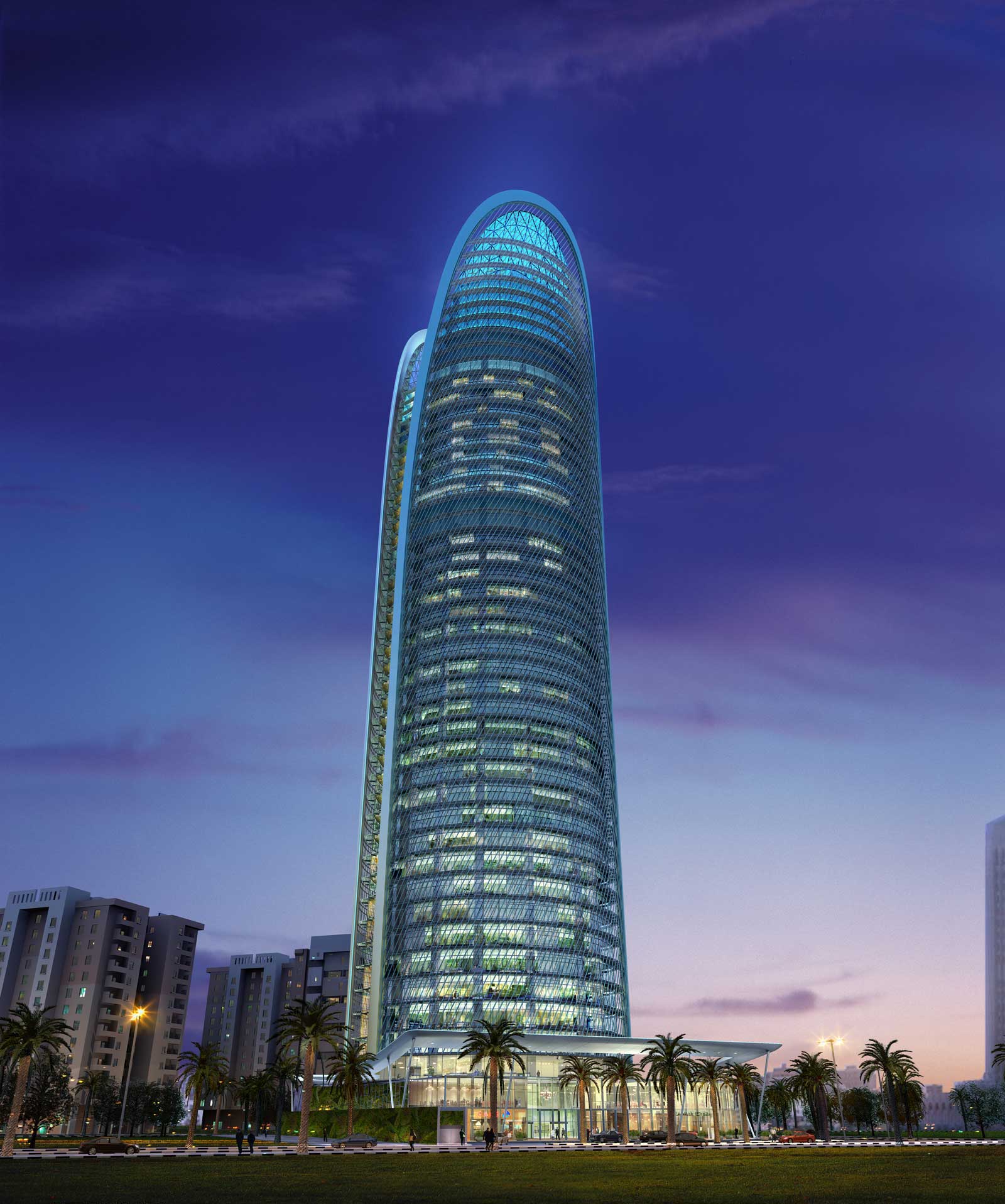



- Location: Tripoli – Libya
- Year: 2007
- Client: SSFI
- Designer: ATKINS
- Site Area: 5,300 m2
- Built-up area: 59,882 m2
- Use: Mixed-use
- Phase: Design
- Role: Coordination between parties as a representative of ECOU
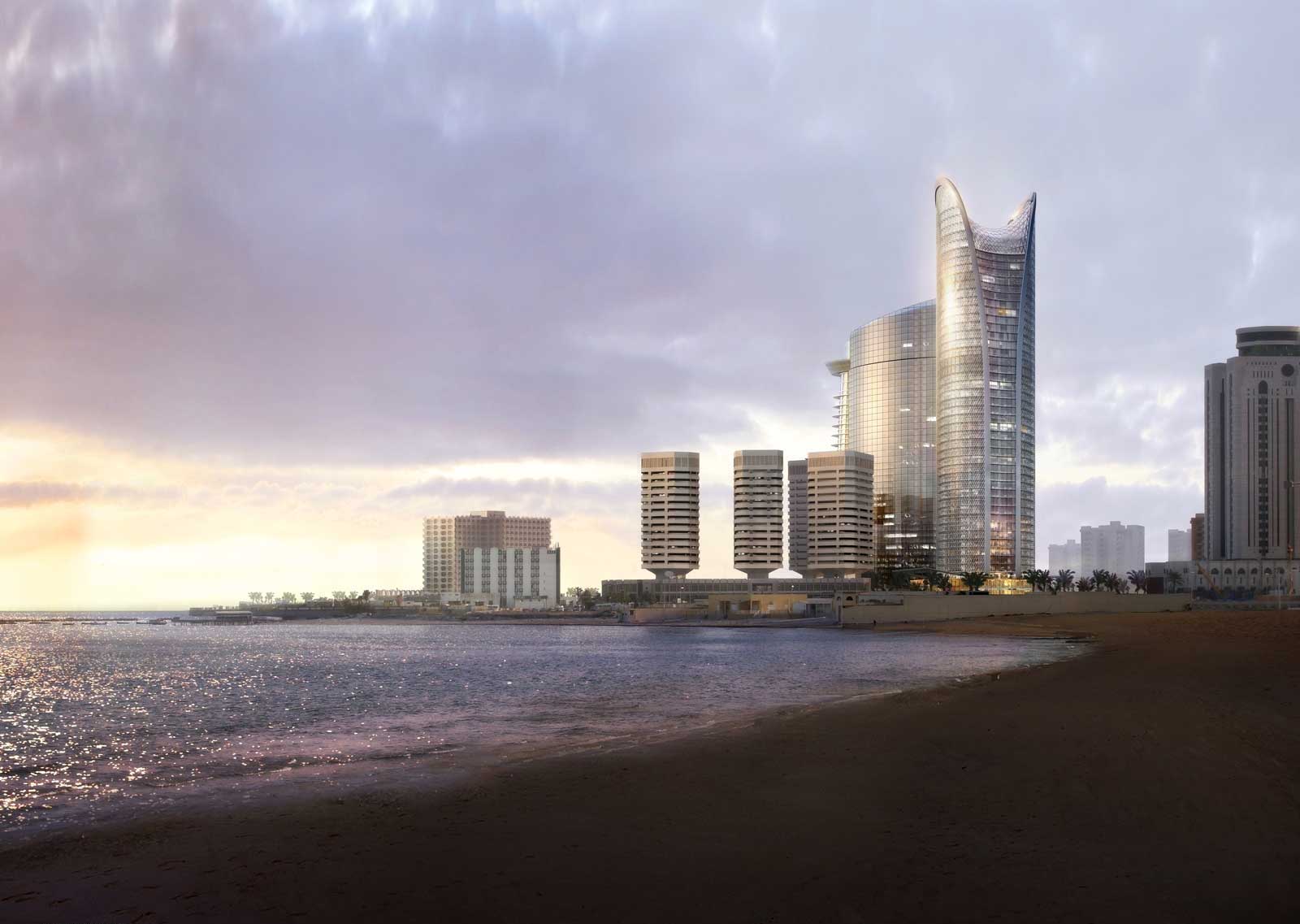
Burj Tripoli: A Modern Icon in the Heart of Libya
Location and Context
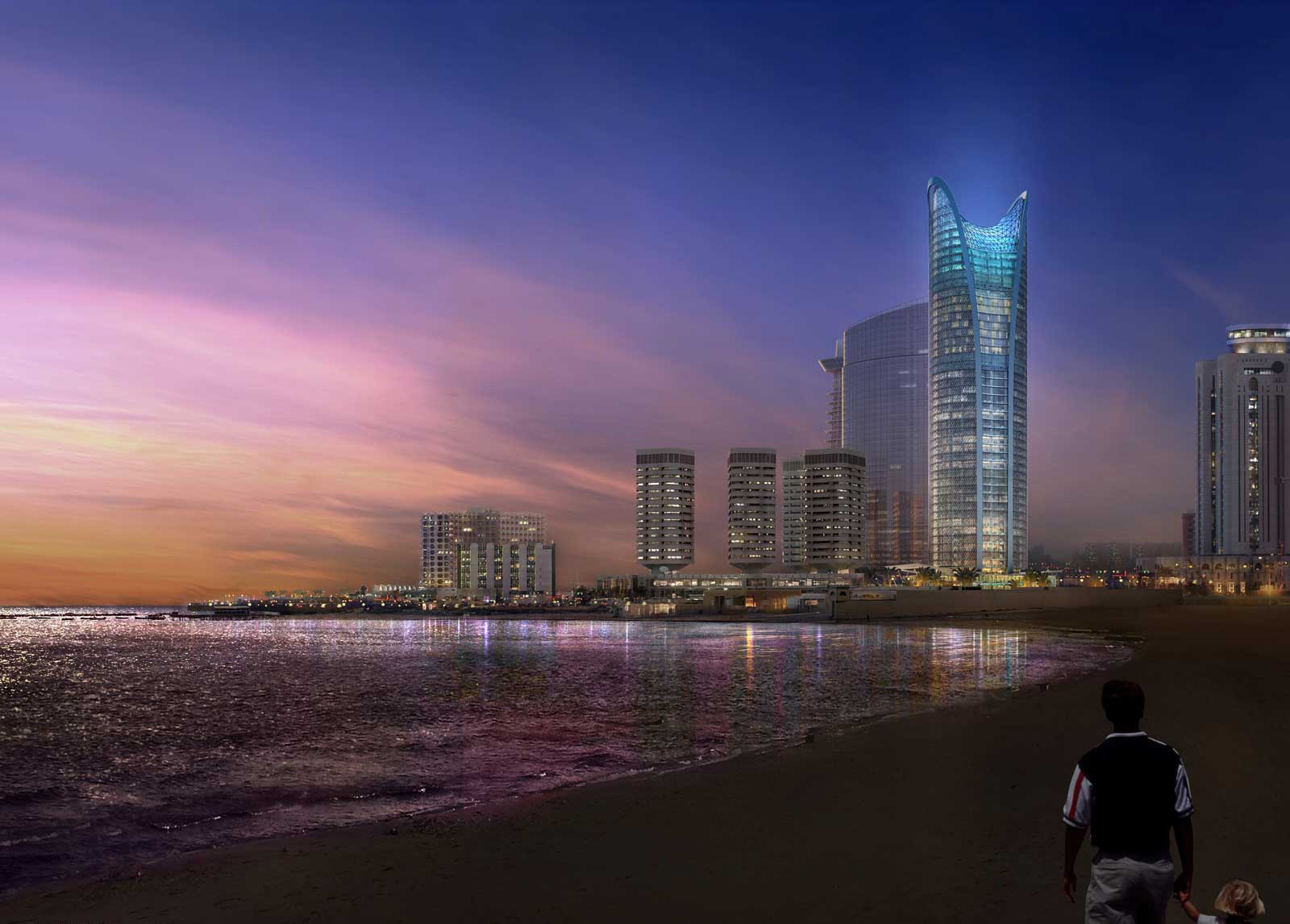
Burj Tripoli, a striking high-rise development, is situated in the bustling commercial district of Tripoli, Libya. Occupying a prime location in the capital, the tower spans a site area of 5,300 square meters, with a total built-up area of approximately 59,882 square meters. Its strategic position offers sweeping views of both the Mediterranean Sea and the vibrant cityscape, making it a defining landmark in the region. This architectural masterpiece reflects Tripoli’s ambitions to emerge as a hub for commerce, luxury living, and cultural innovation.
Concept and Vision
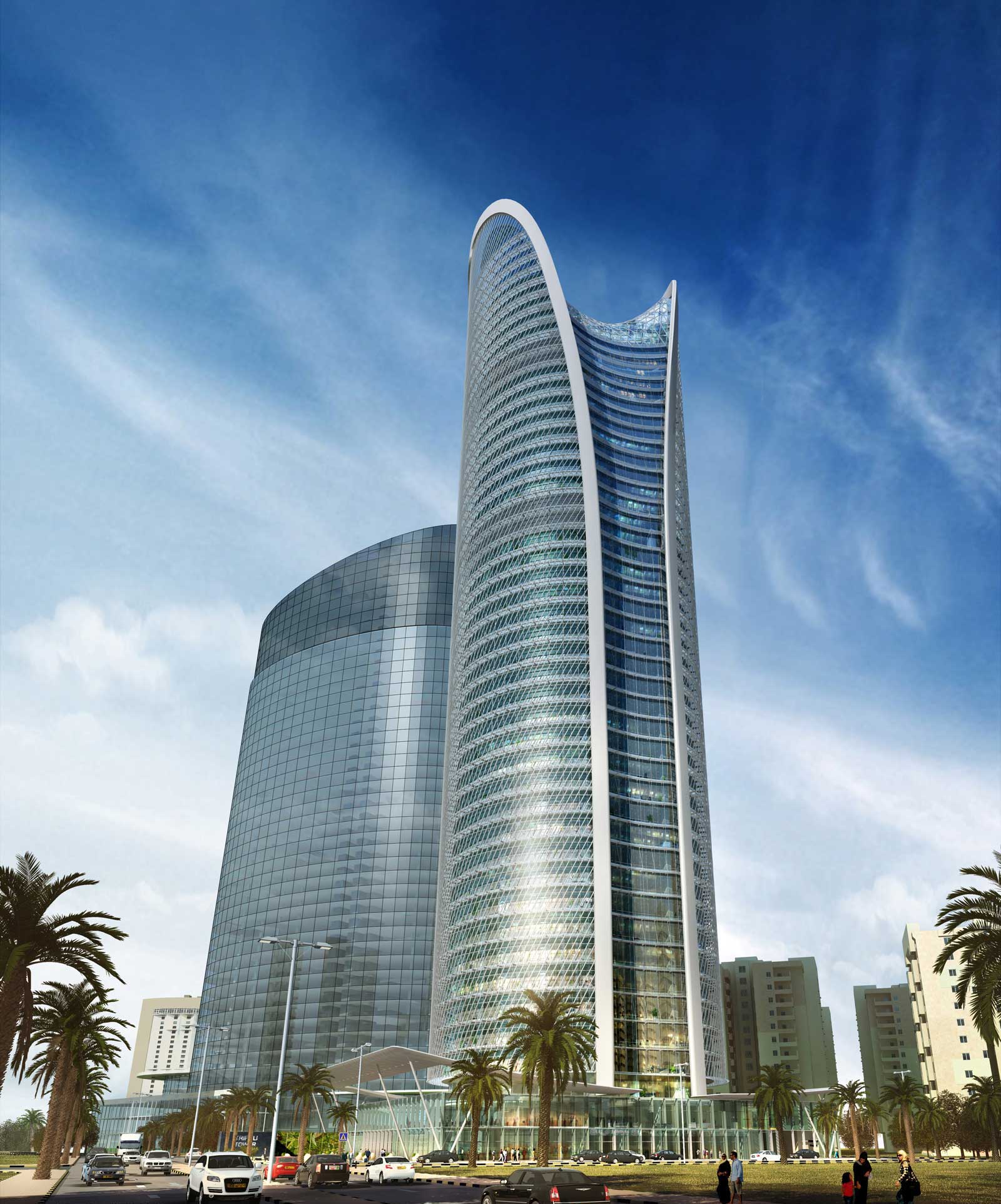
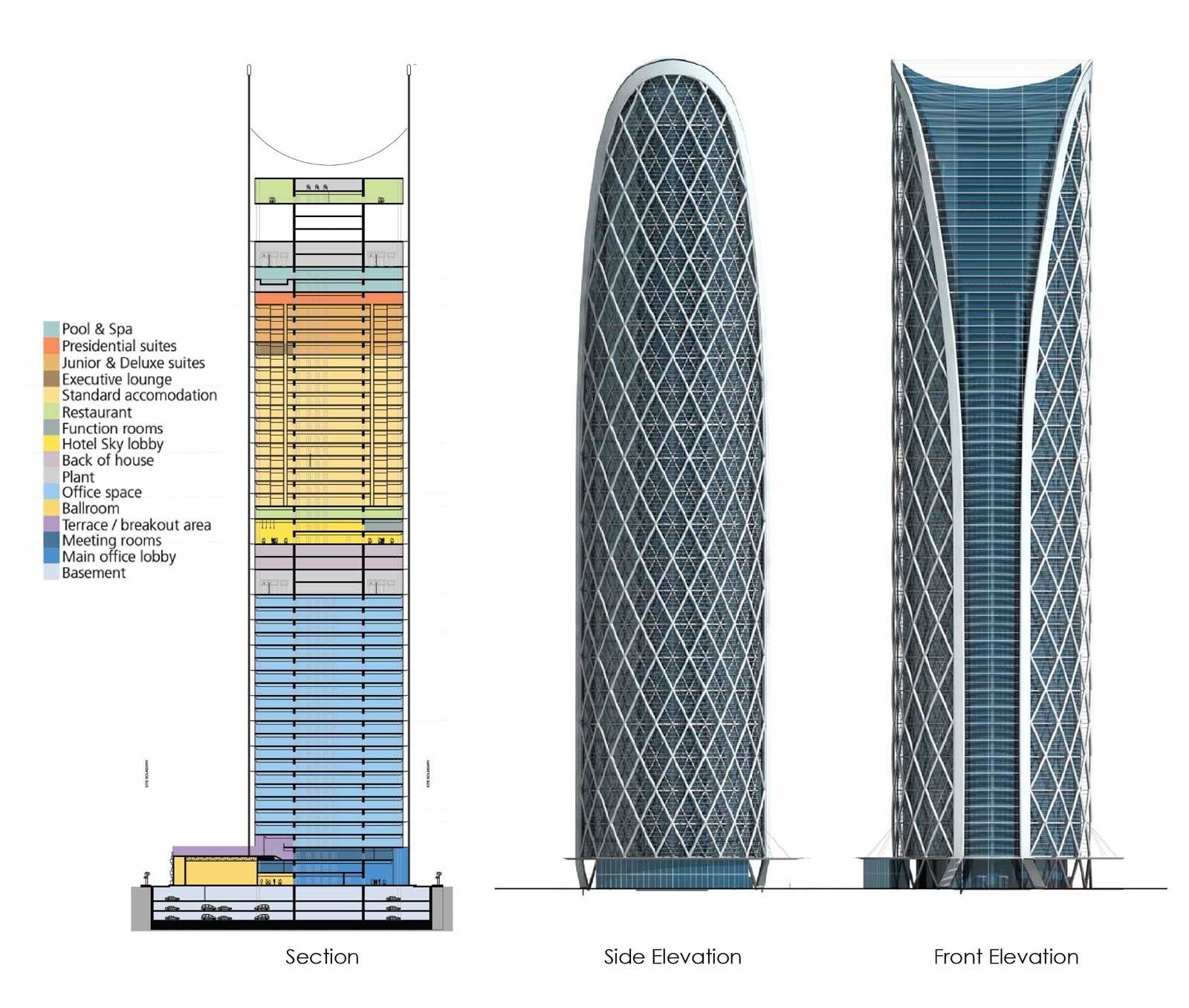
The design of Burj Tripoli is a harmonious fusion of contemporary architecture and cultural symbolism. At 240 meters tall, this mixed-use tower integrates office spaces, luxury serviced apartments, a five-star hotel, and the prestigious Petroleum Club. The tower’s design reflects Libya’s progressive economic aspirations, balancing functionality, modernity, and cultural identity.
Key Project Components
Office Spaces:
Spanning 24,400 square meters across 22 floors, the office spaces are designed to accommodate a range of tenants.
Flexible floor plans allow for customization, enabling the subdivision of each floor into multiple units to meet diverse business requirements.
High-end finishes and amenities cater to international standards for modern office environments.
Hotel:
The hotel features 260 guest rooms, including standard rooms, executive suites, and presidential suites, all designed for luxury and comfort.
Facilities include a grand reception lobby, lounge areas, meeting rooms, event spaces, and fine dining options.
The hotel aims to serve business and leisure travelers, positioning itself as a premier destination for visitors to Tripoli.
Residential Apartments:
A range of serviced apartments, including one-bedroom, two-bedroom, and three-bedroom units, caters to both short-term and long-term tenants.
The residential component is tailored to meet the needs of international visitors and executives seeking premium accommodations.
Petroleum Club:
Occupying the uppermost floors of the tower, the Petroleum Club is an exclusive facility for executives.
Features include high-end dining areas, exhibition galleries, banquet halls, private lounges, a spa, and fitness centers.
The club offers unparalleled panoramic views of the city and the Mediterranean, providing a luxurious and private retreat for its members.
Retail and Dining:
The base of the tower houses restaurants and retail units, spread across two levels with accessible terraces.
These spaces are designed to serve both tower occupants and visitors, creating a lively and interactive ground-level experience.
Parking and Services:
Four basement levels provide ample parking for tenants and visitors, with dedicated zones for deliveries and building services.
Efficient access routes ensure smooth operation and convenience.
Safety and Sustainability
Burj Tripoli incorporates cutting-edge safety and sustainability measures, adhering to the highest standards for high-rise developments:
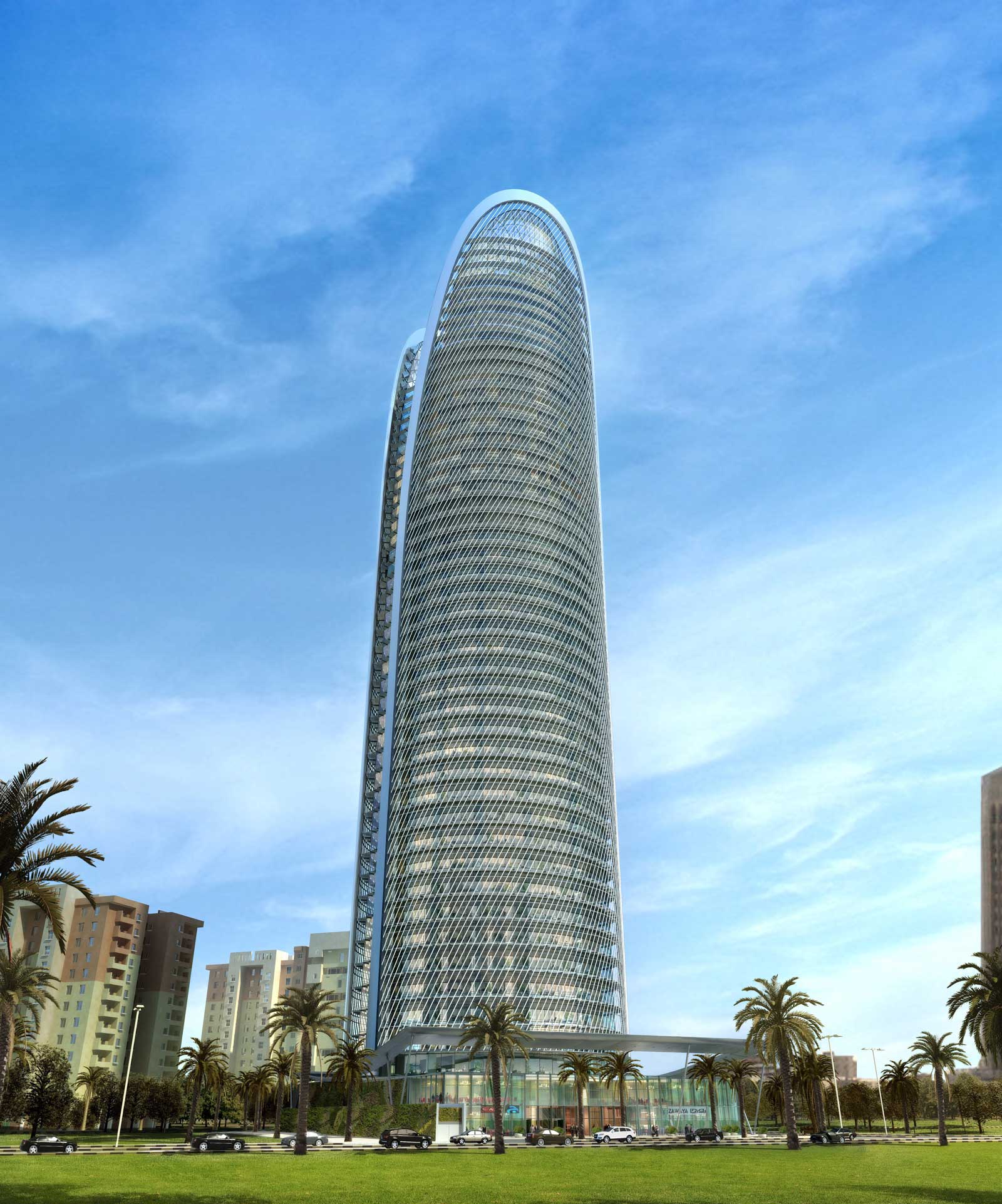
- Structural Safety: The diagrid structure enveloping the east and west facades enhances the tower’s strength and provides solar protection, reducing heat gain and energy consumption.
- Energy Efficiency: The design integrates solar shading and natural ventilation systems, optimizing energy use and aligning with principles of sustainable architecture.
- Emergency Preparedness: Advanced fire safety systems and evacuation strategies ensure the safety of occupants.
Architectural and Cultural Innovation
The architectural language of Burj Tripoli merges modern design with traditional Arabic aesthetics, showcasing a balance between innovation and heritage:
- Circular Plan: The tower’s circular layout maximizes spatial efficiency and provides unobstructed panoramic views. A central core houses all mechanical, electrical, and public health services, ensuring seamless functionality.
- Cultural Motifs: Inspired by Islamic art, the design incorporates elements such as the traditional Arabic octagon and intricate latticework, connecting the modern structure with Libya’s rich cultural heritage.
- Material Palette: The façade’s clean lines and intricate patterns combine contemporary materials with textures and finishes that evoke tradition, creating a timeless aesthetic.
Conclusion
Burj Tripoli is a testament to Libya’s commitment to modernization and economic growth. As a beacon of innovation, luxury, and cultural integration, it enhances Tripoli’s skyline while setting a benchmark for future developments. By combining contemporary engineering with traditional design elements, the tower represents a harmonious blend of progress and heritage, symbolizing a new chapter in the city’s architectural narrative.