


A Bird Tower in the Forest of Sidi Al-Hamri, Eastern Libya
Set within the forest landscape of Sidi Al-Hamri in eastern Libya, Nestspire is a small-scale architectural intervention with a larger environmental and spatial ambition. More than a shelter for birds, the project explores how architecture can create a gentler relationship between living species and the landscape one based not on domination, but on protection, coexistence, and quiet presence.
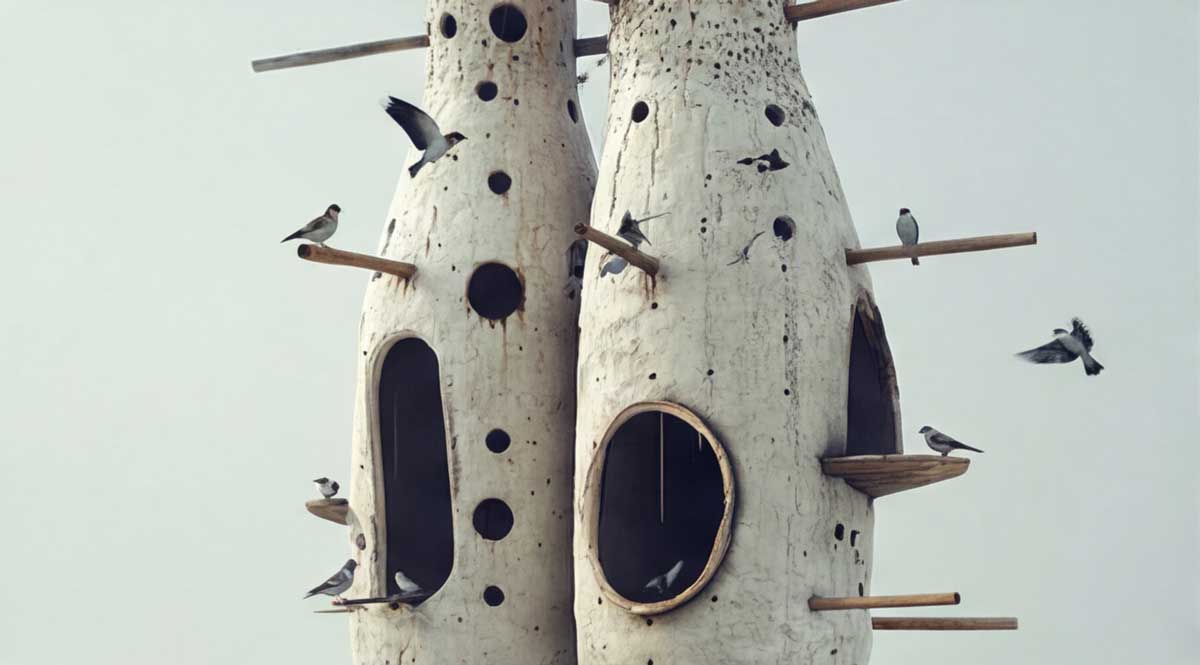
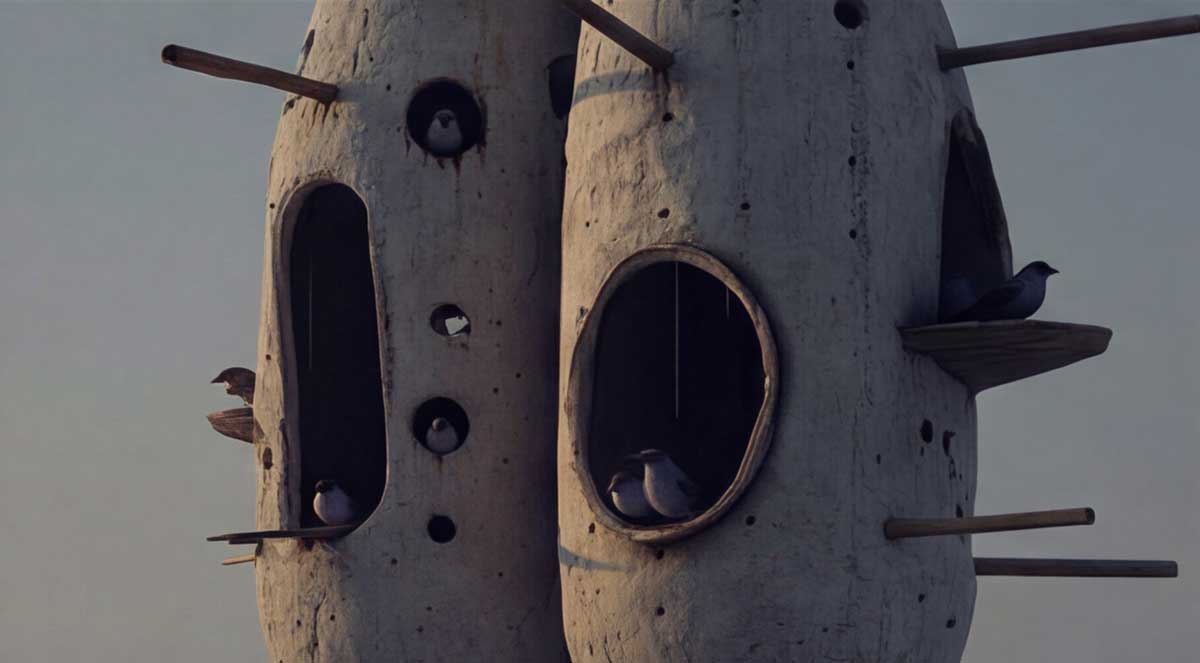
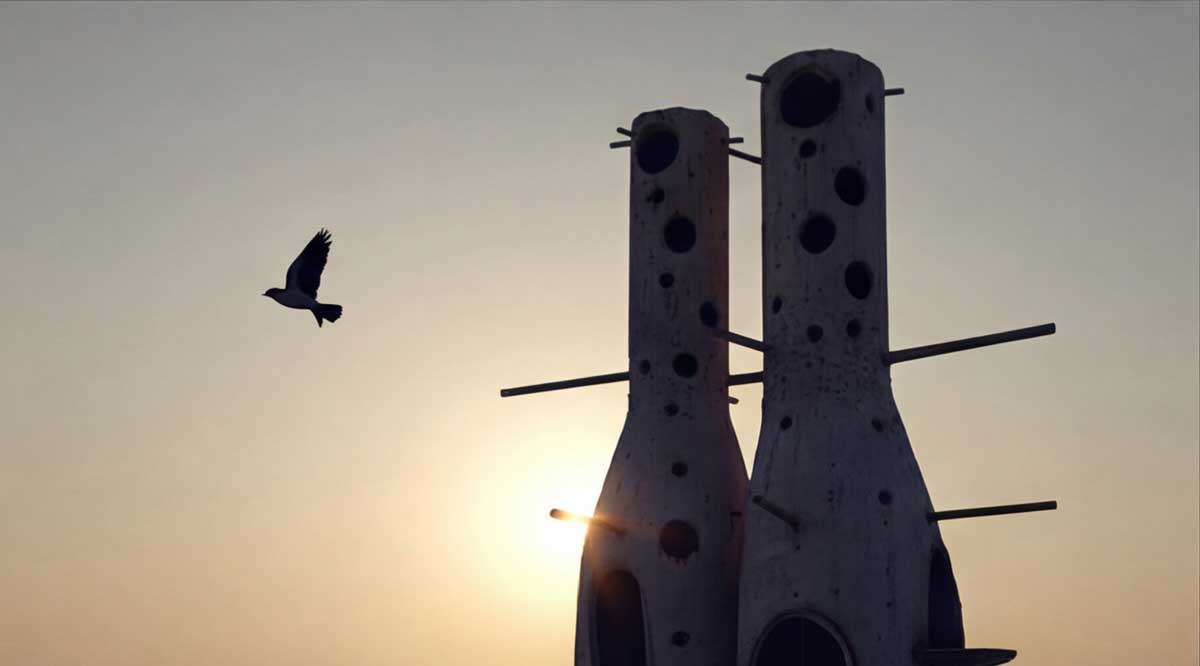
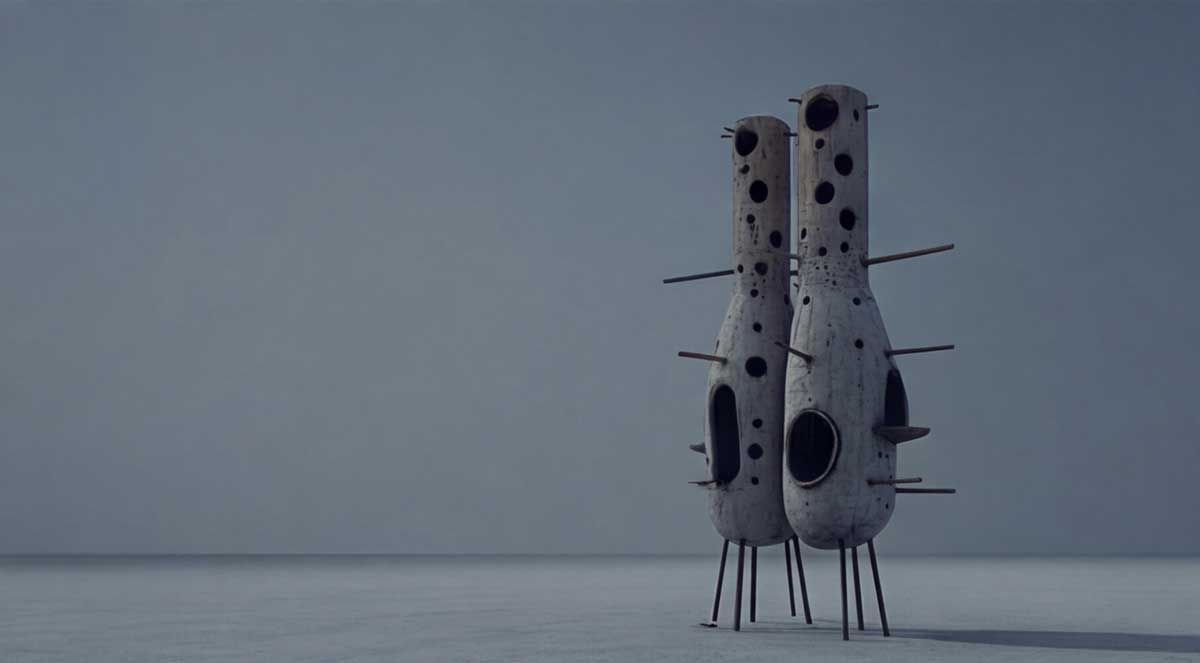
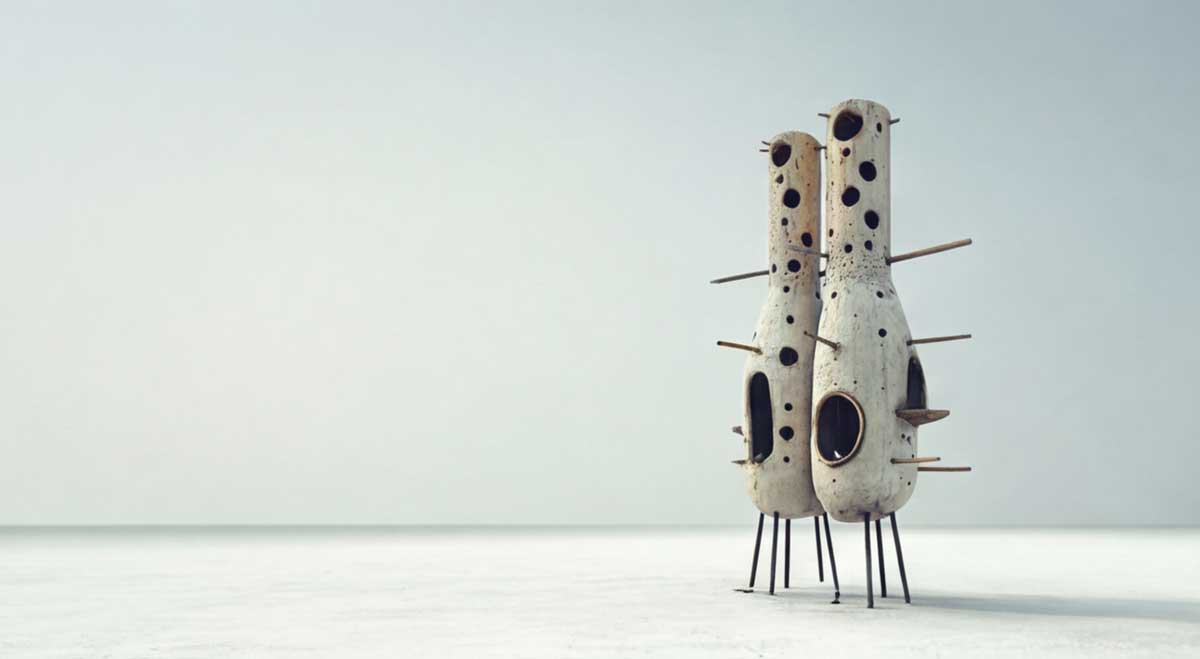
The project begins with a direct question: how can a compact structure become a living habitat for birds while also maintaining a strong sculptural identity within nature? The answer takes shape in a twin vertical composition that appears less constructed than grown an object seemingly formed by wind, light, erosion, and time. Rather than behaving as sealed towers, the two volumes operate as porous envelopes, punctured by cavities, openings, and perches, allowing the exterior surface itself to become inhabitable.
Its formal language draws from organic rather than rigid geometries. Nestspire is not a tower in the conventional sense, but a hybrid figure somewhere between trunk, nest, and marker. This deliberate ambiguity gives the project its architectural character. It does not stand in the landscape as a foreign object; instead, it approaches the logic of natural form, where shape and function are inseparable, and where material expression is inseparable from weathering and age.
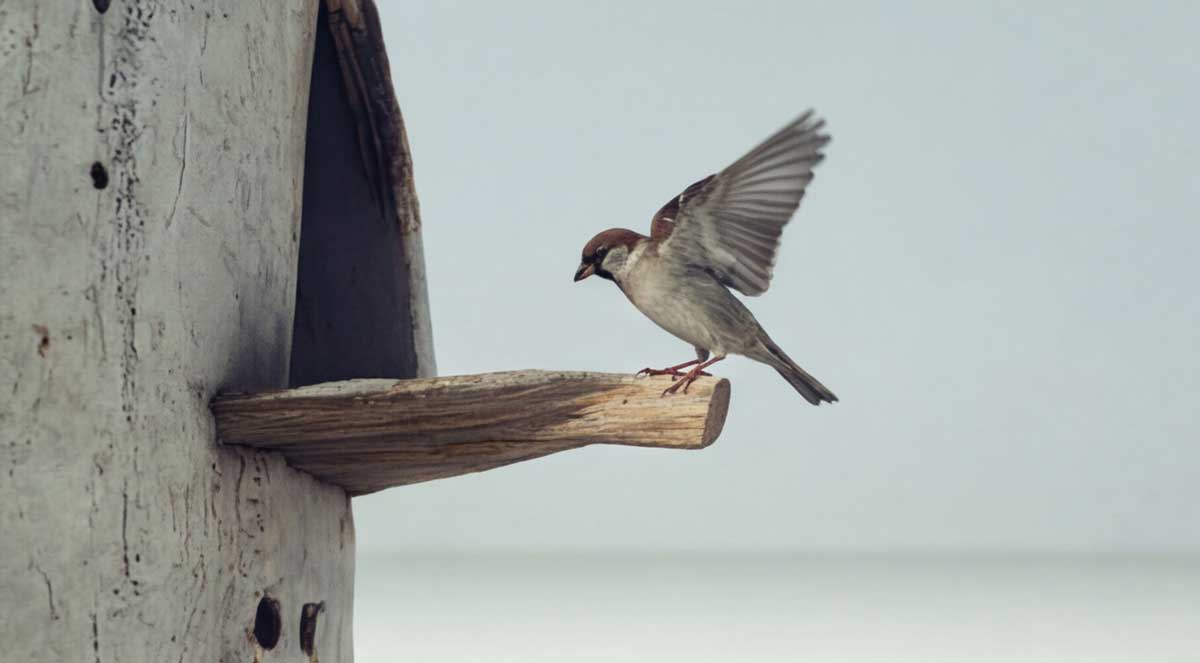
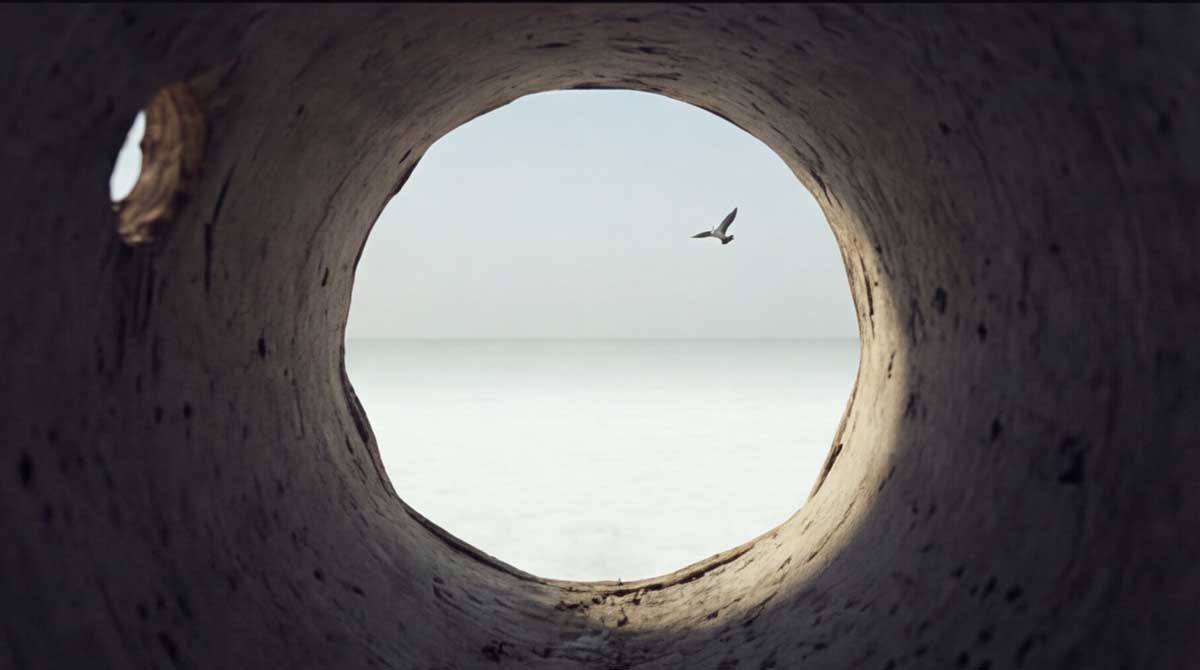
The multiple openings, varied in size and height, are not merely visual devices. They establish an ecological logic, offering different conditions of shelter, exposure, and access for birds. The protruding wooden perches extend the life of the tower beyond its envelope, turning it into a point of rest, observation, and transition between interior refuge and open landscape. In this sense, the project is not a container but a negotiable threshold between stillness and flight.
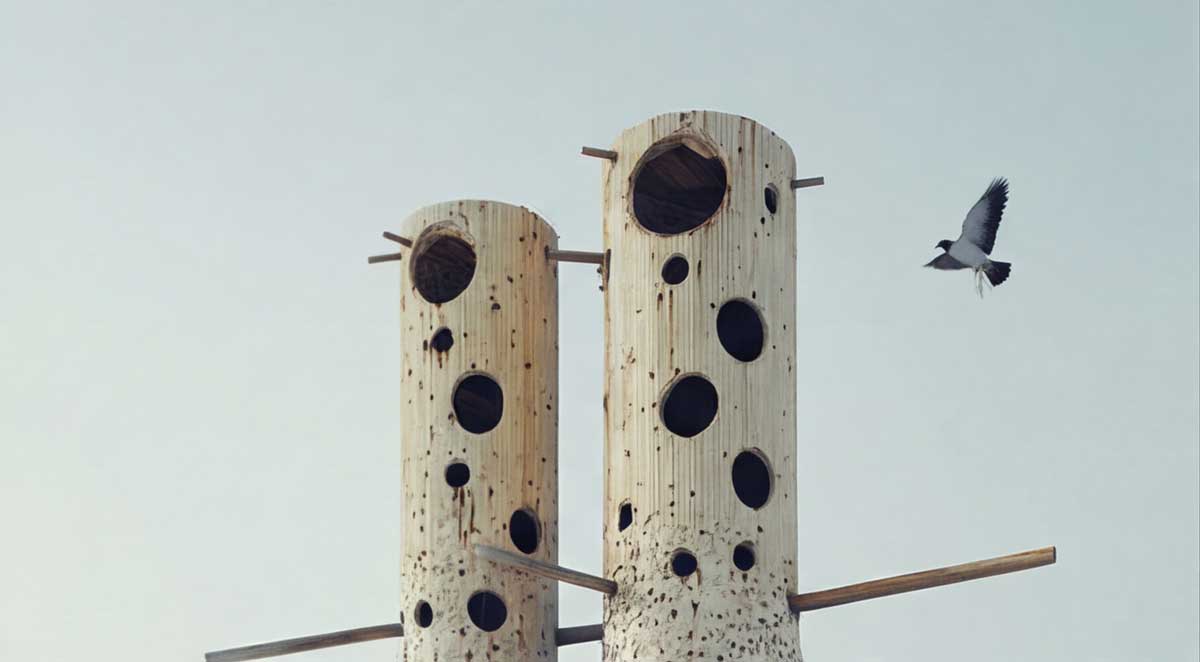
Visually, Nestspire carries the presence of an architectural creature more than that of a utility object. Its elongated proportions, raw textured skin, and dark cavities create an image that feels both fragile and grounded. It is a small project, yet it does not read as minor. On the contrary, it transforms an extremely modest program into a contemplative architectural statement: a bird tower that can also be understood as a gesture of care, and as a form of architecture that steps back from human spectacle in order to support another life.
Within the specific context of Sidi Al-Hamri, the project gains further significance. Nature here is not treated as a picturesque backdrop, but as an active counterpart. The tower’s presence in the forest proposes a small but meaningful model of site-responsive architecture one that understands biodiversity as part of the design process itself, not as an afterthought. Architecture becomes, in this sense, an act of attentiveness: to shadow, to emptiness, to avian movement, and to the slow rhythms that bind living beings to their habitats.
Nestspire does not attempt to become a loud monument. Its strength lies precisely in its restraint. It speaks in a low voice, yet it raises an essential architectural question: what if we designed a small ecological structure with the same seriousness, care, and cultural awareness that we would give to a civic building? That question gives the project its relevance. It offers not just shelter, but an architectural ethic grounded in environmental care.
Ultimately, Nestspire reimagines the bird tower as a contemporary structure positioned between sculpture, habitat, and landscape. It protects life, yet it also composes a calm visual presence within the natural field. Between mass and void, nesting and flight, the project opens a modest but powerful space for thinking about an architecture that is quieter, more sensitive, and closer to life.