


- Location: Tripoli – Libya
- Site Area: 5,300 m2
- Year: 2007
- Built-up area: 6400 m2
- Client: SSFI
- Use: Mixed-use
- Designer:Engel & zimmermann Architects
- Phase:Design
- Role:Coordination between parties as a representative of ECOU
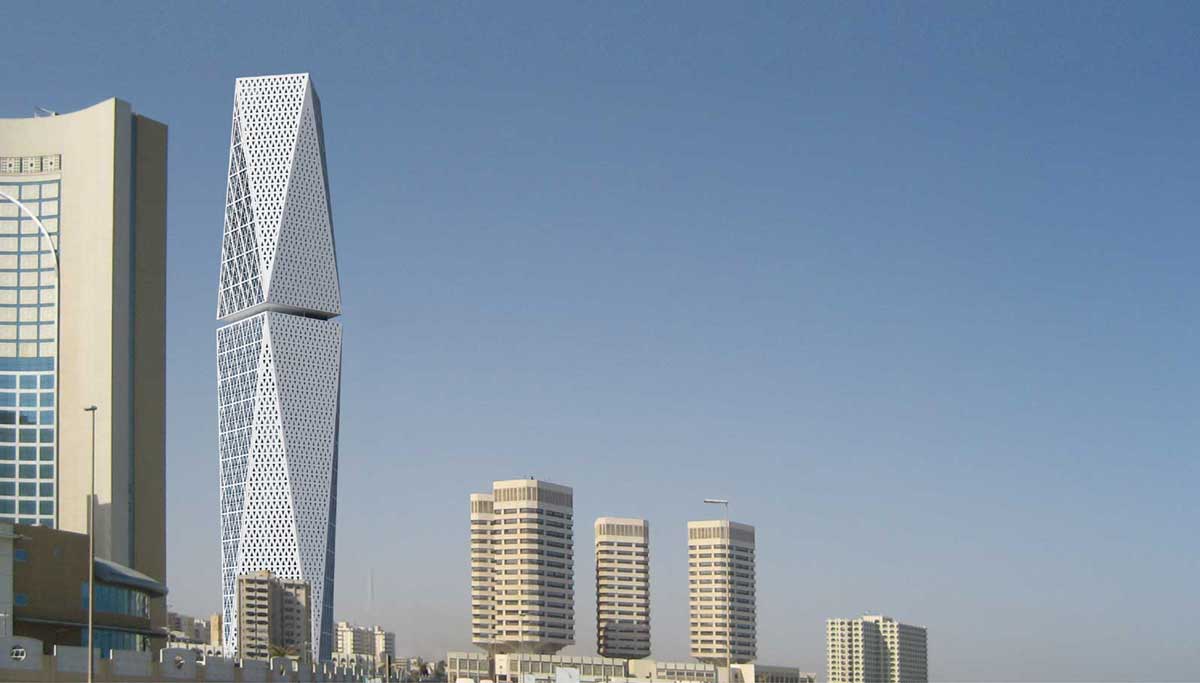
A Modern Landmark in the Heart of Libya's Capital
Location and Context The Tripoli Tower is a striking new addition to the skyline of Tripoli, Libya.
Situated in the bustling commercial district in the heart of the capital, this tower occupies a site area of 5,300 square meters with a total built-up area of approximately 64,000 square meters.
The location is ideal for a project of this magnitude, offering unparalleled views of the city and the Mediterranean Sea.
Concept and Design The Tripoli Tower is designed to maximize the potential of its square site.
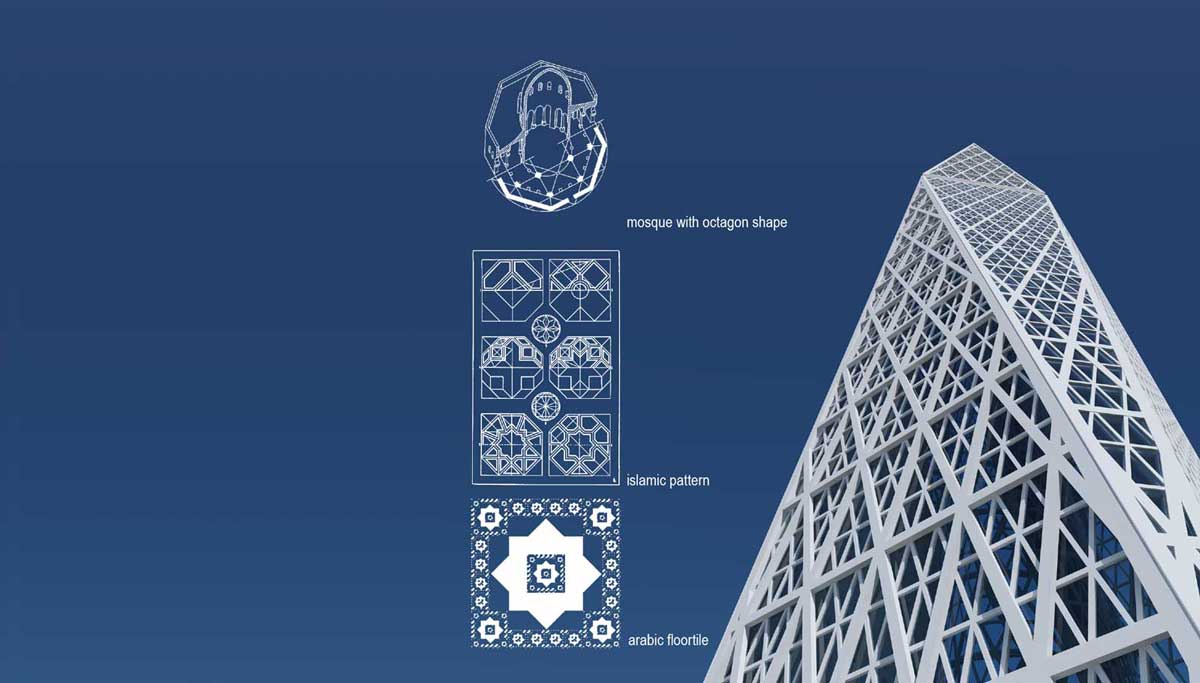
The concept revolves around a dynamic and flexible use of space, blending modern architectural techniques with traditional Arabic motifs.
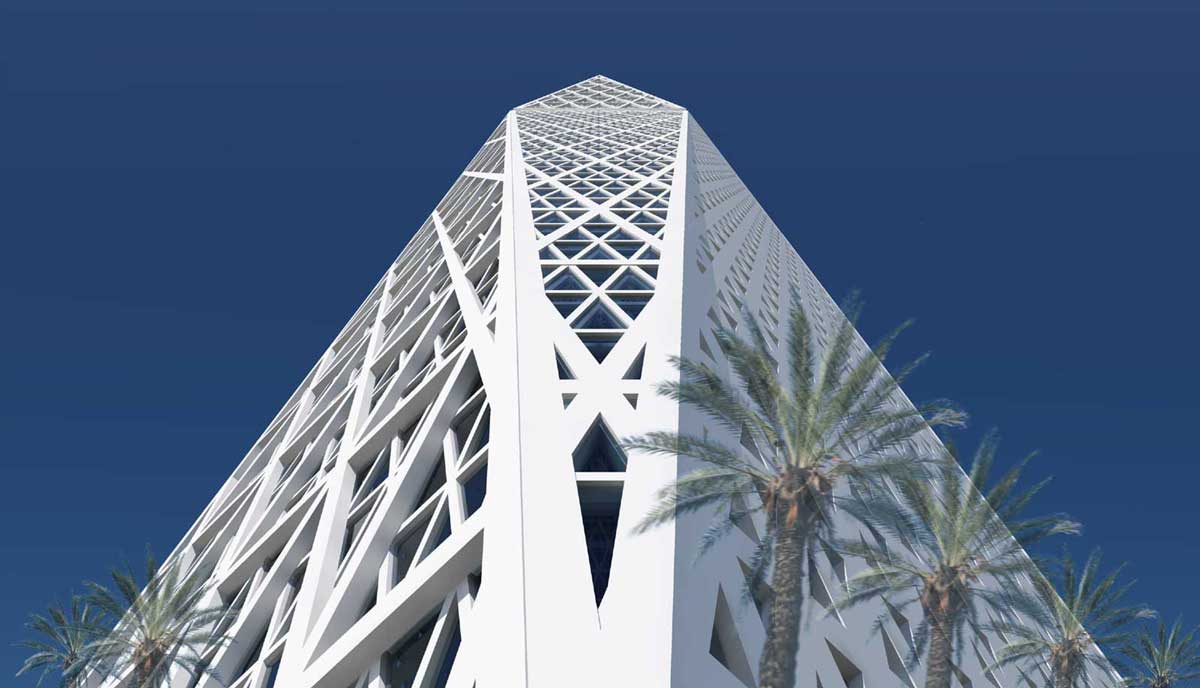
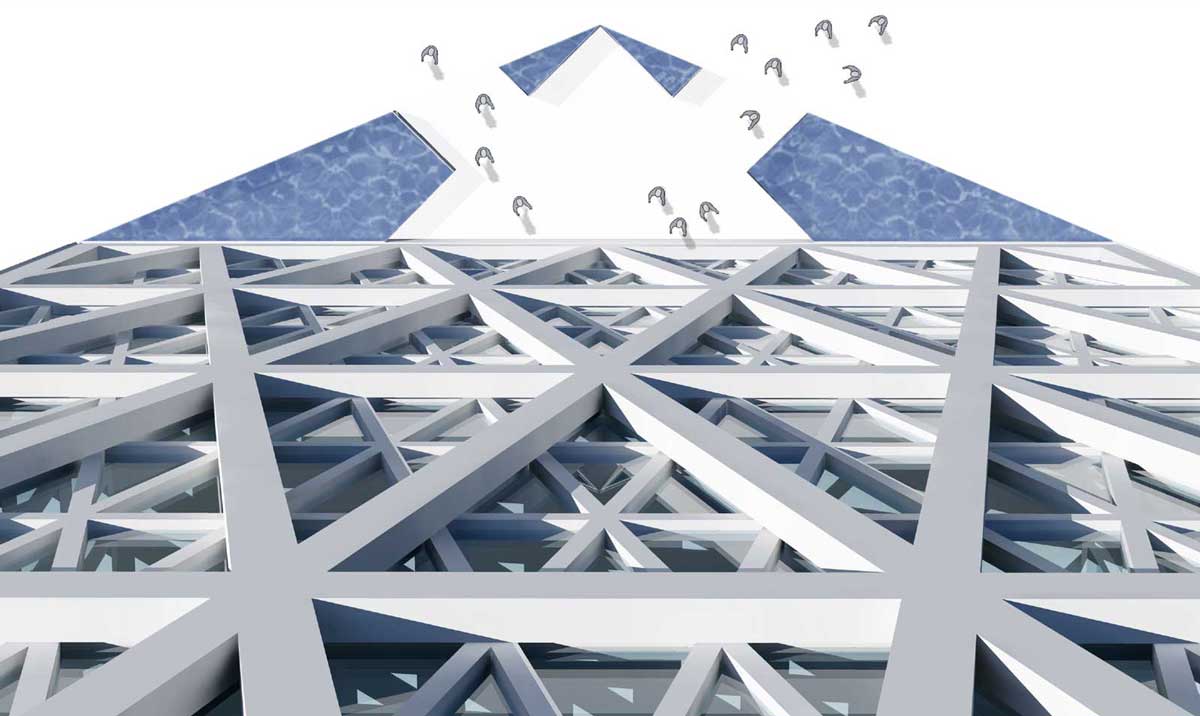
The tower’s structure is characterized by a divided structural shell that not only provides aesthetic appeal but also serves functional purposes.
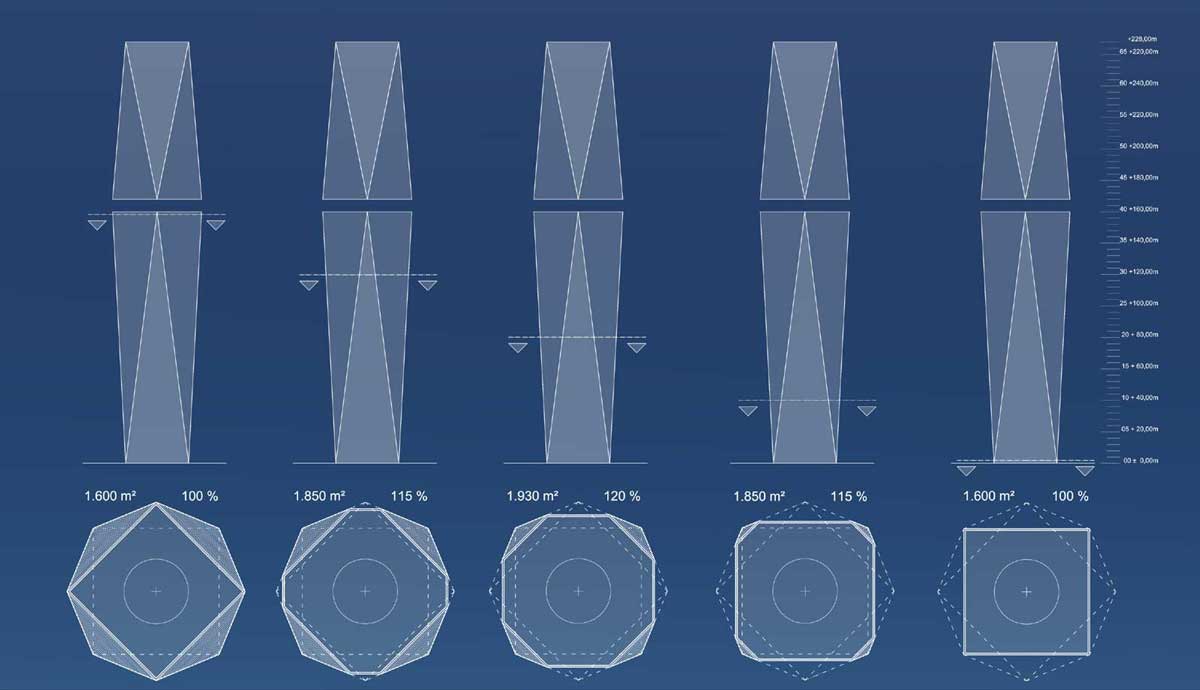
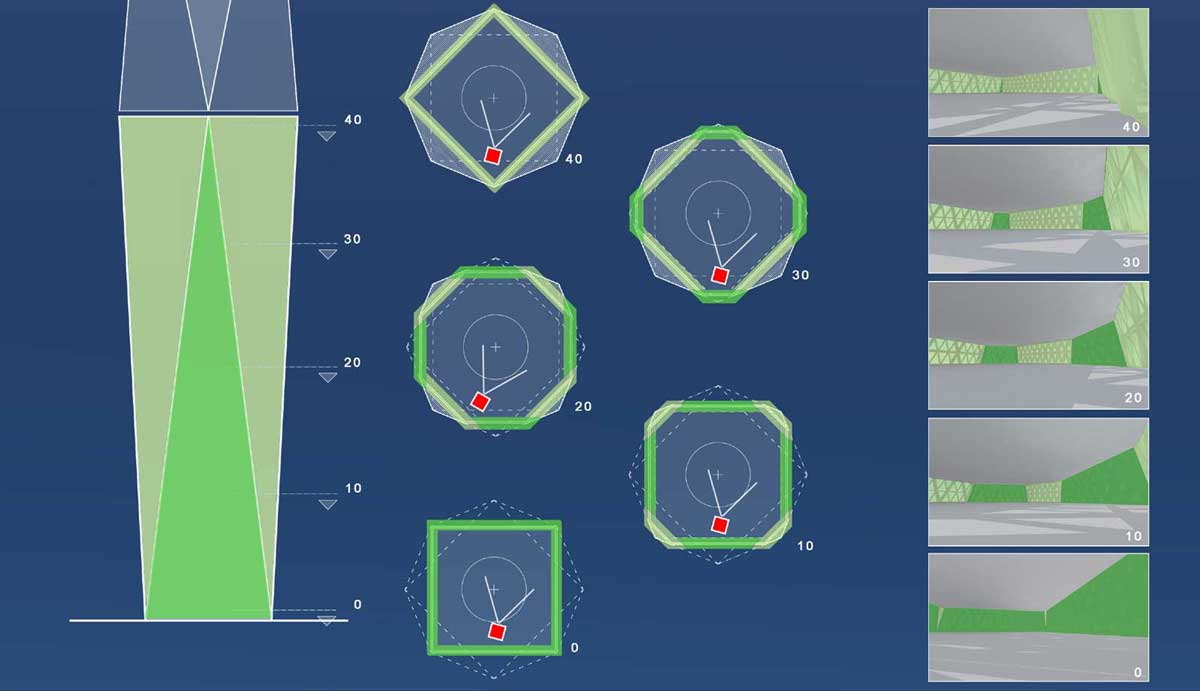
Geometric Transformation and Efficiency The geometry of the tower changes as it ascends, starting from a square base and gradually transforming to form a more intricate structure.
This design incorporates the traditional Arabic octagon symbol, which is evident in the ground plan formation and increases the floor area by up to 20% on higher levels.
This geometric transformation enhances both the structural integrity and the aesthetic complexity of the building.
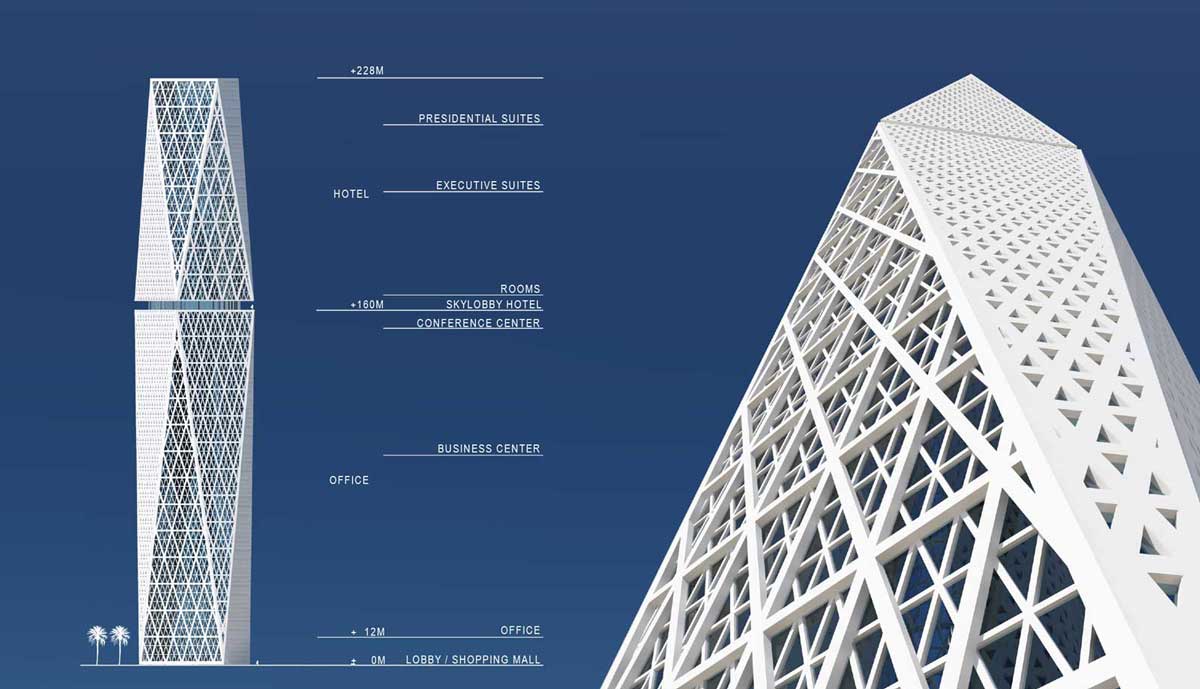
Functional Zoning The tower is functionally divided into several zones:
Lower Levels (0m to +72m):
These floors are designated for office spaces, providing state-of-the-artfacilities for business operations.
Mid Levels (+72m to +160m):
These floors include a business center and a conference center, accommodating large gatherings and corporate events.
Upper Levels (+160m to +228m):
These levels house a five-star hotel with a sky lobby at 160 meters, offering panoramic views over Tripoli and the Mediterranean Sea.
The uppermost floors include executive suites and presidential suites, providing luxurious accommodations for high-profile guests.
Structural Shell and Façade The appearance of the tower within the city silhouette is determined by its unique structural shell, which clearly delineates the building’s functional areas.
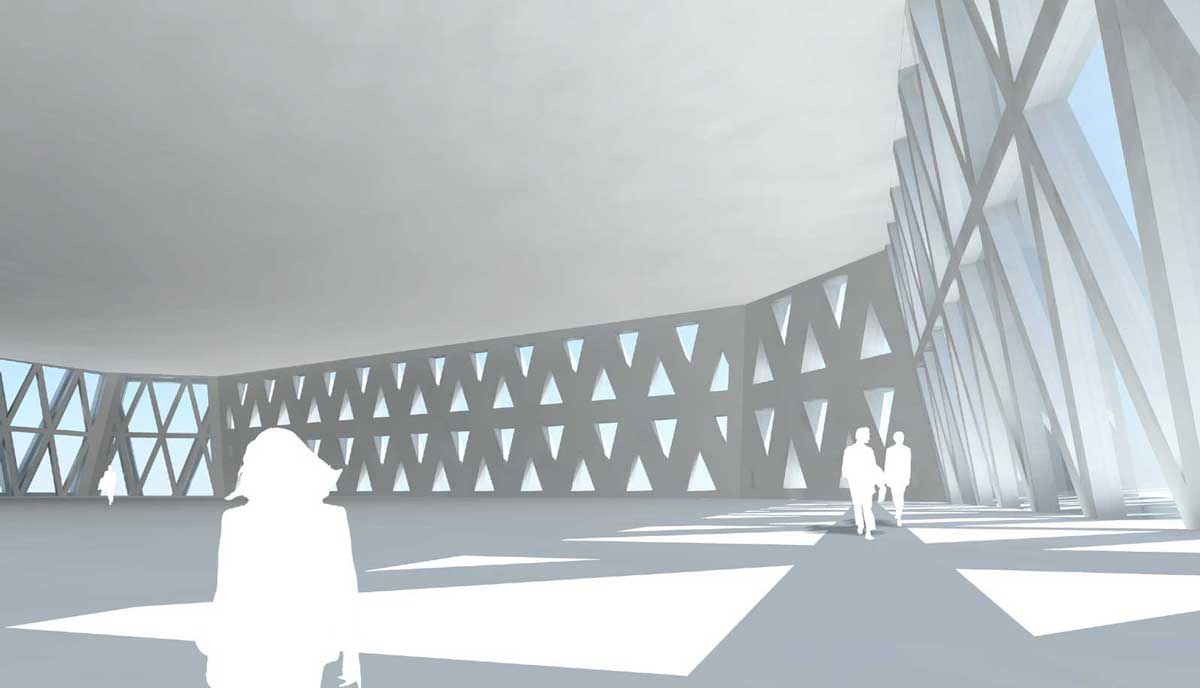
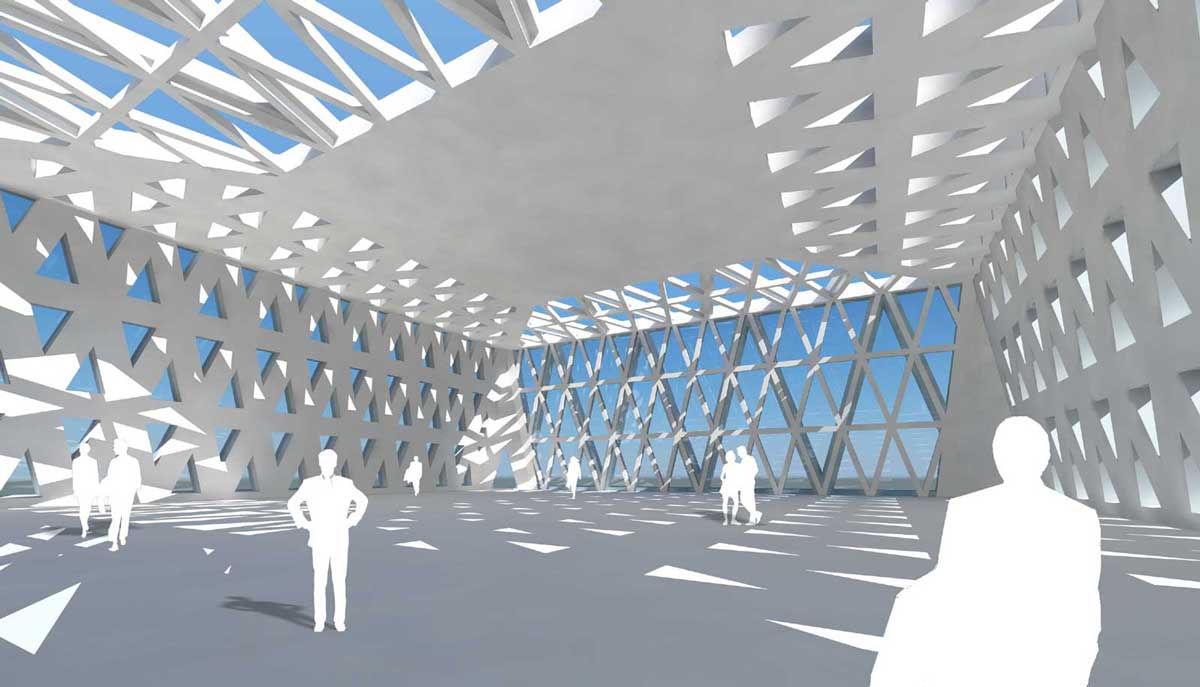
The various angles and depths of the façade openings not only contribute
to the building’s dynamic visual effect but also provide practical benefits such as structural solar protection.
This design principle is inspired by traditional Maghreb architecture, which often features intricate latticework to manage sunlight and temperature.
Security and Safety The design of the Tripoli Tower incorporates the latest security requirements for high-rise buildings.
Solutions have been developed to address a variety of potential danger scenarios, ensuring that the tower meets modern safety standards.
The structural shell not only enhances the building’s aesthetic and functional qualities but also contributes significantly to its overall safety and resilience.
Visual and Cultural Integration The design of the Tripoli Tower integrates elements of Islamic art and architecture, such as traditional patterns and motifs.
These cultural references are seamlessly blended with modern architectural practices, creating a building that is both contemporary and deeply rooted in its cultural context.
The use of Arabic floor tiles and other decorative elements highlights the rich heritage of the region while emphasizing the tower’s modernity.
Conclusion The Tripoli Tower stands as a testament to innovative architectural design and cultural integration.
By combining modern engineering techniques with traditional Arabic aesthetics, the tower not only enhances the skyline of Tripoli but also serves as a symbol of progress and heritage.
This project exemplifies how contemporary architecture can respect and incorporate cultural history while meeting the demands of modern functionality and safety.
*In this project, my role was to coordinate between the designer) Engel und zimmermann Architects( , the engineering consultancy office (ECOU), and the owner.
This involved ensuring effective communication among all parties, aligning the design vision with engineering standards, and meeting the owner's specific requirements.
Through this coordination, a perfect balance was achieved between architectural innovation and practical implementation, resulting in a successful project that met all stakeholders' expectations.