


- Location: Benghazi – Libya
- Year: 2018
- Client:
- Designer: MUFTAH Design
- Site Area: 3,824 m2
- Built-up area: 10,805 m2
- Use:
- Phase: Design
- Role: Project Architect
North Benghazi Courthouse: A Modern Judicial Landmark
Introduction
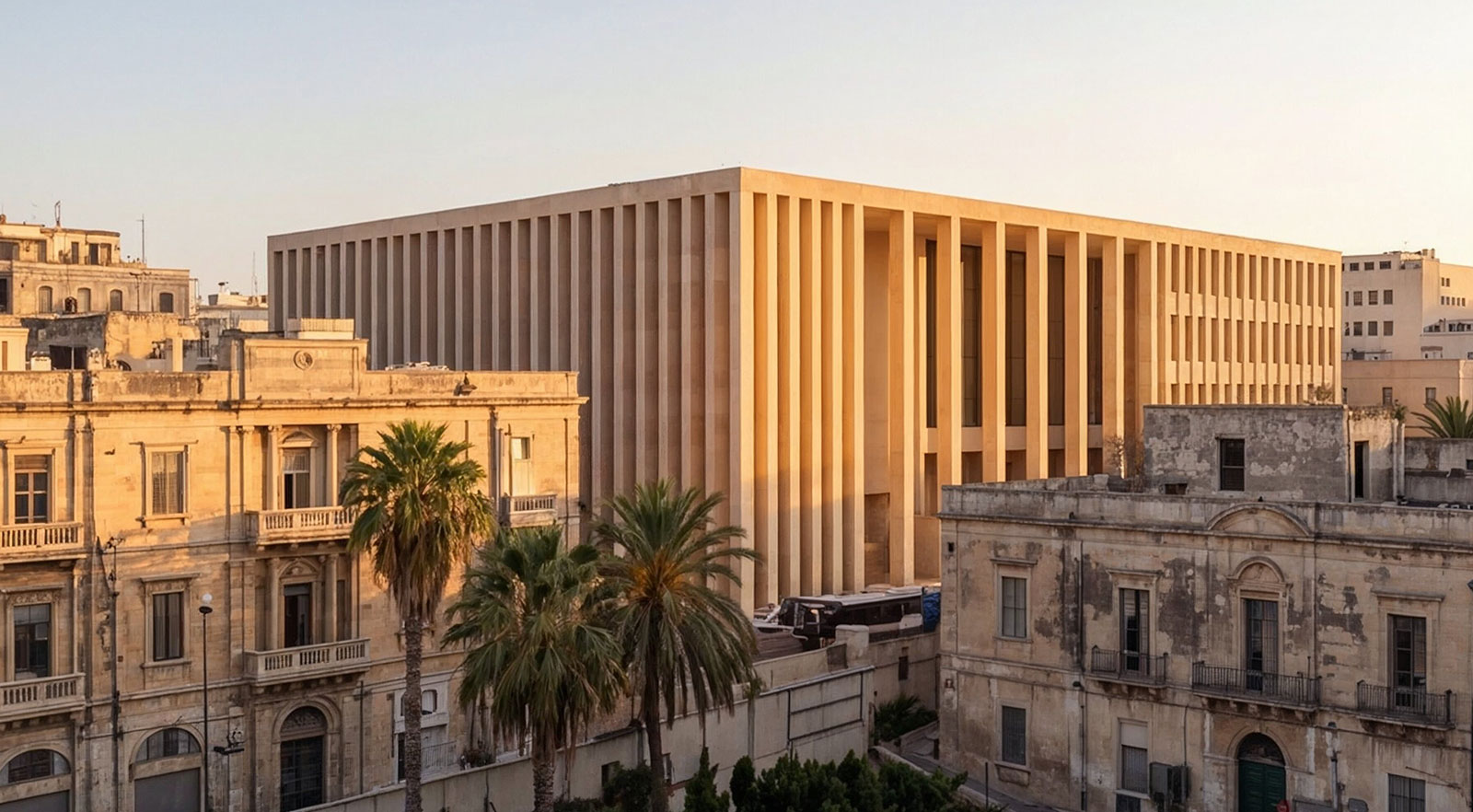
The North Benghazi Courthouse is a pioneering architectural project designed to embody the principles of justice, transparency, and functionality. Situated in the heart of Benghazi, this courthouse represents Libya's aspirations for a modern and efficient judiciary system. With a design rooted in international standards, the project prioritizes accessibility, security, and adaptability while maintaining a strong connection to the urban fabric of the city.
Location and Urban Context
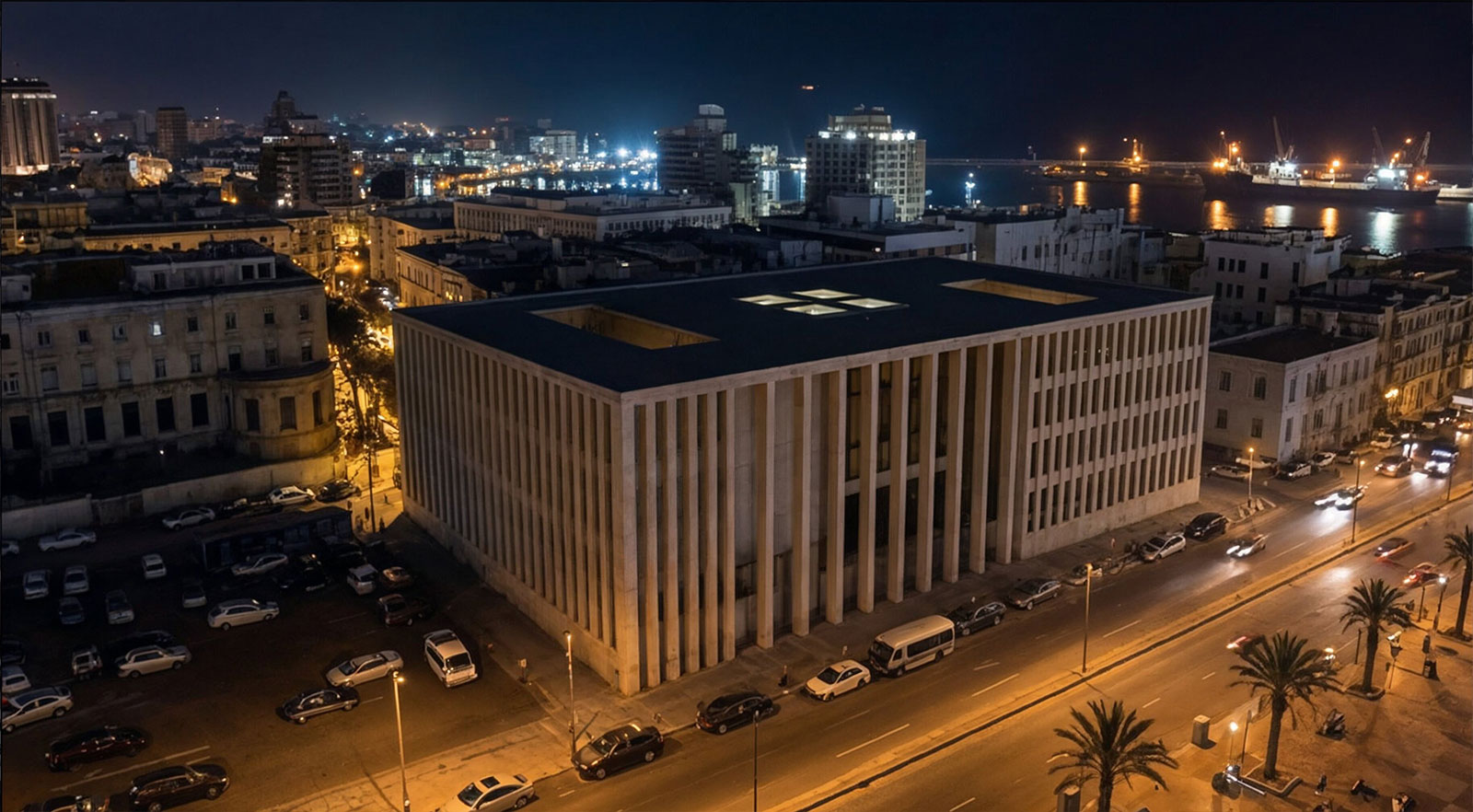
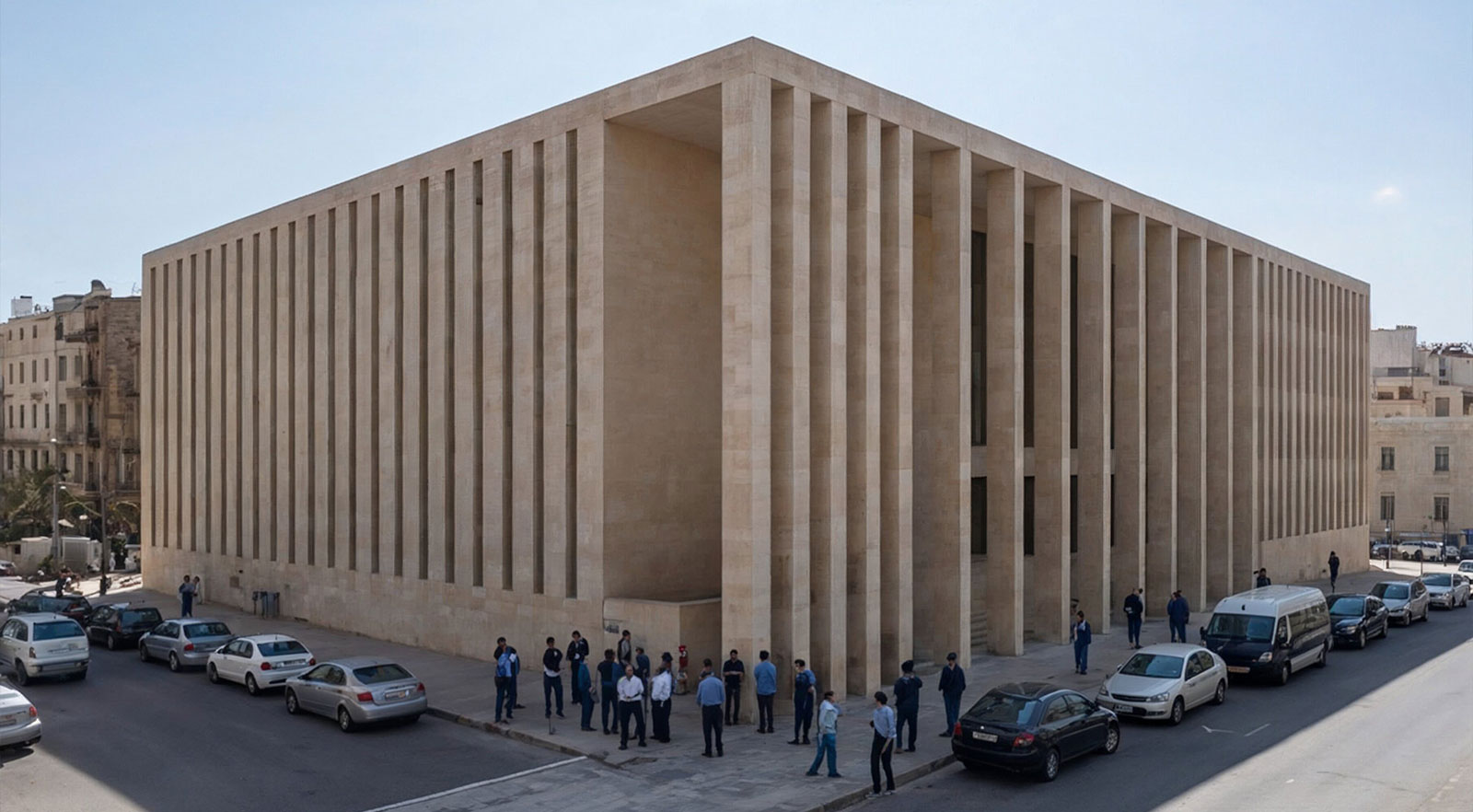
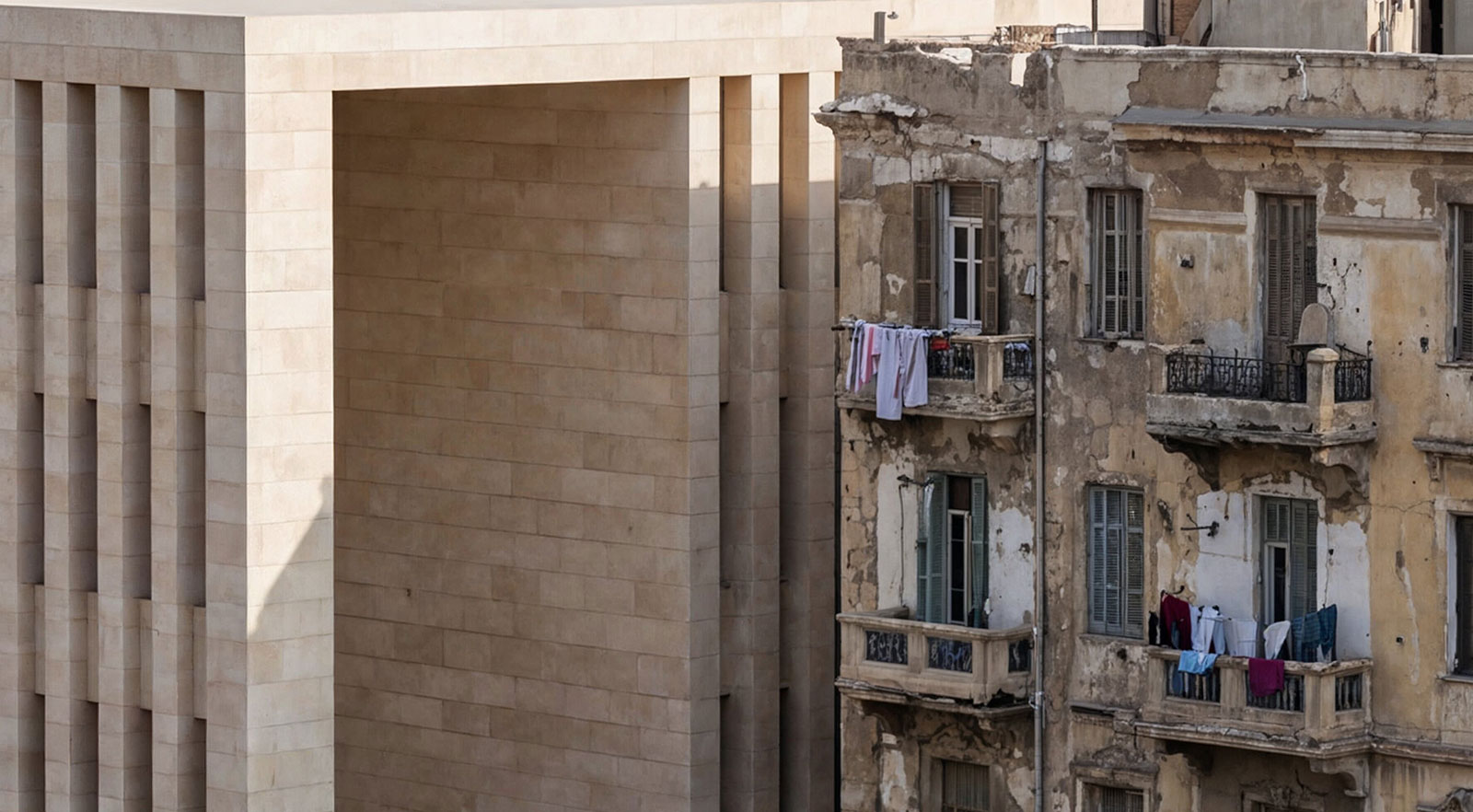
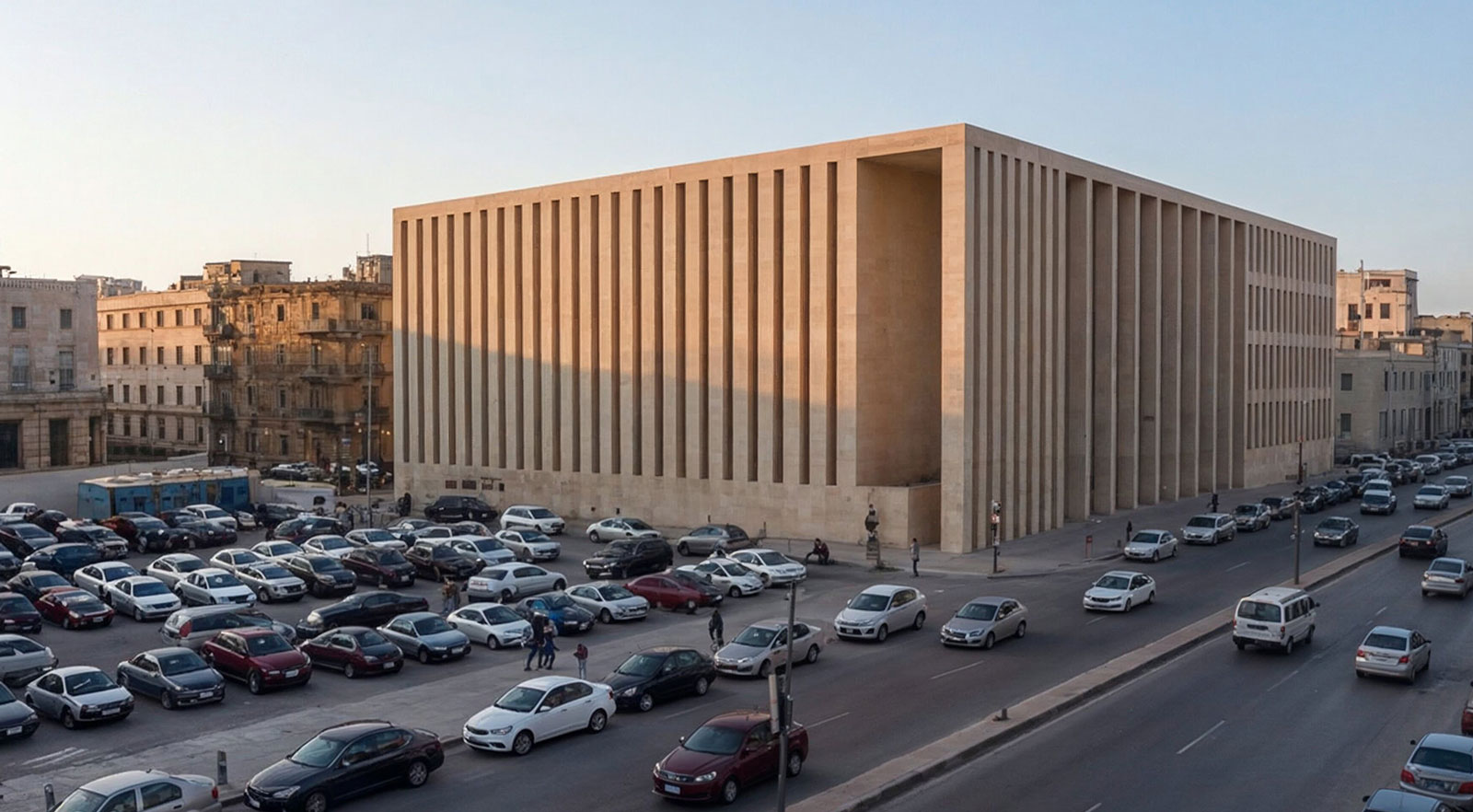
Positioned in Benghazi's urban core, the courthouse occupies a site of 3,824 square meters with a total built-up area of 10,805 square meters. Surrounded by a mix of historical and contemporary structures, the courthouse bridges Benghazi's rich architectural heritage and its modern urban ambitions. The strategic location ensures connectivity to key public institutions, promoting ease of access for citizens, legal professionals, and staff.
Architectural Concept
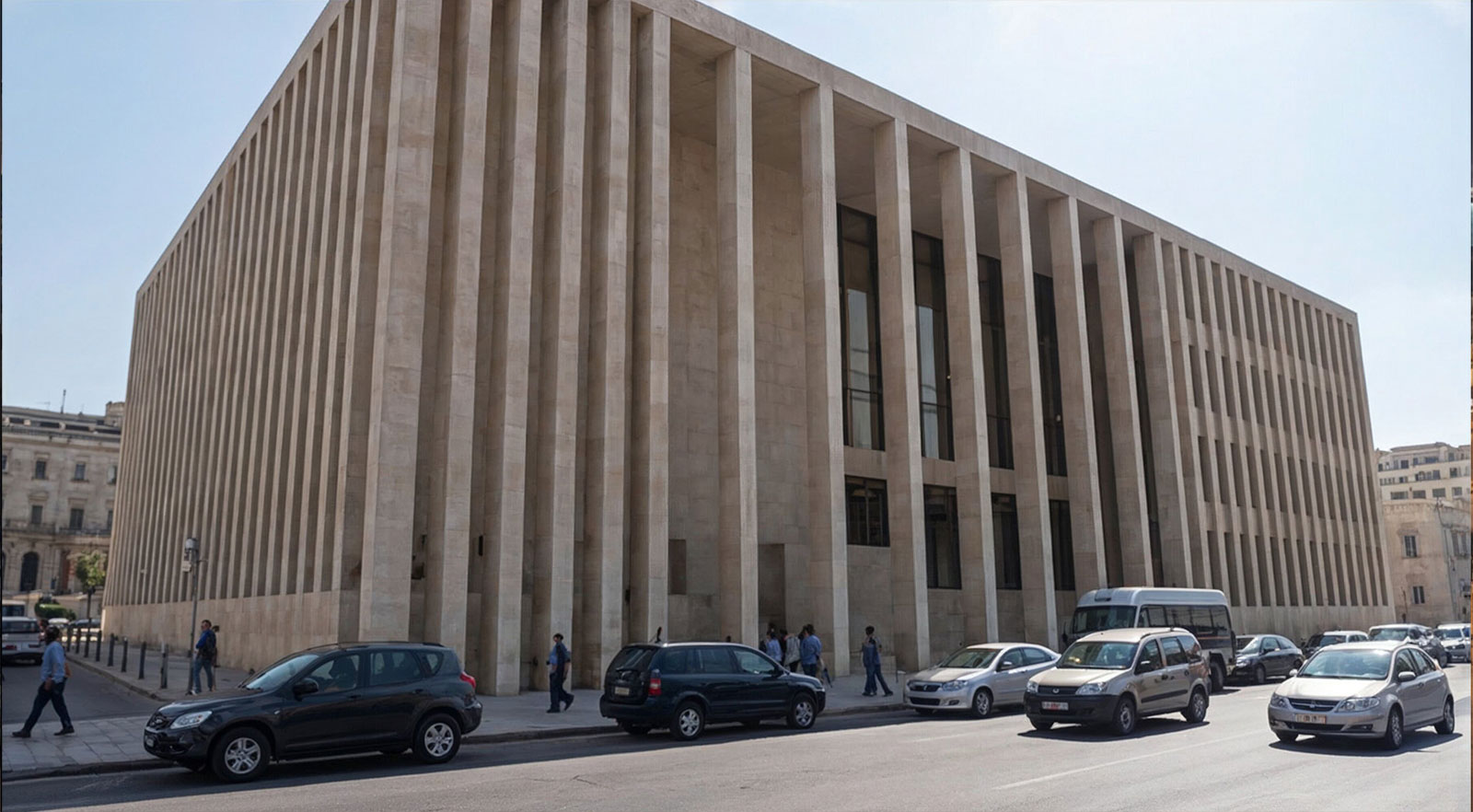
The design philosophy of the courthouse emphasizes clarity, neutrality, and openness. The building’s form is defined by its compact and efficient volume, reflecting a commitment to energy efficiency and spatial rationality. The courthouse integrates:
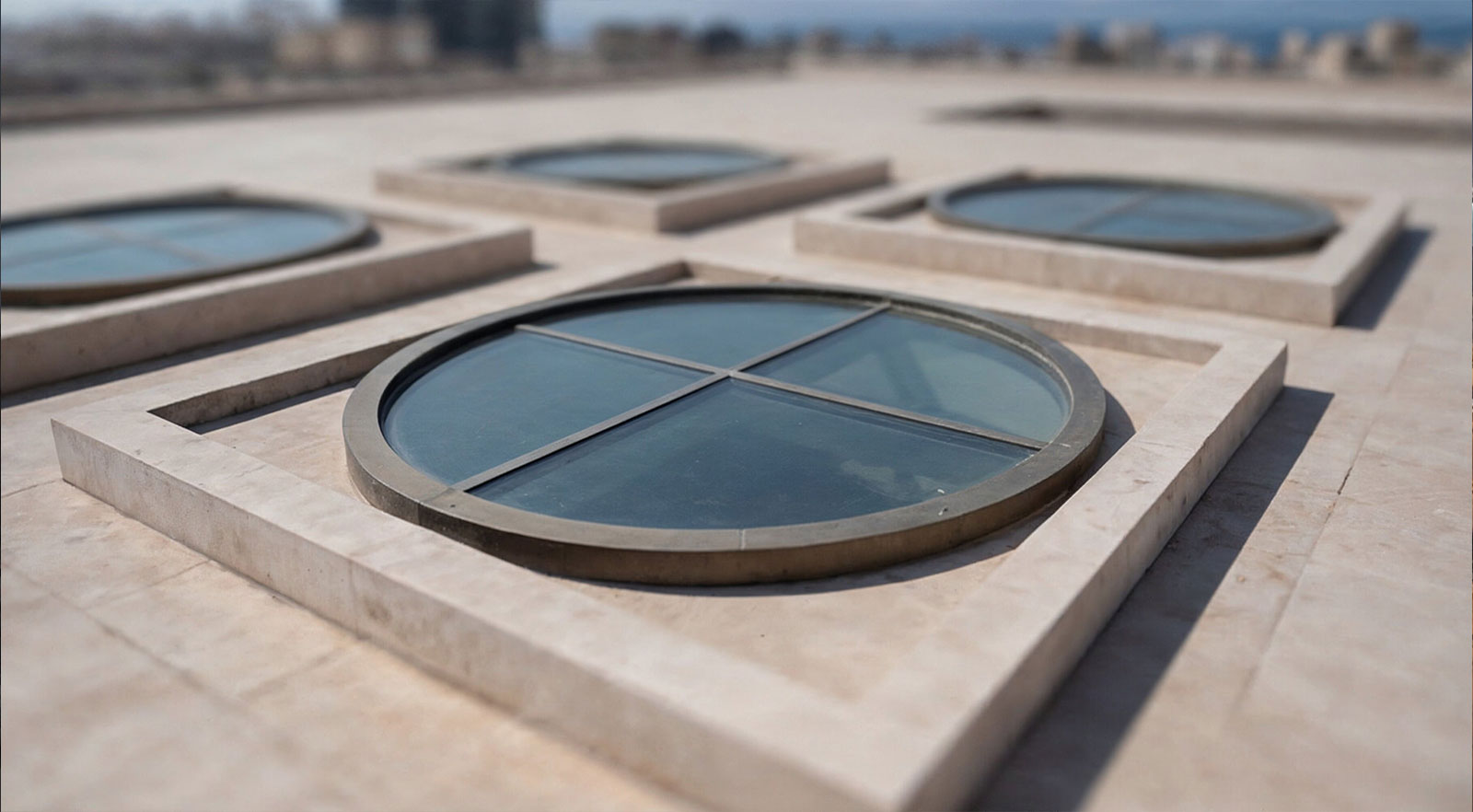
Transparency in Design: Extensive use of natural light and open public areas symbolizes the judiciary's accountability and openness.
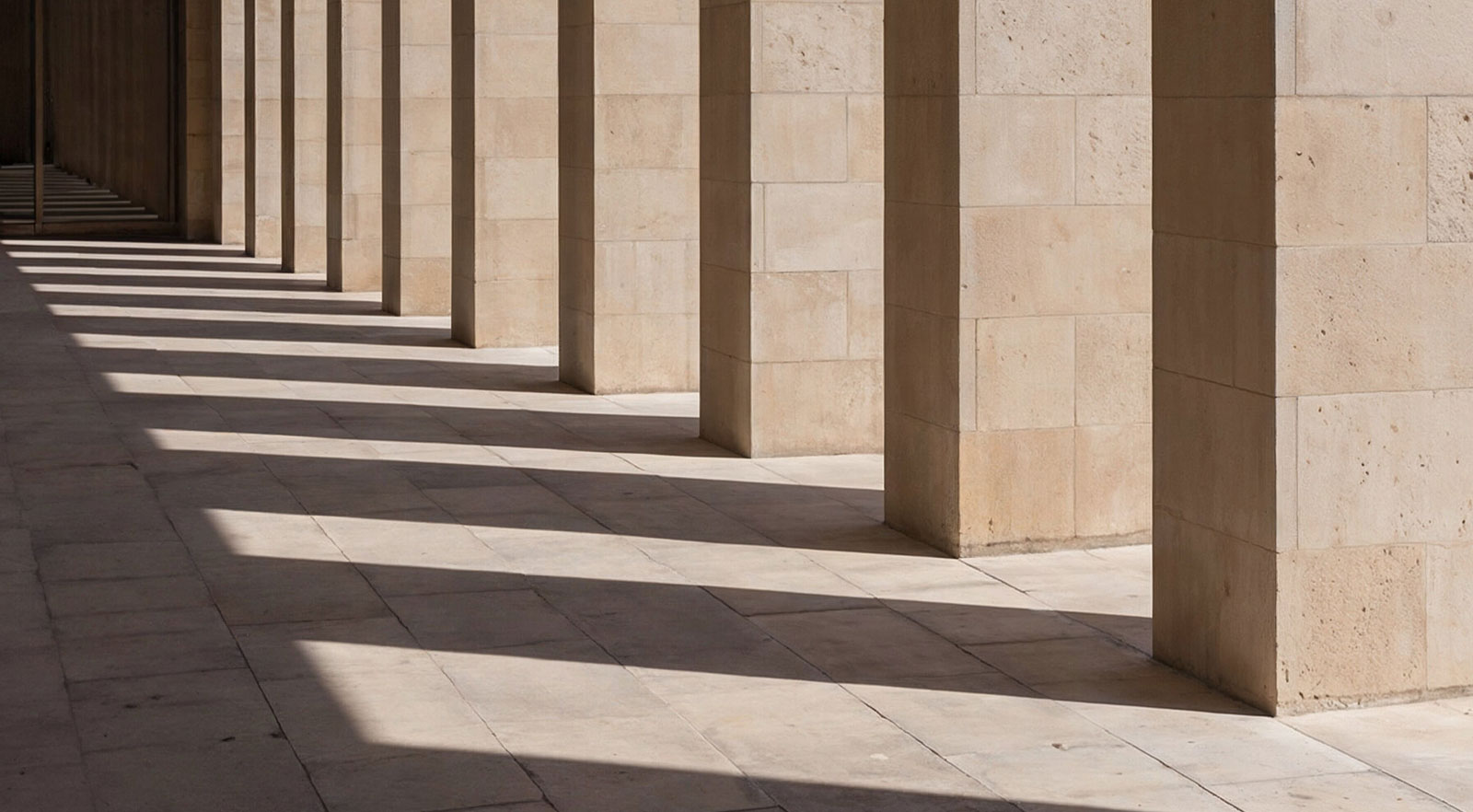
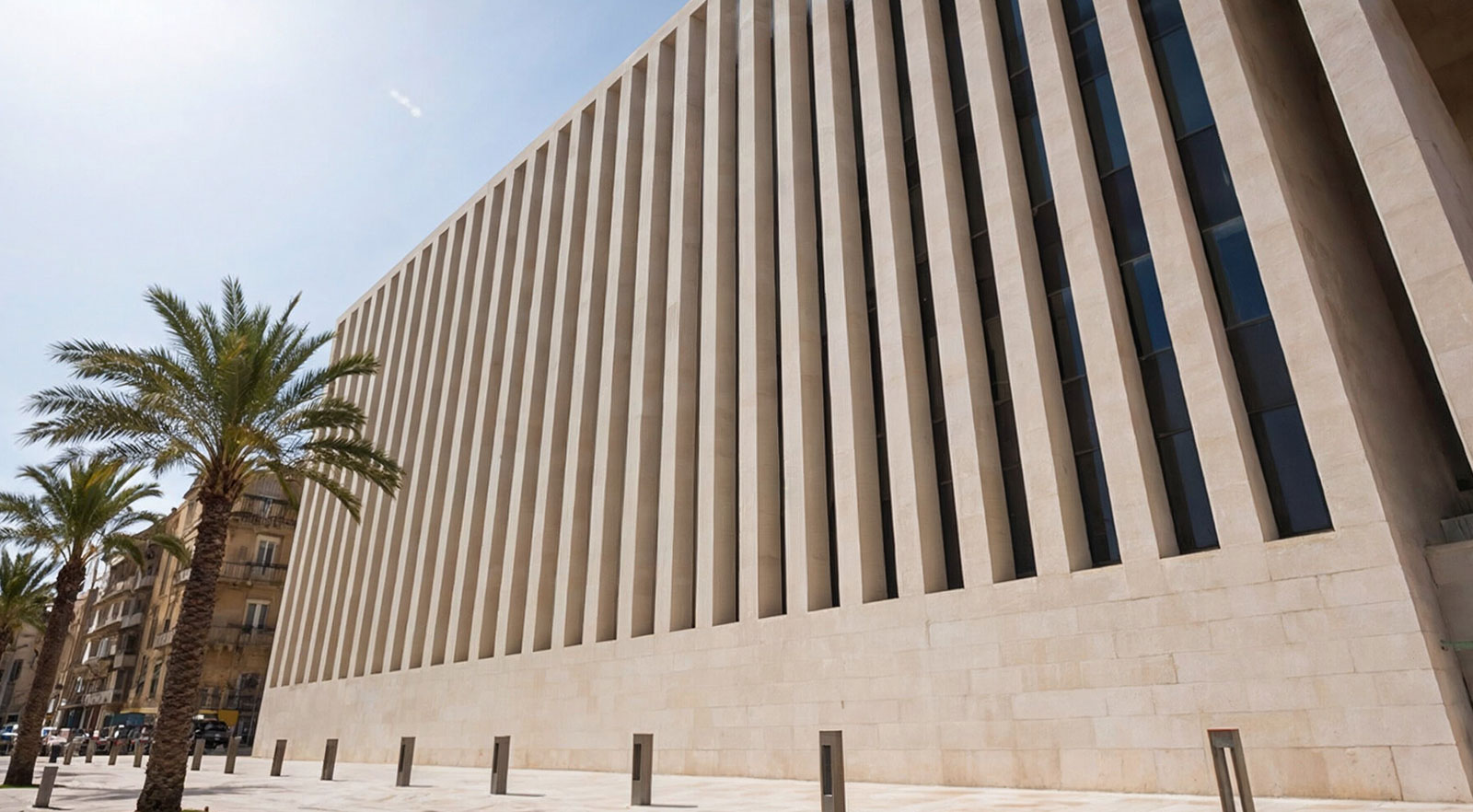
Neutrality in Aesthetics: The restrained façade and balanced proportions convey the institution's authority while maintaining a welcoming character.
Spatial Hierarchy: The courthouse is organized into distinct zones—public, private, and service areas—ensuring seamless operations and security.

Functional Zoning and Circulation
The internal organization is structured around the principles of functionality and separation of flows:
Public Zone: Includes the main entrance, public waiting areas, and general service counters. This area is designed for accessibility and comfort, ensuring a welcoming experience for visitors.
Private Zone: Dedicated to judges, administrative staff, and legal professionals. This area ensures confidentiality and efficiency in judicial operations.
Trial Zone: Centrally located courtrooms with controlled access for judges, lawyers, defendants, and witnesses. This zone is meticulously designed to prevent unintended interactions between different user groups.
Service Zone: Includes archives, detention facilities, and technical spaces. Located in the lower levels, this area ensures smooth logistical operations.

Design Features
Main Lobby and Circulation:
- A spacious and naturally lit central lobby serves as the courthouse's heart, guiding visitors to various areas with intuitive wayfinding elements.
- Clear distinctions between public, private, and trial zones enhance operational efficiency and security.
Courtrooms:
- Positioned for optimal natural light and acoustic control.
- Flexible layouts accommodate different case types, from civil disputes to criminal trials.
- Separate access routes for defendants, ensuring secure and discreet transfers.
Sustainability:
- Incorporation of natural ventilation and daylighting reduces energy consumption.
- Use of local materials aligns the building with environmental and cultural contexts.
Flexibility and Expansion:
- Modular design enables future growth, allowing for additional courtrooms or administrative spaces without disrupting existing operations.

Connection to the Urban Fabric
The courthouse engages with its surroundings through:
- Public Squares: Adjacent open spaces create areas for public gatherings and reinforce the building's civic presence.
- Integrated Access: Well-planned pedestrian and vehicular access ensure smooth traffic flow, with designated parking for staff and visitors.
Symbolism and Authority
Architecturally, the courthouse communicates the gravitas of justice:
- Authority: Its clean, modern lines and robust materials symbolize strength and impartiality.
- Community: Public-facing elements, such as the lobby and gathering spaces, emphasize the judiciary's role as a service-oriented institution.
Conclusion
The North Benghazi Courthouse sets a benchmark for judicial architecture in Libya, blending functionality, symbolism, and urban integration. It reflects the ideals of justice and accessibility while meeting the demands of a modern legal system. As a pivotal element of Benghazi’s civic infrastructure, the courthouse stands as a testament to Libya’s commitment to governance and progress.