


- Location: Tobruk– Libya
- Year: 2013 / Completion
- Client: Libyan Central Bank
- Designer: +381 / Libya Design
- Site Area: 40,000 m2
- Built-up area: 7,740 m2
- Use: Bank
- Phase: Design
- Role: Project Architect
The Central Bank of Libya in Tobruk: A Modern Symbol of Stability and Growth
Project Overview
The Central Bank of Libya (CBL) in Tobruk represents a fusion of functional architecture and symbolic expression, designed to embody the core principles of security, transparency, and flexibility. Positioned in the emerging business hub of Tobruk, the project addresses the immediate operational needs of a central financial institution while accommodating future growth and urban integration.
Architectural Concept and Spatial Organization
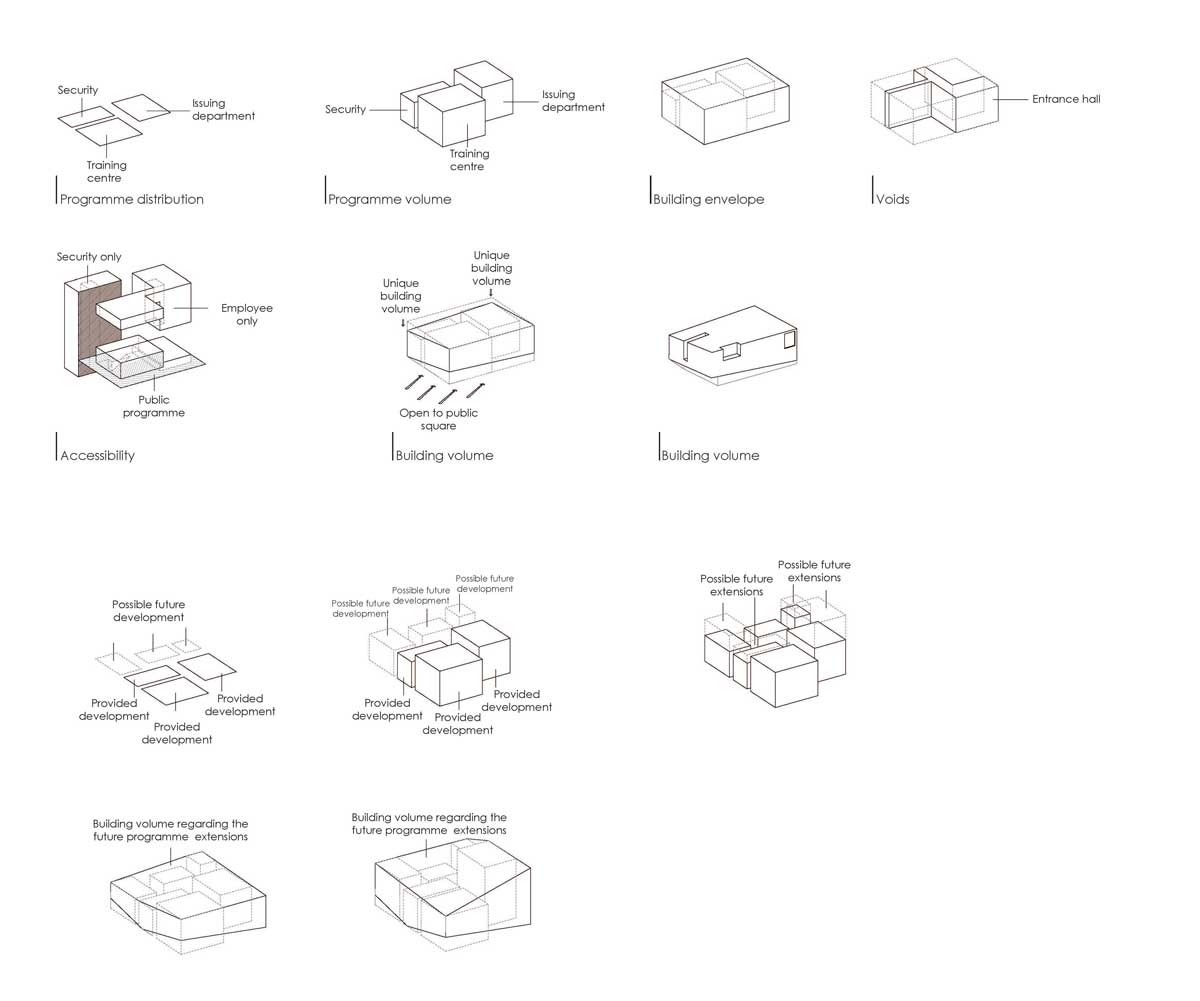
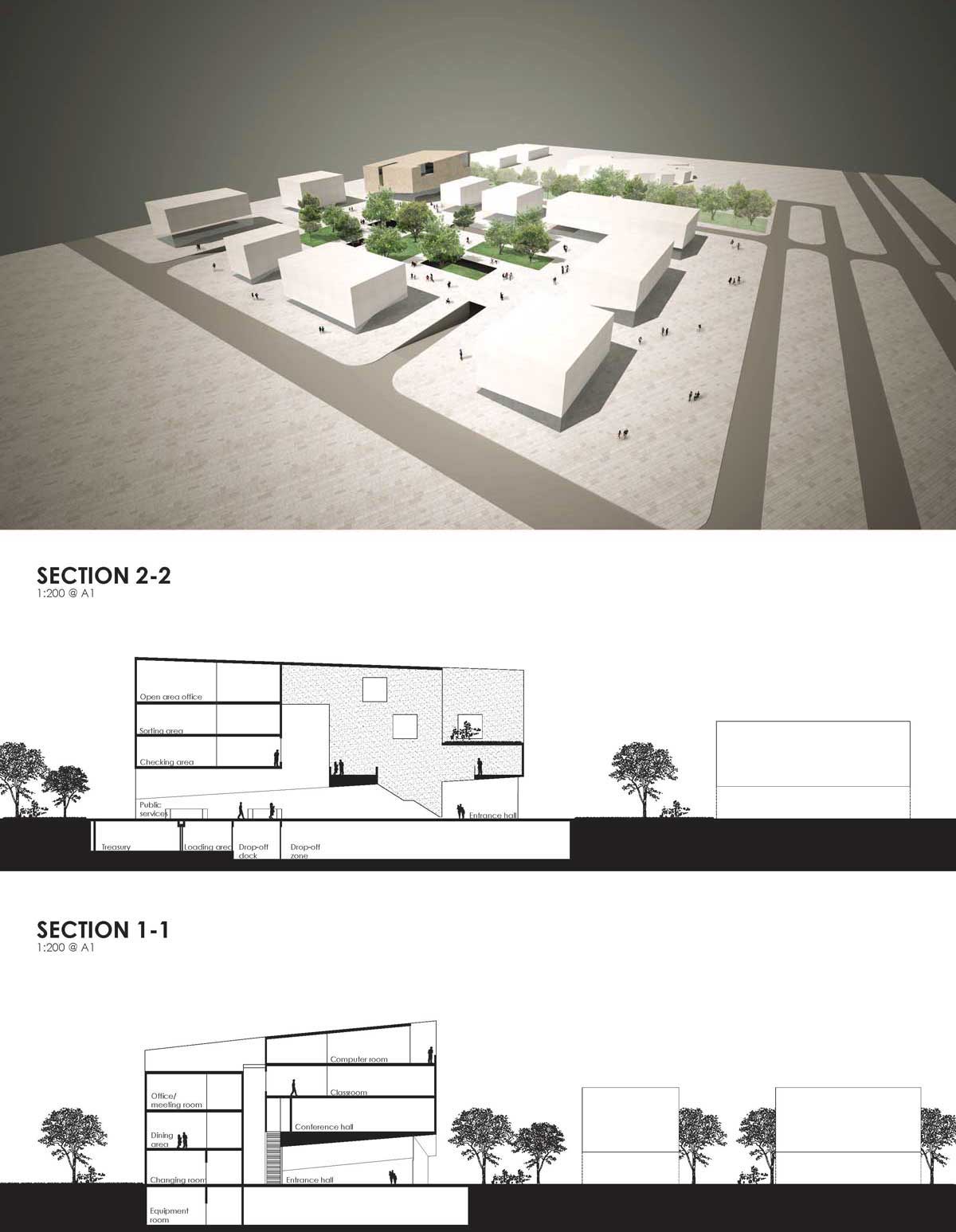
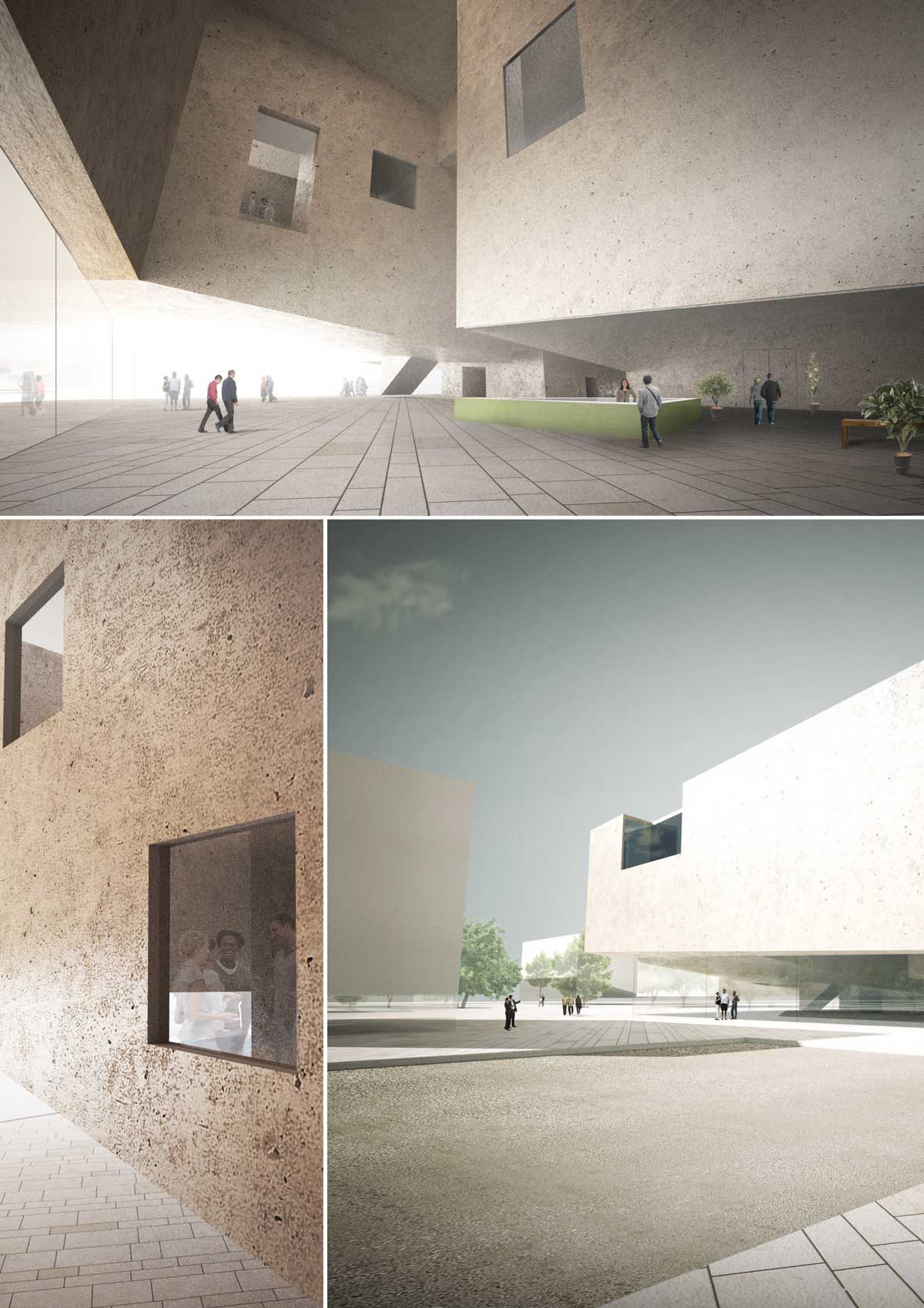
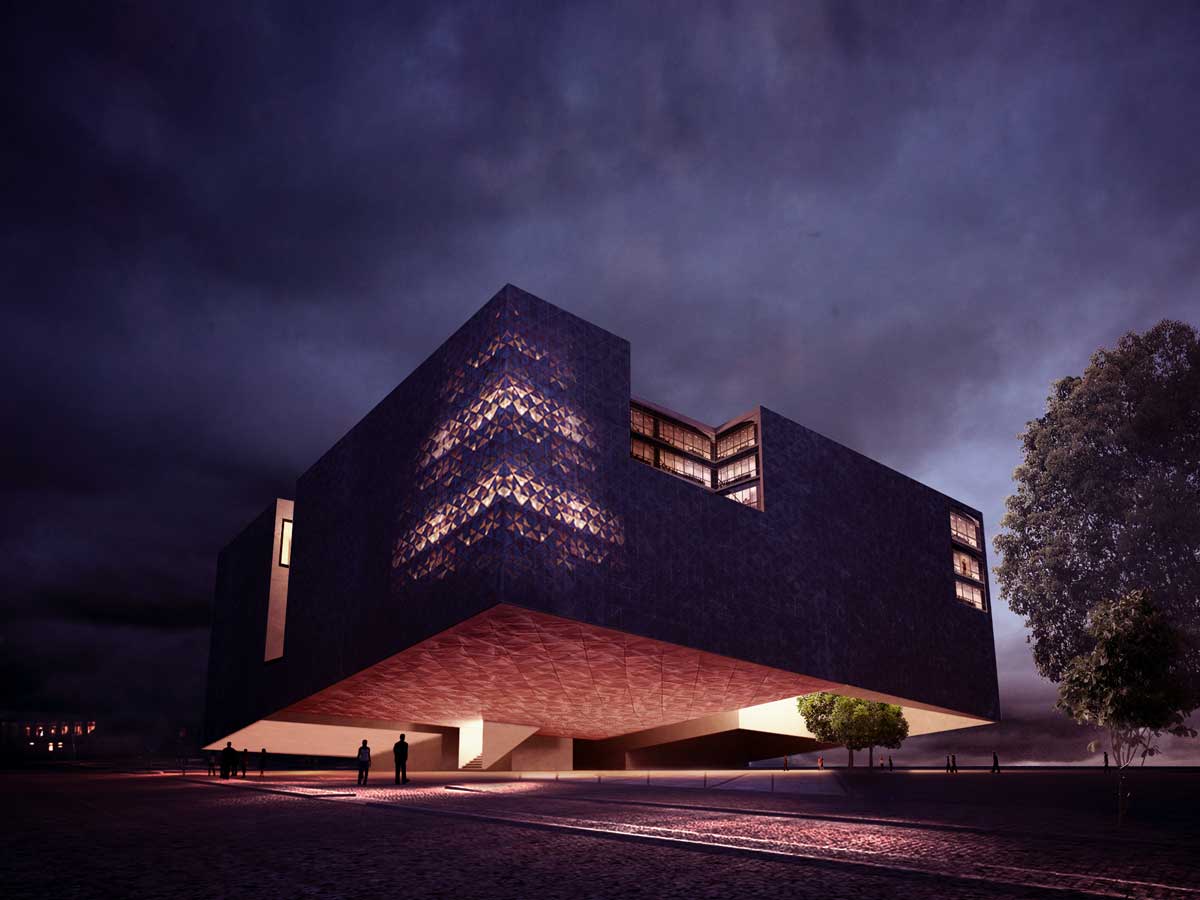
The bank’s architectural design revolves around three interconnected volumes: the Issuing Department, the Security Department, and the Training Center. These elements function as independent entities while collectively forming a unified architectural expression. This modular arrangement ensures operational efficiency, clear spatial hierarchy, and the adaptability to meet future demands.
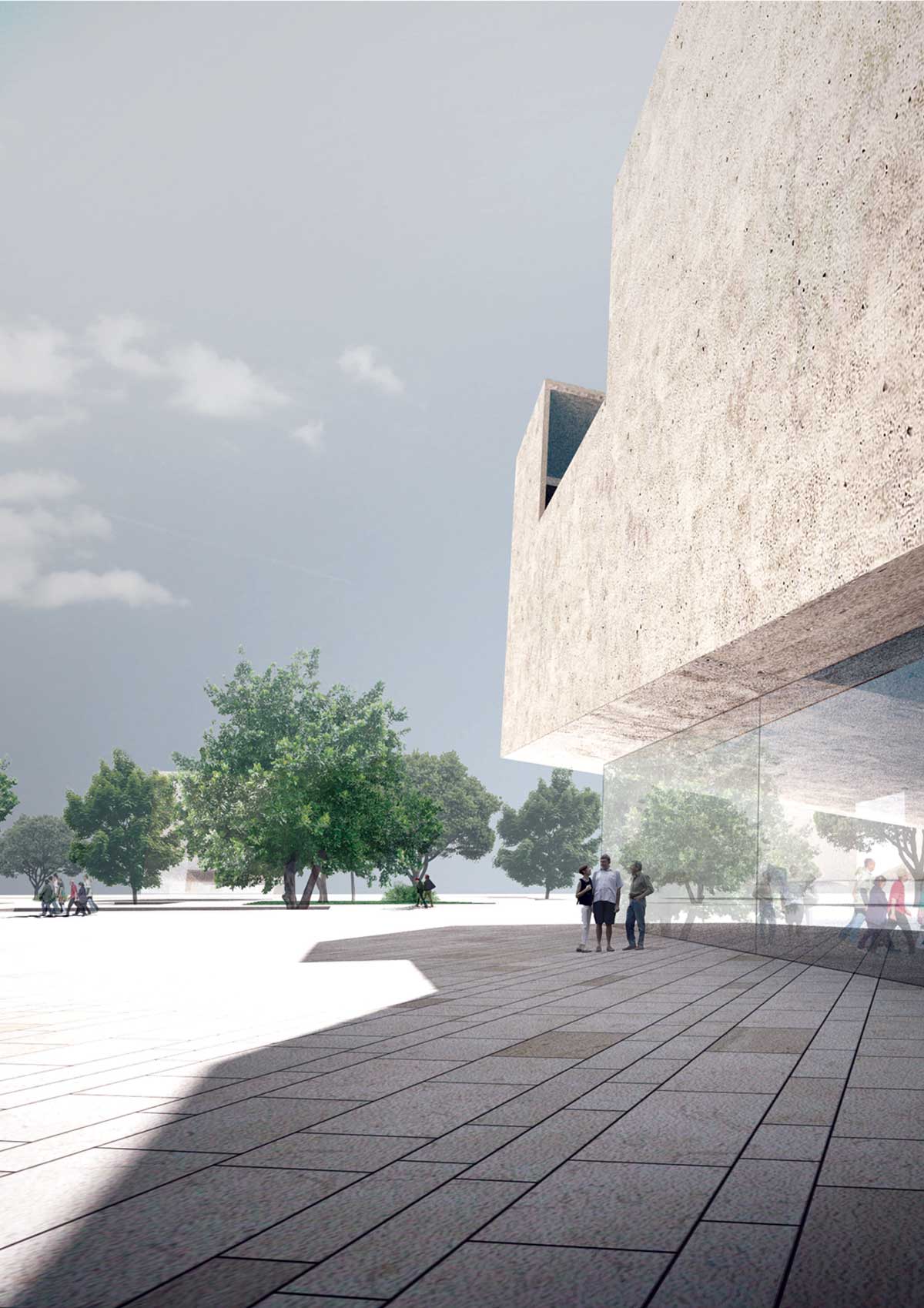
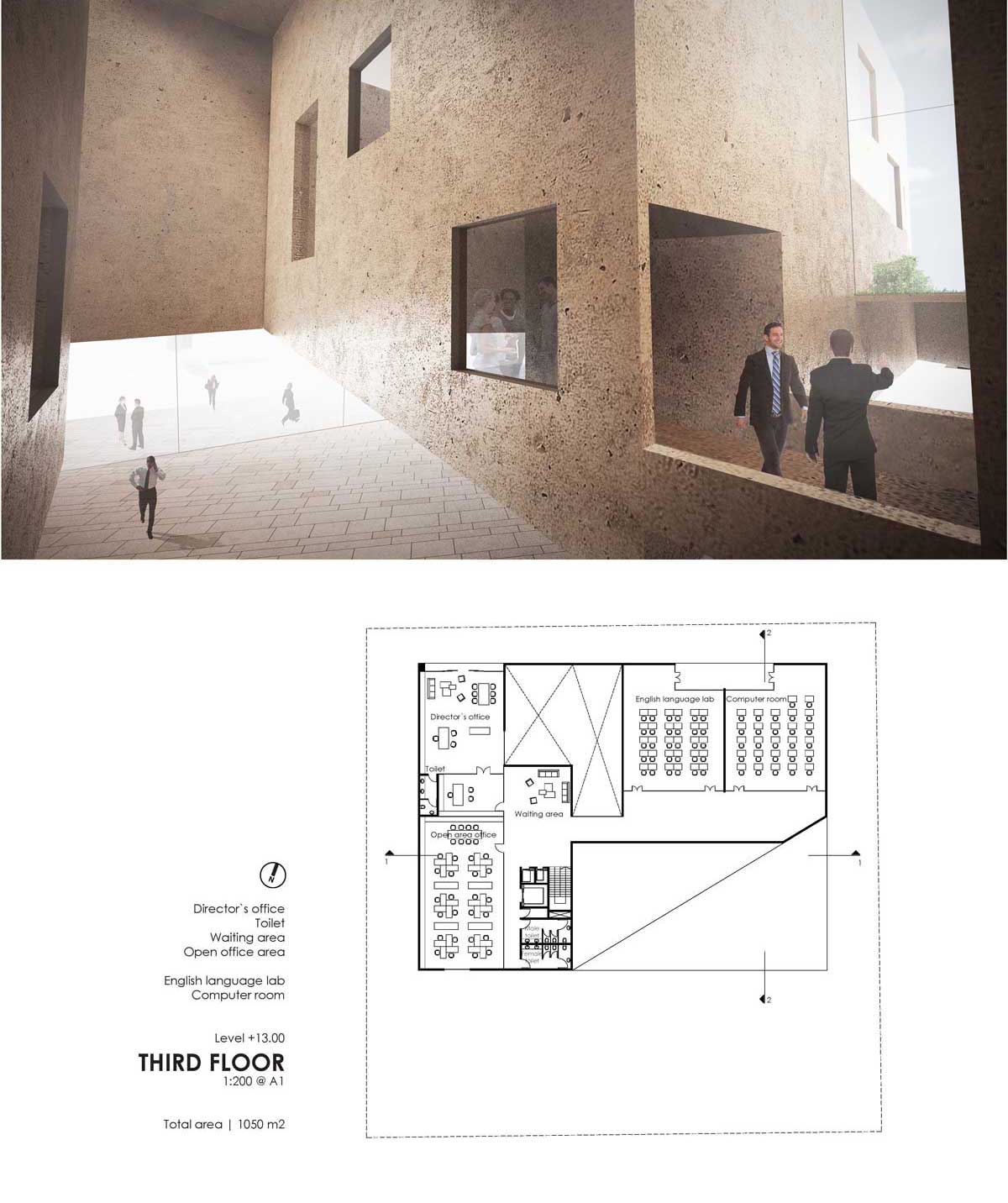
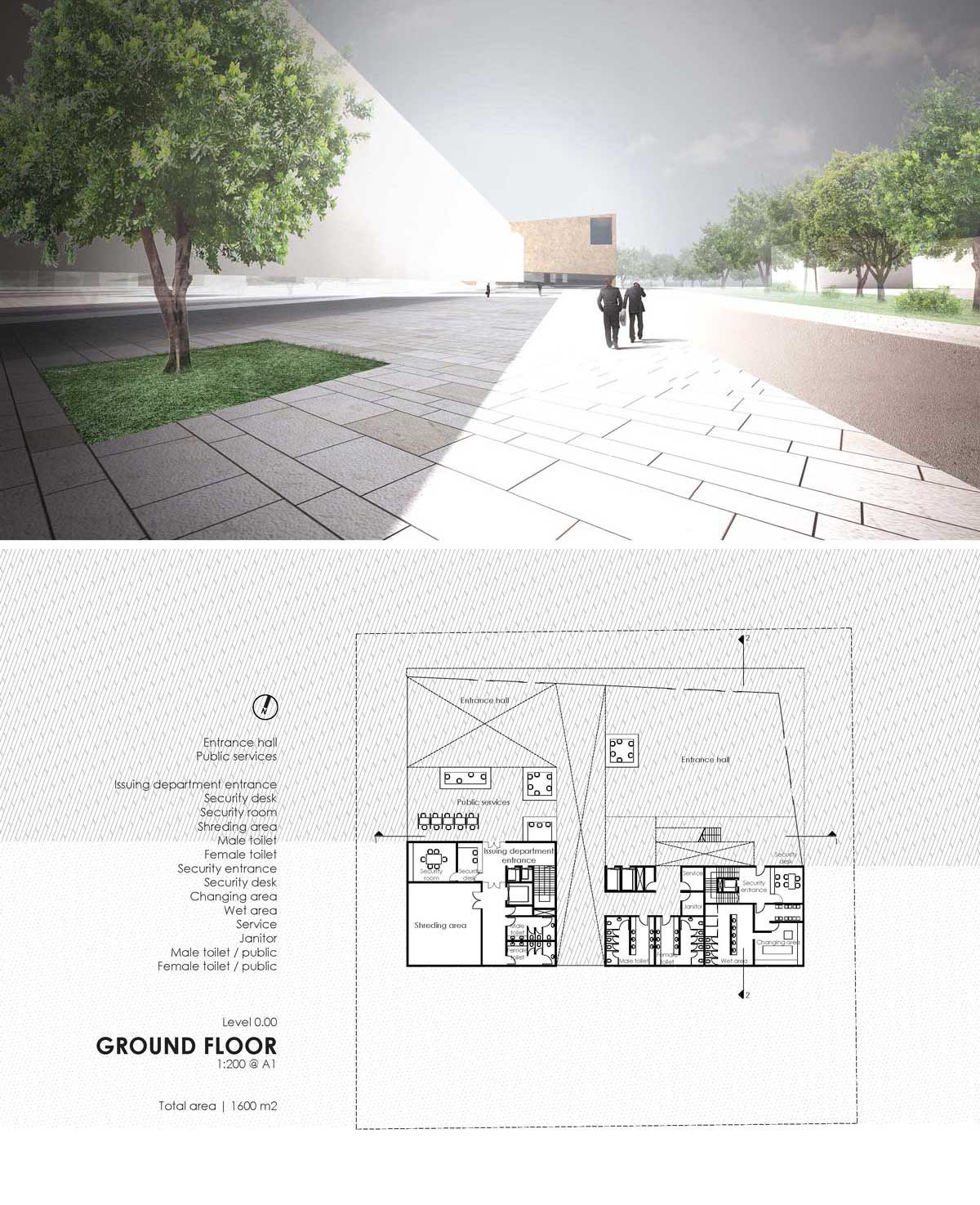
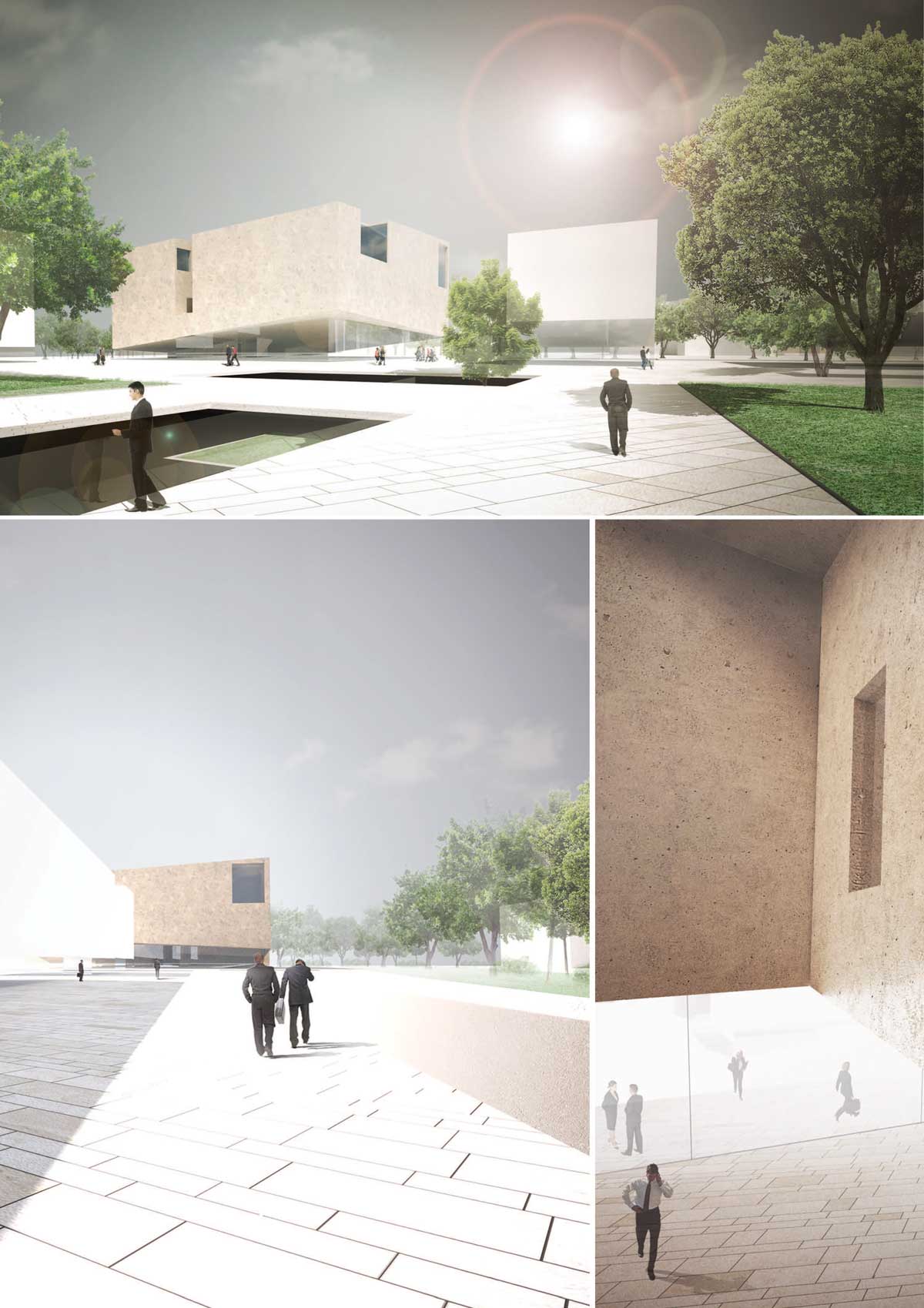
The voids between the volumes are designed as open, light-filled spaces that enhance functional separation while promoting natural ventilation and visual connectivity. At the heart of the structure lies the entrance hall, a central void that acts as both a symbolic gateway and a welcoming public space. Its direct connection to the adjacent public square reflects the bank’s commitment to transparency and its integration into the urban fabric.
Functional Zones
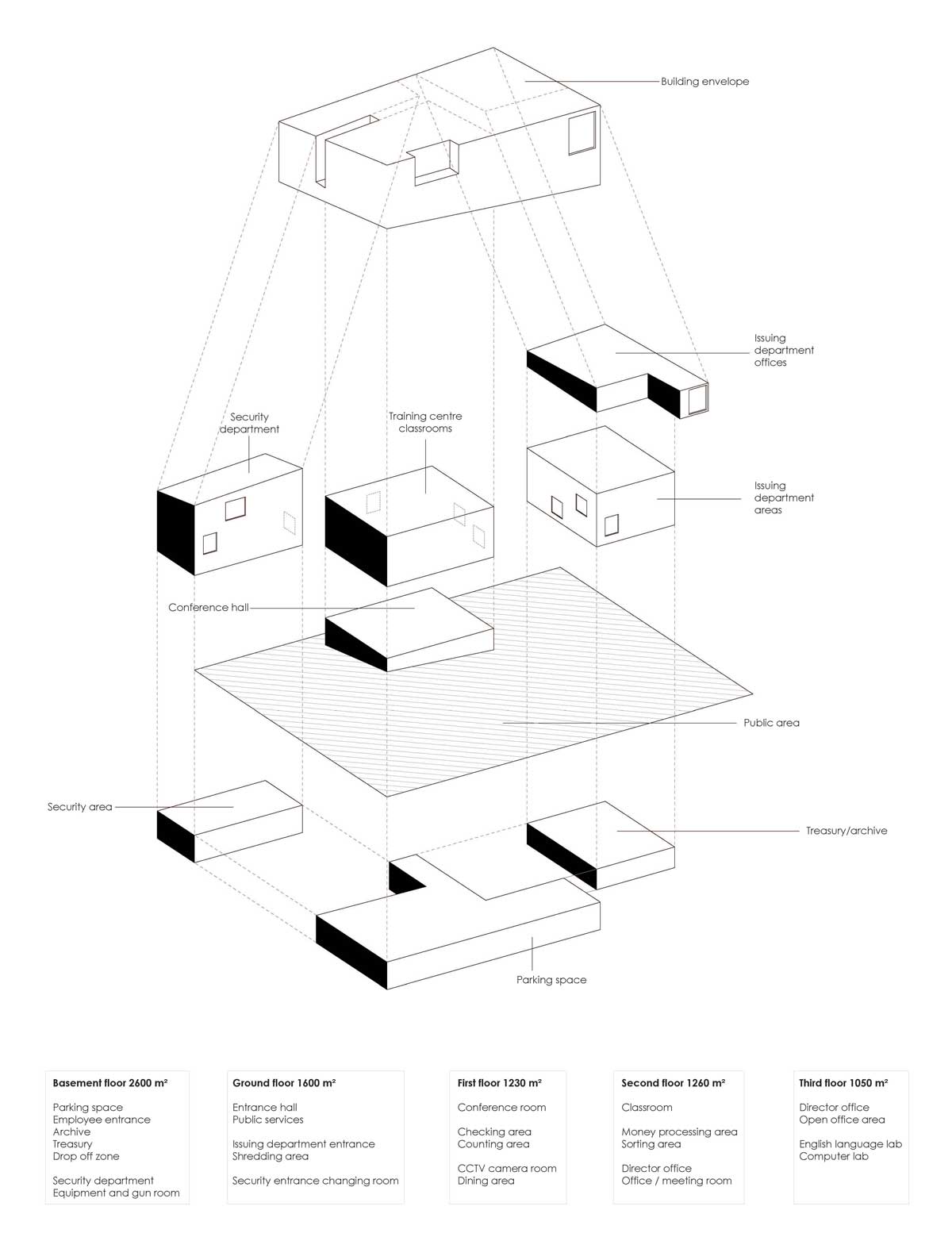
The Central Bank is meticulously organized across three levels, each tailored to specific operational and functional requirements:
- Ground Floor (1,600 sqm): This level serves as the public interface of the bank, housing the main entrance hall, public services, and accessible facilities. The layout ensures clear navigation, with designated spaces for the issuing department and secure access to restricted areas.
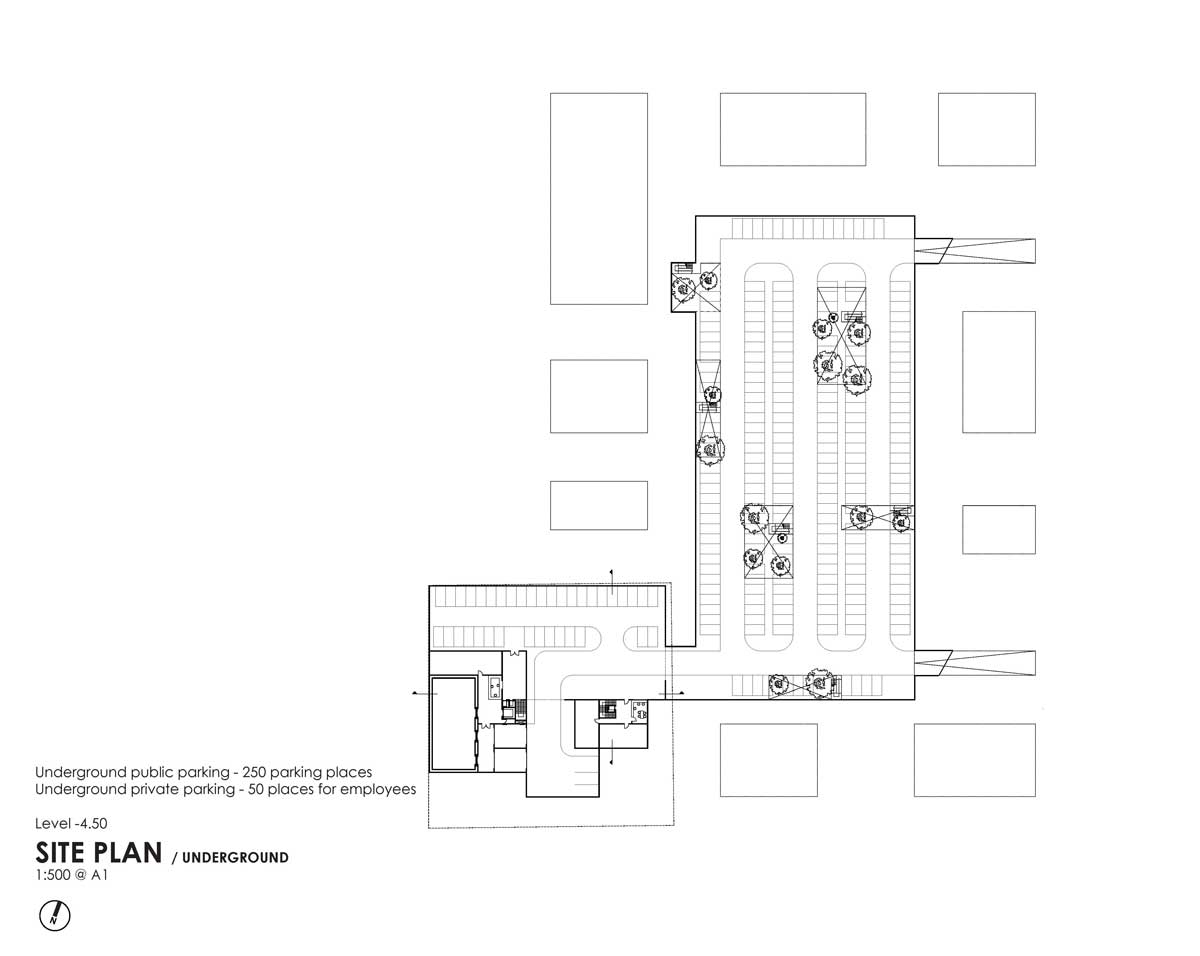
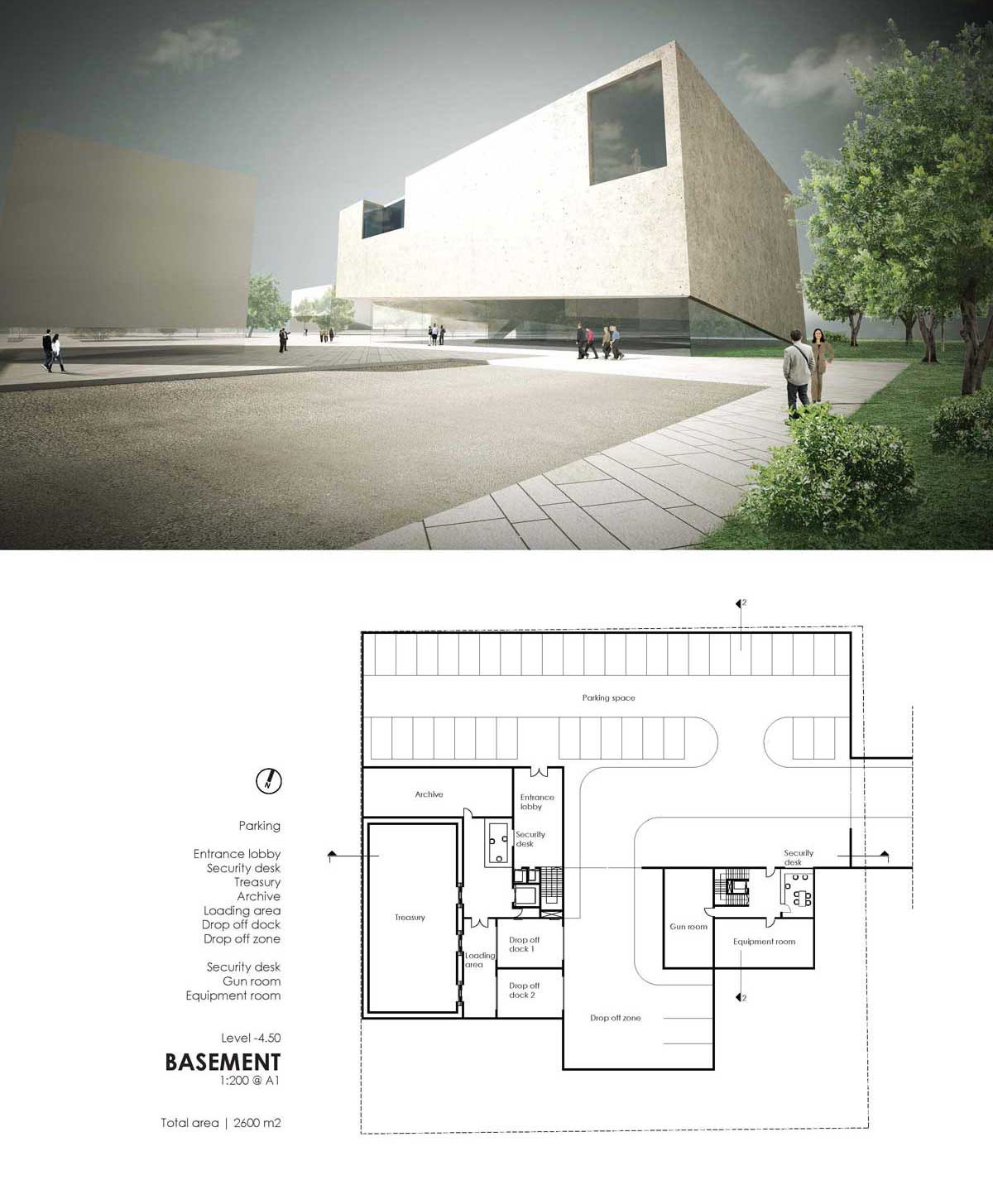
- Basement (2,600 sqm): Designed as a highly secure zone, the basement includes employee parking, a treasury, an archive, and specialized facilities such as a gun room and equipment storage for the security department. These spaces are discreetly integrated into the building’s operational flow, ensuring functionality without compromising security.
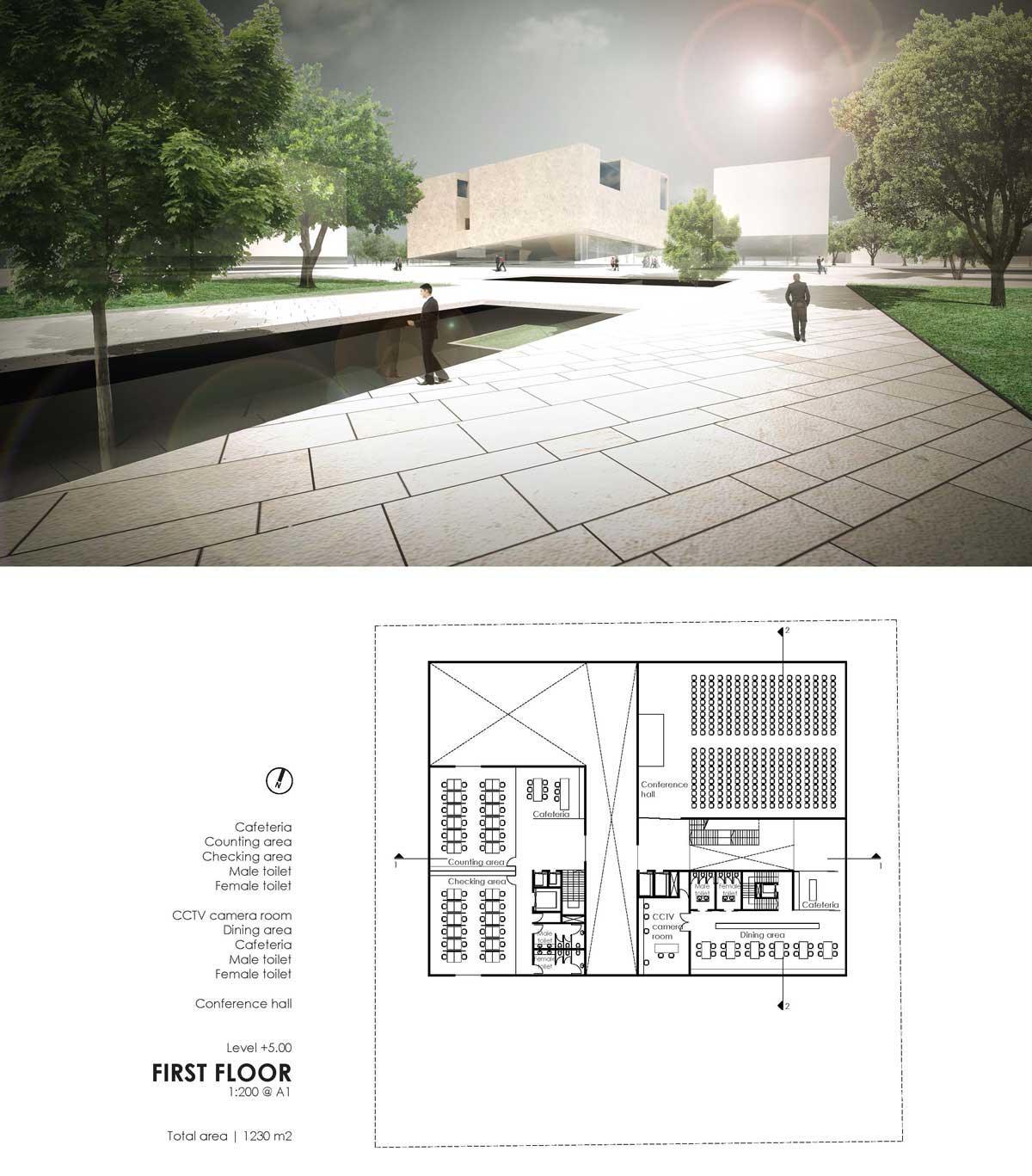
- First Floor: Dedicated to administrative and operational functions, including a conference hall, CCTV monitoring rooms, and spaces for currency counting and verification.
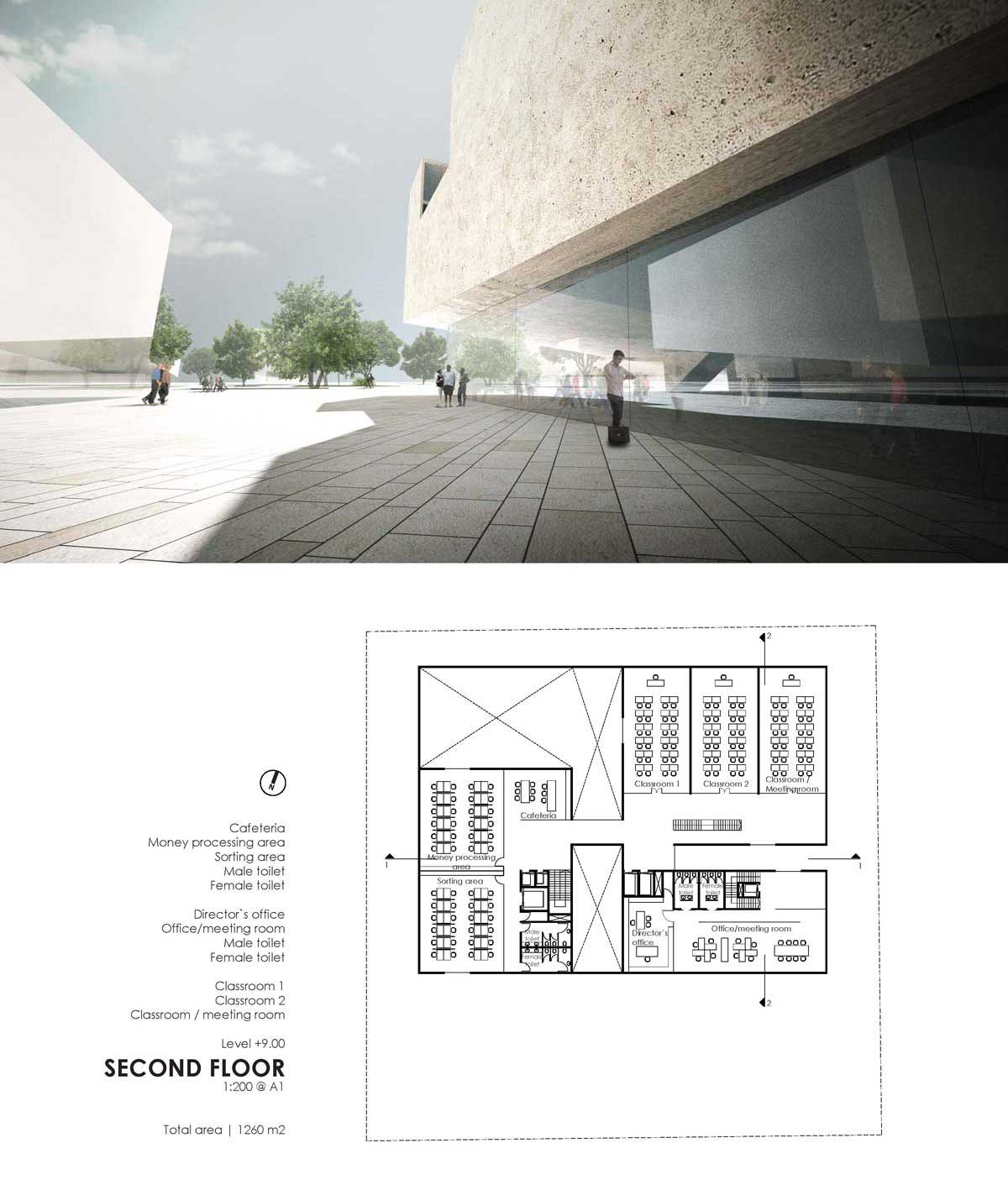
- Second Floor: Focused on training and staff development, this level includes classrooms, offices, and currency processing areas.
- Third Floor: Reserved for executive functions and advanced training, featuring offices, an English language lab, and a computer lab.
Flexibility and Expansion
A key feature of the bank’s design is its inherent flexibility. The modular architectural approach allows for the seamless expansion of each volume or the addition of new structures without disrupting current operations. This adaptability is a direct response to the evolving needs of the banking sector, ensuring the building remains relevant and functional in the face of societal and technological advancements.
Integration with the Urban Fabric
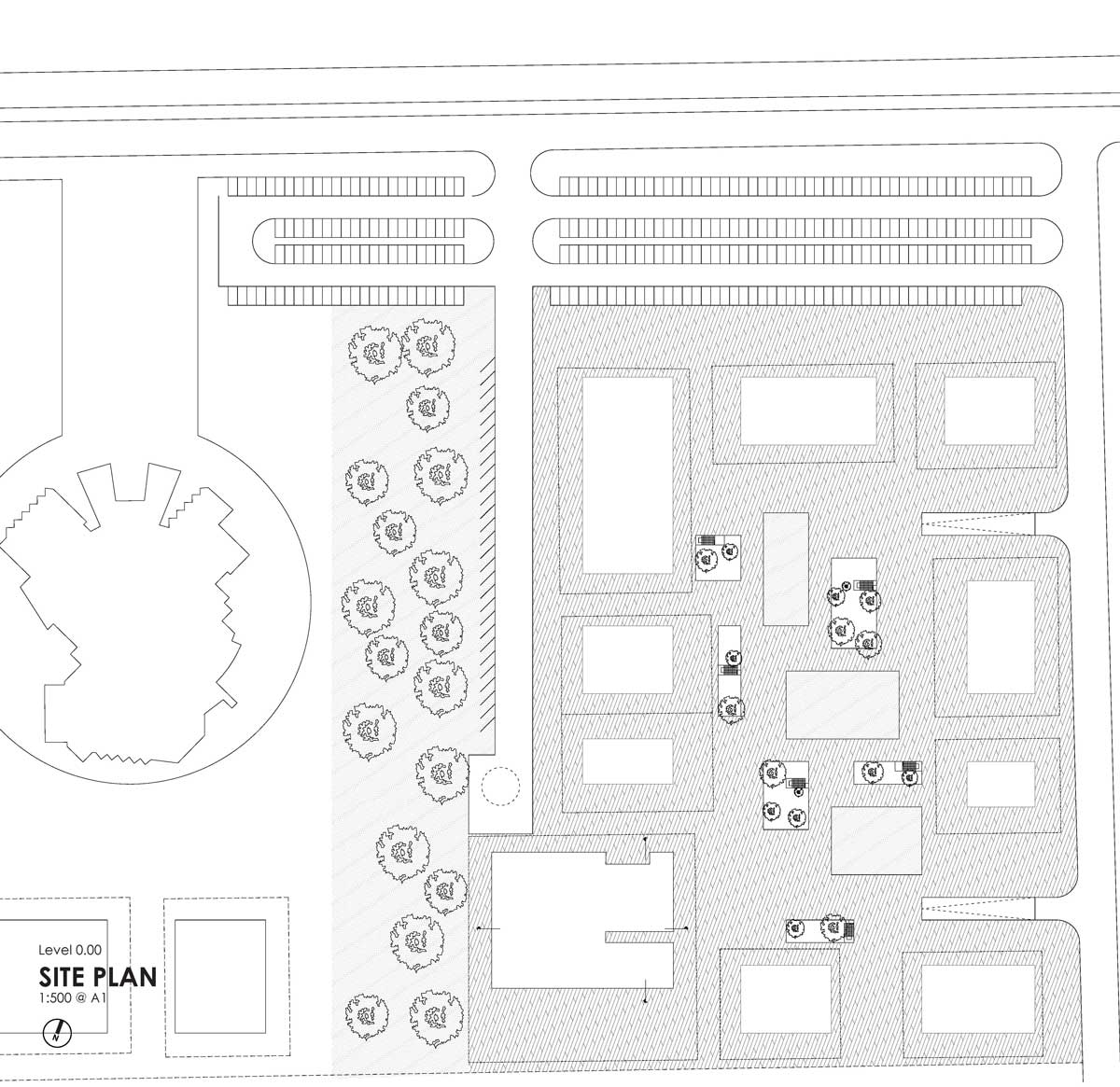
The Central Bank’s location within Tobruk’s future business district underscores its role as a civic institution. The building opens onto a public square that serves as a multi-functional space with pedestrian pathways, green areas, and underground parking. This square enhances connectivity between the bank and the city, reinforcing the bank’s accessibility and engagement with the community.
The voids between the bank’s volumes act as green links, integrating the built environment with natural elements. These spaces connect the underground parking to surface-level pathways, adding an environmental dimension to the project while promoting pedestrian movement.
Architectural Symbolism and Security
The architectural design of the Central Bank reflects the duality of transparency and security. Each volume represents a key aspect of the banking system:
The Issuing Department symbolizes the core operations of currency flow and financial management.
The Security Department underscores the institution’s commitment to safeguarding its assets and operations.
The Training Center highlights the bank’s investment in future growth and staff development.
While the design incorporates open, light-filled spaces to convey transparency and trust, secure areas are discretely integrated into the structure. The clean, modern lines and carefully selected materials further emphasize stability and innovation, aligning with the institution’s values.
Sustainability and Future-Proofing
Sustainability is integral to the Central Bank’s design. Natural ventilation and daylighting reduce energy consumption, while the modular approach minimizes the environmental impact of future expansions. Locally sourced materials and construction methods enhance the building’s cultural and ecological relevance.
The design ensures the bank’s longevity and adaptability, positioning it as a key component of Tobruk’s urban development. As the city grows and the financial sector evolves, the Central Bank is poised to expand and innovate, maintaining its role as a cornerstone of Libya’s economic infrastructure.
Conclusion
The Central Bank of Libya in Tobruk is more than a functional financial institution; it is a symbol of stability, transparency, and progress. Through its thoughtful architectural design, integration with the urban context, and emphasis on sustainability, the bank sets a benchmark for institutional architecture in Libya. As a dynamic and adaptable structure, it reflects the nation’s aspirations for growth and modernization while serving as a vital part of Tobruk’s urban landscape.