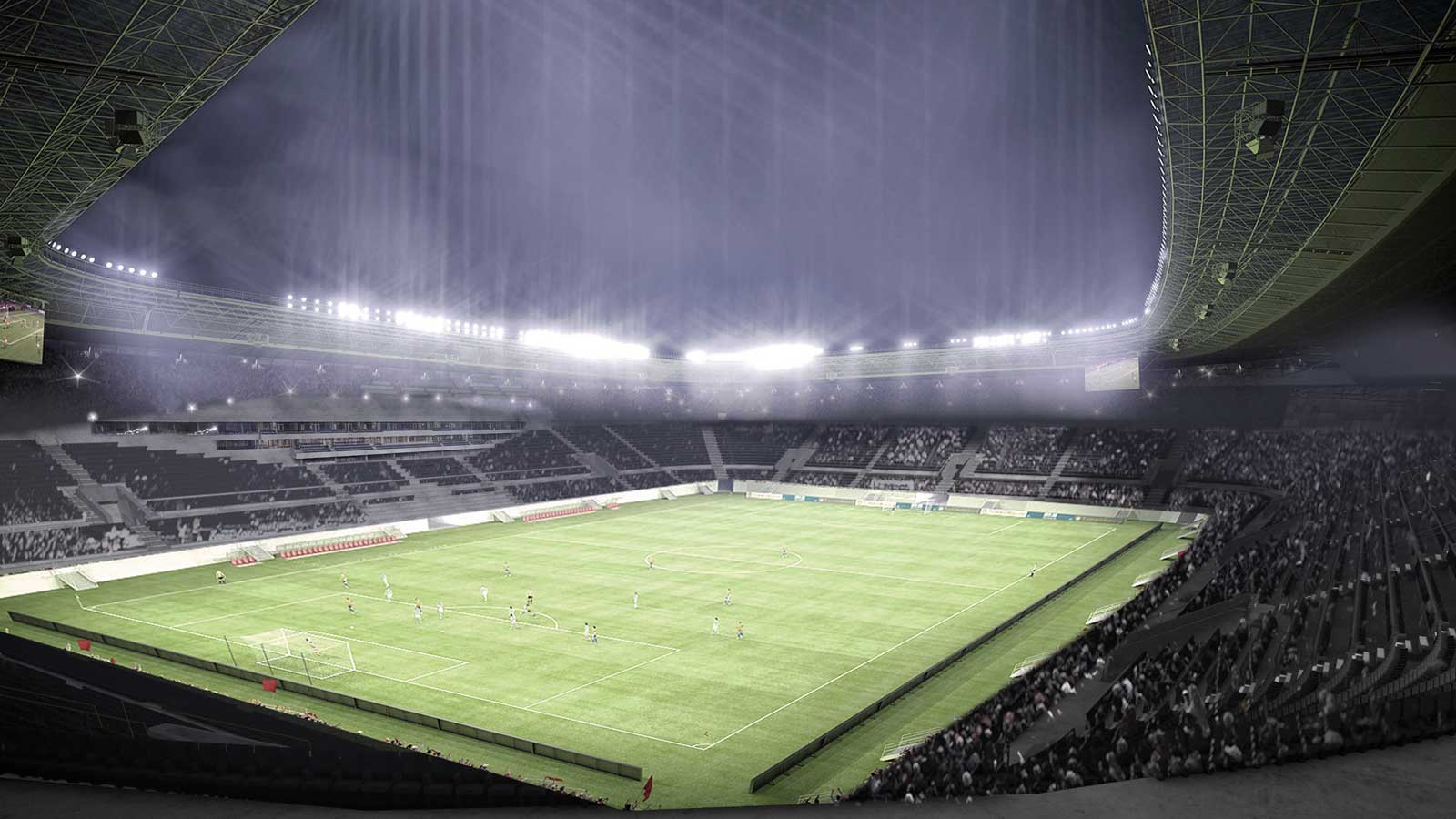



- Location: Zliten – Libya
- Year: 2014
- Client: ODAC
- Designer: Libya Design / +381
- Site Area: 80,557 m2
- Built-up area: 35,788 m2
- Use: Sports
- Phase: Design
- Role: Project Architect
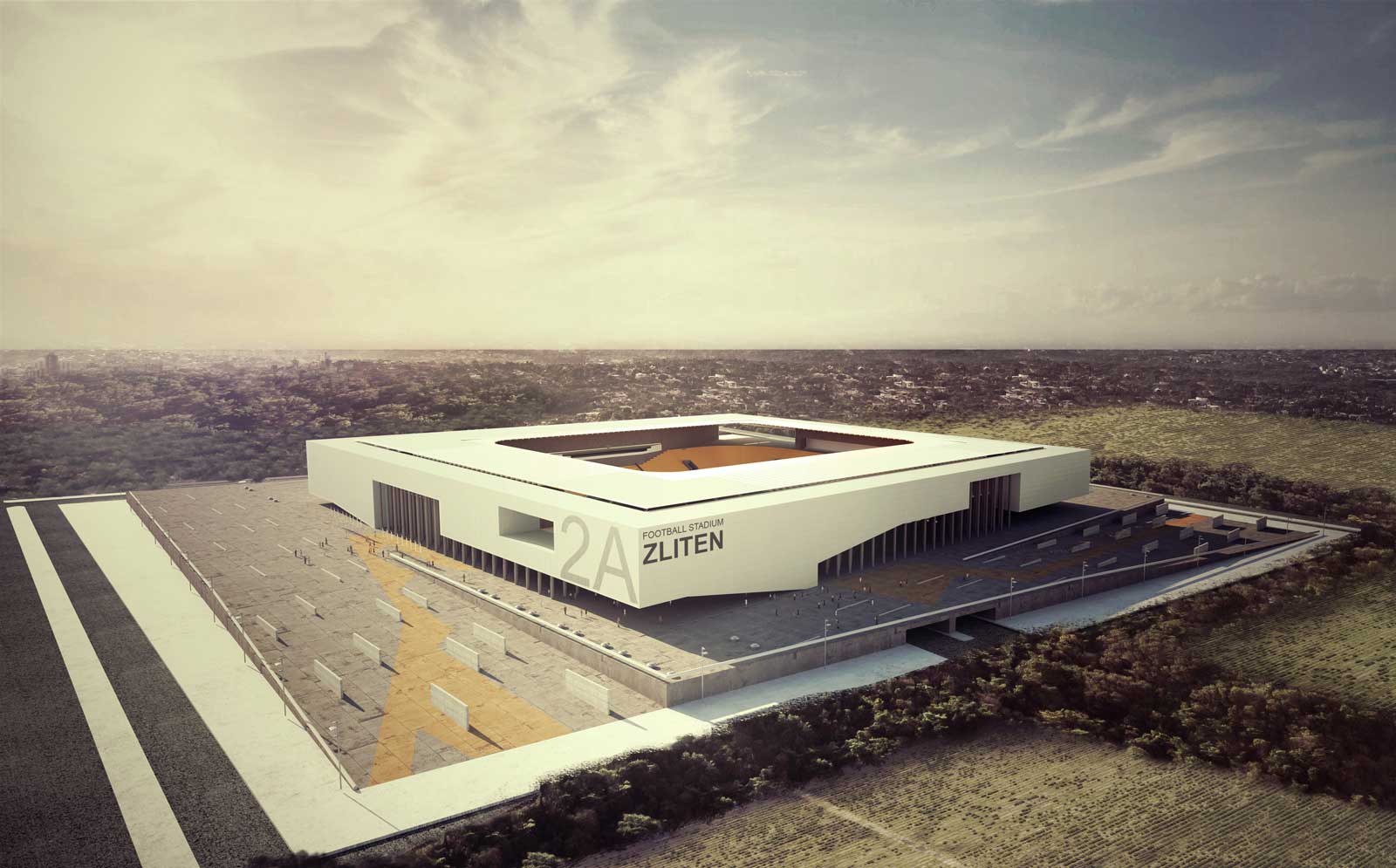
Zliten Football Stadium: A Gateway to Sports and Community in Libya
Project Overview
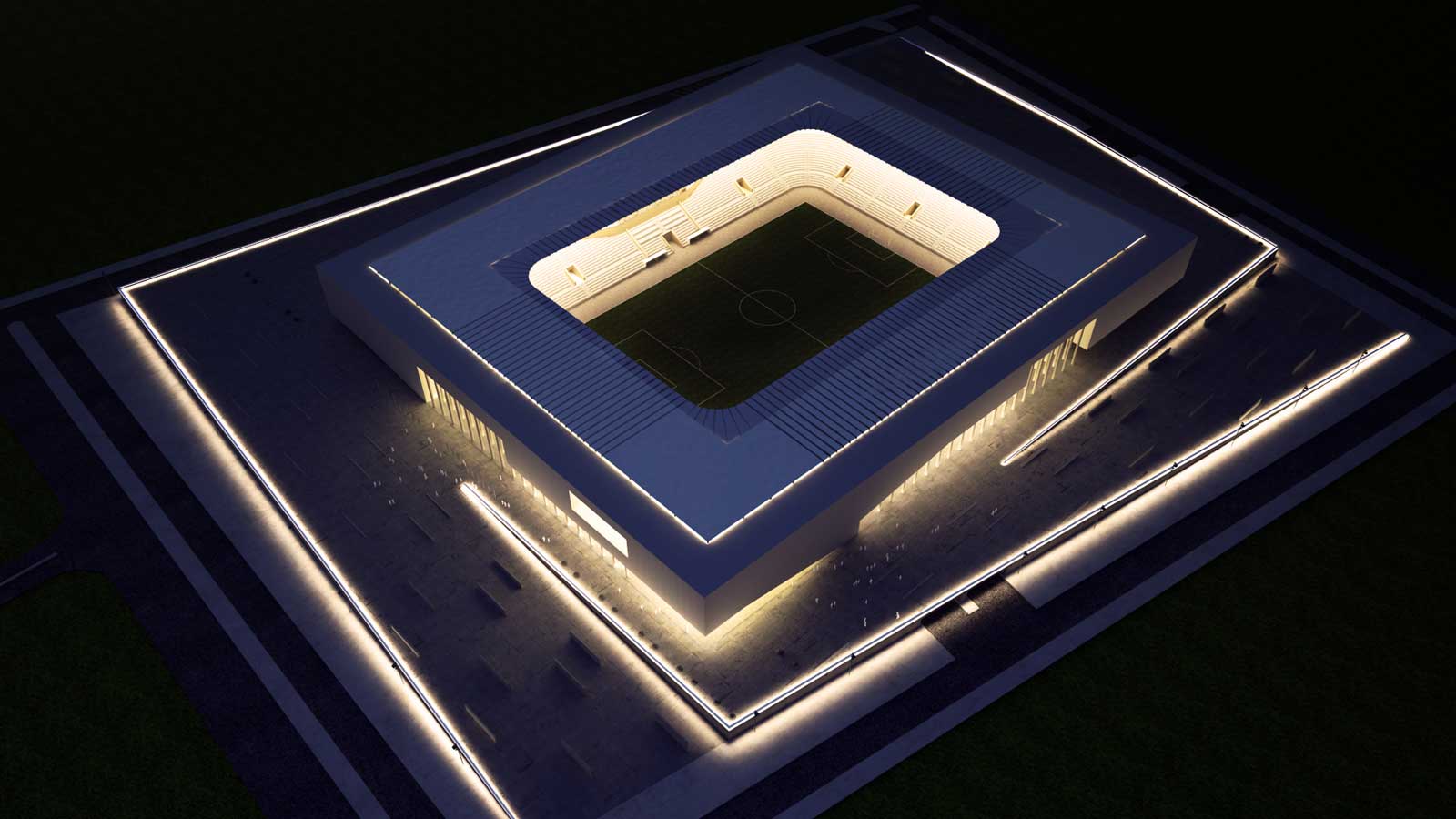
The Zliten Football Stadium is a contemporary sports venue designed to host 30,000 spectators, embodying a harmonious blend of functionality, innovation, and sustainability. Located 9.5 kilometers from the city center of Zliten, Libya, the stadium is a significant addition to the country’s sports infrastructure. Developed in collaboration with the Organization for Development of Administrative Centers (ODAC), the project emphasizes quality, accessibility, and cultural resonance.
Site Context and Environmental Integration
Situated on a 80,557 square meter plot within a predominantly agricultural zone, the stadium's location leverages its proximity to the Mediterranean Sea for natural cooling and favorable sunlight. The site’s strategic placement aligns with future infrastructural upgrades in the area, fostering development while respecting the surrounding landscape.
Architectural Vision
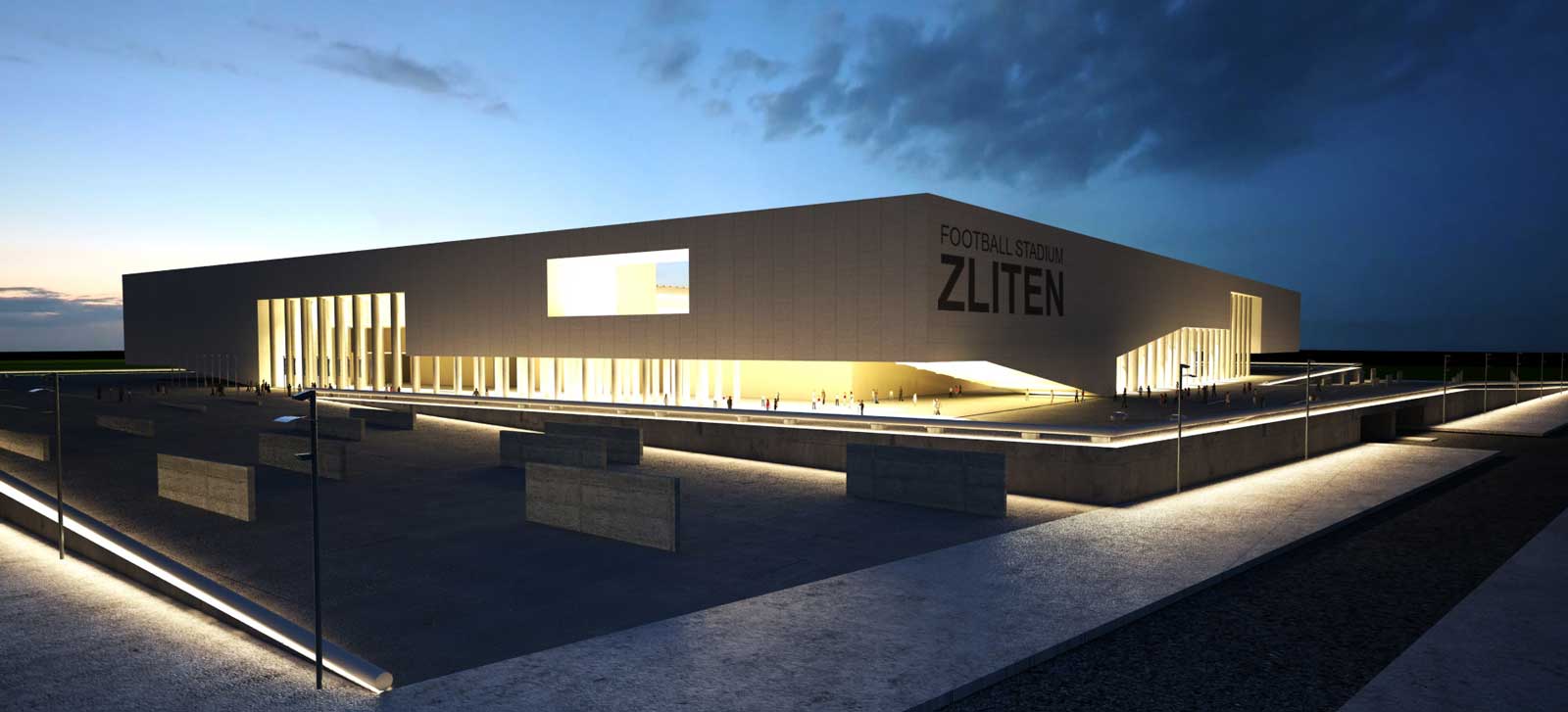
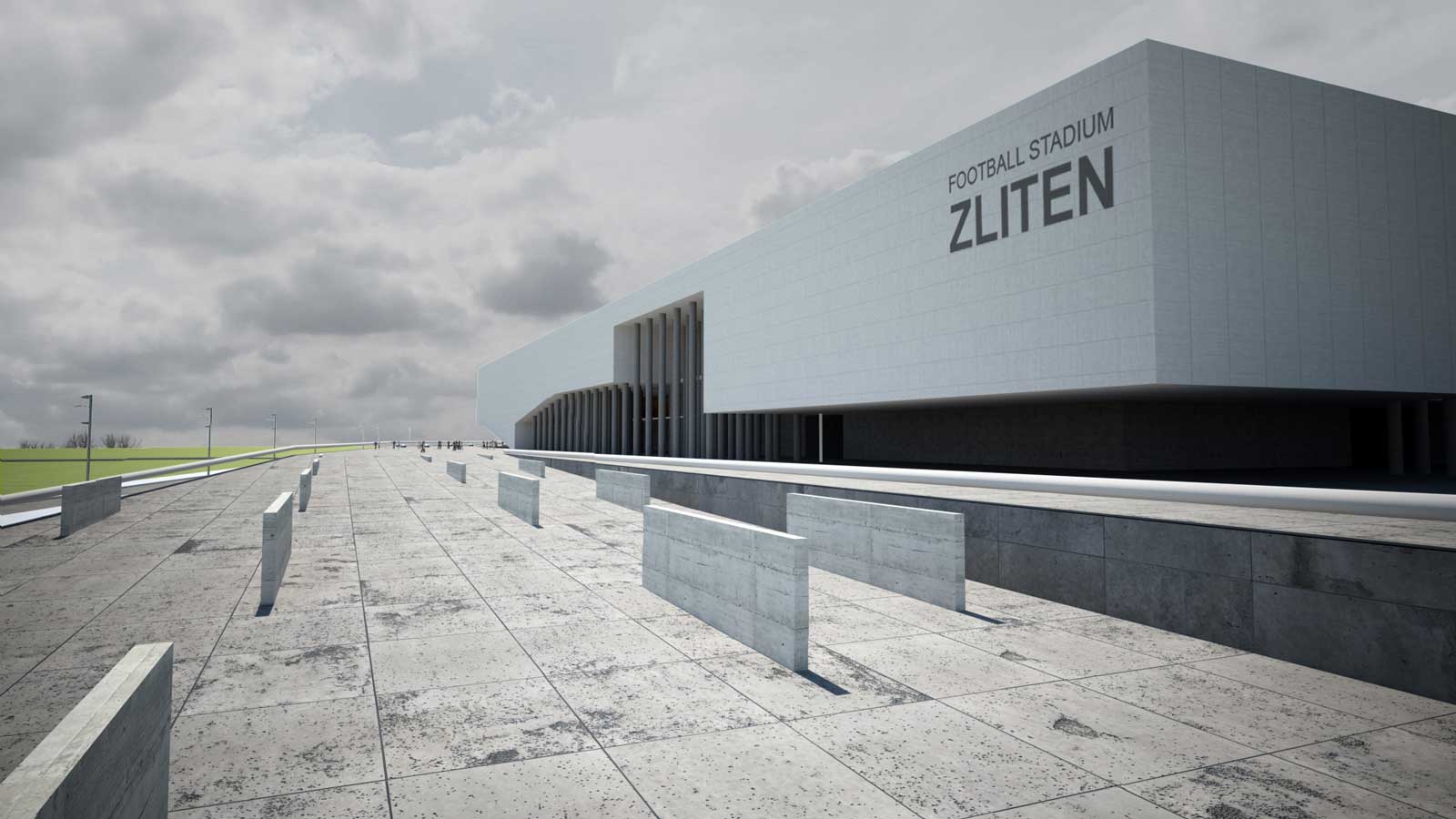
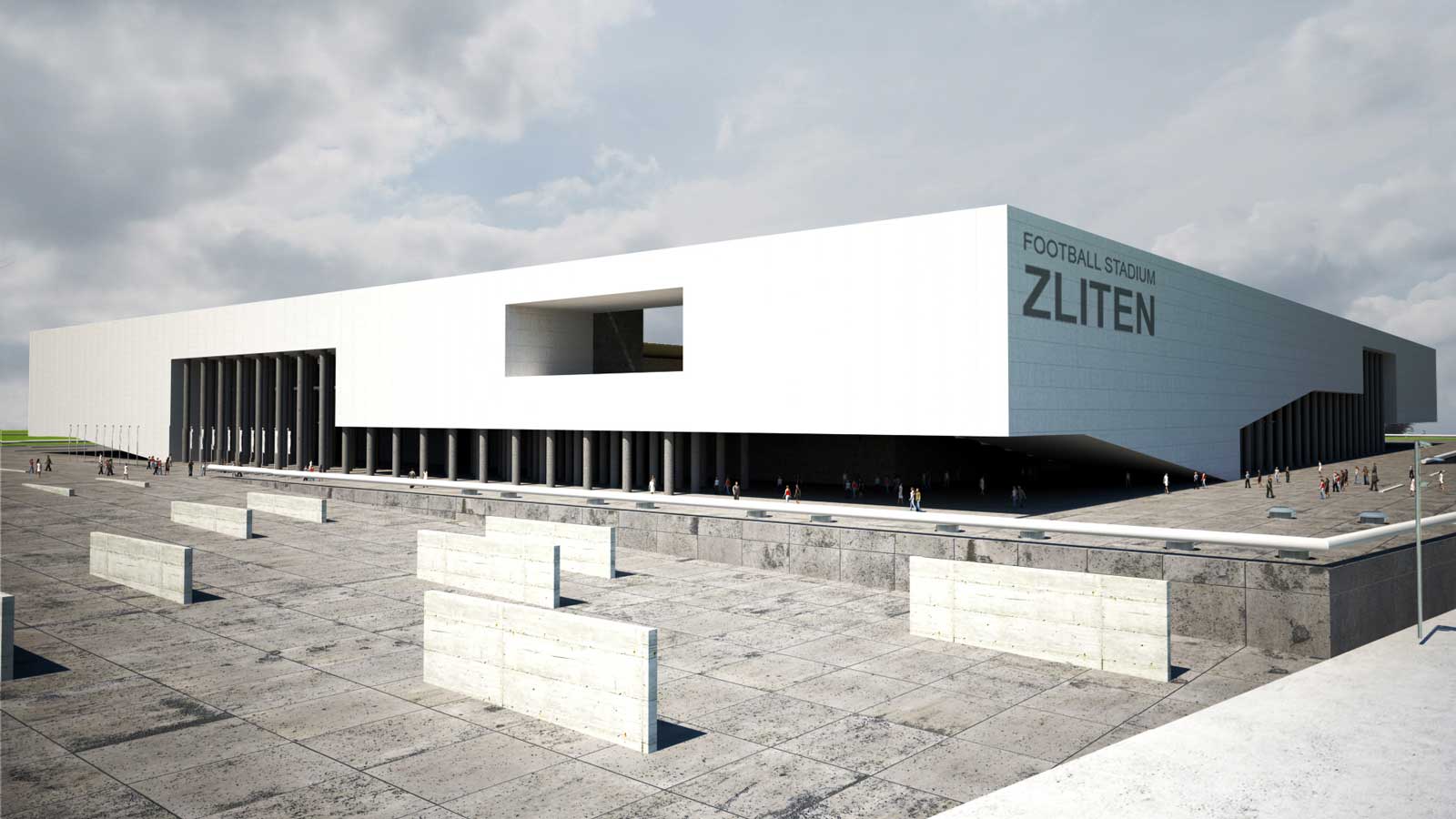
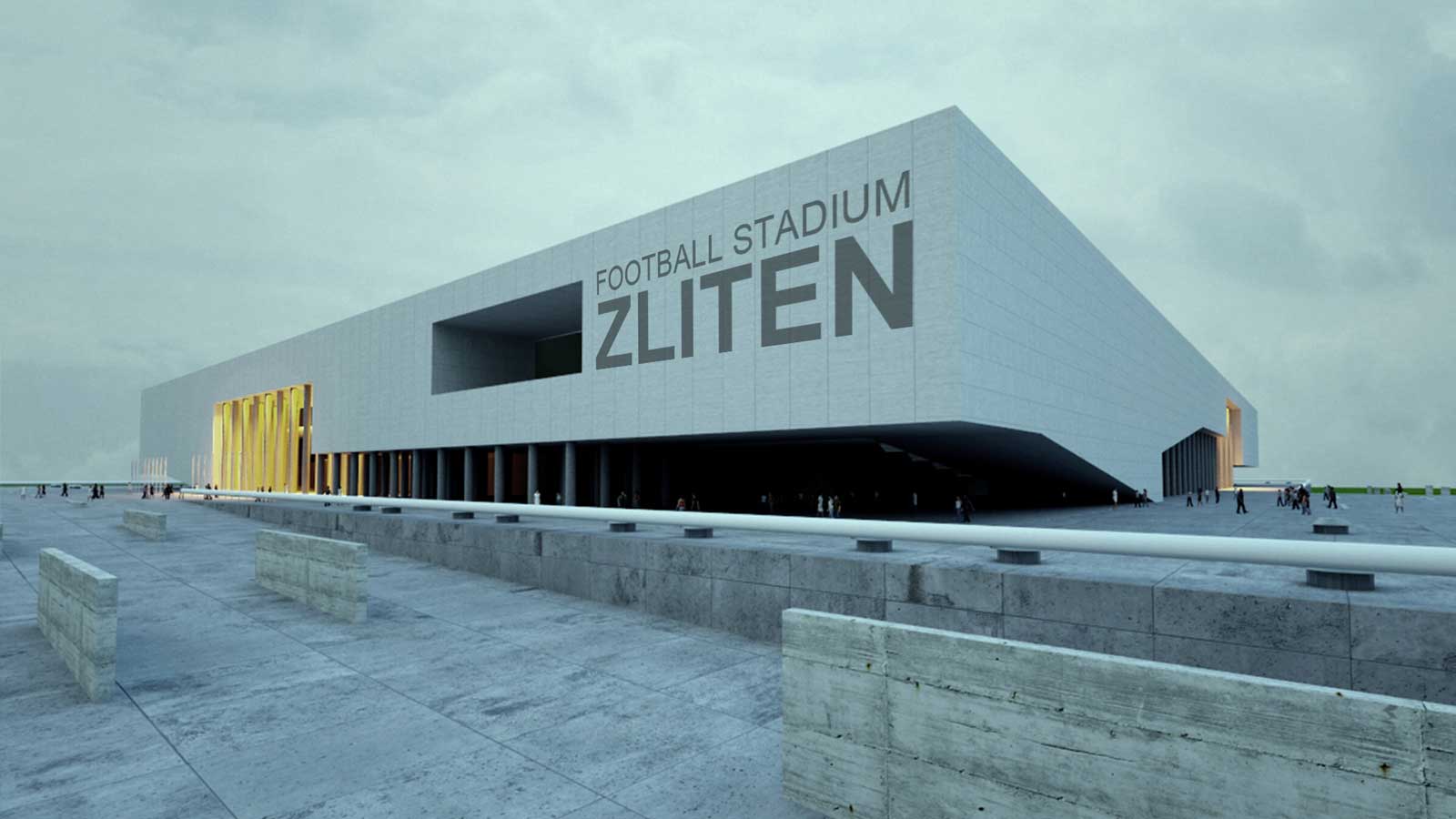
The design integrates modern architectural principles with a contextual approach, resulting in a structure that is visually striking and operationally effective. The elevated cubic form creates a seamless interaction between interior and exterior spaces, promoting natural ventilation and daylight penetration. This approach minimizes reliance on artificial systems, underscoring the stadium's commitment to environmental responsibility.
Key Features
Elevated Structure: The raised design provides open public spaces beneath the main structure, facilitating smooth circulation and fostering community engagement.
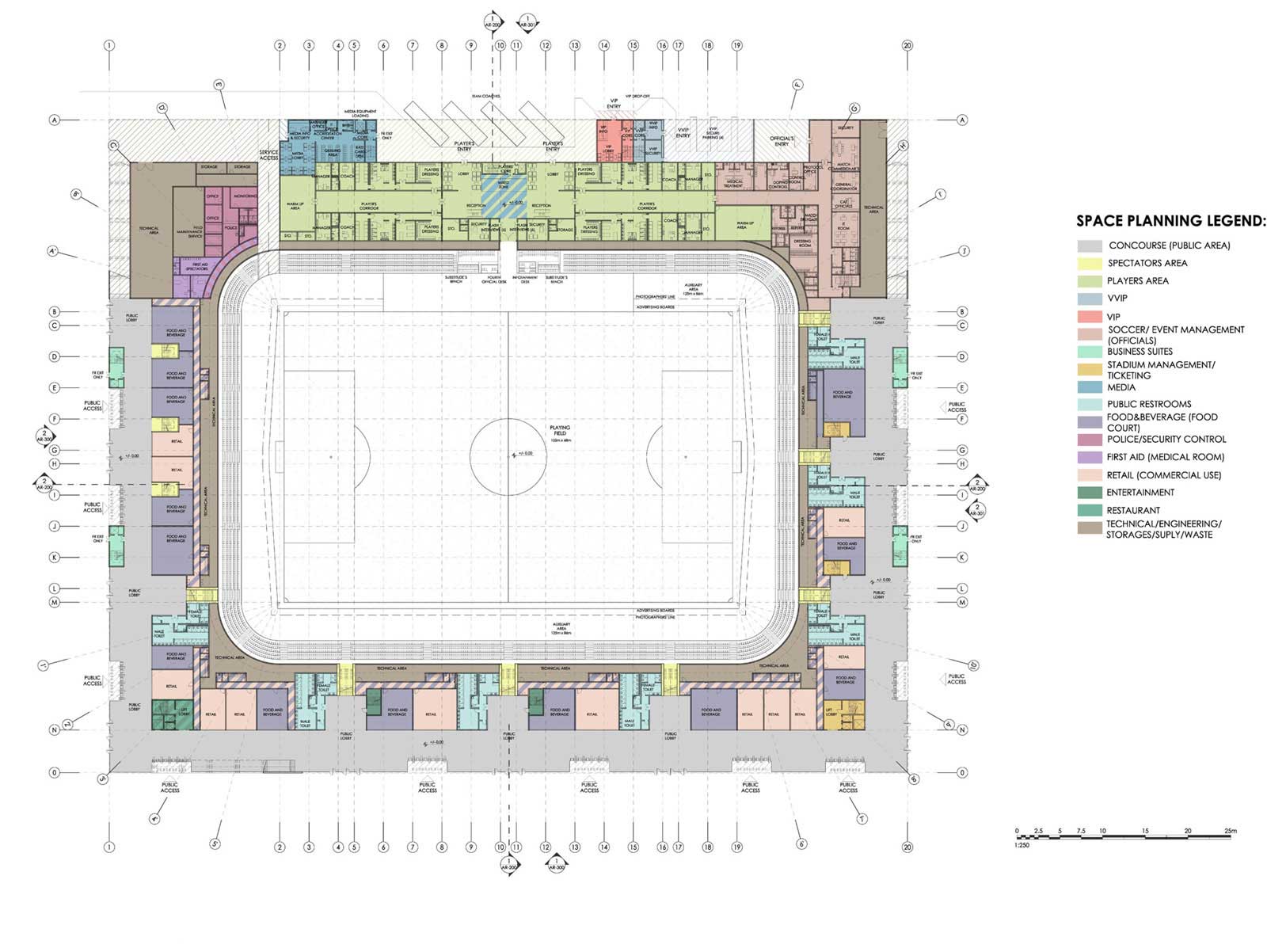
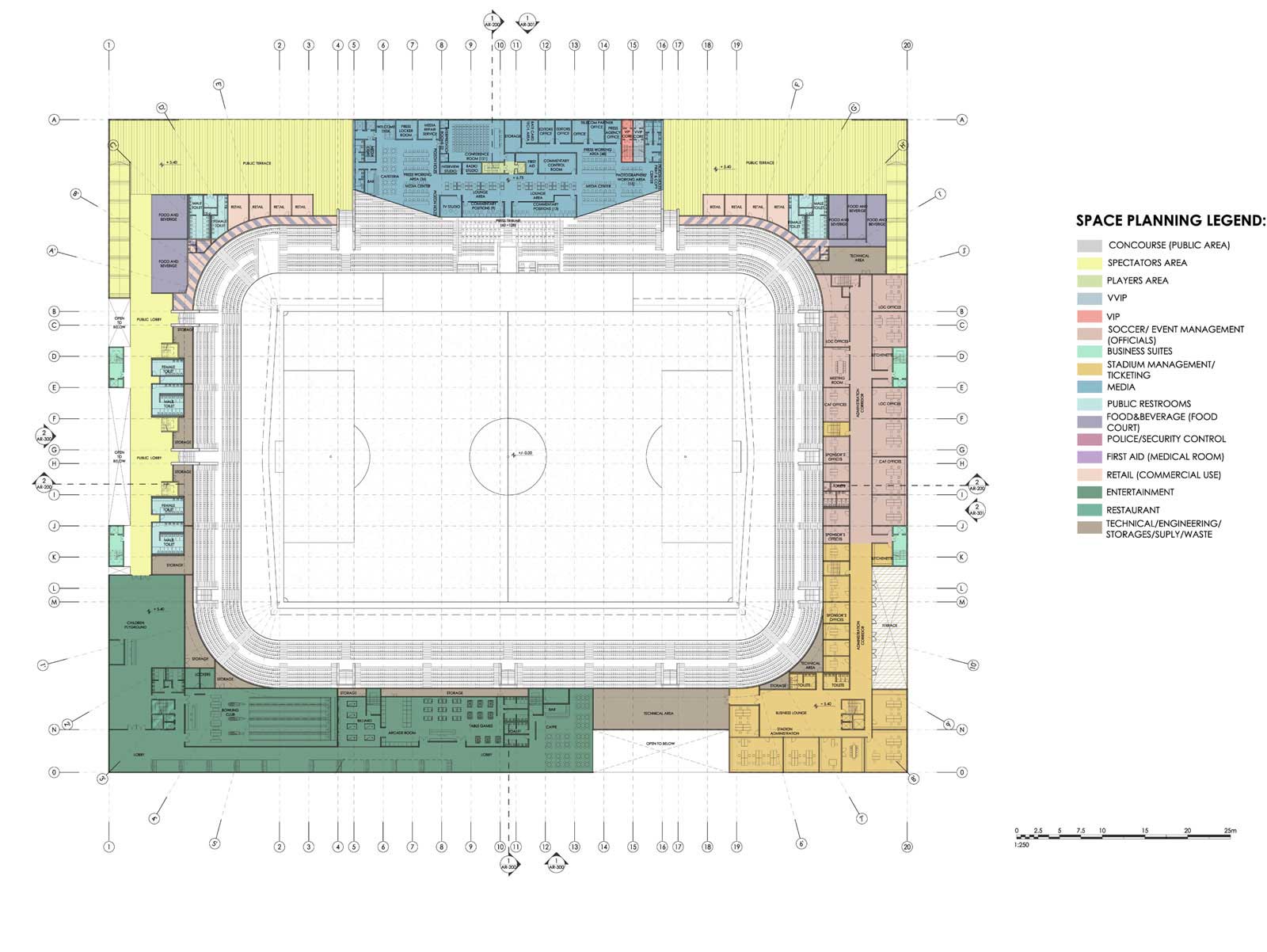
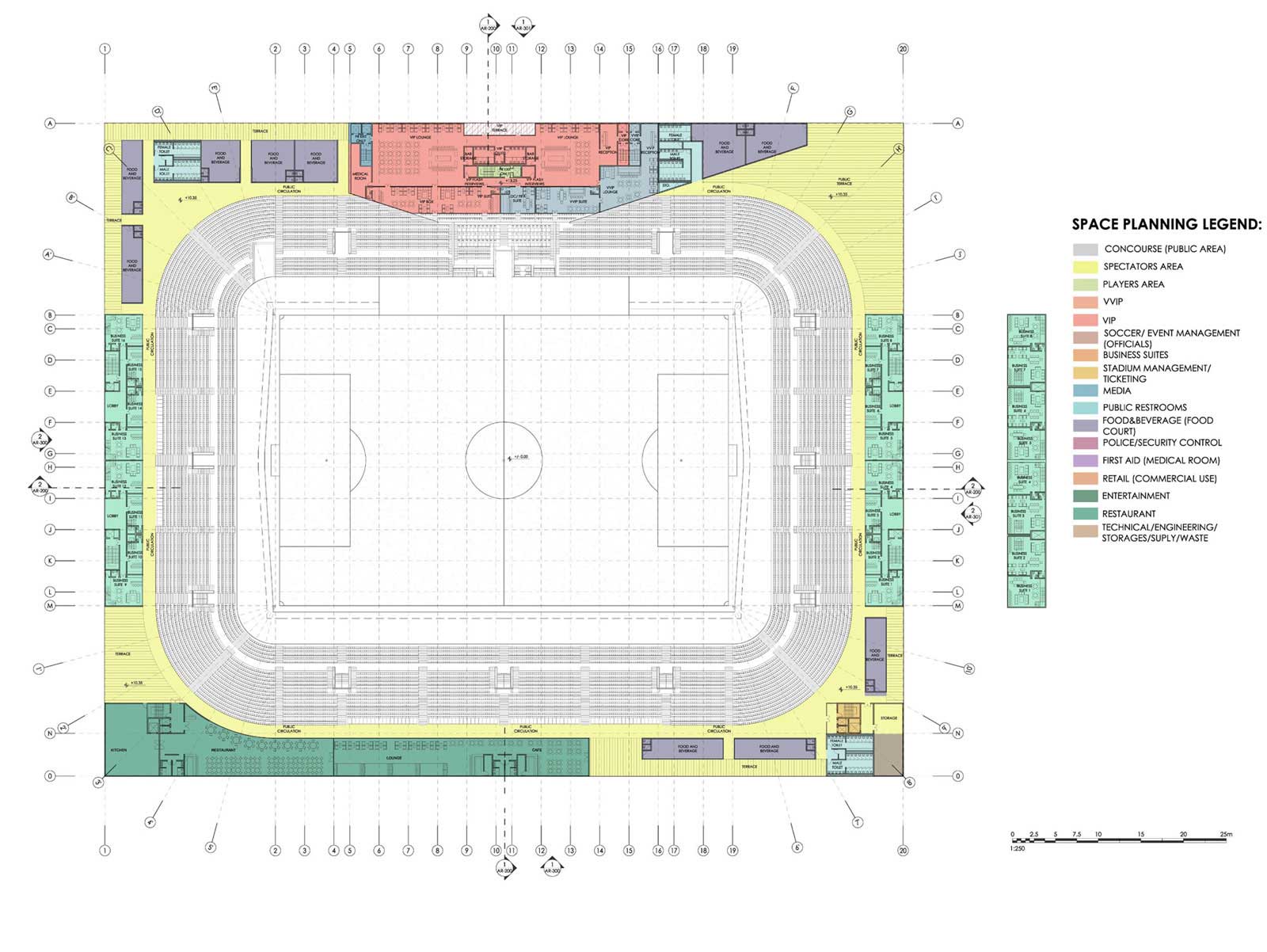
Functional Organization: The stadium includes dedicated zones for spectators, players, VIPs, and media, ensuring efficient and secure operations.
Public Plazas and Green Areas: These spaces encourage community use beyond match days, offering shaded, comfortable environments for gatherings and events.
Spatial Layout
The stadium is organized across three primary levels, each tailored to distinct user groups and functions:
Ground Floor (13,443 sqm): Home to public facilities such as retail spaces, food courts, restrooms, and administrative offices. Players' areas, including changing rooms and warm-up halls, are strategically positioned for direct pitch access.
First Floor (11,123 sqm): Dedicated to media operations, this level includes press centers, broadcast studios, and commentary boxes with optimal sightlines, along with additional spectator amenities.
Second Floor (11,222 sqm): Designed for VIPs and VVIPs, featuring exclusive suites, lounges, and hospitality areas. Rooftop terraces offer panoramic views of the stadium and the Mediterranean Sea.
Sustainability
Sustainability is at the core of the project, incorporating measures such as:
Daylighting and Ventilation: The building orientation and façade design optimize natural light and airflow.
Local Materials: Construction methods and materials reflect Libyan heritage, enhancing cultural relevance while reducing environmental impact.
Façade Design: Inspired by traditional architecture, the mesh panel system balances privacy, security, and natural light.
Transportation and Accessibility
The master plan includes upgraded road networks, improving connectivity between Zliten and Misrata. Public parking facilities with a capacity of 8,000 vehicles are supplemented by dedicated spaces for buses, VIPs, and media. Separate access points ensure smooth traffic flow during events, enhancing overall accessibility.
Community Integration
The Zliten Football Stadium is envisioned as a year-round community hub, featuring retail shops, restaurants, and cafes that remain active beyond match days. This multi-functional approach transforms the stadium into a dynamic public space, fostering social and economic vitality in the region.
Cultural and Social Impact
More than a sports venue, the stadium symbolizes Libya’s aspirations for cultural and social growth. Its design reflects a commitment to preserving traditional architectural elements while embracing modern functionality. By promoting sports and healthy lifestyles, the stadium serves as an inspiration for future generations, fostering a sense of community pride.
Conclusion
The Zliten Football Stadium sets a benchmark for sports architecture in Libya. With its innovative design, sustainability-focused approach, and integration into the local context, the stadium is poised to become a pivotal feature of Zliten’s urban and cultural landscape. As a venue for national and international events, it reinforces Libya’s position on the global sports stage while contributing to the region’s social and economic development.