


Introduction
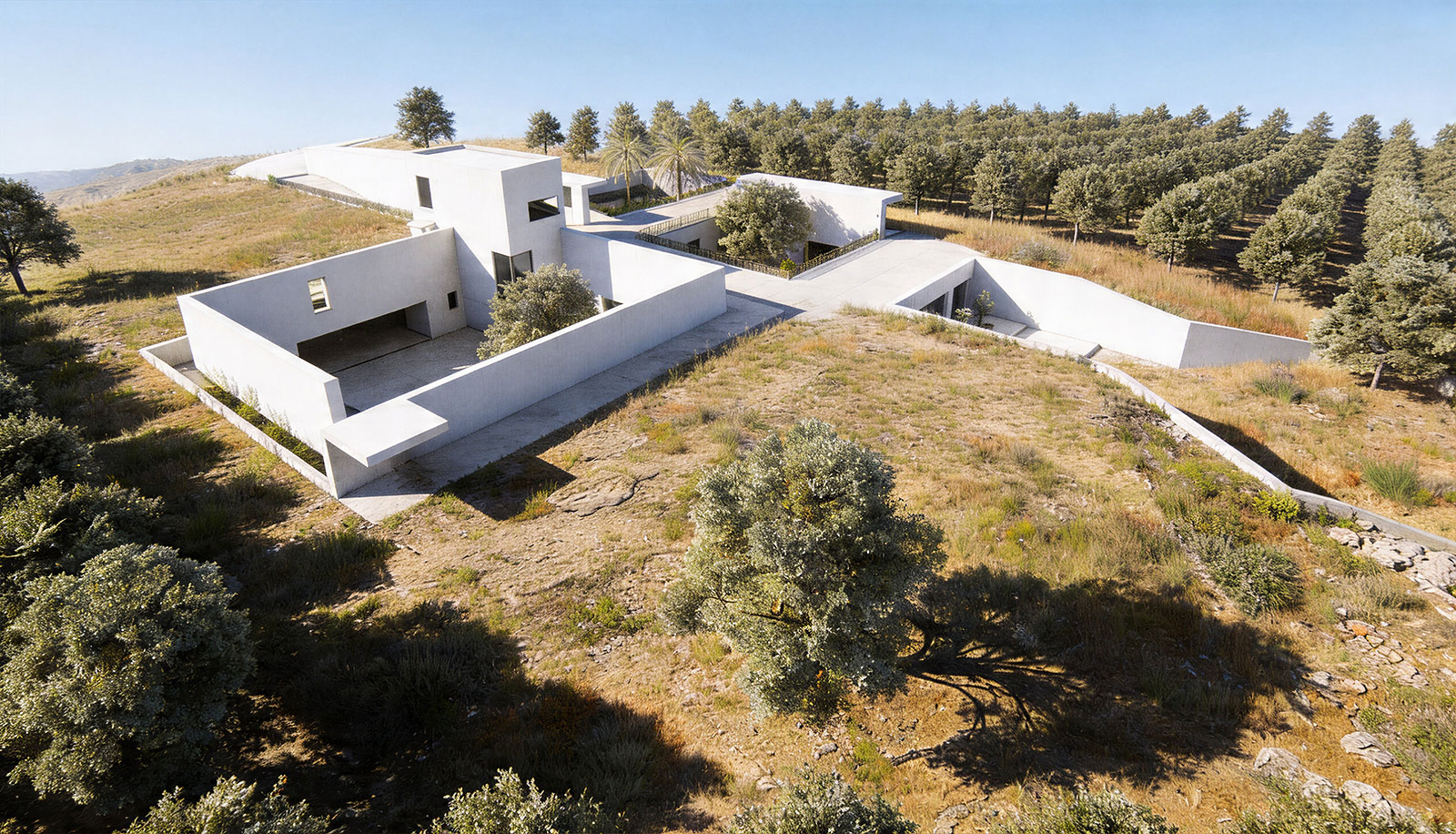
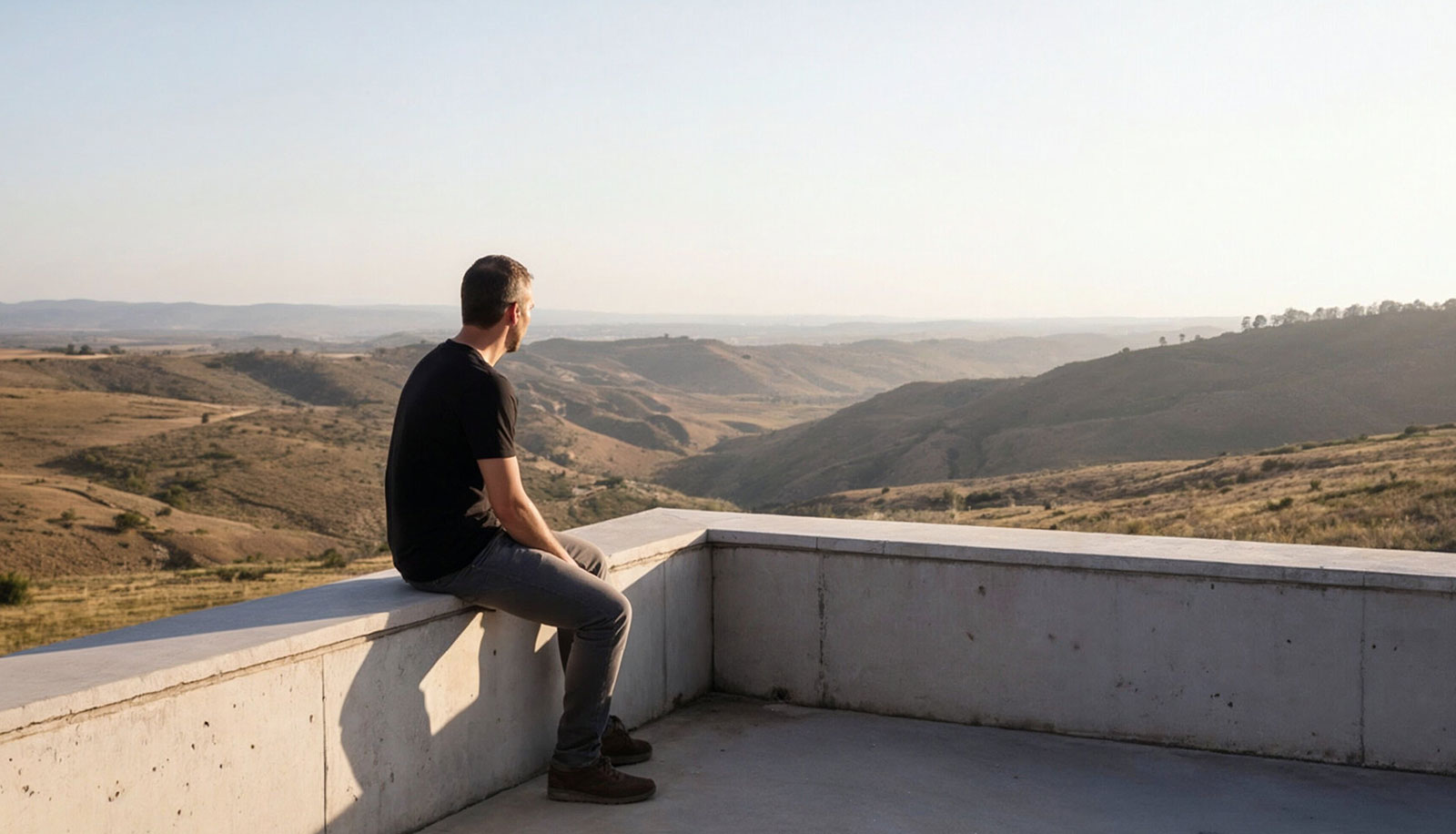
The Gharyan Villa is located on a hilltop overlooking two valleys in the city of Gharyan, Libya. The project engages a site that simultaneously opens toward the natural landscape while confronting an expanding urban fabric.
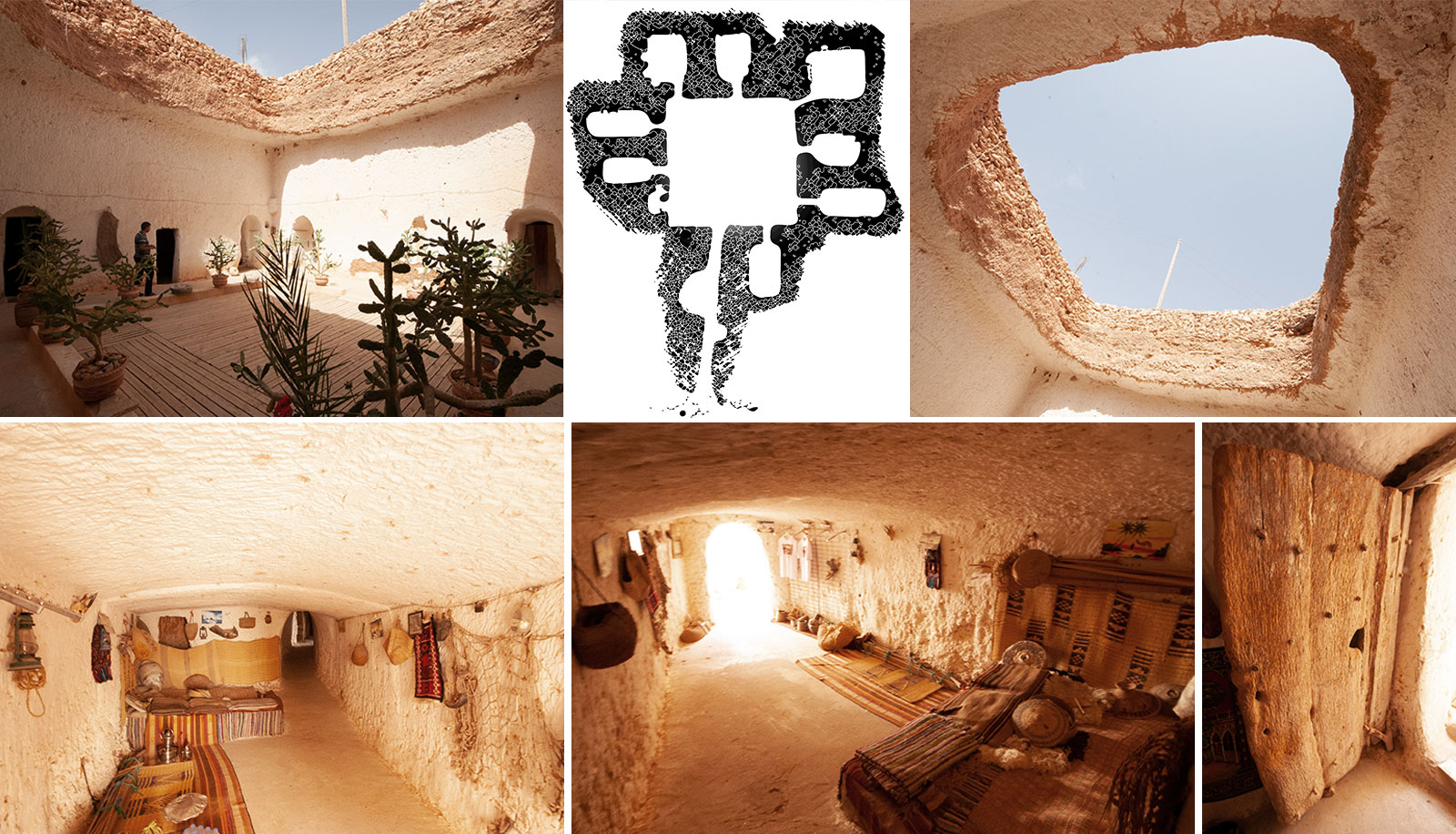
It is grounded in a careful reading of both topography and cultural context, drawing from the spatial logic of traditional troglodyte dwellings, which historically offered effective responses to climate and terrain.
Rather than replicating this heritage as form, the project approaches it as a spatial and environmental system, reinterpreted within a contemporary architectural framework.
- Location: Gharyan – Libya
- Year: 2014
- Client: Privet
- Designer: MUFTAH Design
- Site Area: 7,077 m2
- Built-up area: 1,1100 m2
- Use: Residential
- Phase: Design
- Role: Project Architect
Architectural Concept
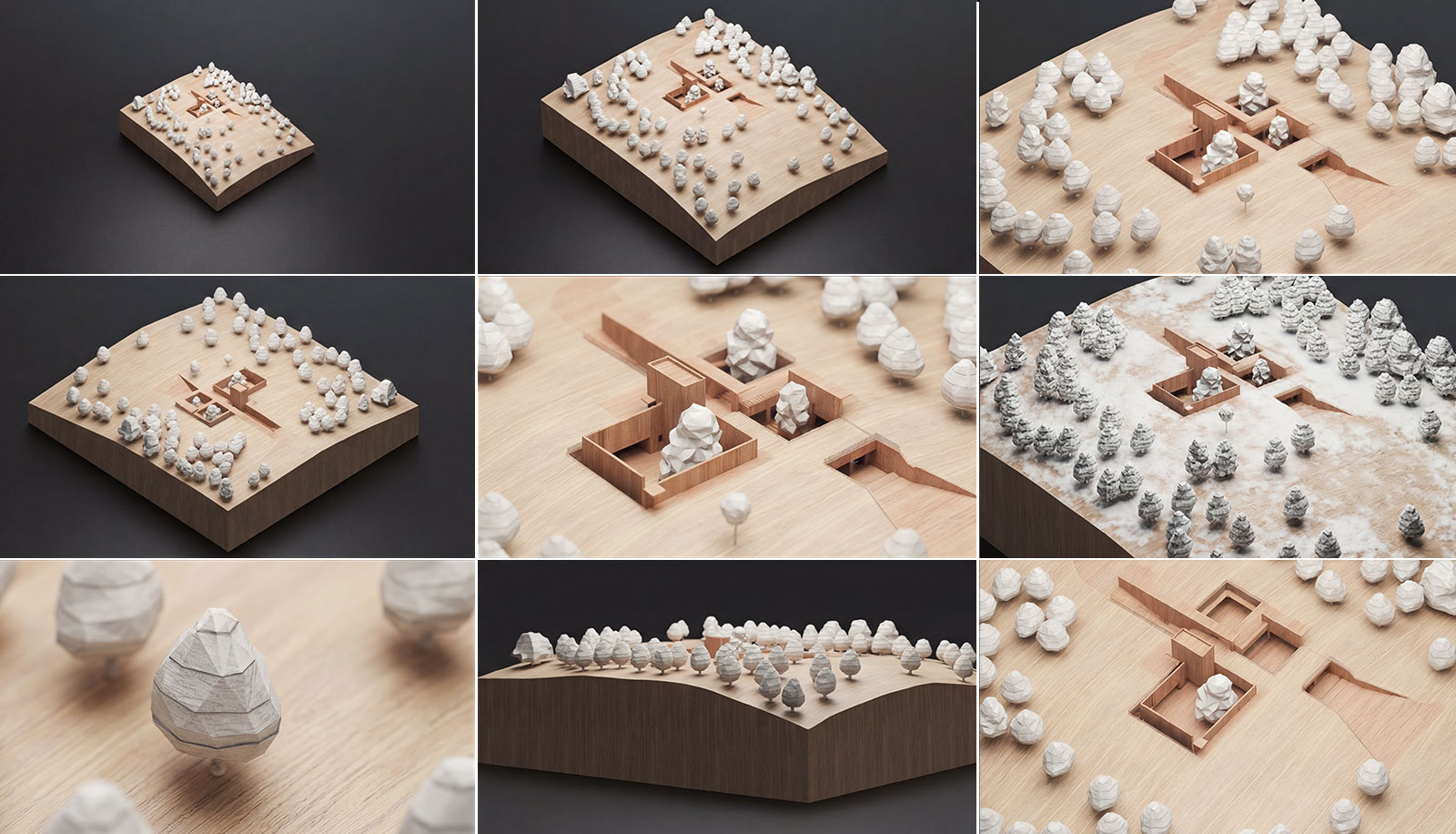
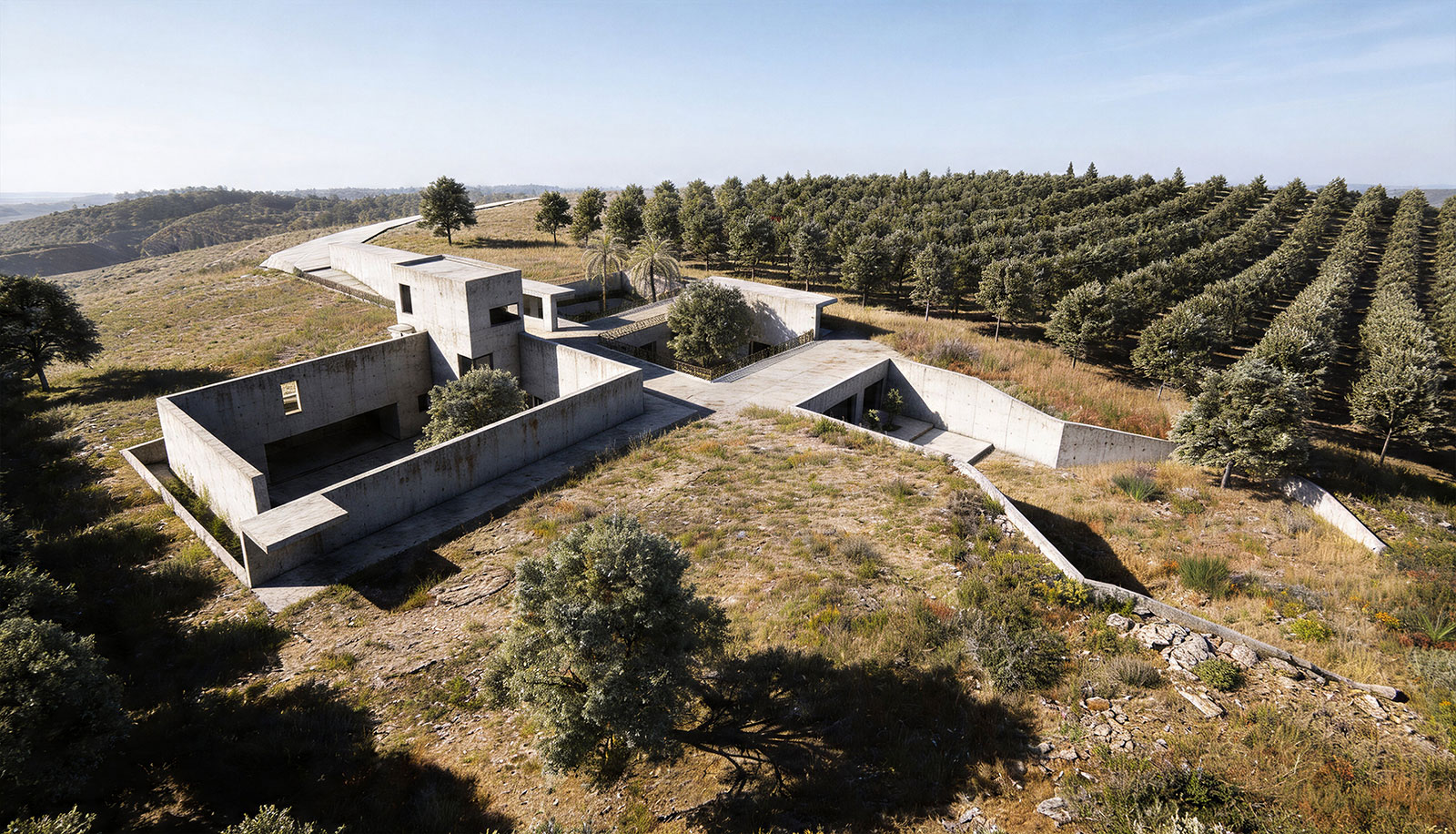
The project is based on the integration of architecture with the ground. The building is not conceived as an object placed on the site, but as a spatial system embedded within its terrain.
This is achieved by lowering the primary level of the house approximately 3.80 meters below ground level, reducing environmental exposure while enhancing thermal performance.
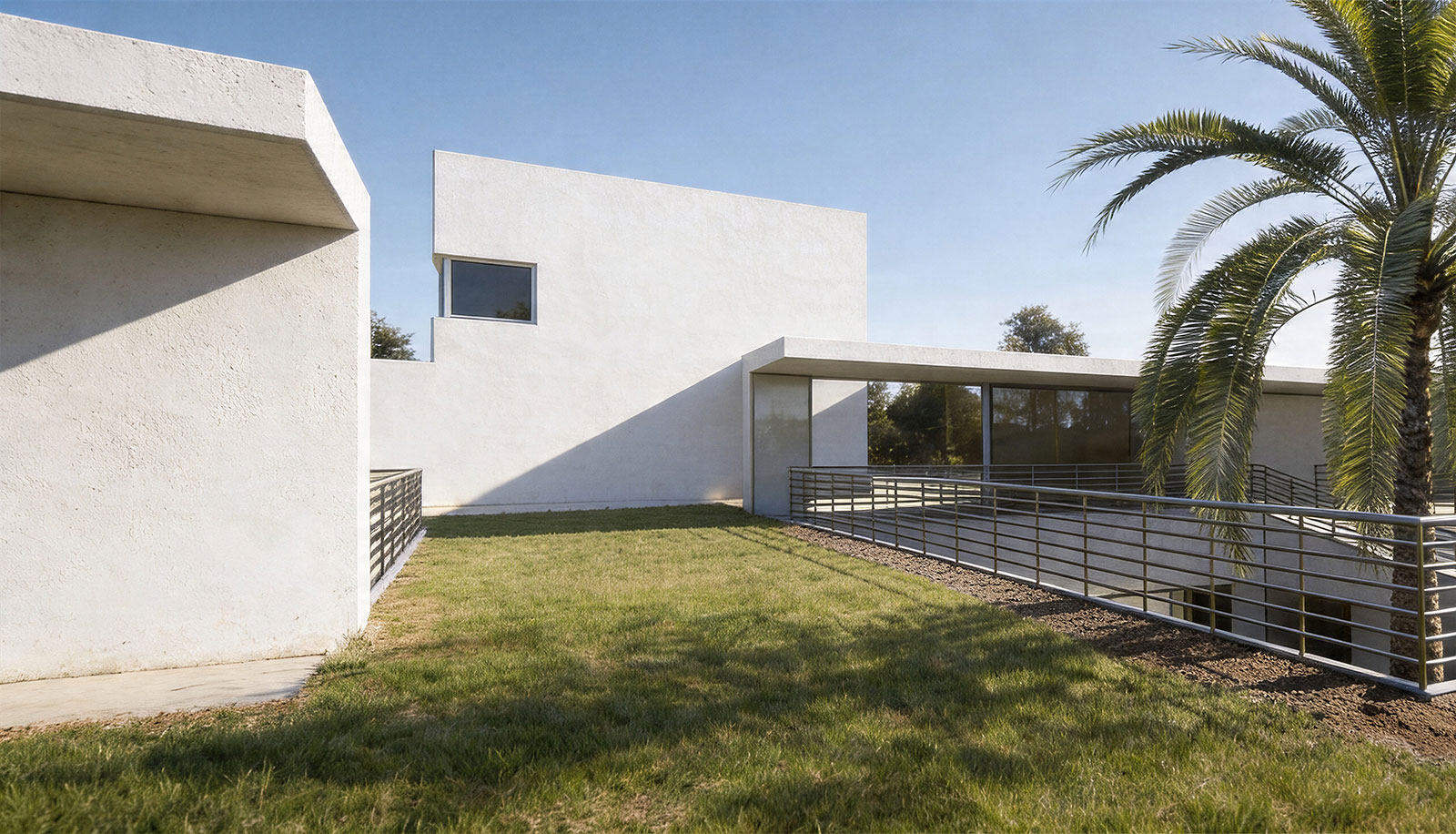
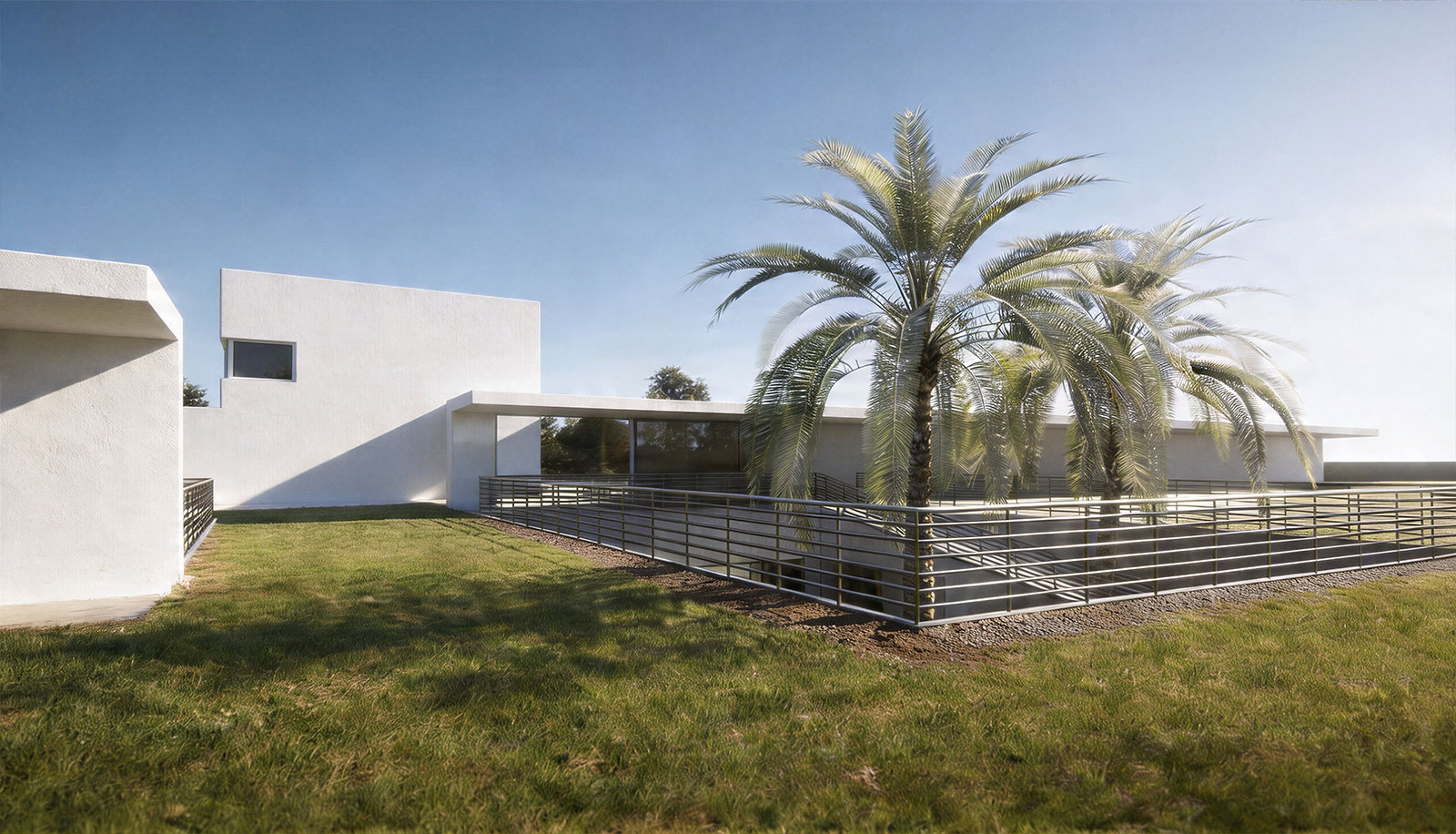
The architecture is defined by a precise relationship between mass and void. Solid volumes provide enclosure and thermal stability, while internal courtyards introduce light and air, organizing movement throughout the project.
Site Strategy
The site presents a dual orientation: exposure to the existing urban fabric to the east, and open views toward the valley to the northwest.
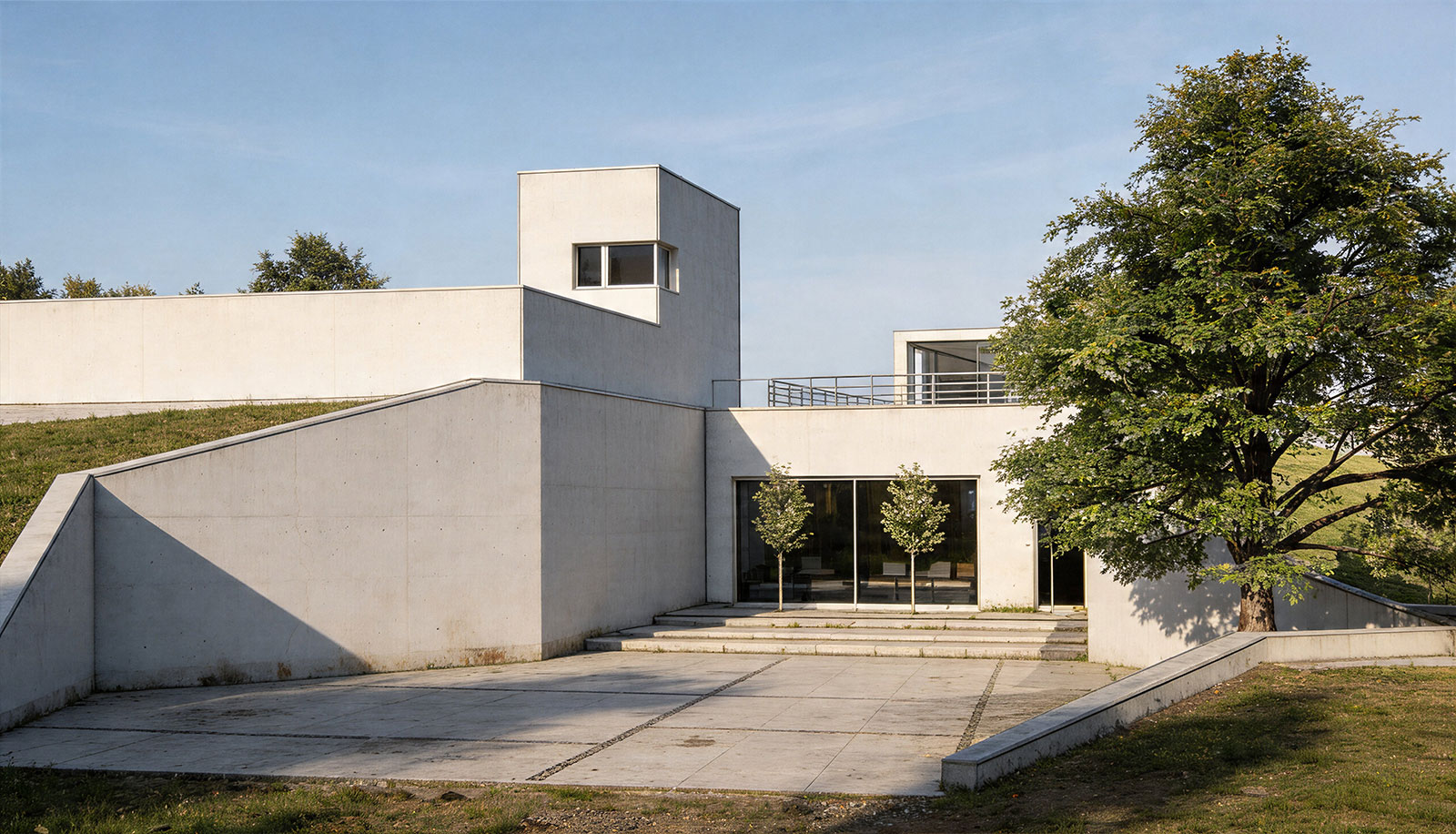
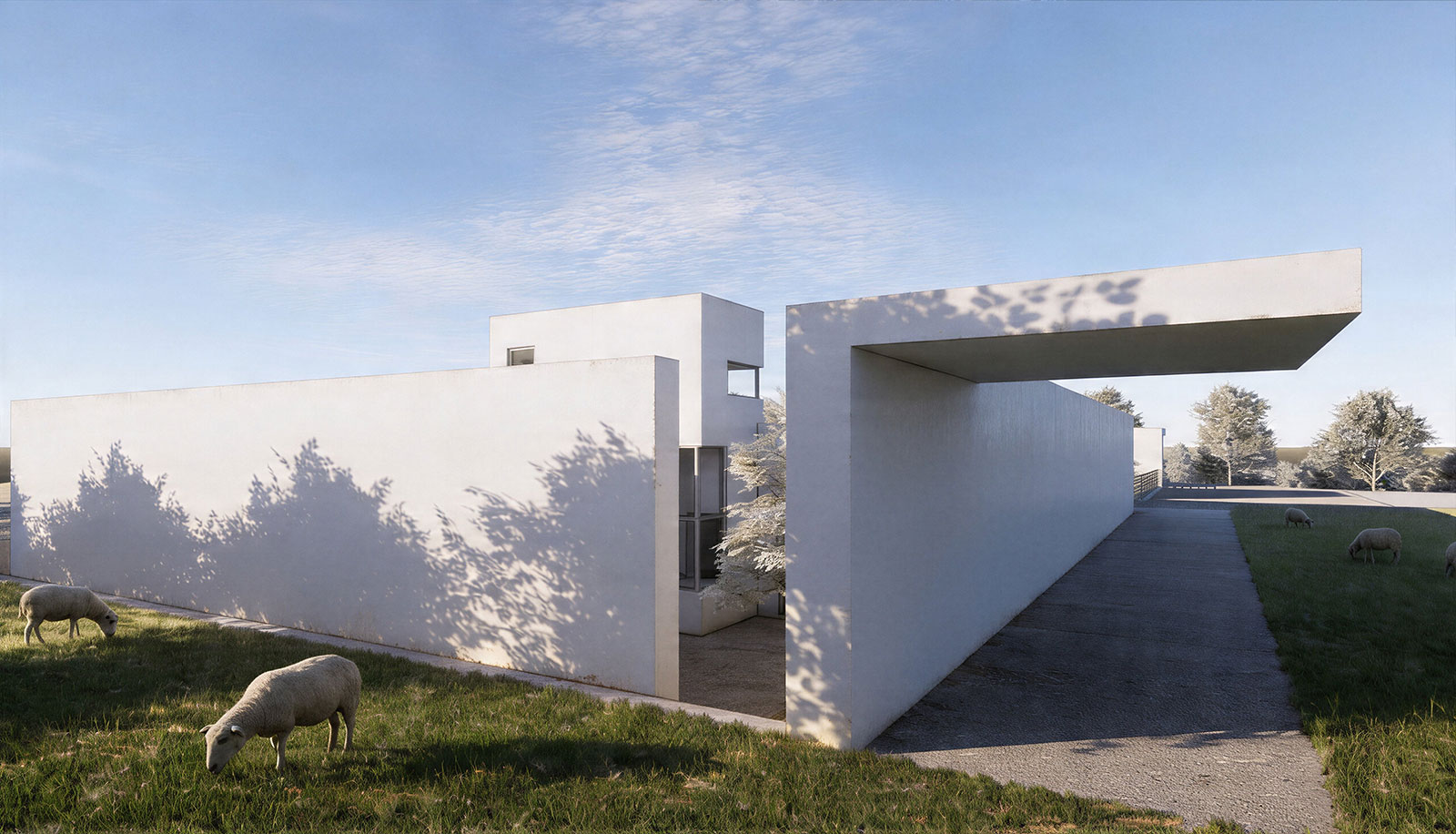
In response, the building adopts a more enclosed character toward the urban side, with controlled openings to ensure privacy. Toward the landscape, it opens through horizontal extensions and carefully oriented apertures.
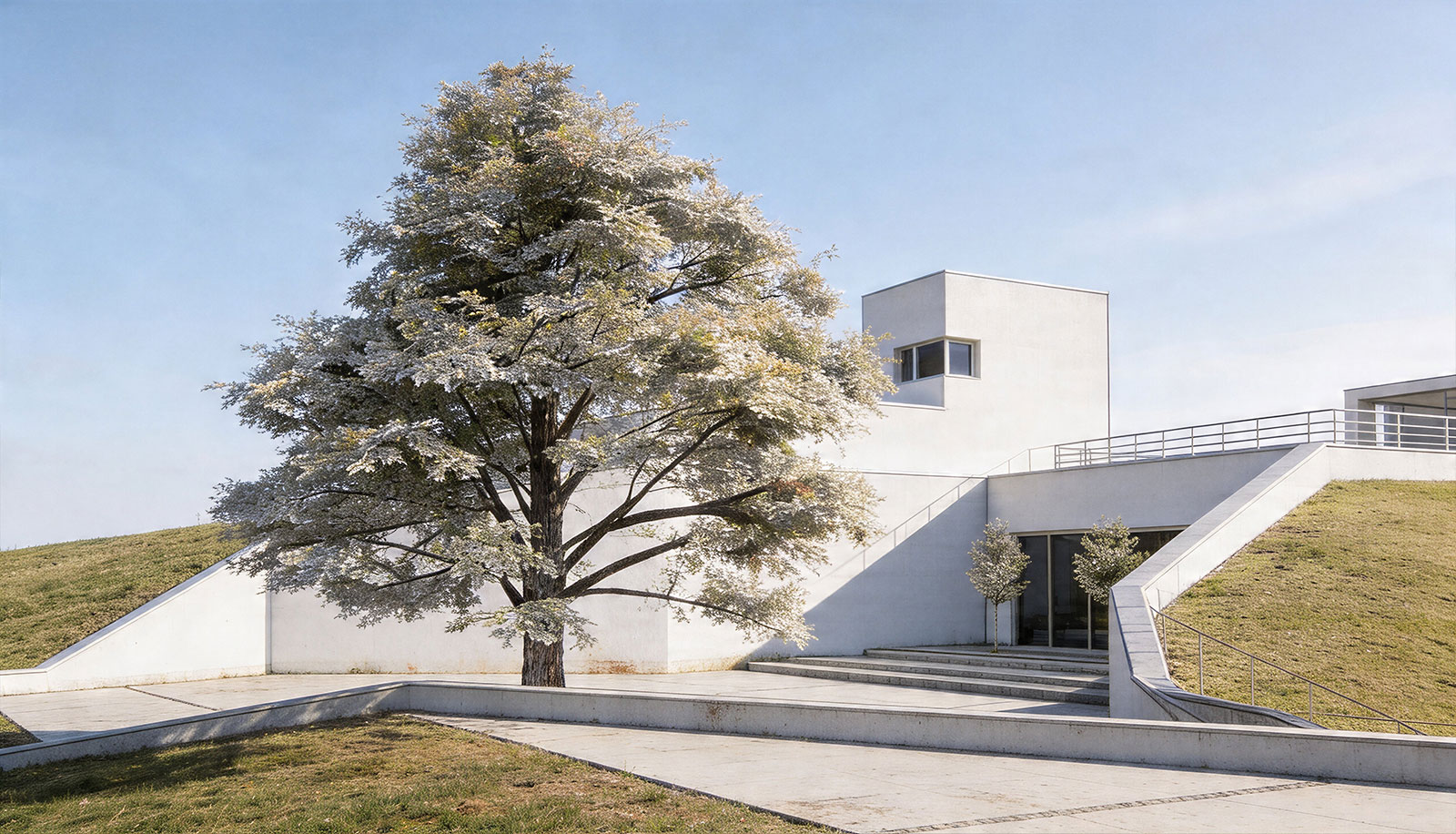
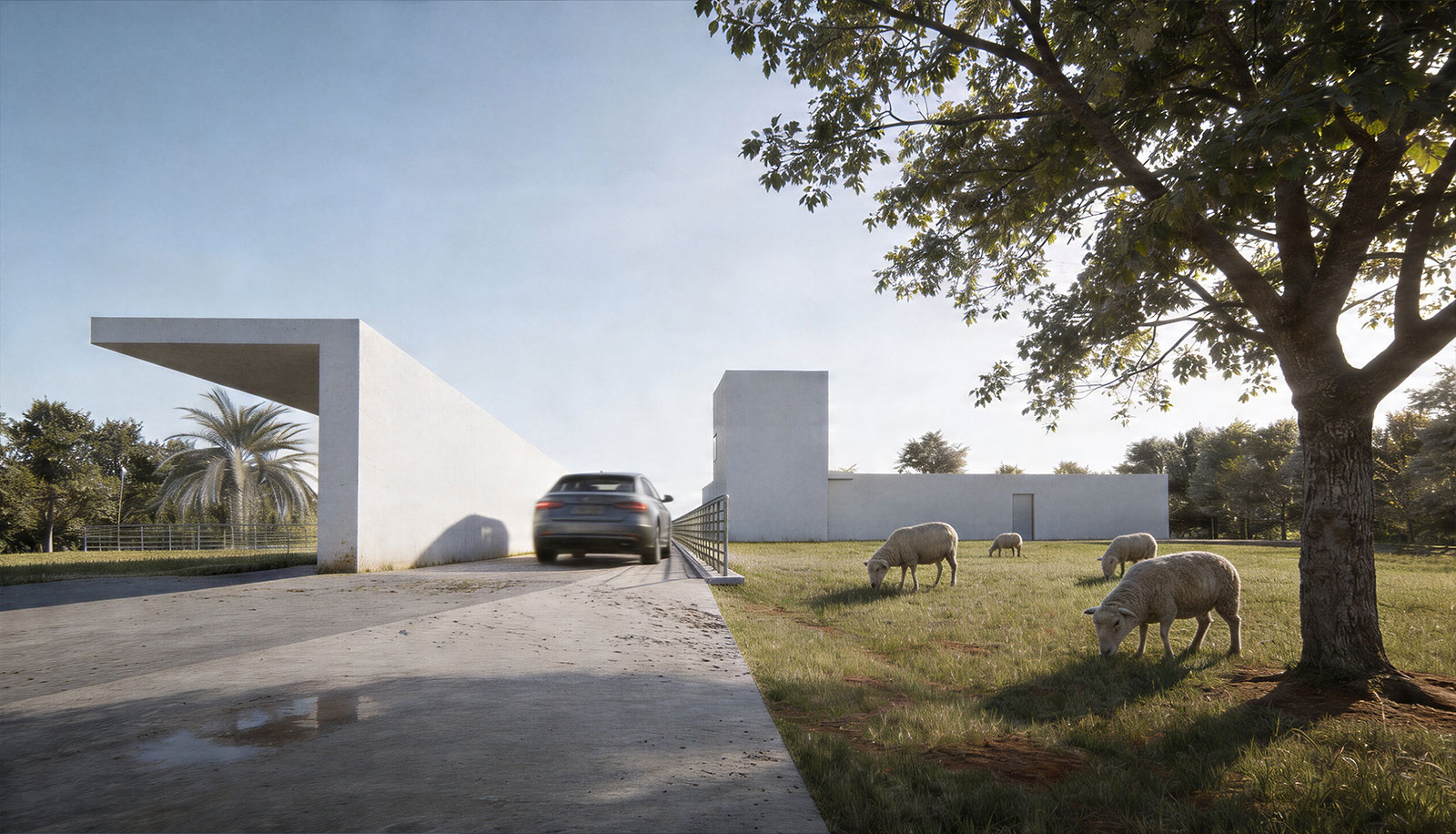
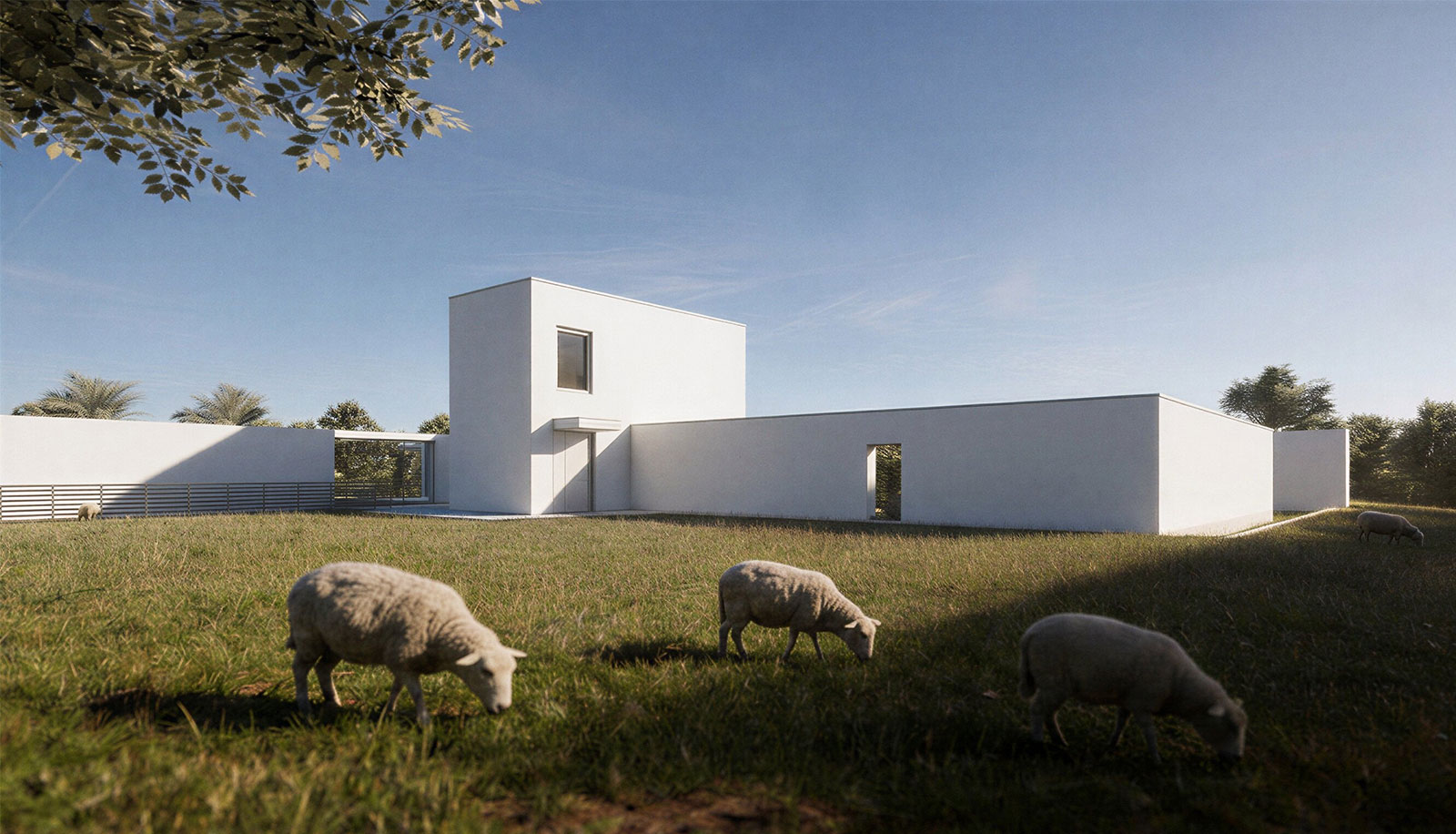
At ground level, the project maintains a low visual profile. Most of the built mass is embedded within the earth, allowing the natural terrain to remain visually dominant.
Spatial Organization
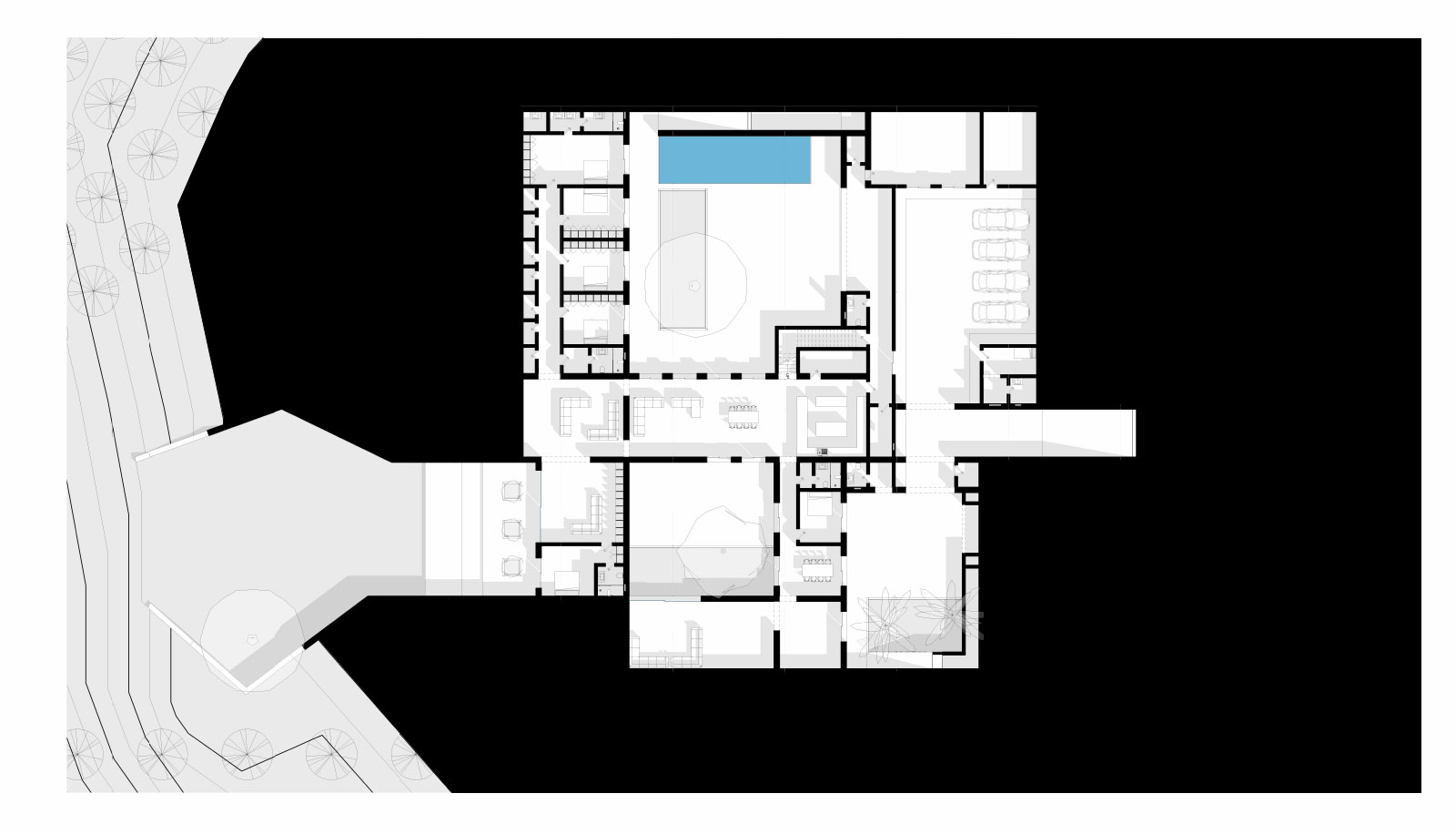
The program consists of seventeen functional spaces distributed across two levels, organized through a clear zoning strategy that separates different modes of use.
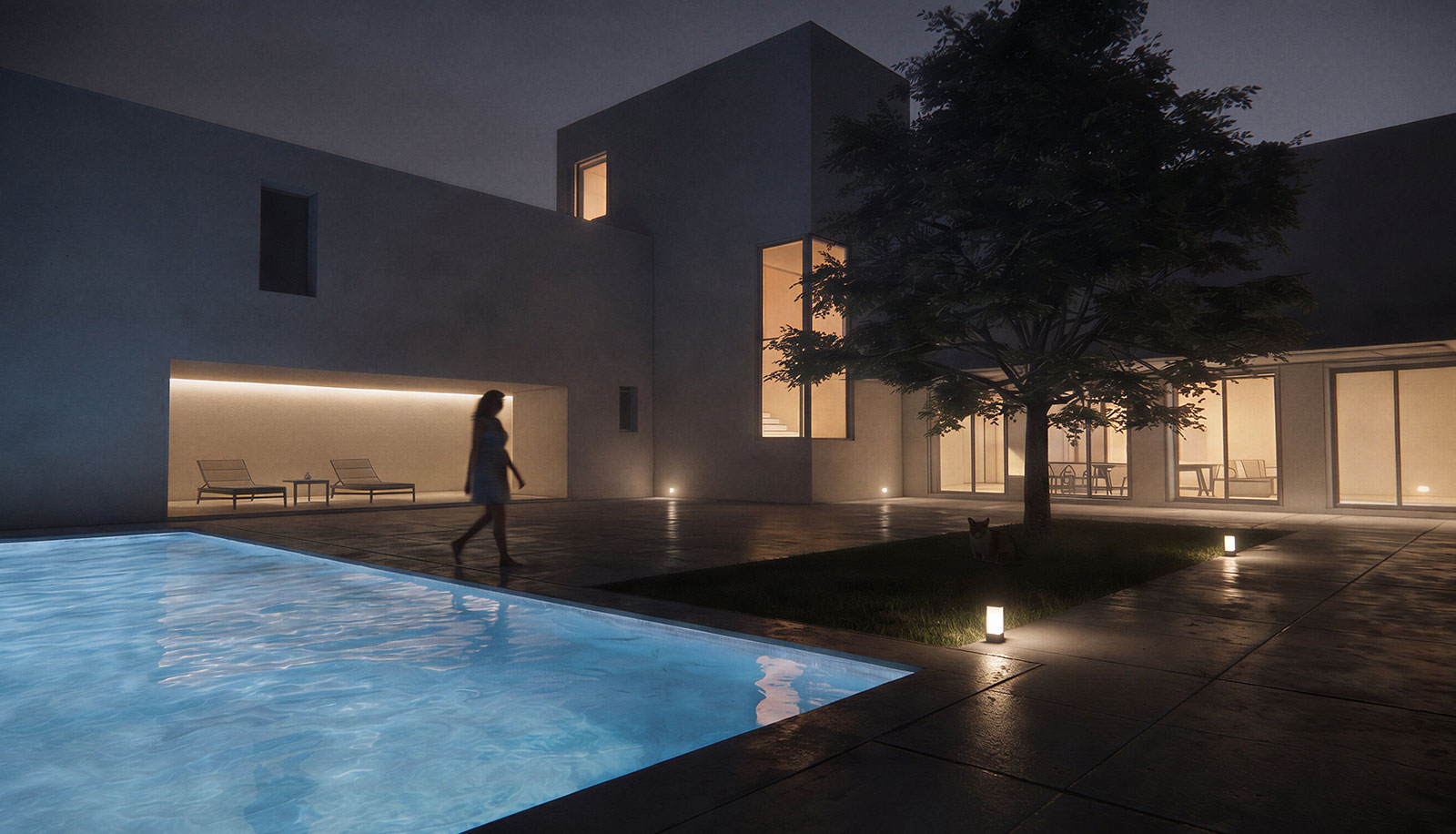
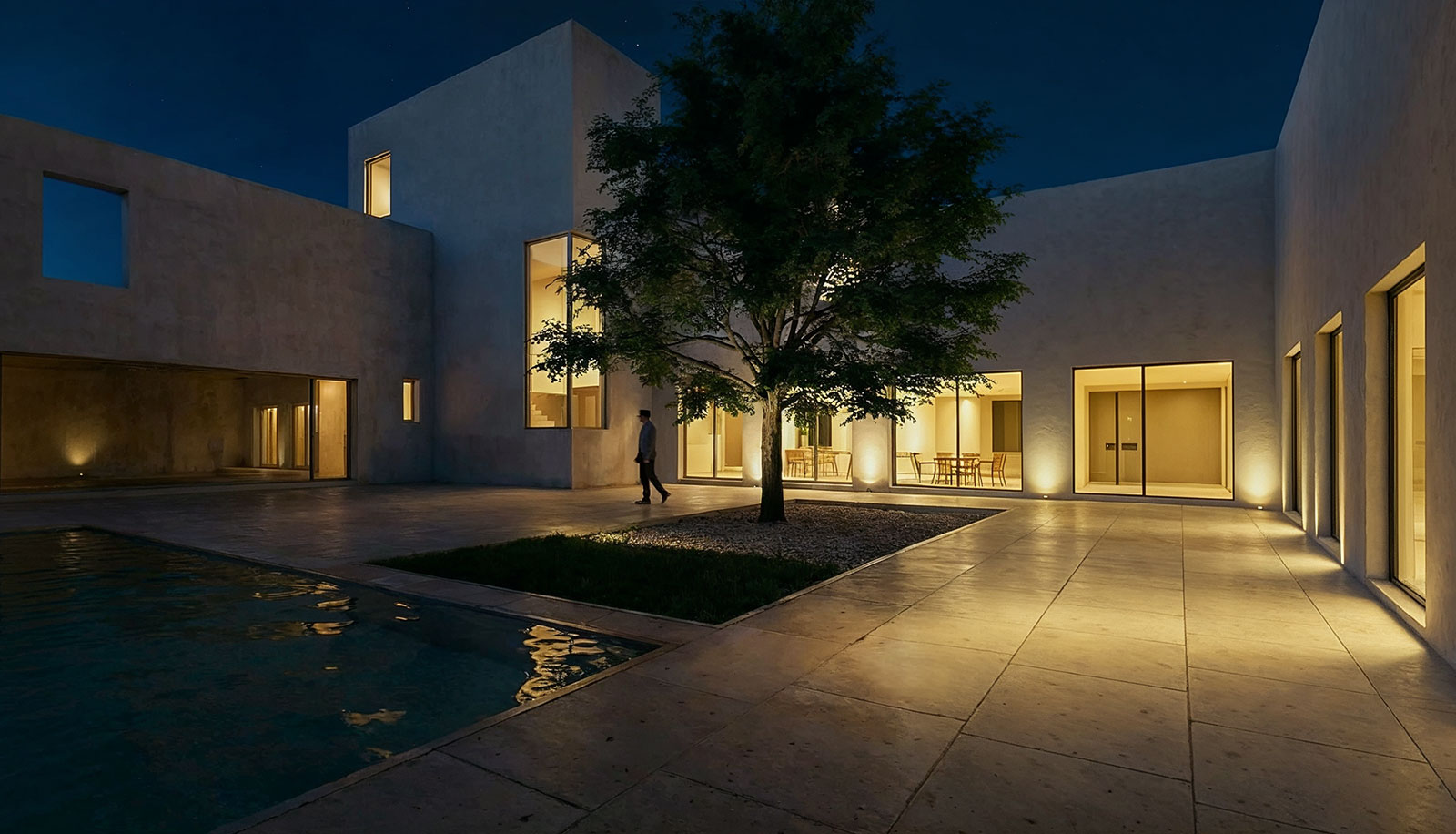
The daily living zone forms the core of the project. It includes the living, dining, and kitchen areas, directly connected to the main courtyard, which accommodates a swimming pool, an outdoor kitchen, and a fitness space. This configuration establishes a continuous relationship between interior and exterior life.
The private residential zone is located on the northern side of the project. It includes three bedrooms, two master suites, and a private sitting area oriented toward the valley. This zone provides a higher level of privacy and a controlled spatial environment.
The guest zone is designed as an independent entity. Organized around its own courtyard, it includes a reception space and a guest bedroom, ensuring a clear separation between family life and hospitality functions.
Courtyard System
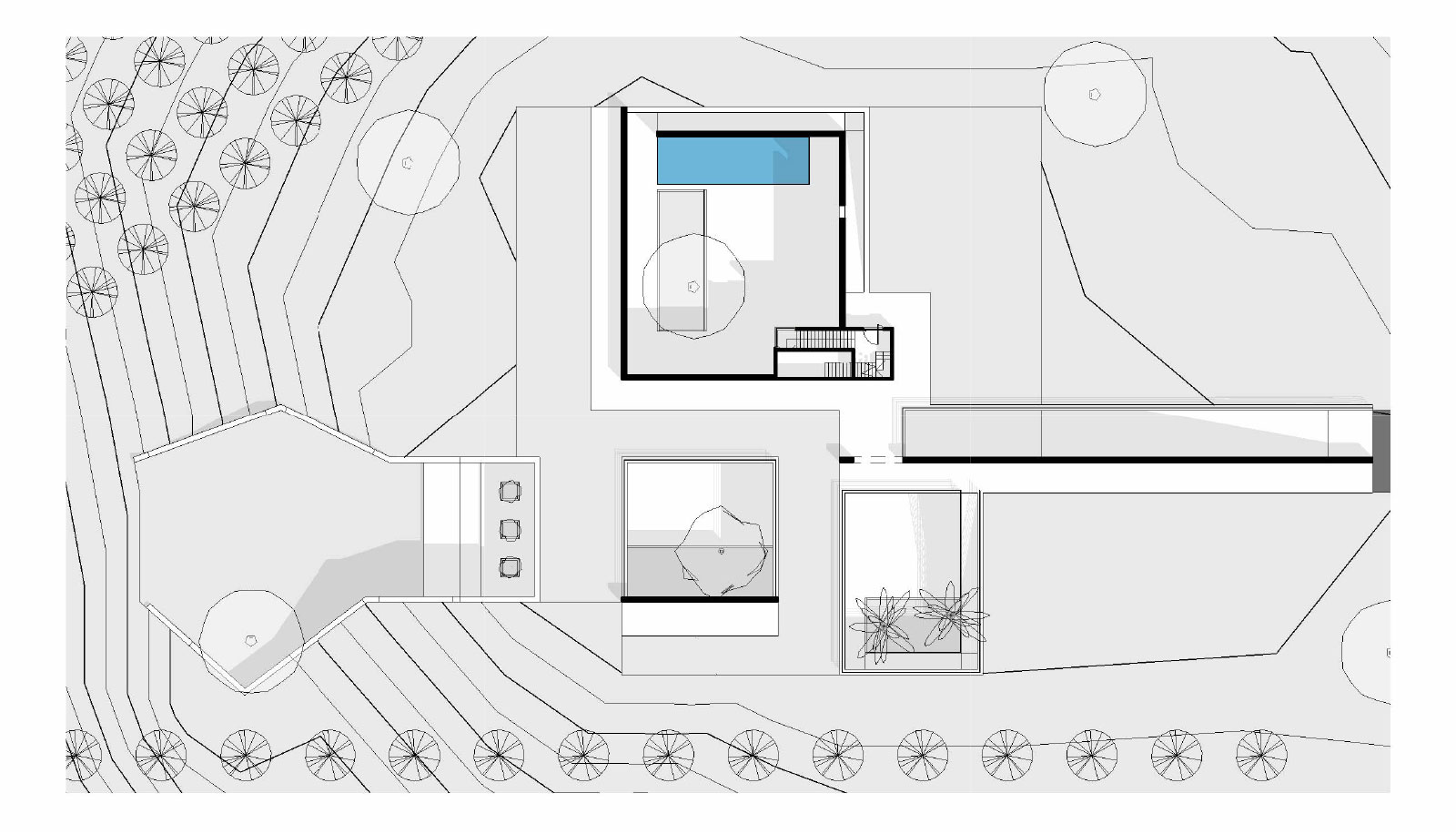
The project is structured around multiple courtyards rather than a single central space. Each courtyard plays a specific role within the overall spatial system.
The main courtyard organizes daily activities and connects interior spaces to outdoor functions. The guest courtyard establishes a semi-independent domain. Secondary open spaces act as transitional elements between enclosed volumes and exposed exterior conditions.
This system creates a clear spatial hierarchy while supporting natural ventilation and balanced daylight distribution.
Circulation and Access
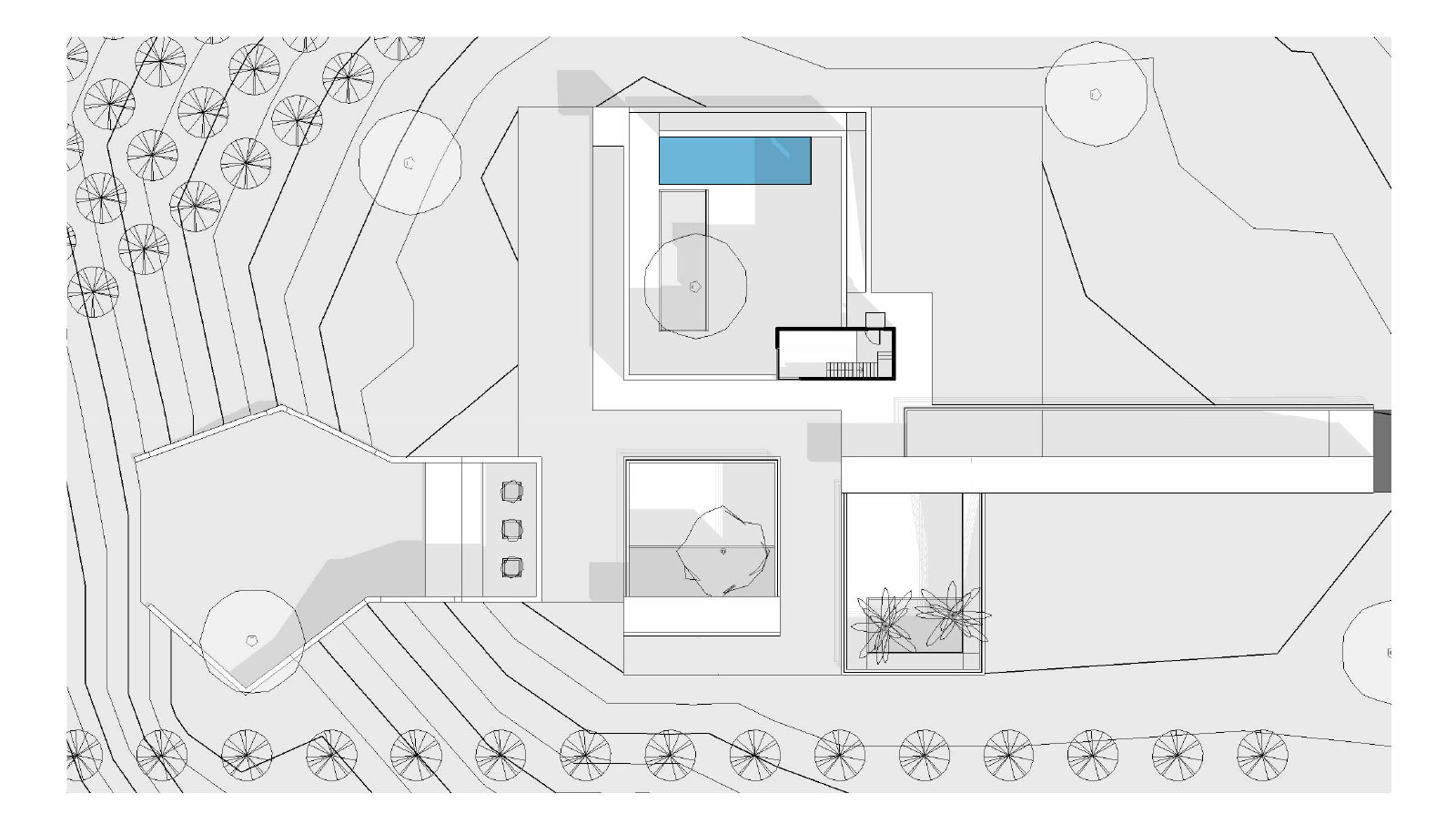
Access to the project is defined through a descending path that connects ground level to the main entrance at the lower level. This movement creates a gradual transition from an open landscape to a more contained architectural environment.
At the point of arrival, circulation converges between service areas, the guest zone, and the main entrance, ensuring clarity and efficiency of movement.
Vertical Element
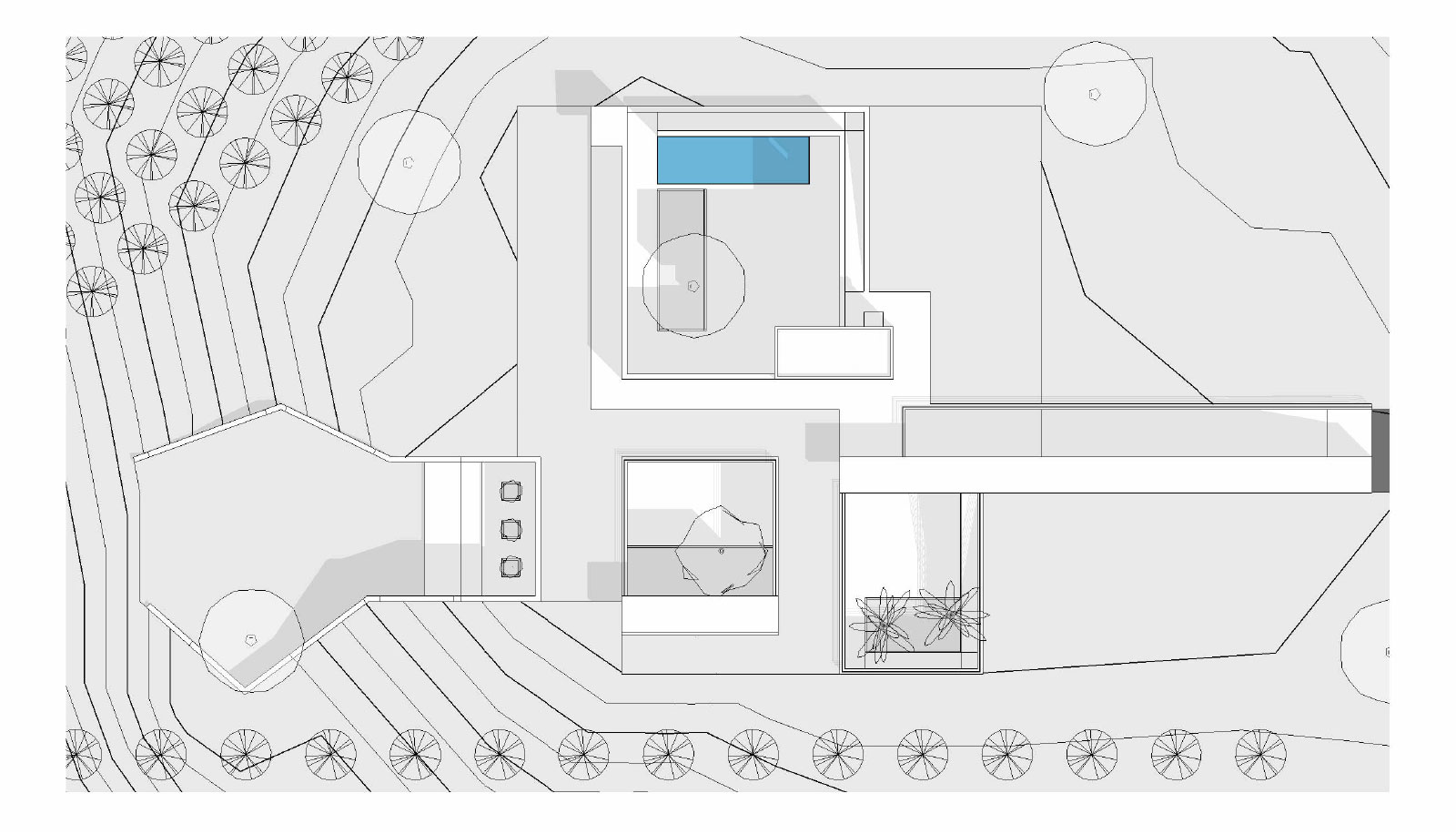
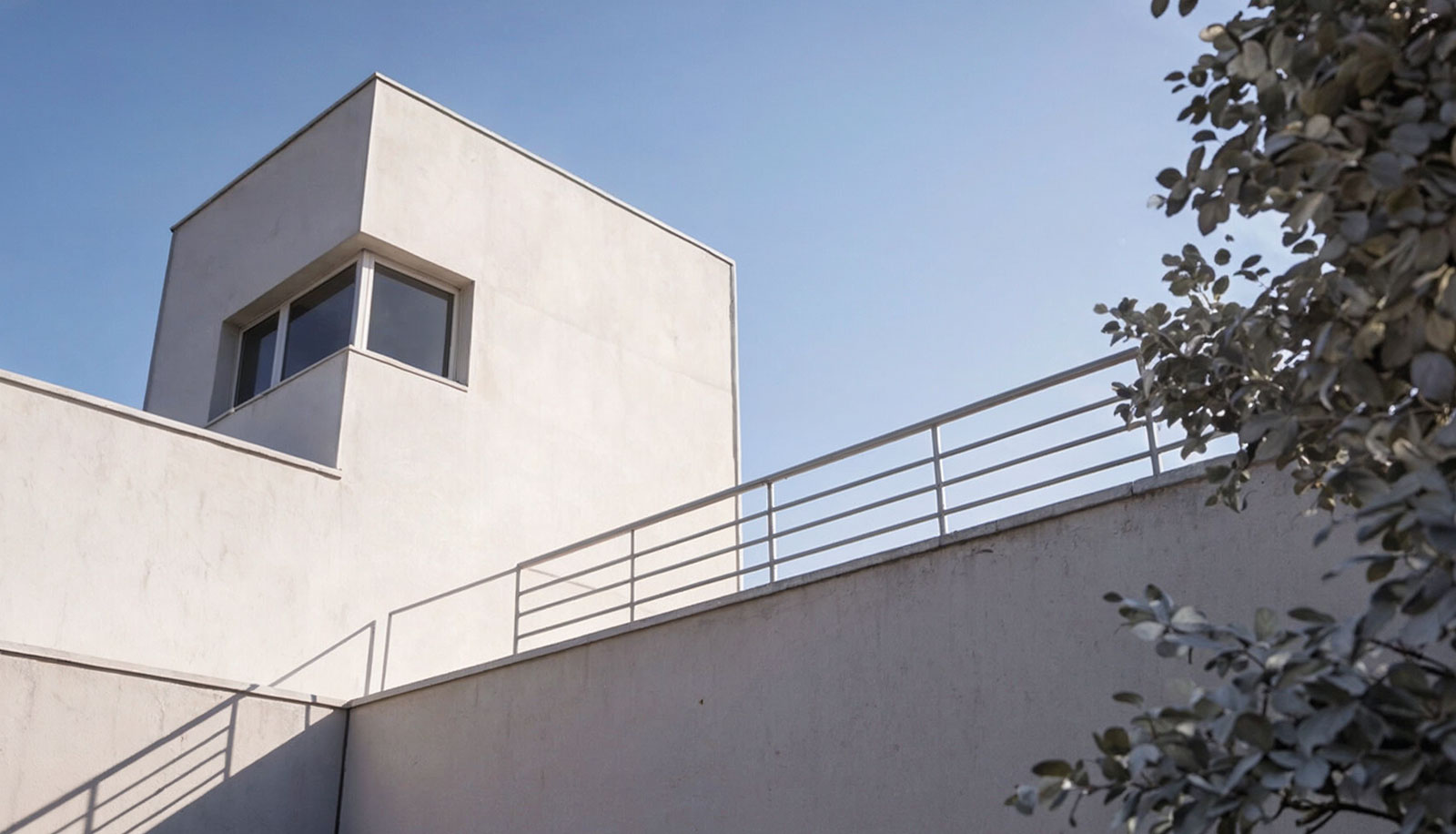
While the project is predominantly horizontal, a distinct vertical element emerges in the form of the staircase volume, which extends upward to accommodate an office space.
This tower acts as a visual landmark within the project, offering panoramic views over the site and surrounding valleys. It introduces a contrasting spatial condition, shifting from embedded and inward-oriented spaces to an elevated and open perspective.
The tower establishes a balance between the horizontal extension of the building and a controlled vertical presence.
Material and Construction
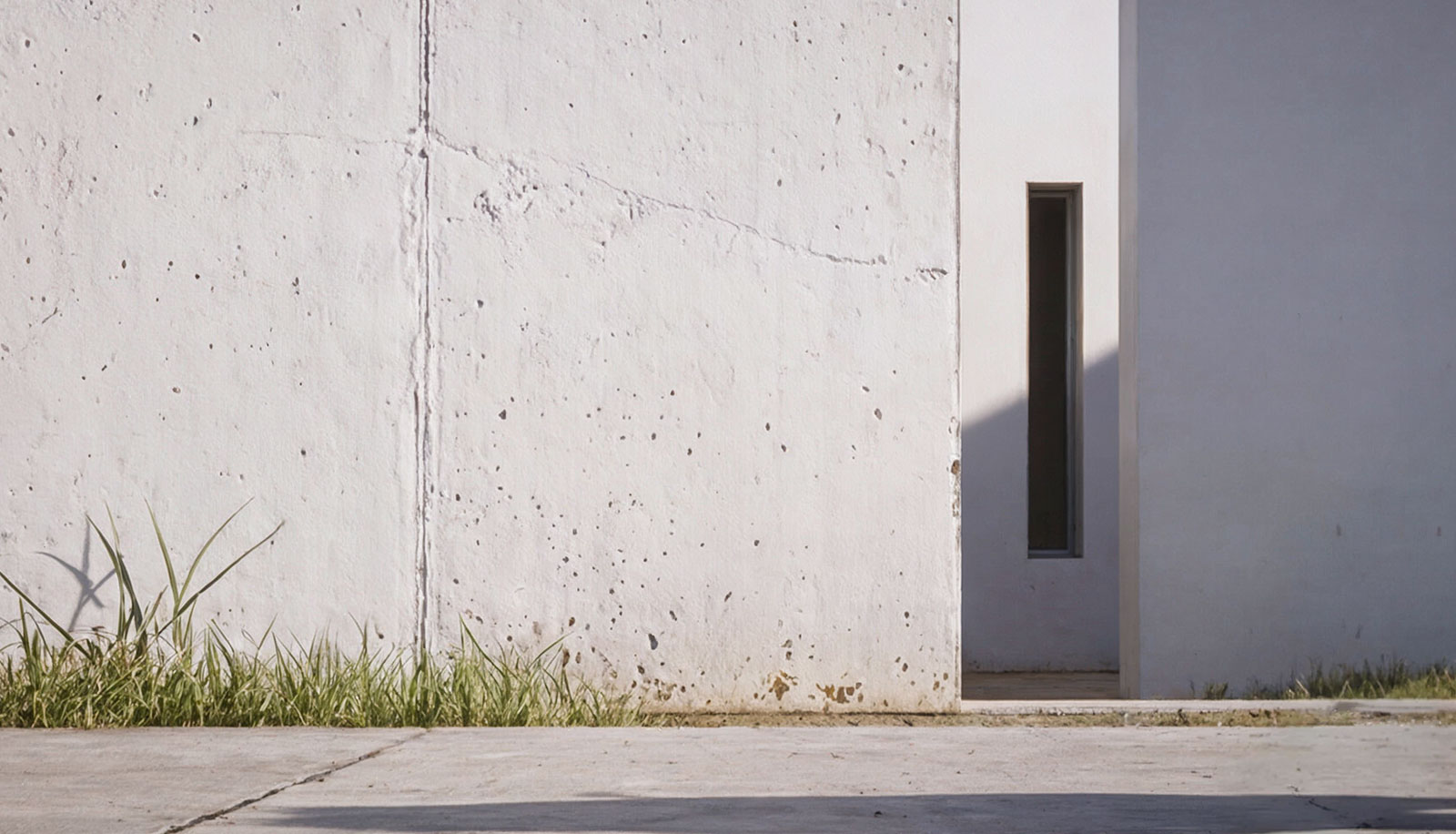
The project utilizes cast-in-place reinforced concrete as its primary structural system, providing durability and thermal mass.
Internal walls are constructed using blockwork, while external surfaces are finished with insulated render. A green roof covers most of the building, enhancing thermal performance and visually reintegrating the architecture with the landscape.
The material approach is intentionally restrained, emphasizing mass, light, and proportion.

Environmental Strategy
The project adopts passive environmental strategies derived from traditional architecture. Embedding the building within the ground provides natural thermal insulation.
Courtyards facilitate natural ventilation, while the green roof reduces heat gain. The presence of water within the courtyard contributes to microclimatic cooling through evaporation.
Together, these strategies reduce reliance on mechanical systems and improve indoor environmental comfort.
Spatial Experience
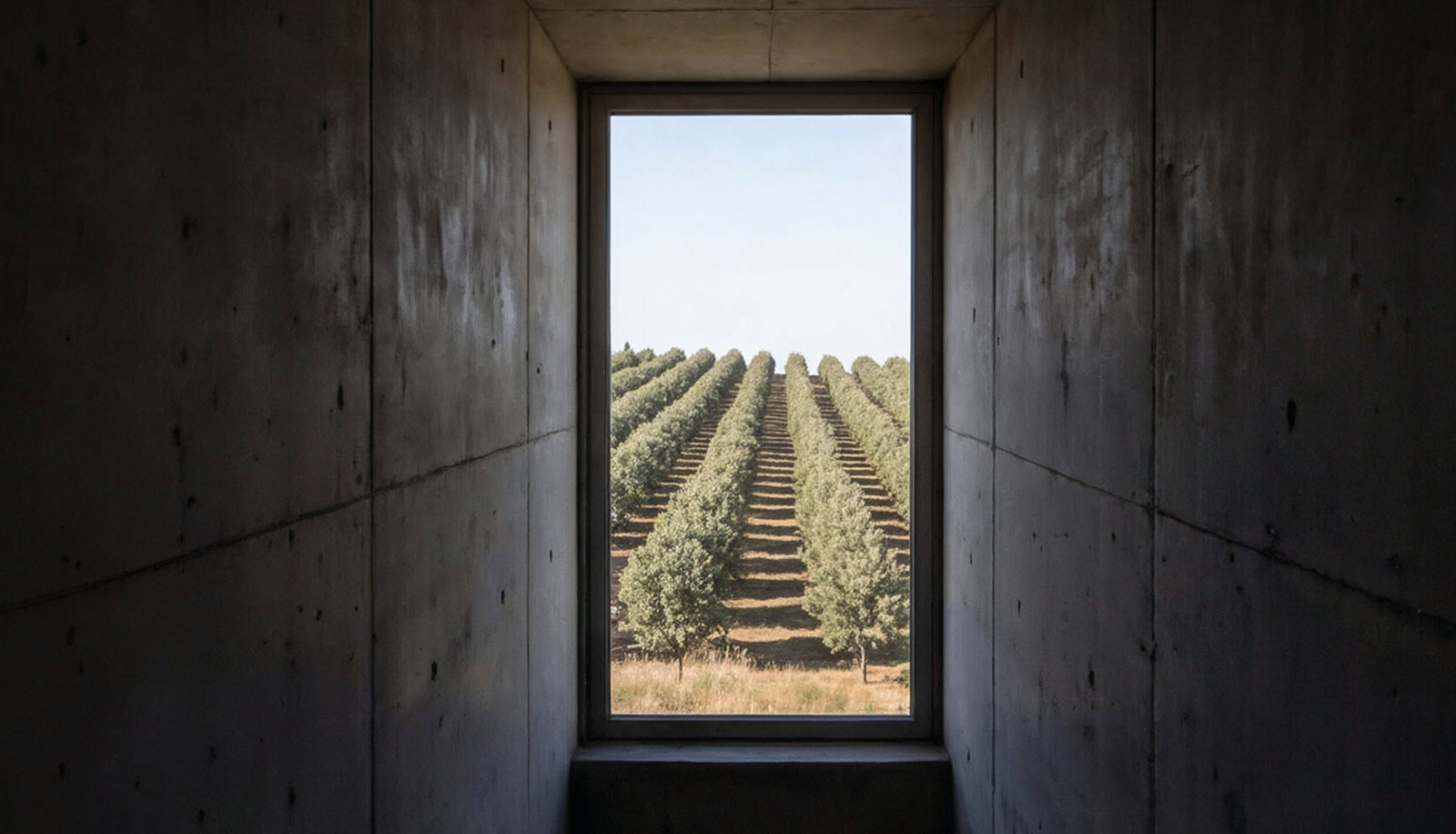
The spatial experience is defined by a sequence of transitions between openness and enclosure. Movement begins in the open landscape and gradually descends into more controlled interior spaces.
Courtyards reintroduce light and sky into the depth of the plan, creating moments of openness within an otherwise contained environment.
The architecture is experienced as a continuous sequence shaped by movement, light, and orientation rather than as a static object.
Conclusion
The Gharyan Villa presents a model of contemporary architecture rooted in place. It redefines the relationship between building and landscape through integration rather than separation.
By organizing space around courtyards and embedding the structure within the ground, the project achieves a balance between privacy and openness, tradition and modernity.
It demonstrates that contemporary architectural identity can emerge from a deep understanding of environmental and cultural context rather than formal imitation.