


Mountain House
A Dialogue Between Architecture and Nature on the Slopes of Jabal Al Akhdar
The Mountain House as an Extension of Topography
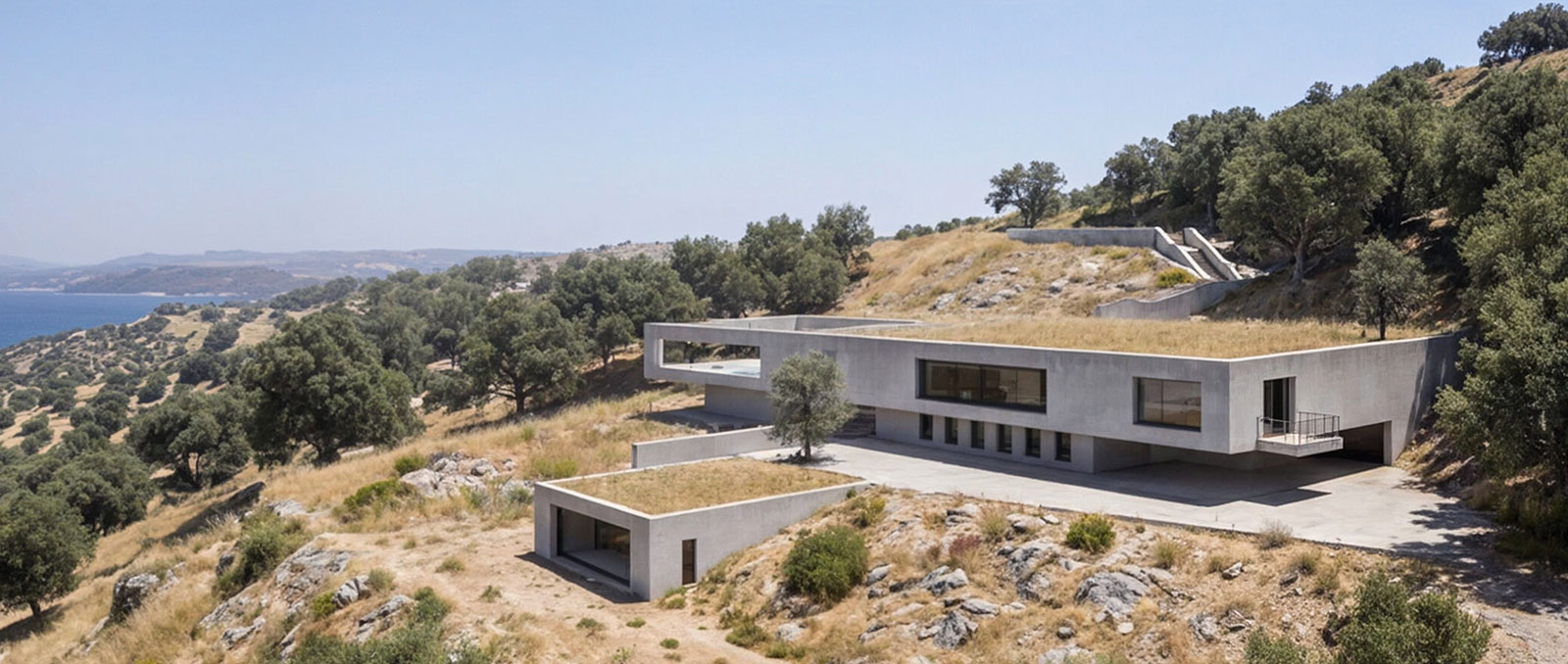
In the heart of the Jabal Al Akhdar highlands in eastern Libya, where the peaks of Al Bayda merge with the horizon of the Mediterranean, Mountain House emerges as a clear architectural statement: form is not imposed upon the land, but rather shaped from within it.
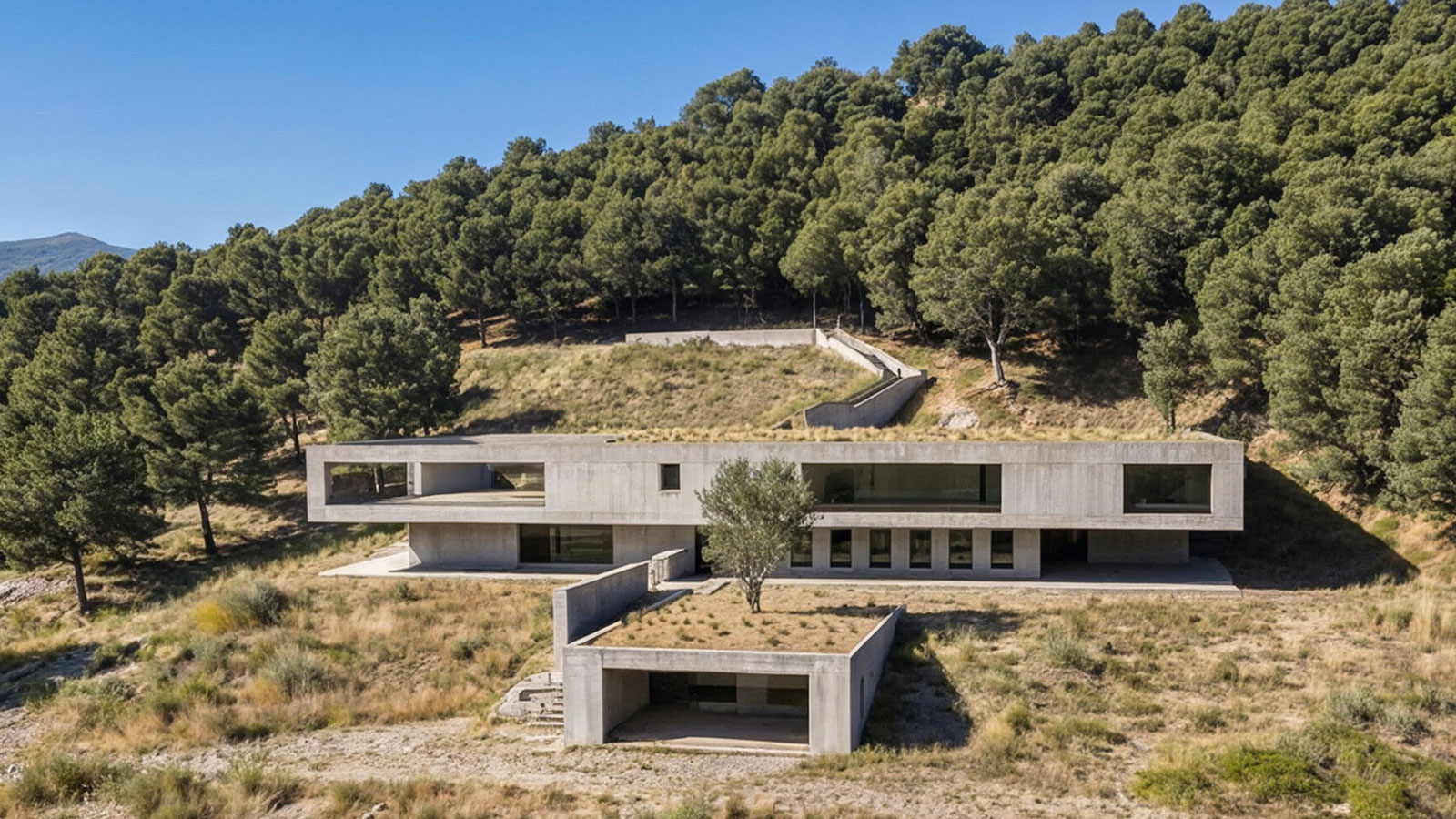
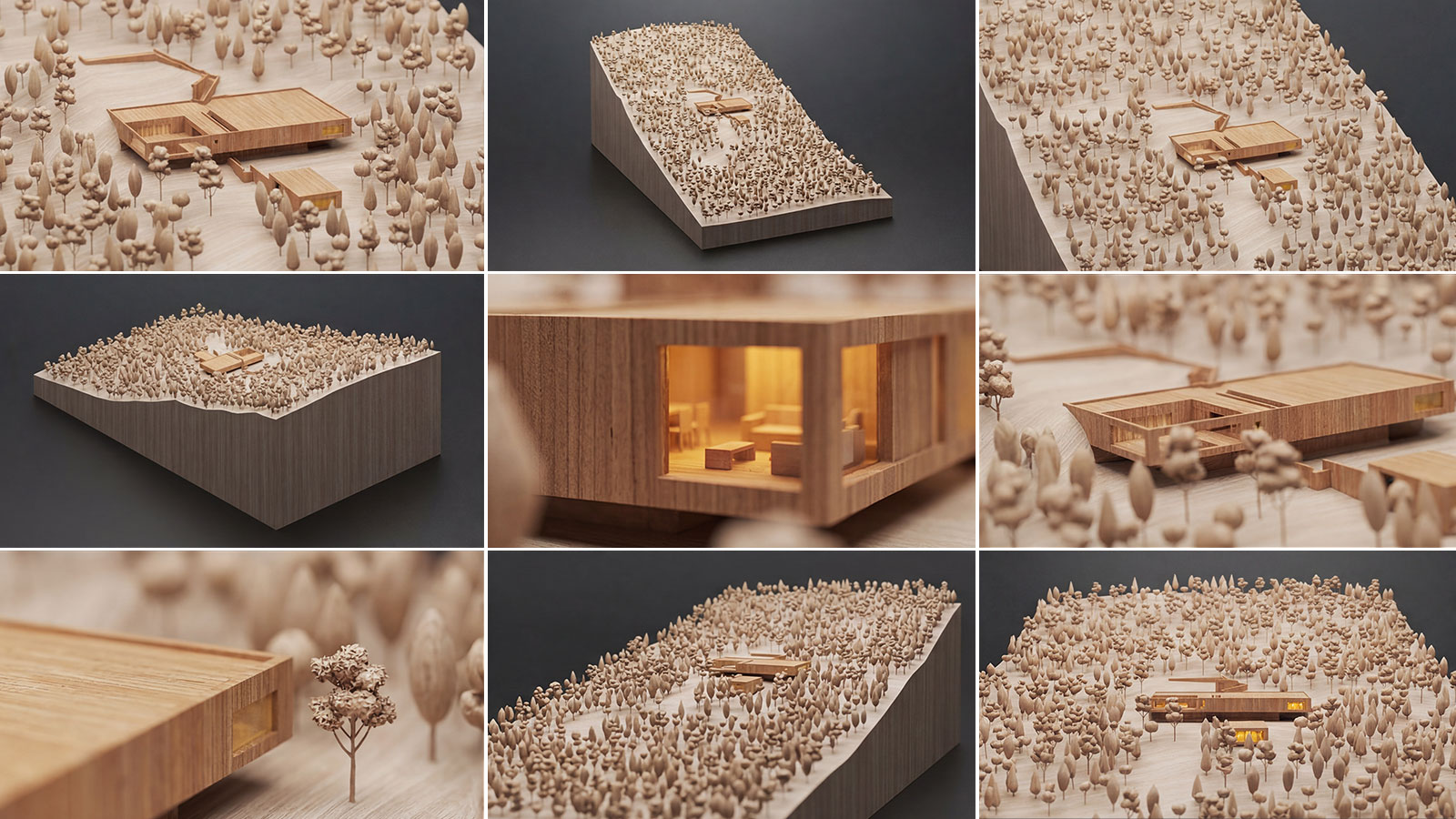
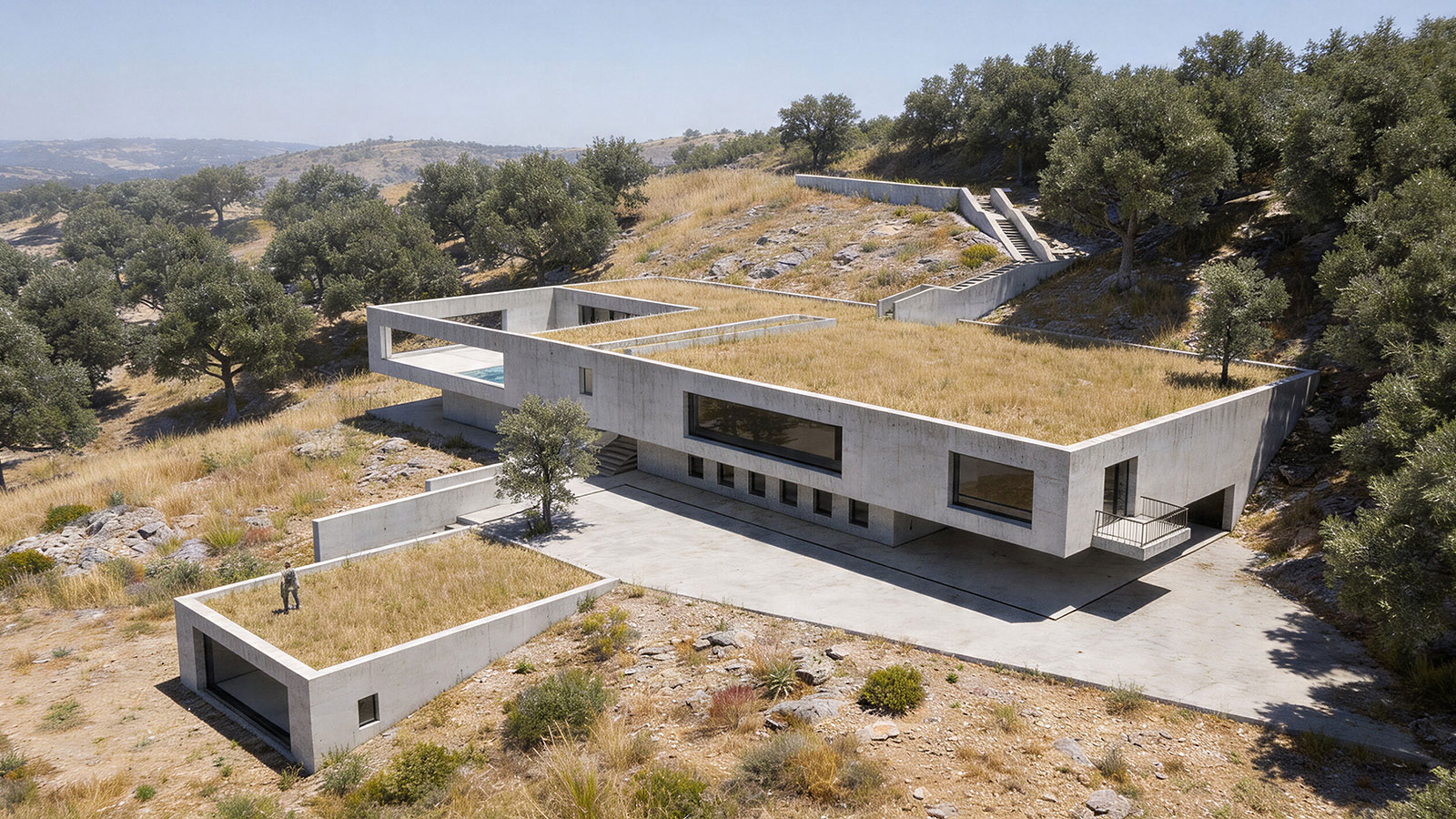
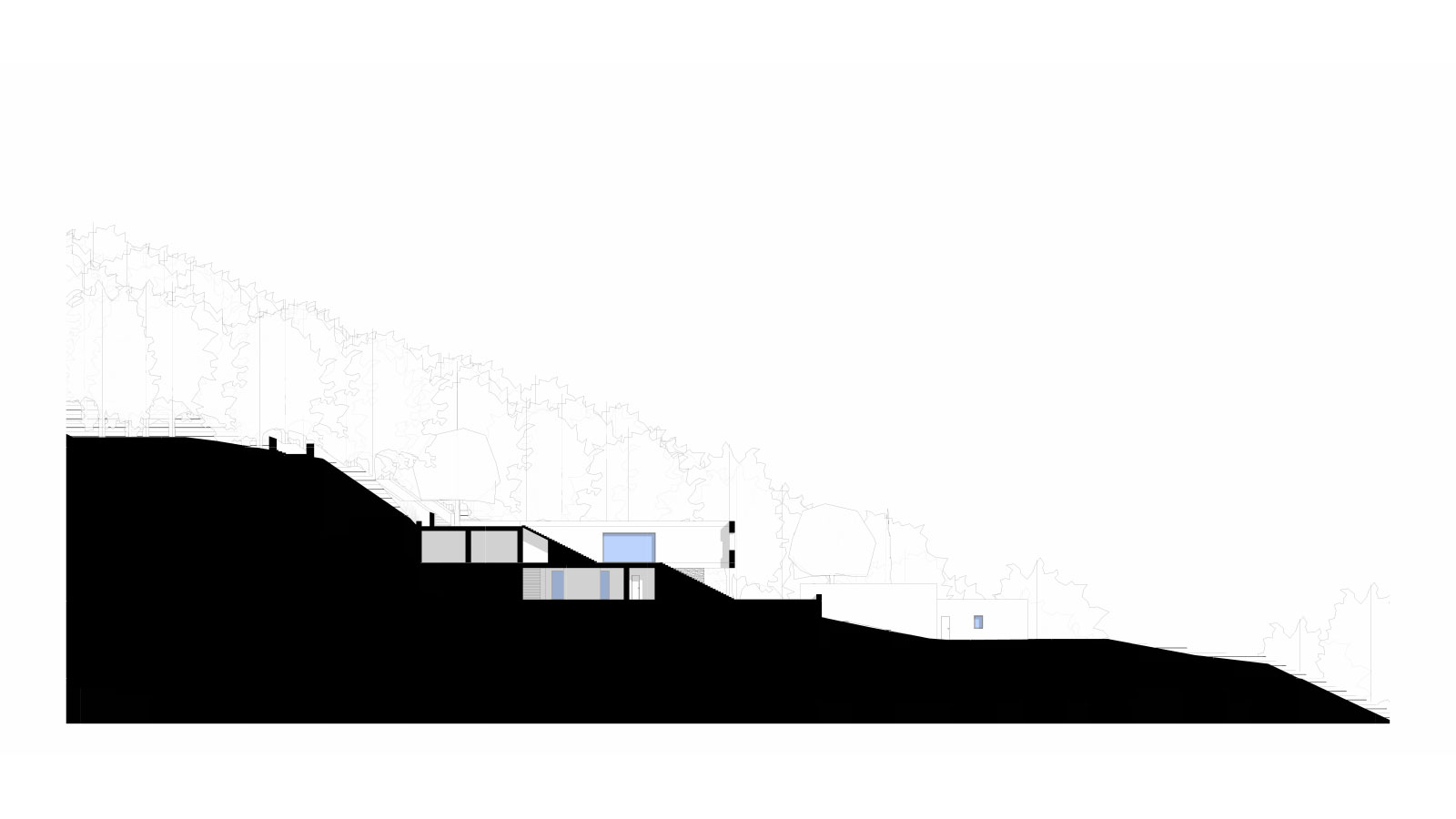
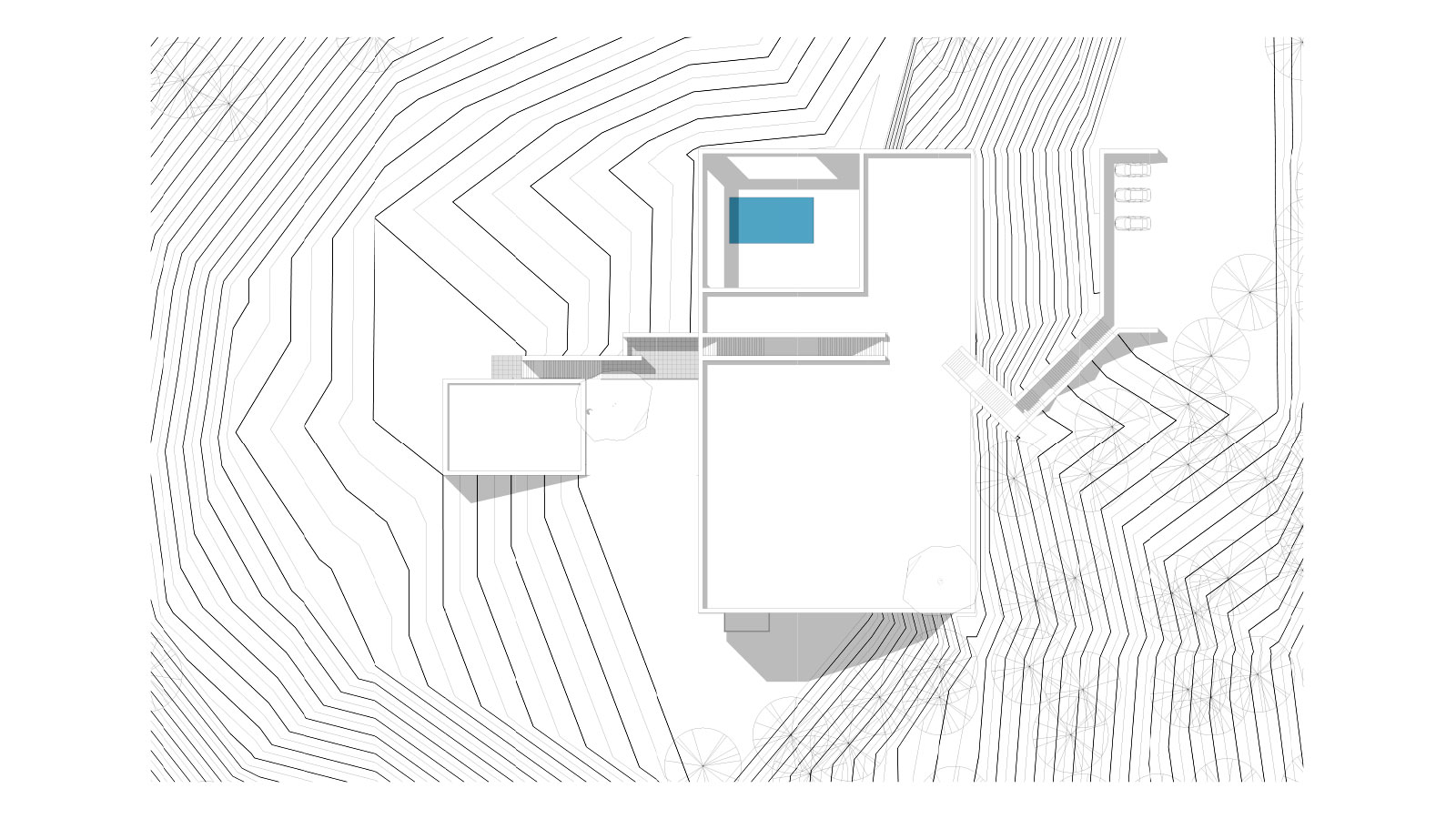
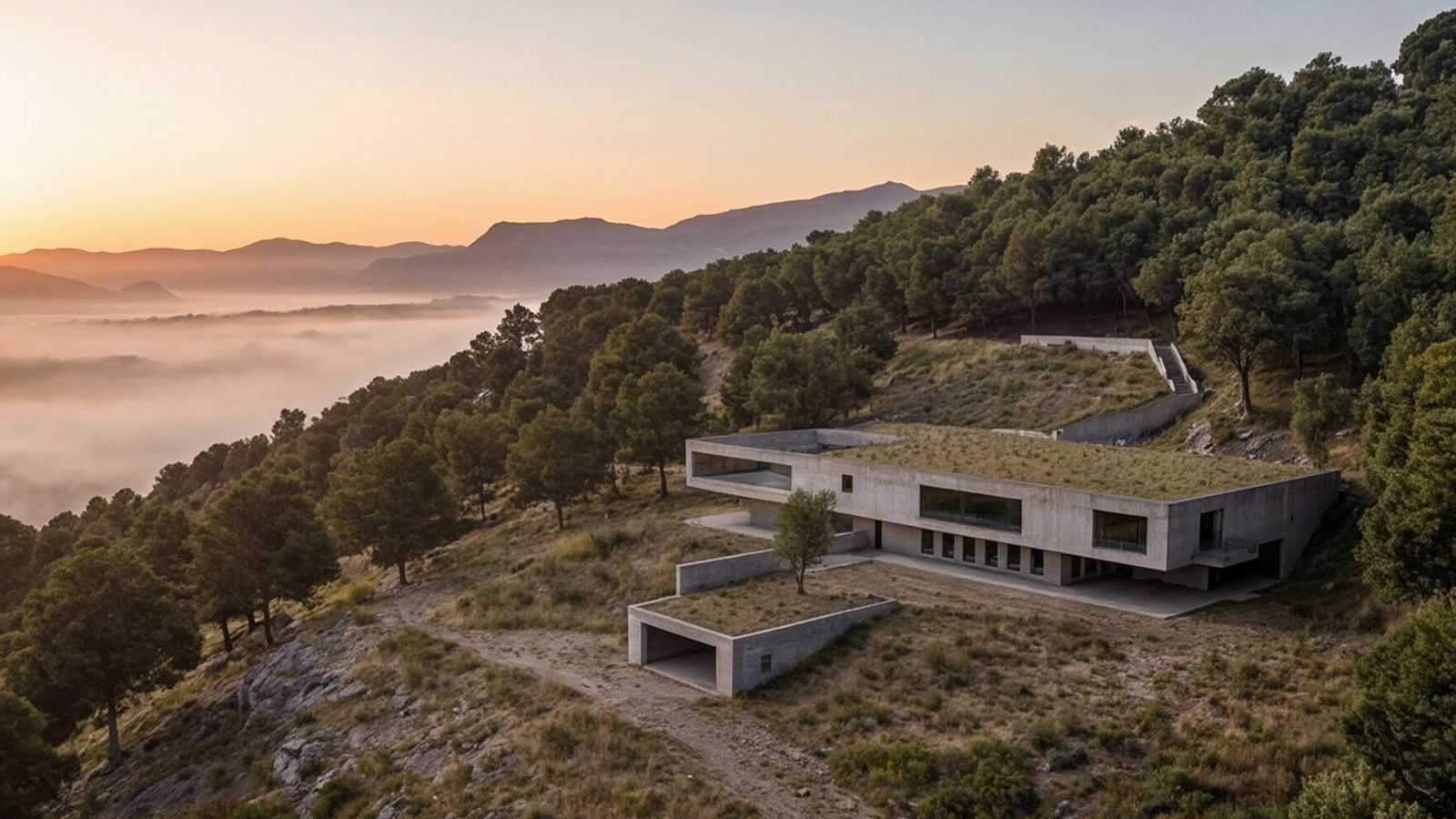
Designed in 2009 by MUFTAH Design, the project is situated on a site of 18,000 m² overlooking the distant northern coastline, specifically the shores of Al-Haniyah and Al-Hamamah . Instead of forming a singular centralized mass that dominates the slope, the building is fragmented into stepped volumes that follow the logic of the natural terrain, transforming the house into an extension of the topography rather than an obstacle to it.
The design is driven by a fundamental duality: controlled enclosure that ensures privacy, and directed openness toward the panoramic northern landscape. The house is not merely a residential function, but a physical framework for inhabitation—one that positions the occupant as part of the mountain rather than a visitor upon it.
“Orientation, view, and privacy are the primary forces shaping the form — the aesthetic sensibility of the materials explores the tectonic interaction between spaces generated through the intersection of volumes.”
- Location: Al Bayda – Libya
- Year: 2009
- Client: Privet
- Designer: MUFTAH Design
- Site Area: 18,000 m2
- Built-up area: 1,145 m2
- Use: Residential
- Phase: Design
- Role: Project Architect
The House as a Topographic Condition, Not an Isolated Object
Embedding into the Ground
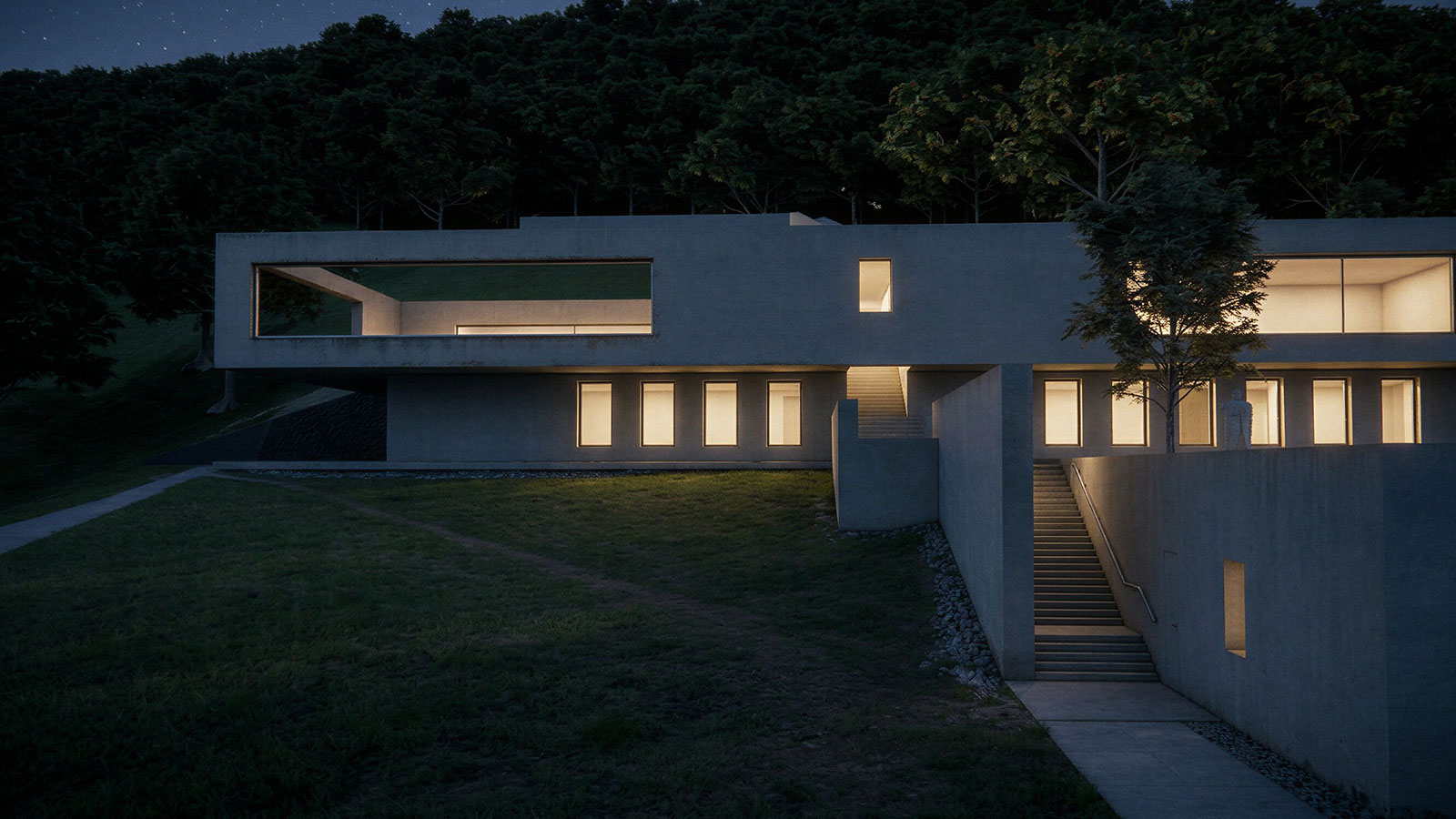
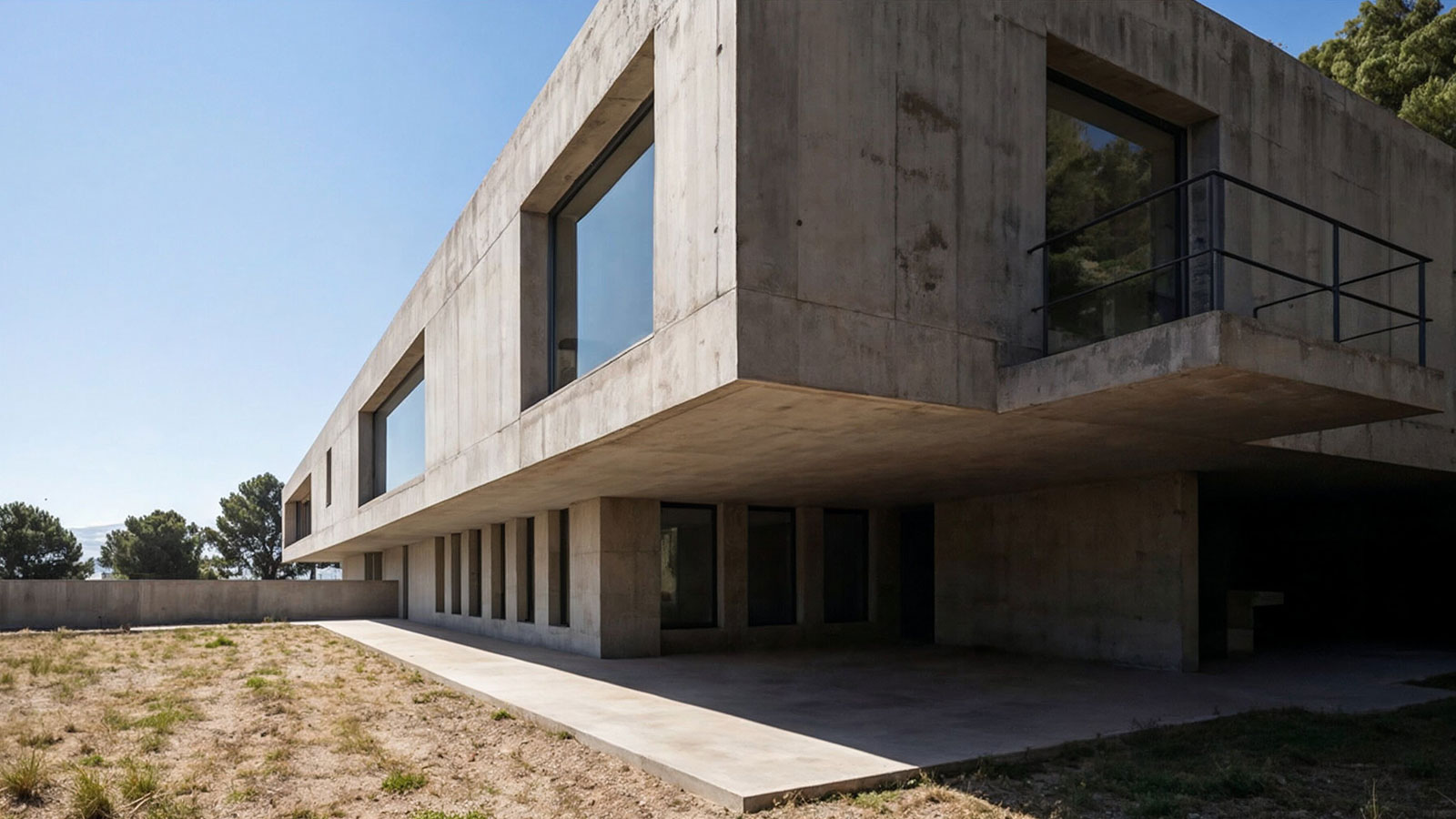
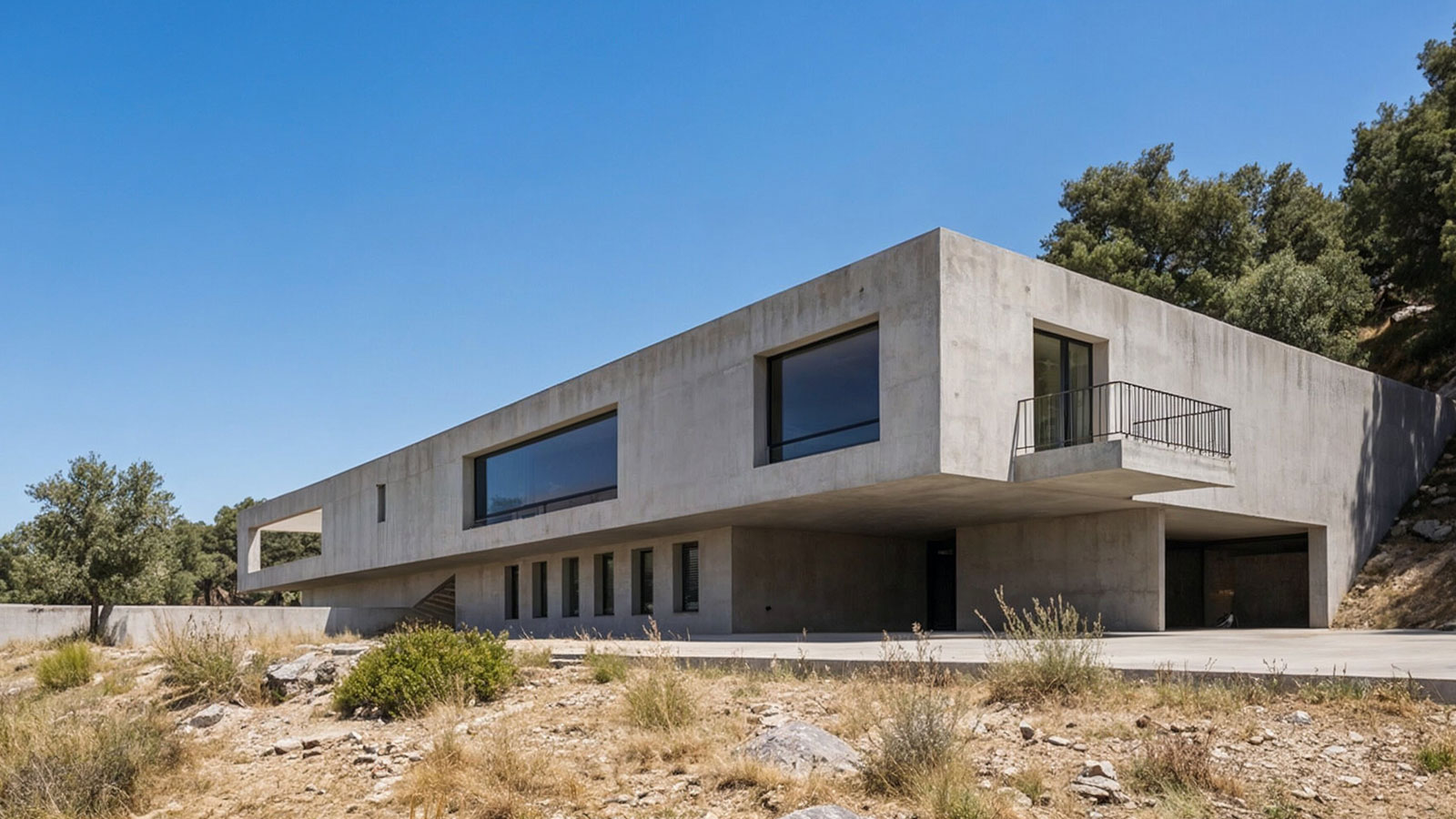
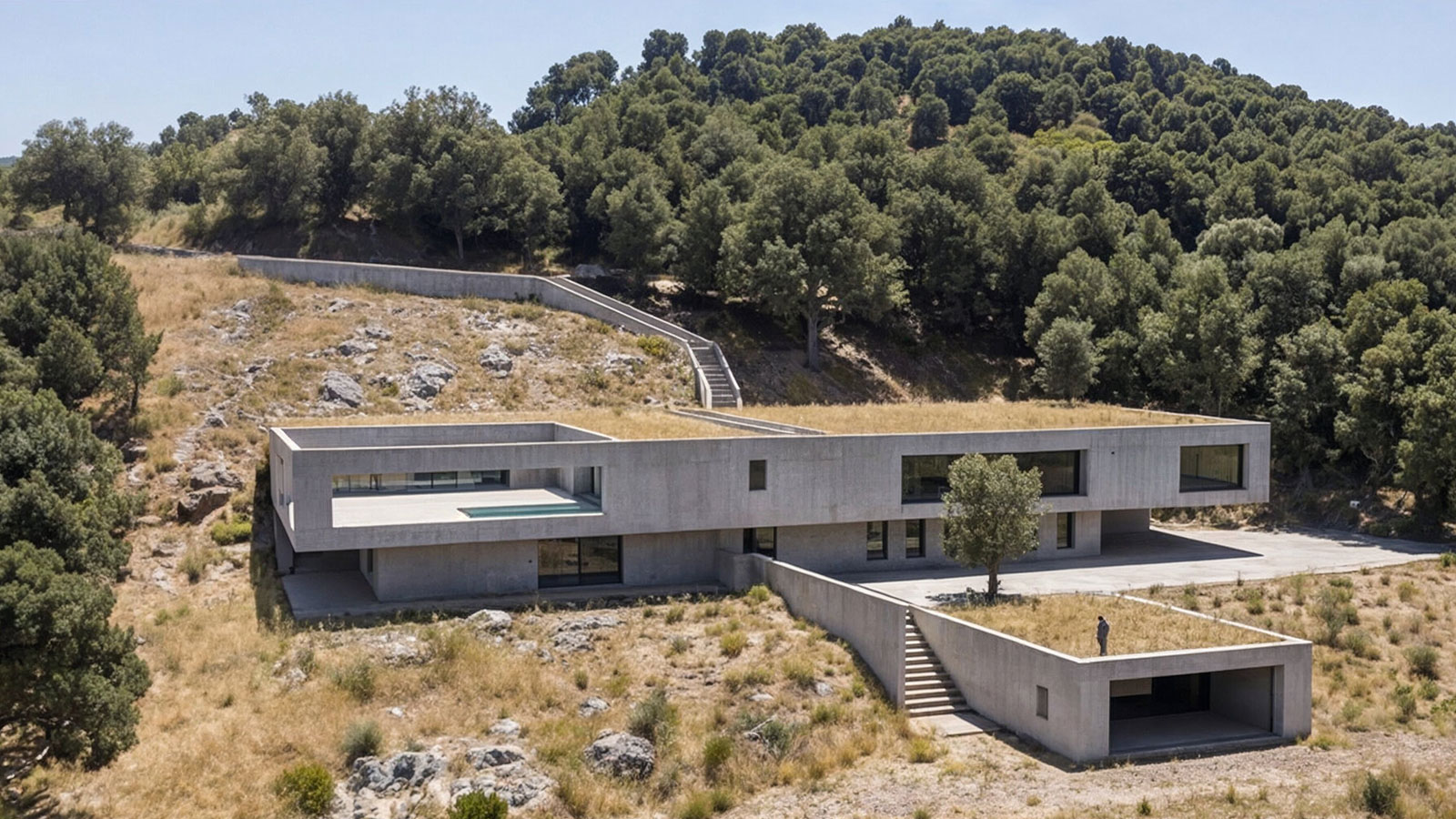
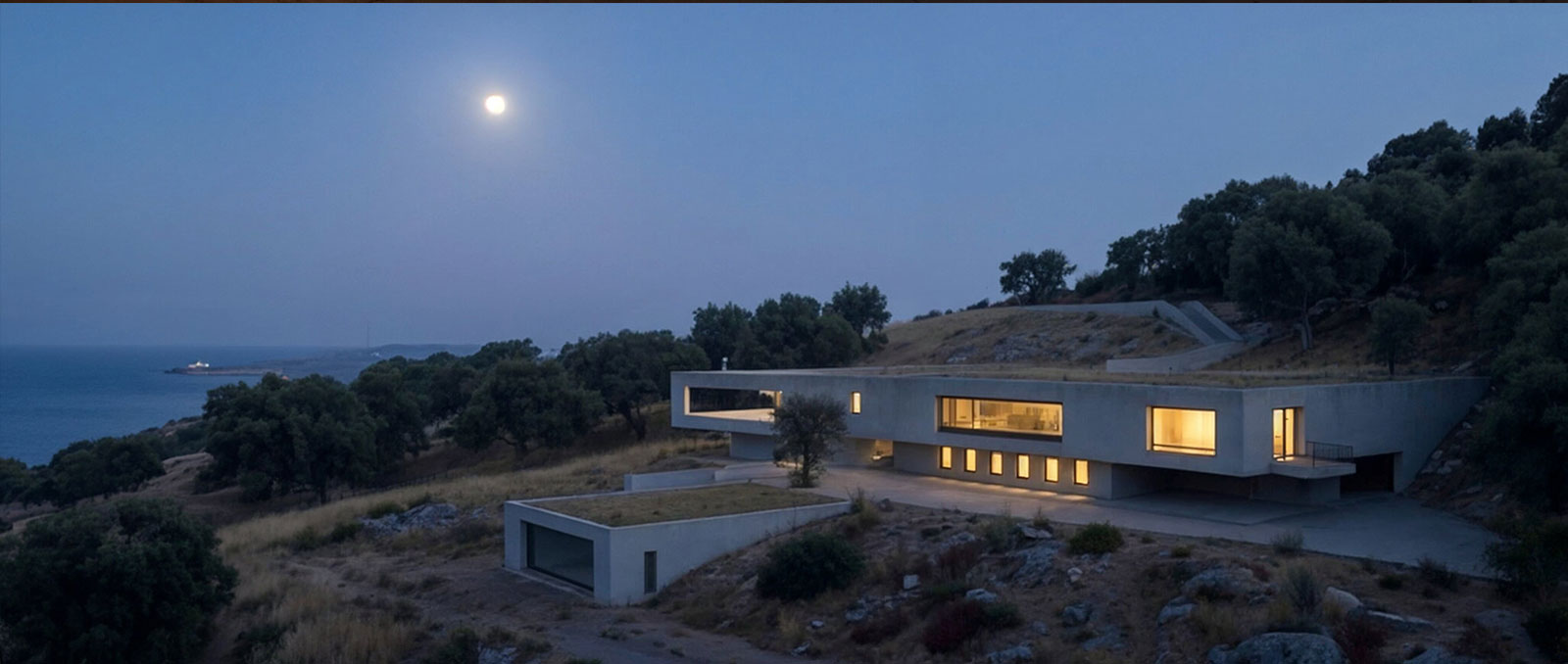
The project rejects the notion of a singular object imposed upon the landscape. Instead, the concrete volumes unfold in parallel with contour lines, allowing the building to be perceived from a distance as a natural extension of the mountain surface rather than an inserted foreign body.
The Duality of Enclosure and Openness
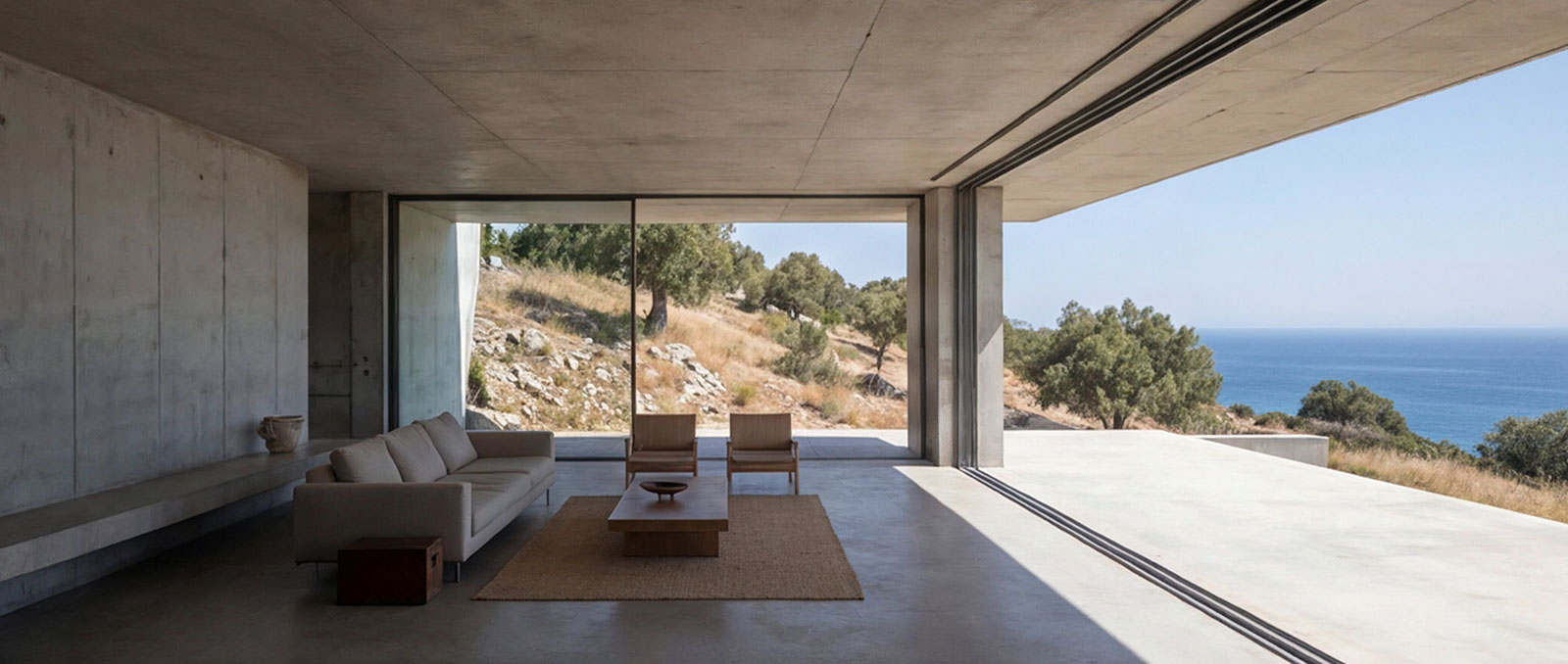
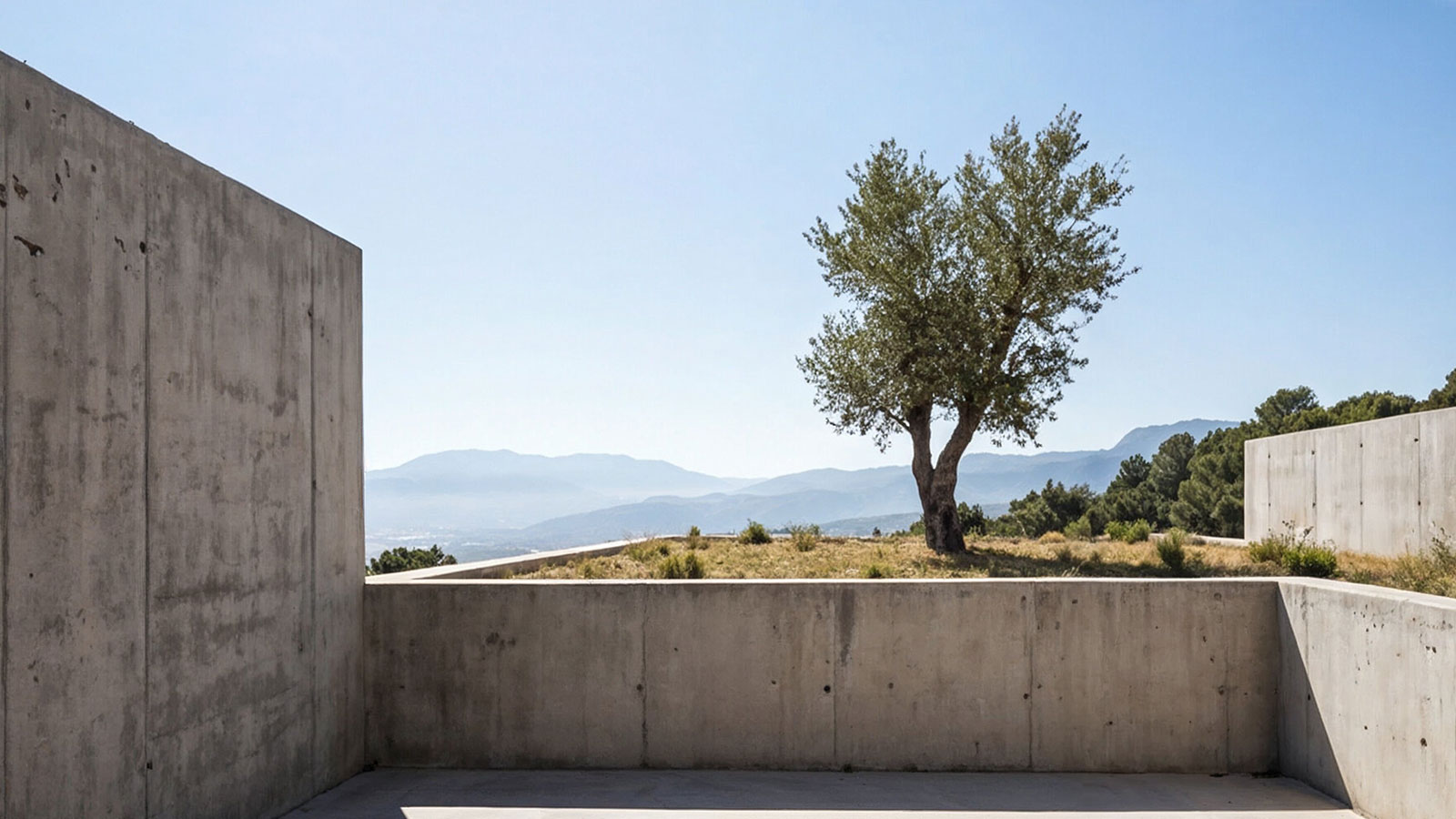
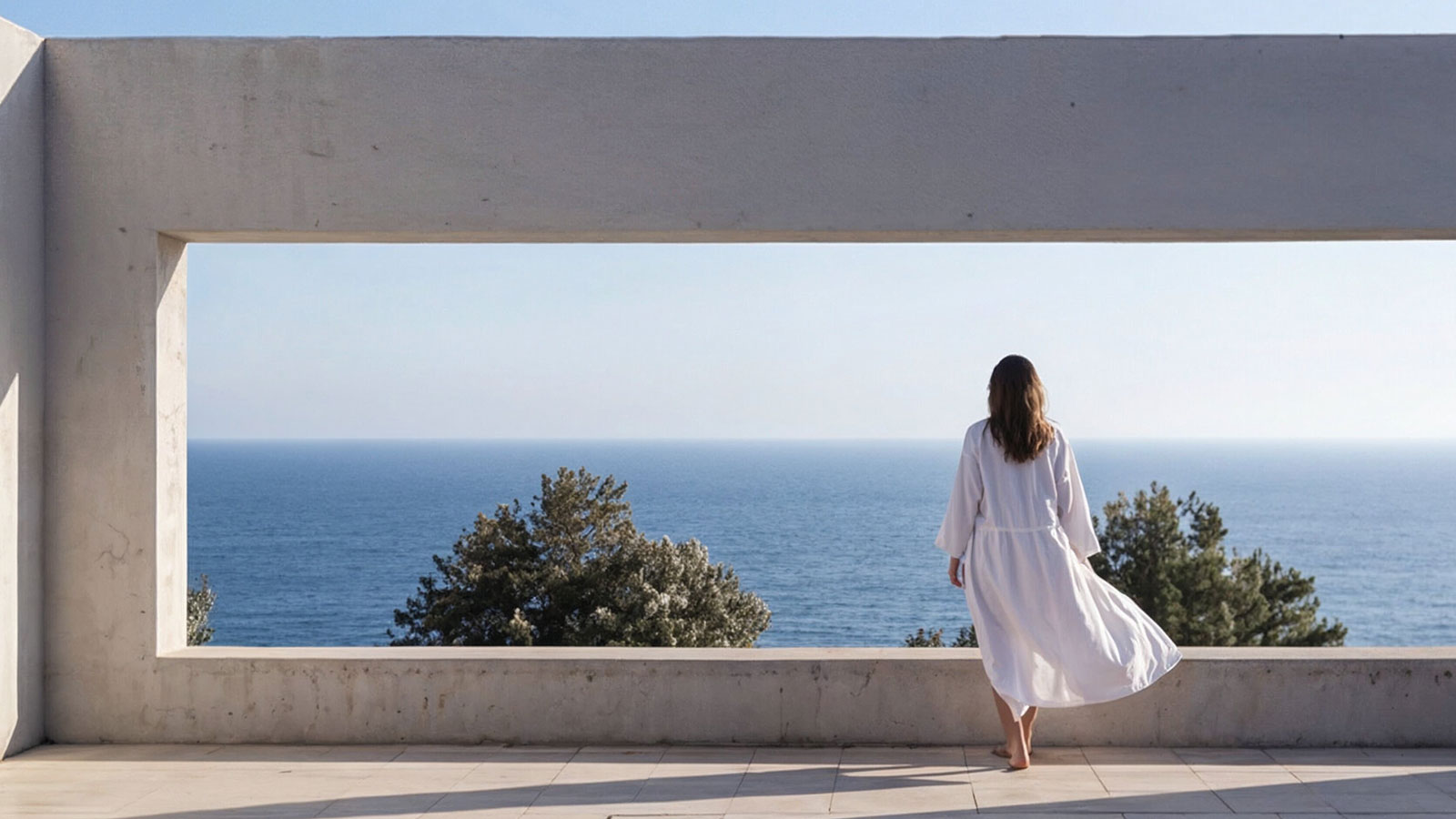
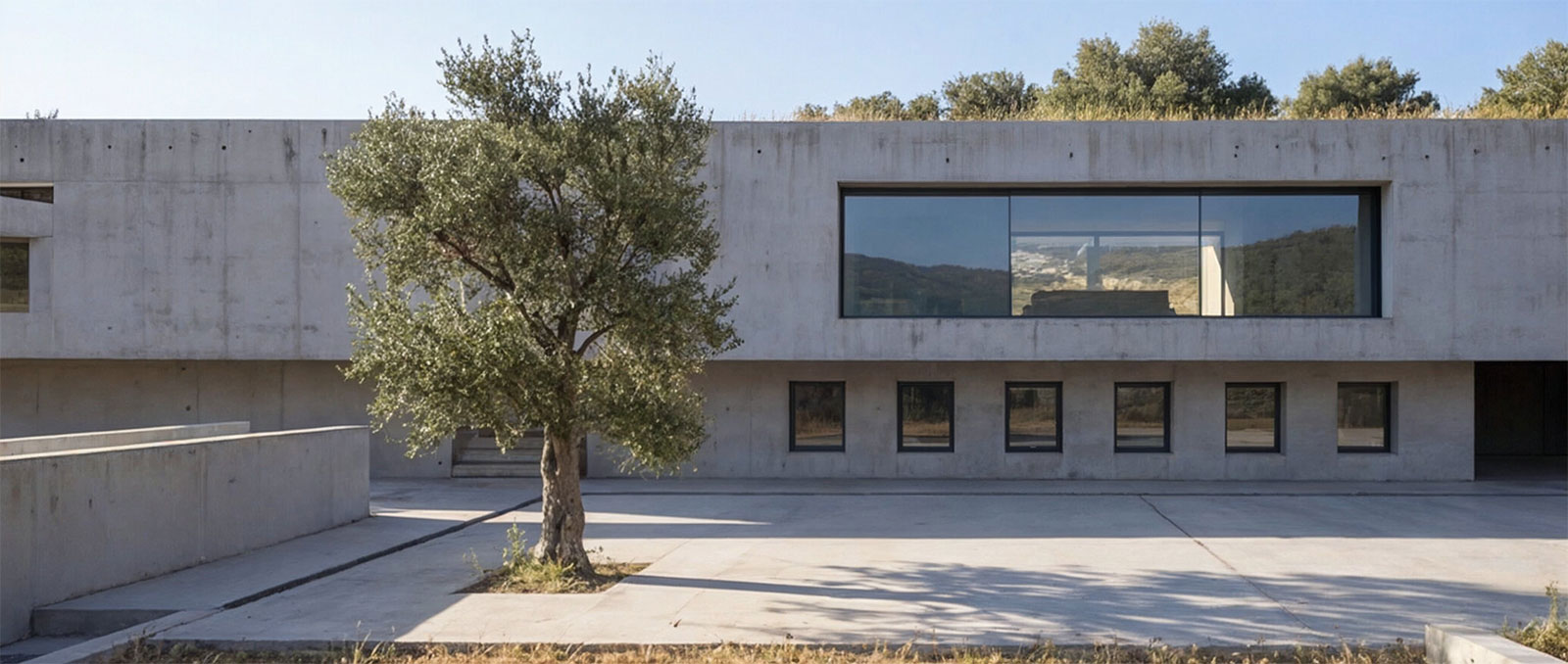
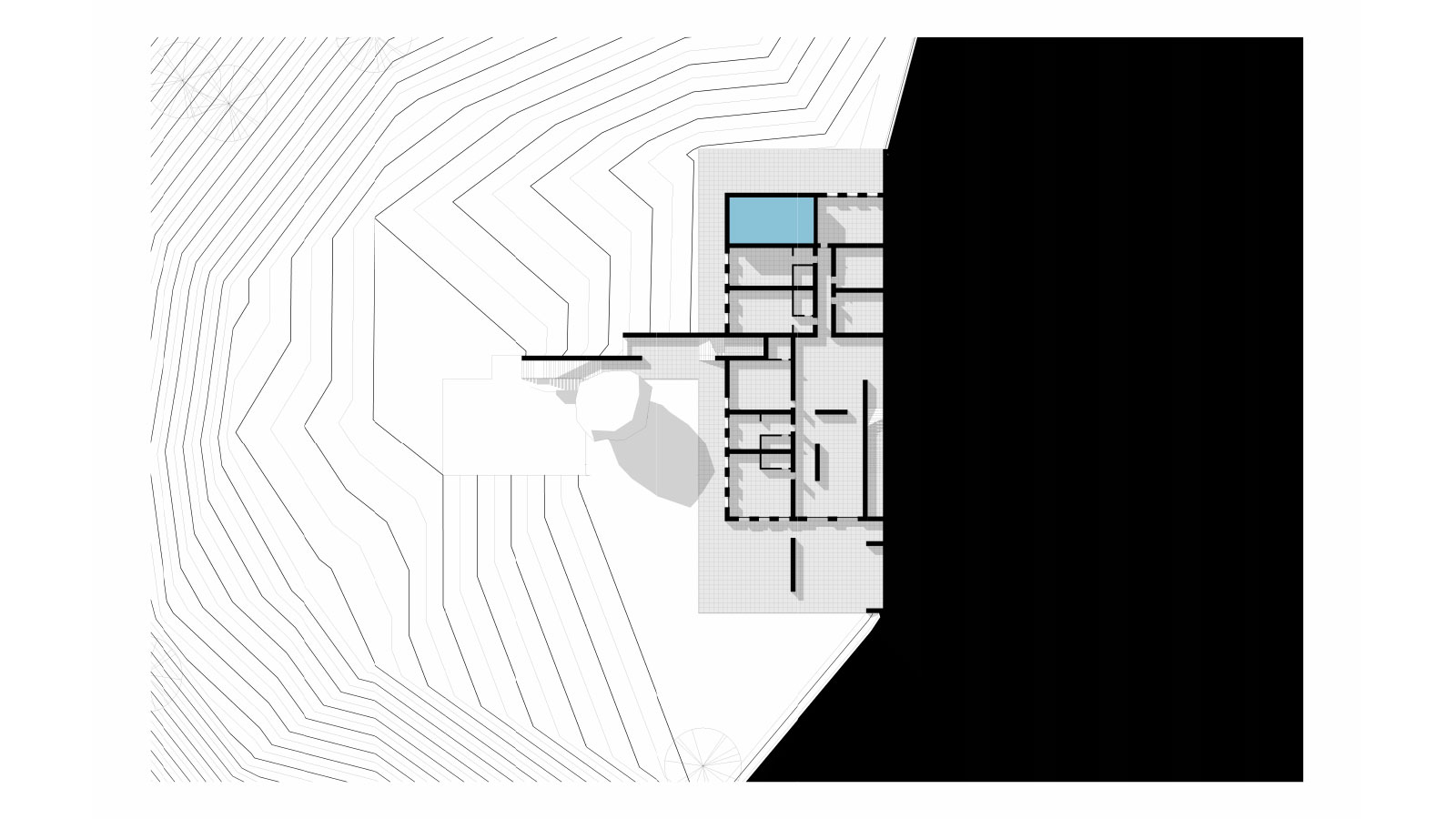
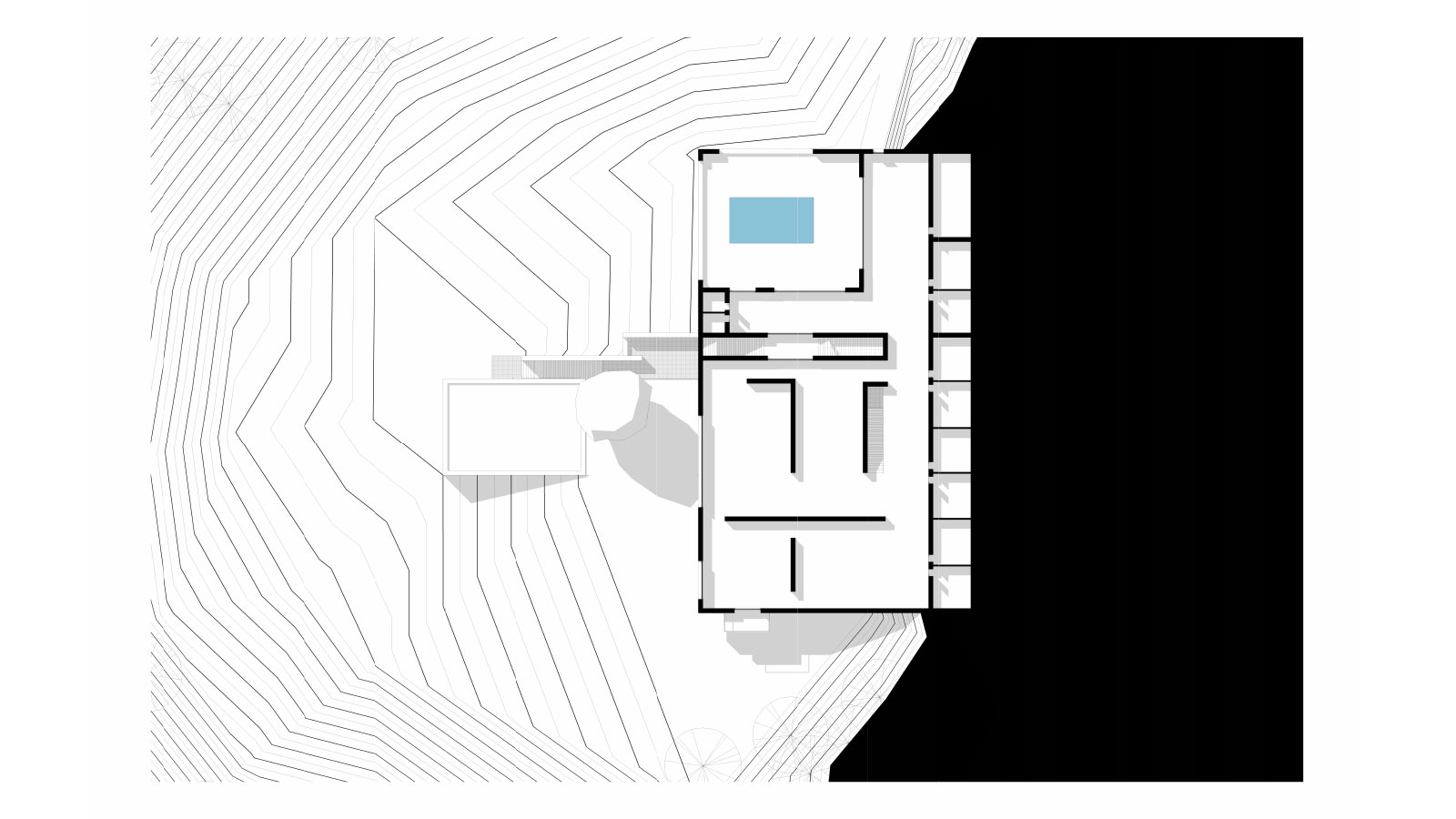
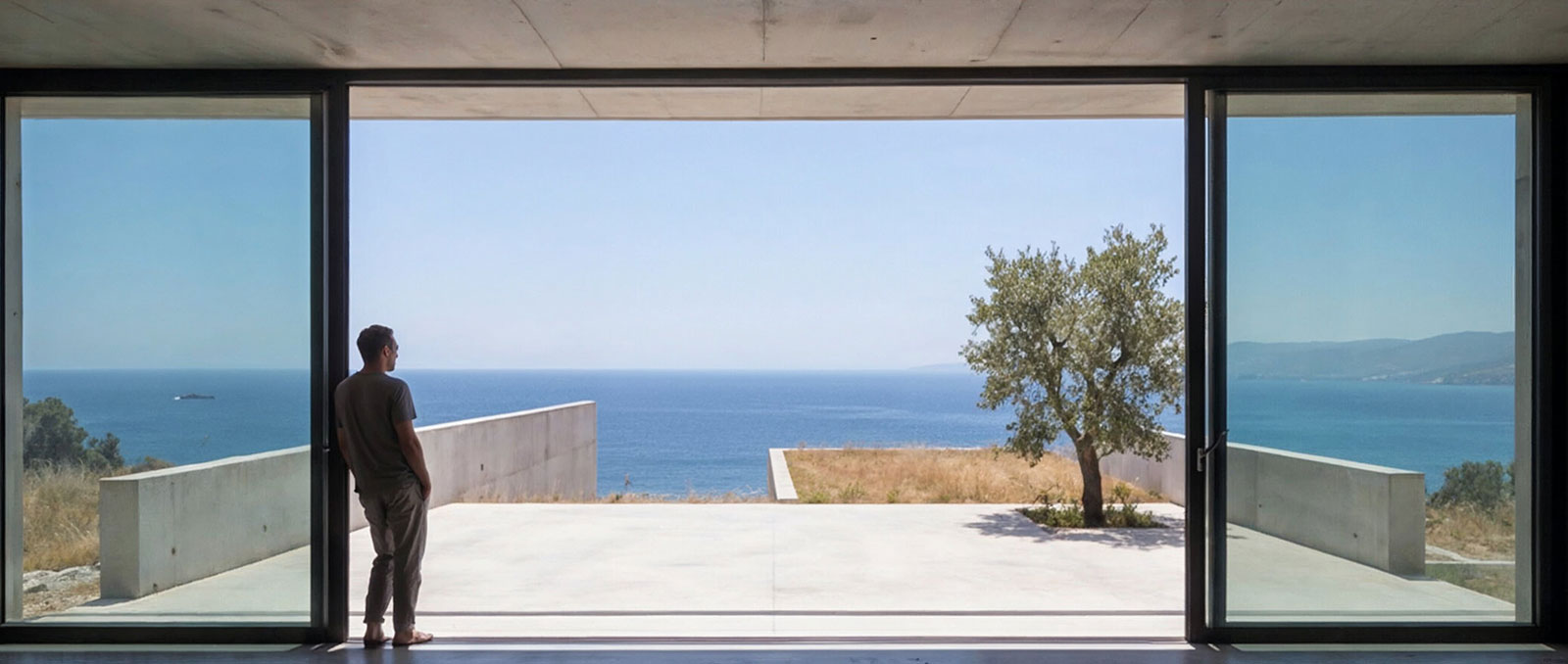
Inward-facing courtyards, enclosed by solid walls, generate protected and introspective environments, while expansive glazed façades on the northern side dissolve the boundary between interior space and the distant horizon. The tension between these two conditions forms the core of the lived spatial experience.
Movement as an Architectural Act
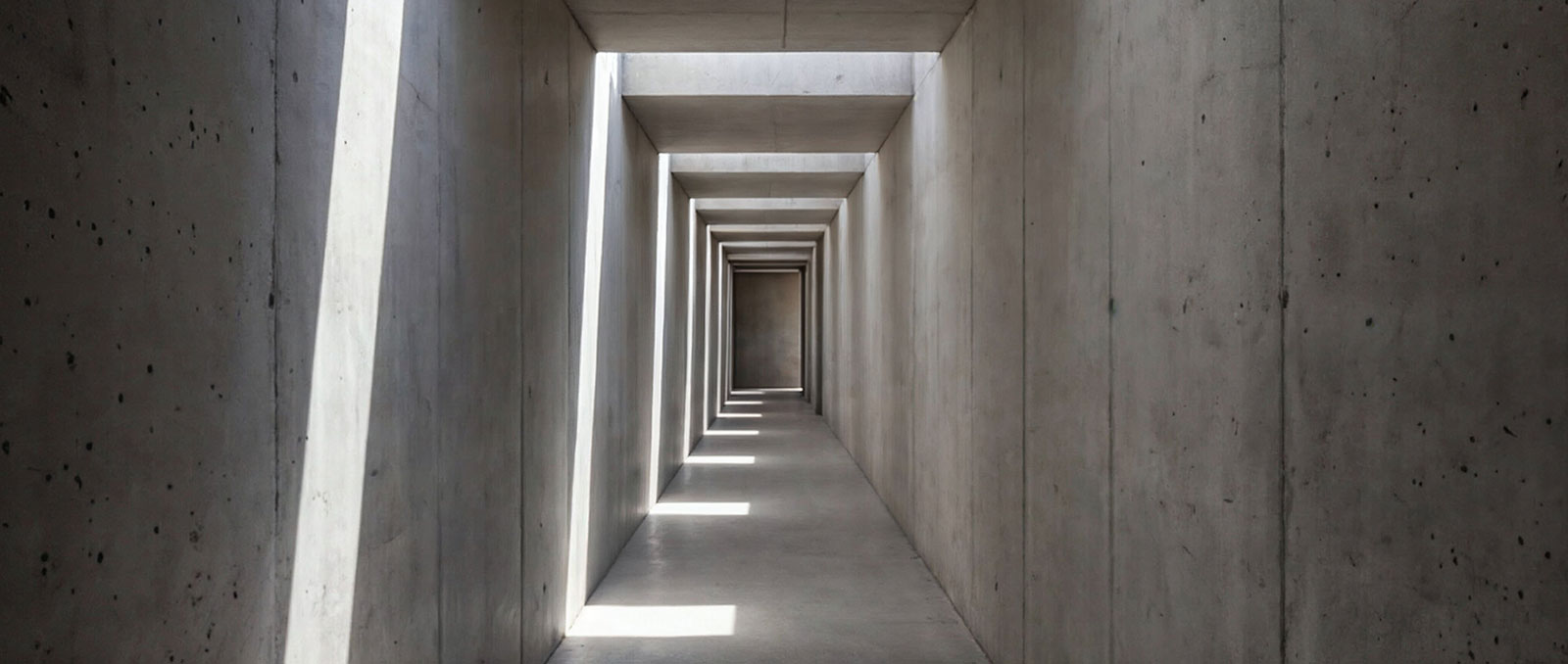
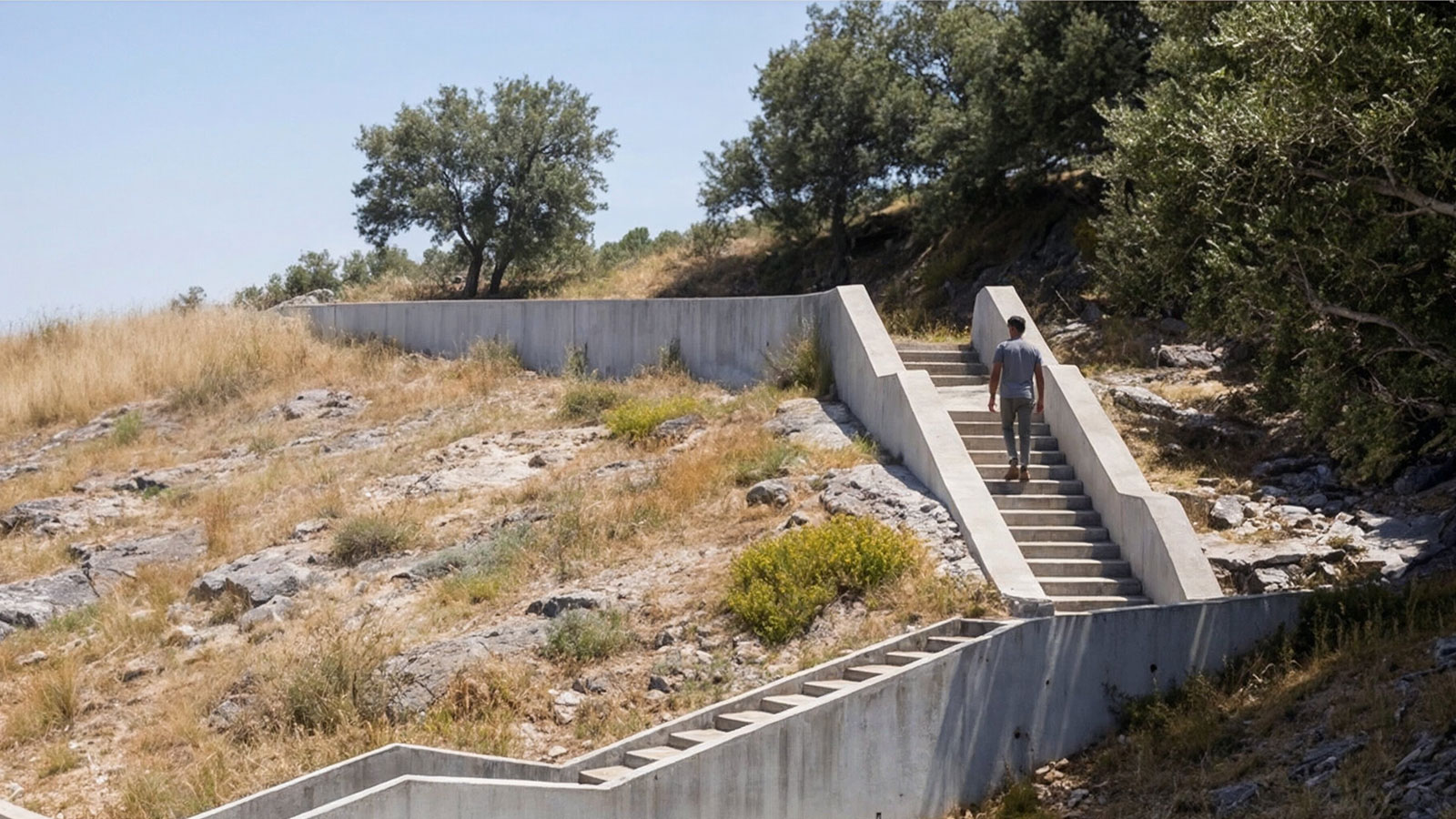
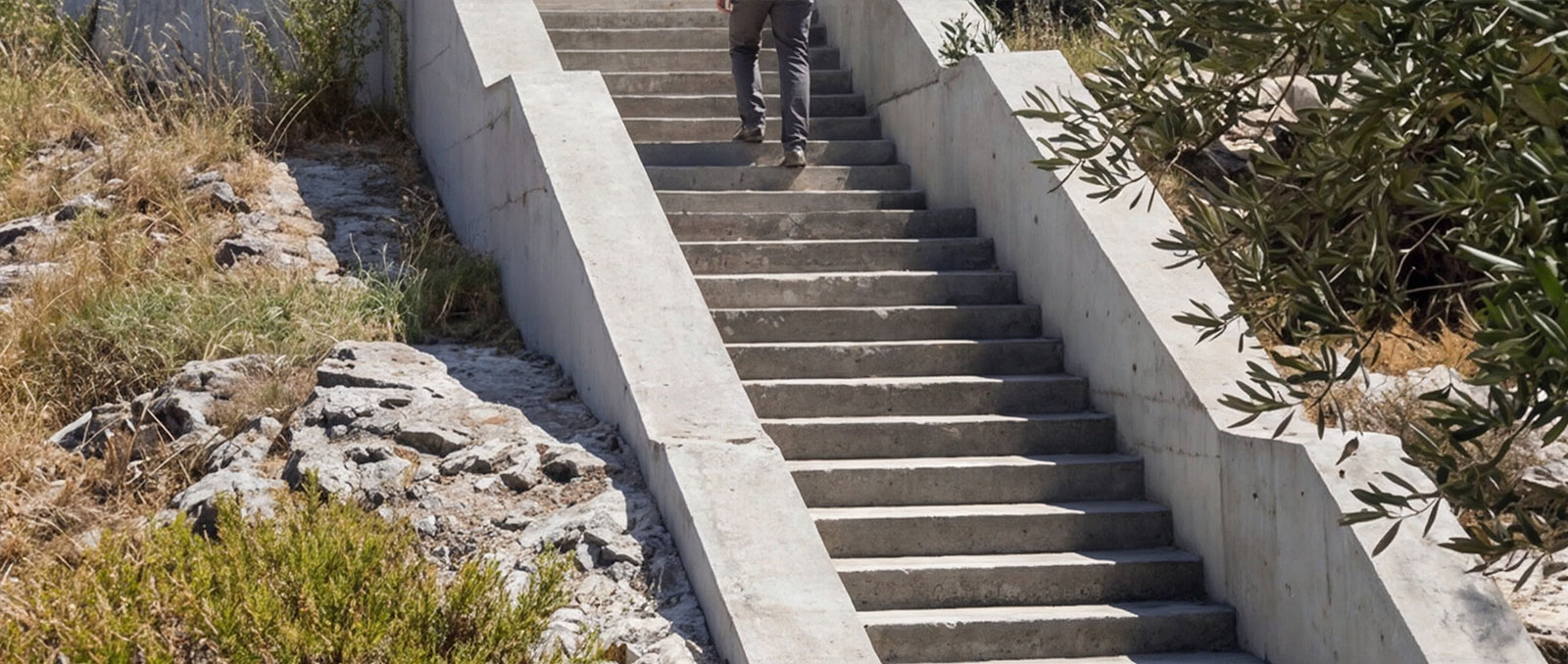
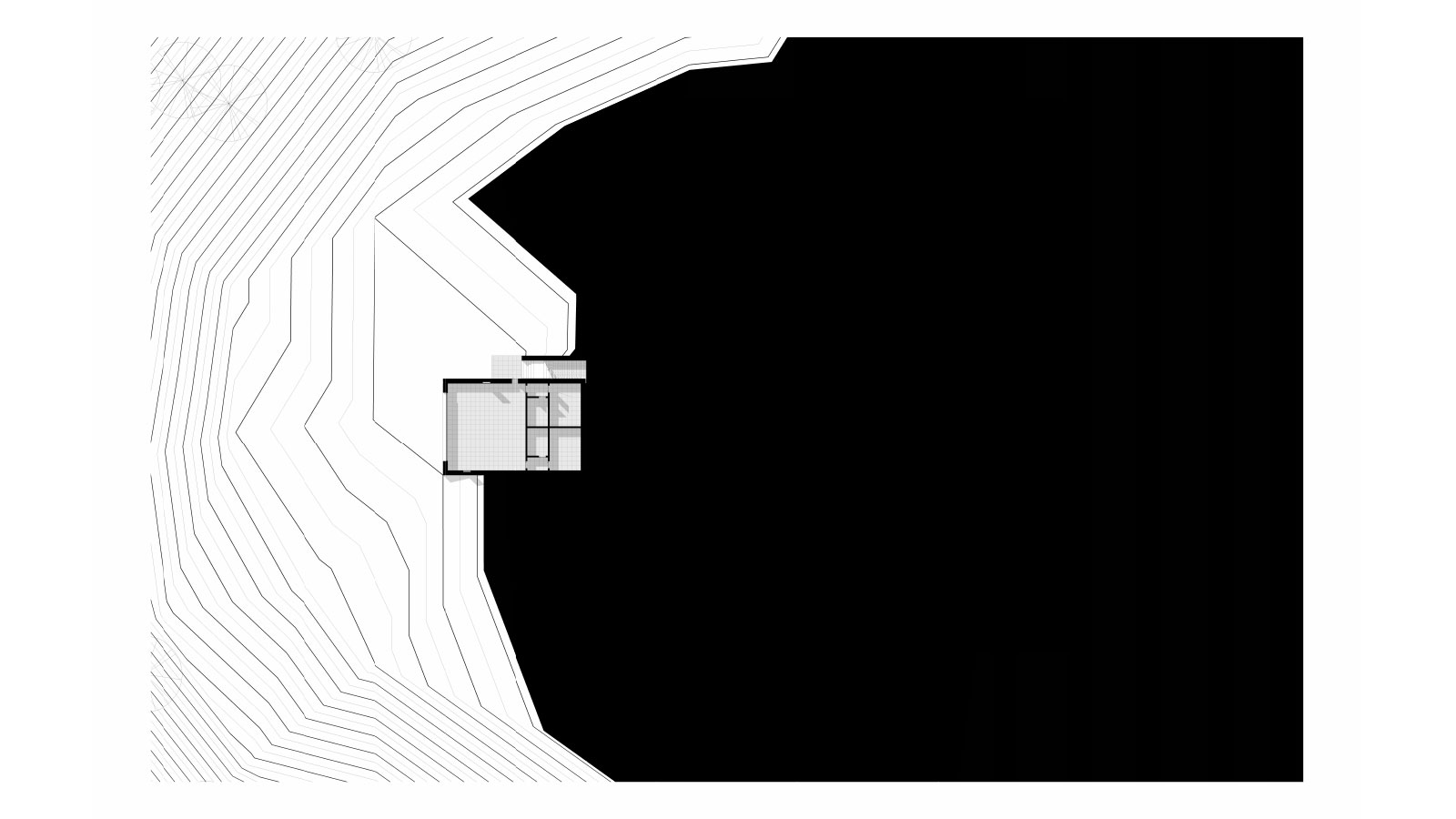
External staircases, continuous corridors, and activated roof planes are not merely functional elements; they are experiential paths designed to transform movement through the three levels of the building into a gradual visual journey, where views unfold progressively.
Choreography of Movement and View
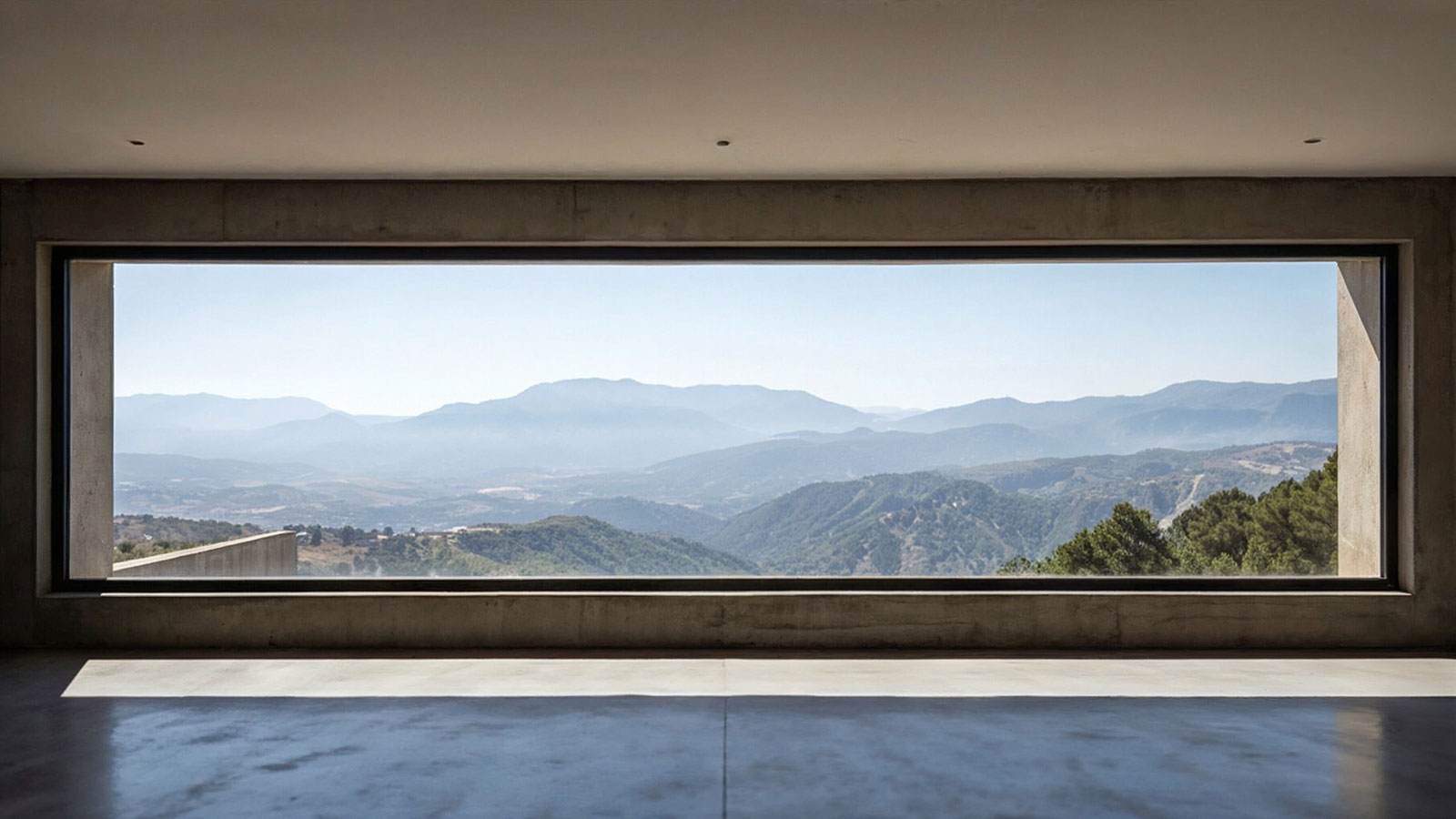
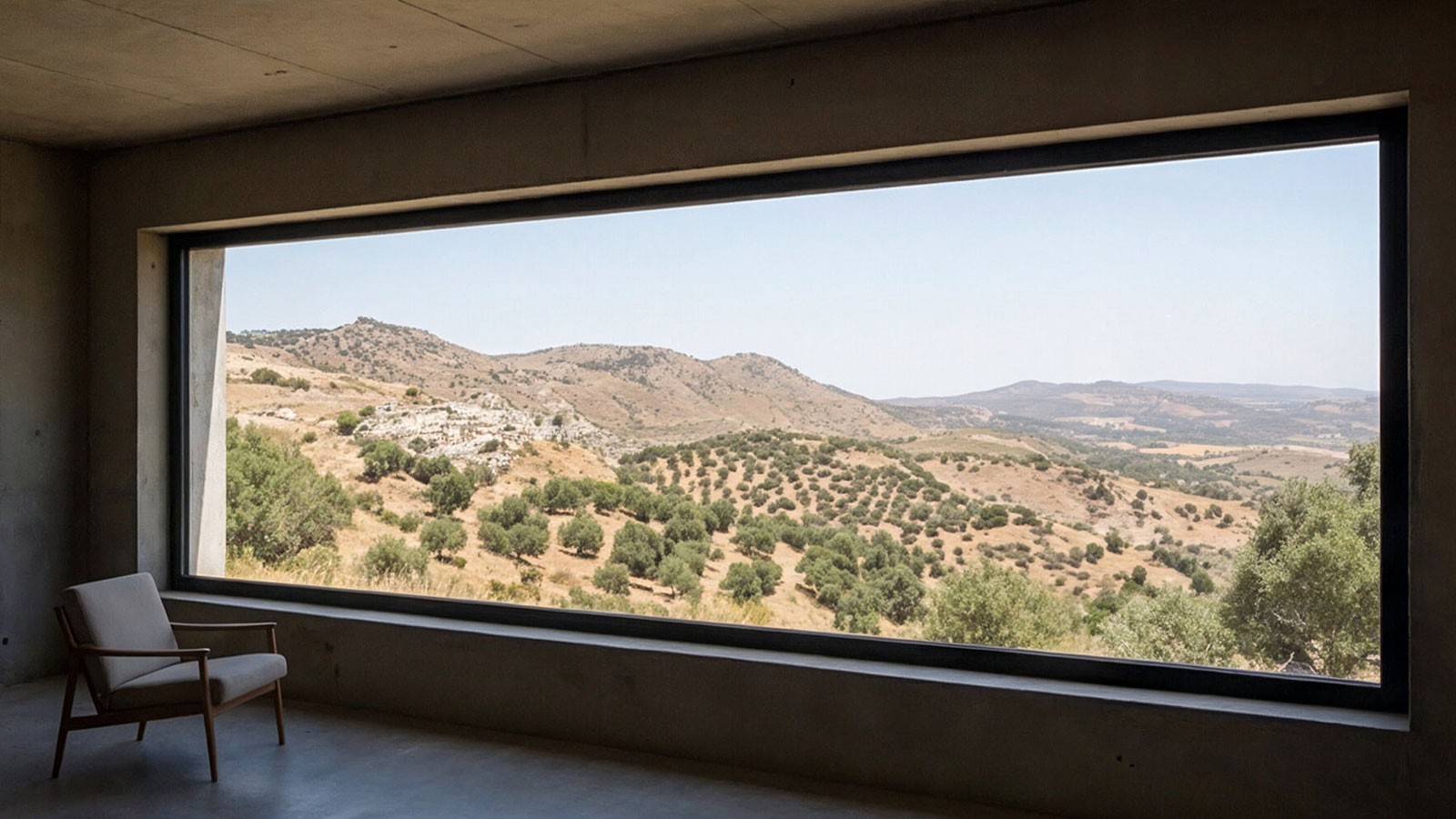
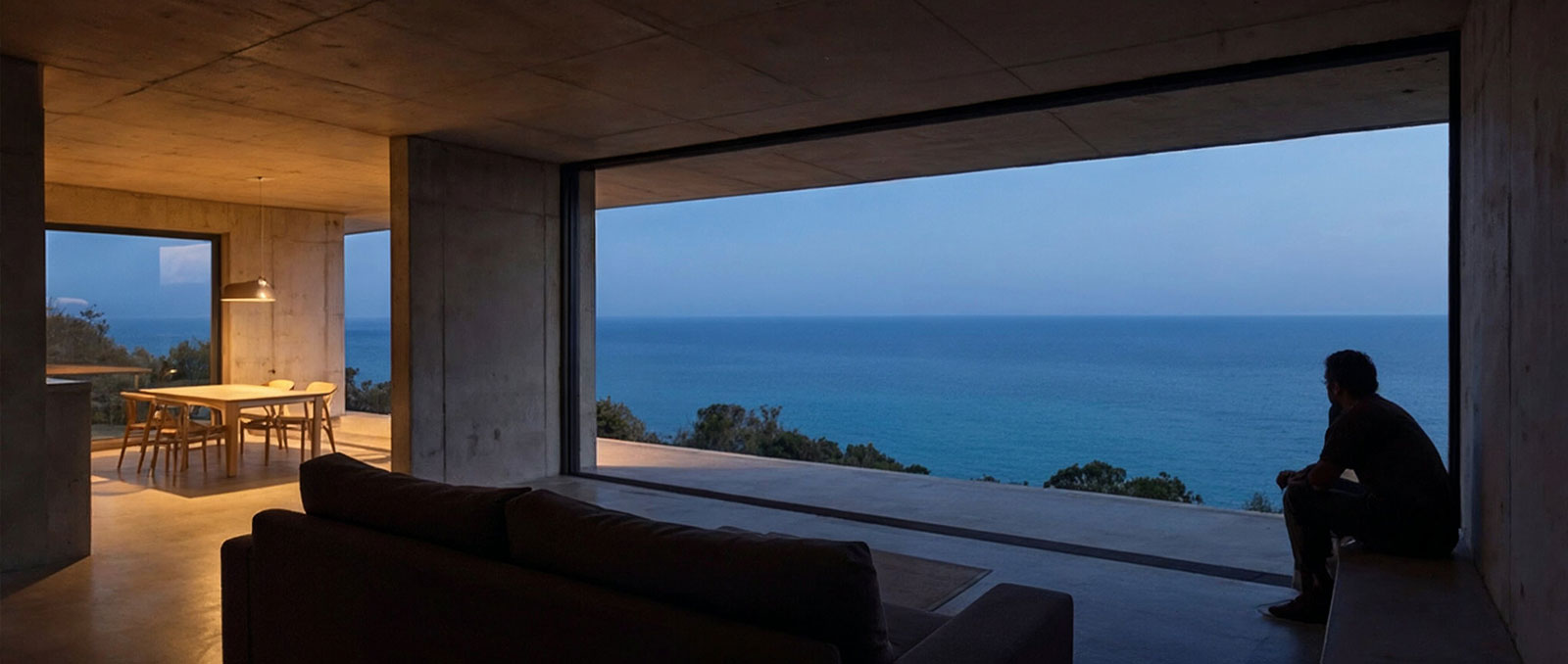
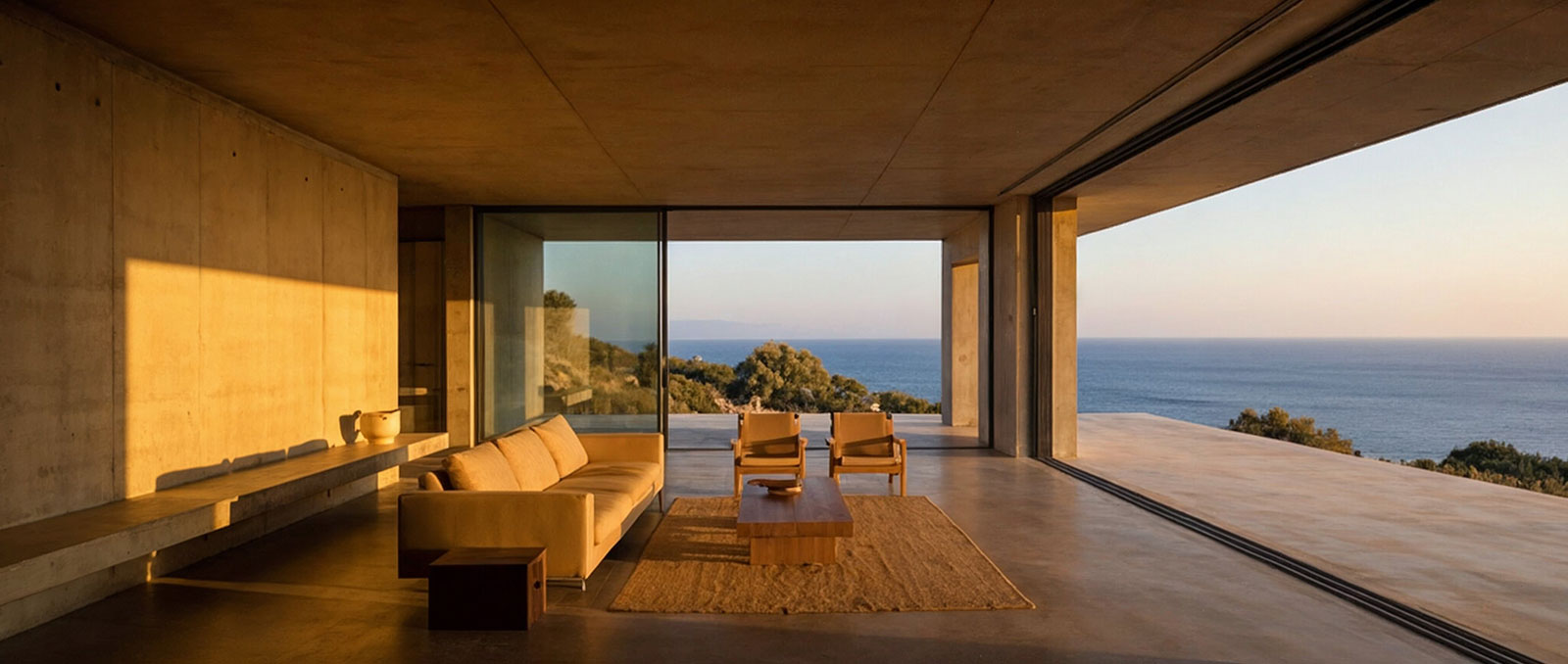
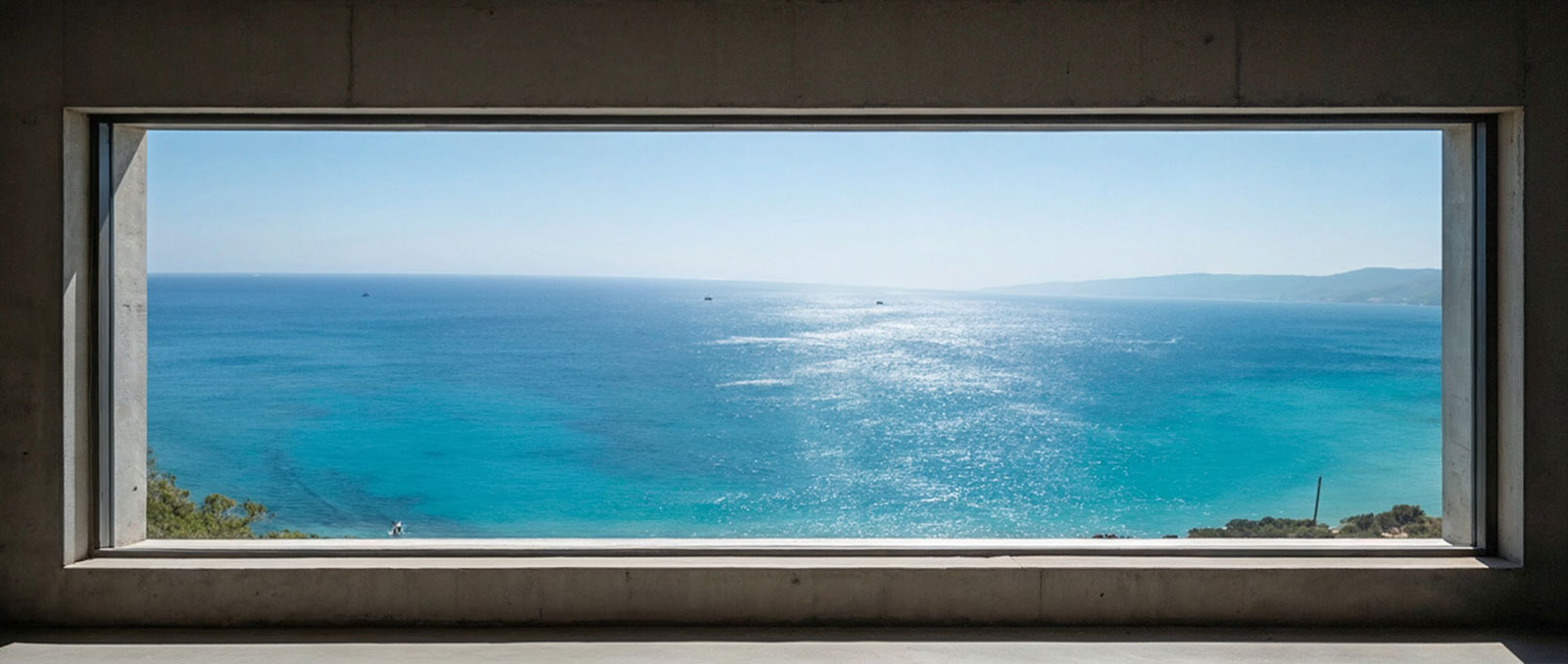
The spatial sequence within Mountain House is composed with a deliberate dramatic quality, not without a subtle theatrical dimension. The experience begins with a concealed entrance embedded within the mountain, followed by a gradual spatial release toward an intermediate courtyard, culminating in a full visual opening at the northern wing, where a continuous glass façade frames an infinite horizon.
Wooden surfaces extend outward to form open-air rooms, transforming the compact built footprint into a broader and more diverse living experience. The central family space distinguished as the only volume oriented perpendicular to the main axis acts as a social hinge from which all other spaces emerge.
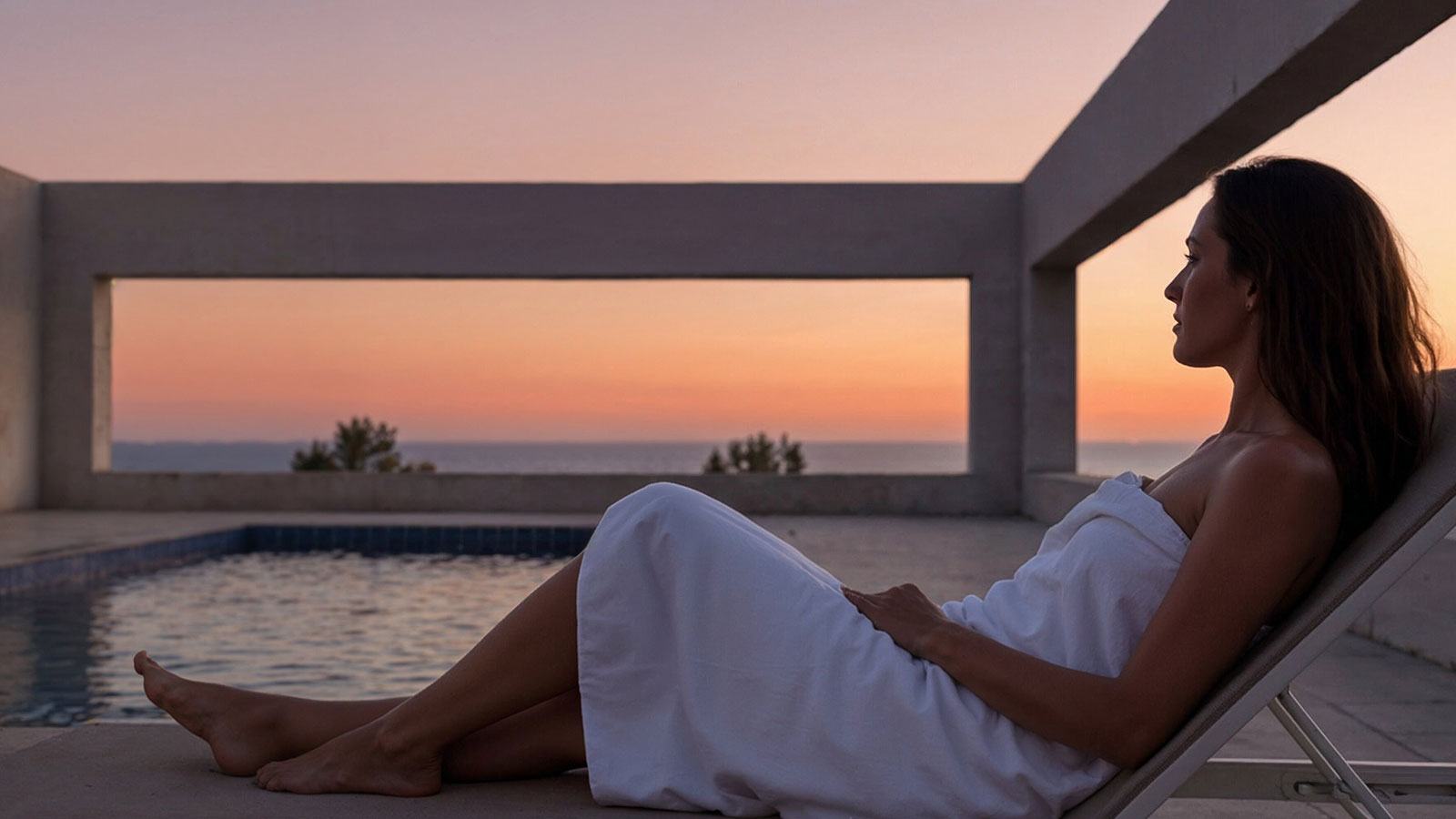
At night, the project reveals a different character: openings transform into luminous apertures, and the concrete walls frame warm compositions of light against the deep darkness of the mountainous landscape, evoking the presence of a living structure that breathes within its environment.
A Layered Tectonic Language: Concrete, Wood, and Glass
Material selection in this project operates as a philosophical decision before being an aesthetic one.
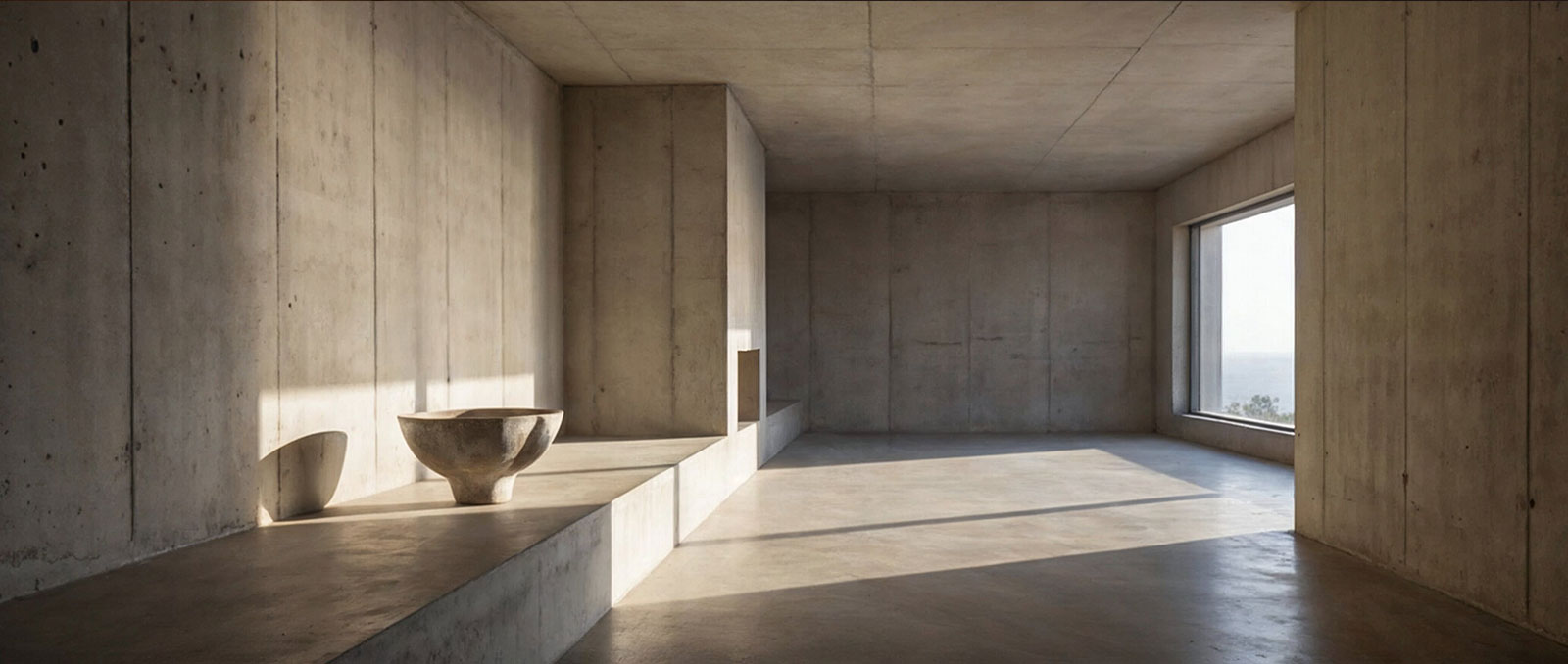
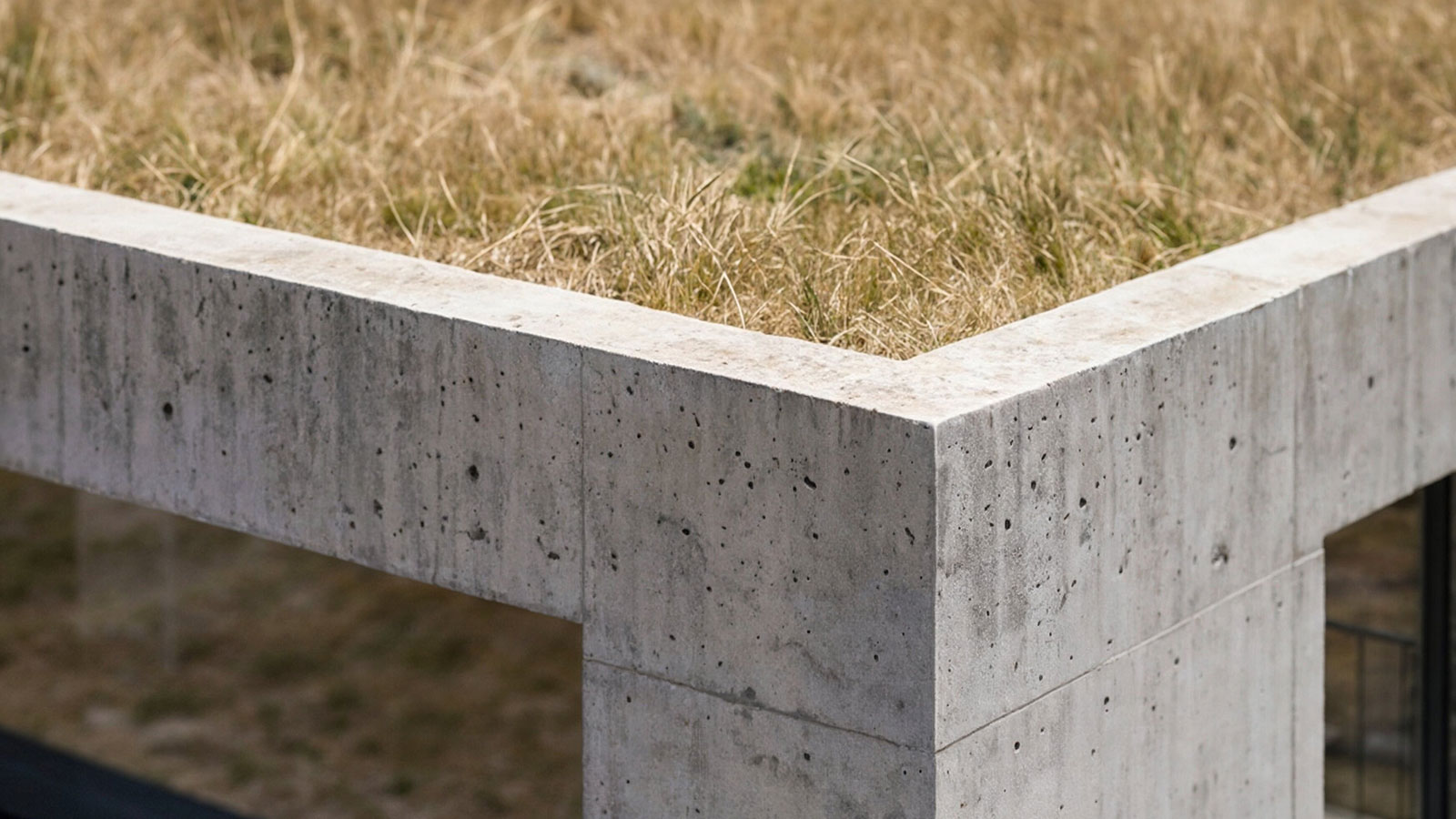
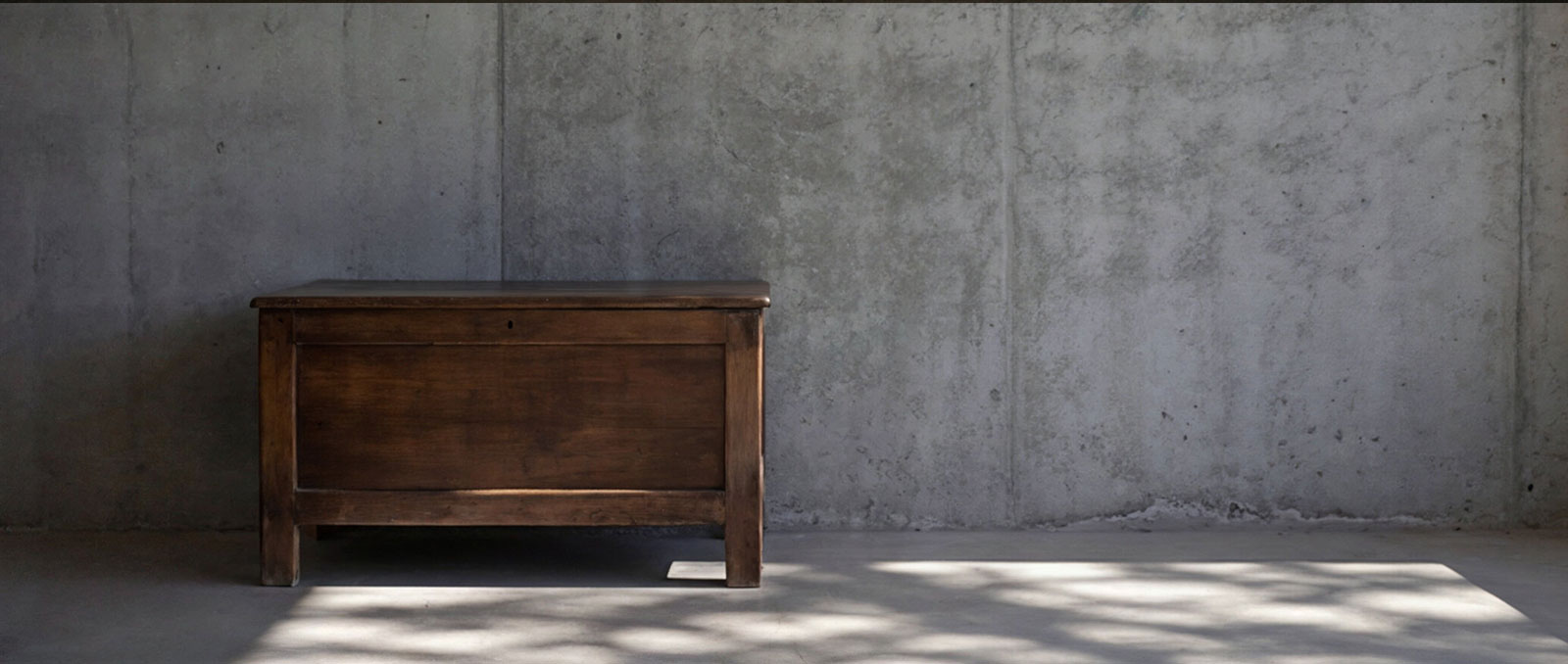
Concrete, left exposed, is not merely structural—it reflects the raw, solid nature of the site itself. The rocky terrain and mountainous soil find a direct resonance in the grey texture of the cast surfaces. Concrete anchors the building to its place, expressing permanence and stability.
Wood introduces a missing human dimension within the rigidity of concrete bringing tactile warmth, grain, and a sense of life and temporality. On external surfaces, wood ages under sun and weather, becoming part of the building’s narrative rather than a superficial finish.
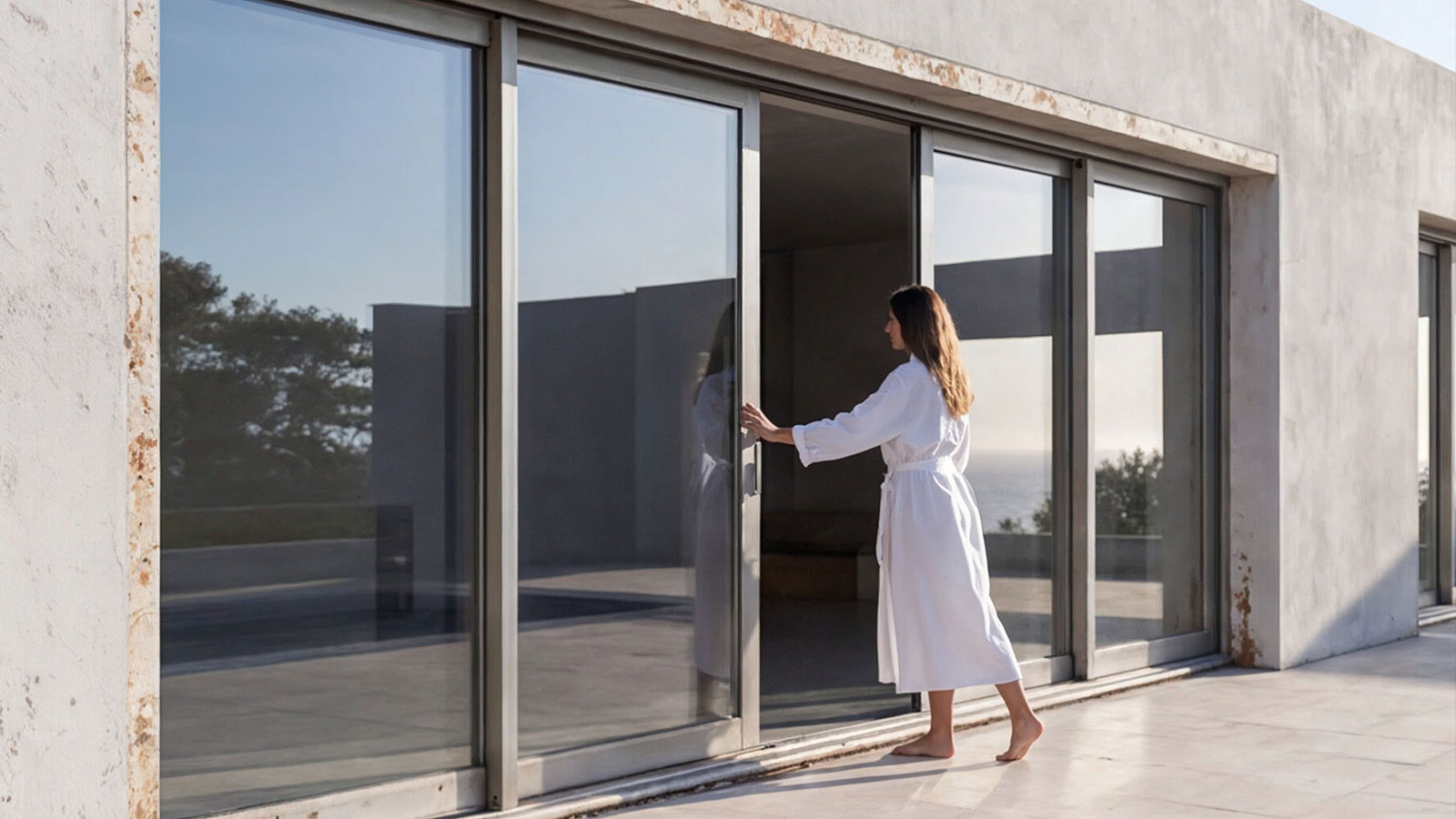
Glass, used extensively along the northern façade, does not eliminate the boundary but rather softens it. It operates as an intermediate layer, allowing the eye to extend toward the horizon while maintaining the body within a protected interior. This tension between full visual openness and physical enclosure defines one of the project’s most profound spatial qualities.
Three Levels Fourteen Functional Spaces
The project is organized across three levels that follow the natural slope: the lower ground level, the intermediate level, and the ground level. This tripartite organization is not merely a topographic solution, but a spatial hierarchy that separates privacy, social interaction, and exposure to the landscape .
Nature as a Design Partner
The project adopts a passive environmental strategy, reducing reliance on mechanical systems. Enclosed courtyards function as air collectors, generating natural ventilation throughout the building. The precise northern orientation of primary spaces minimizes direct solar exposure while maintaining consistent natural light.
The compact structural footprint—initially perceived as a constraint—becomes an environmental asset. Minimizing intervention in the natural terrain preserves soil integrity and vegetation, while living space is expanded horizontally through terraces and roof planes rather than vertically through additional floors.
Position Within Contemporary Architectural Discourse
Mountain House can be situated within what is increasingly referred to as Earth Architecture a contemporary discourse that rejects the notion of the iconic object detached from its context, favoring instead a philosophy of embedding, continuity, and topographic humility.
Within this framework, the project resonates with the works of Álvaro Siza in his engagement with Portuguese landscapes, and Peter Zumthor in his material sensibility and understanding of architecture as a vessel of place memory.
Yet, what distinguishes this project is its local context. Al Bayda is not a curated European landscape, but a Libyan mountainous territory with largely underexplored architectural potential. The act of designing a residence that engages this raw terrain through a contemporary concrete language and a mature spatial vision constitutes a meaningful contribution to the regional architectural landscape.
“The house is not merely a place of dwelling, but a carefully articulated dialogue between human life and the natural world an architecture shaped as much by the land as by design intention.”
What remains from Mountain House is not a singular visual image, but a condition
a sense that the building belongs to the mountain in an organic way, and that inhabiting it becomes, fundamentally, an act of inhabiting nature itself.