



- Location: Benghazi– Libya
- Year: 2018
- Client: Privet
- Designer: MUFTAH Design
- Site Area: 11,243 m2
- Built-up area: 5,673 m2
- Use: Residential
- Phase: Under Construction
- Role: Project Architect
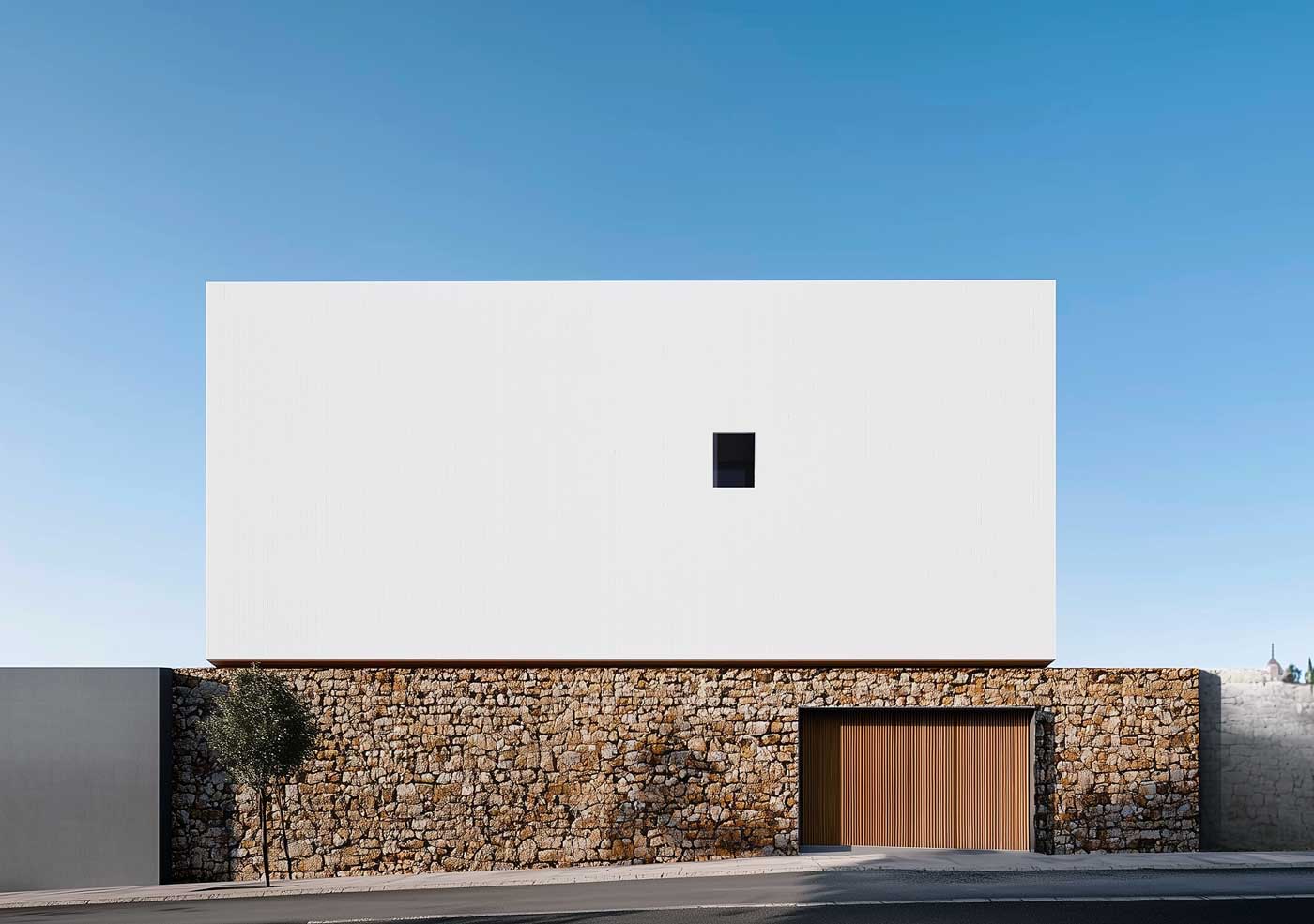
Cube Residence: Redefining Harmony between Tradition and Modernity
Introduction
The Cube Residence is an exemplary synthesis of cultural heritage and contemporary architecture in the heart of Benghazi. Designed by Muftah Design, this private residence integrates vernacular traditions with modernist ideals, creating a tranquil retreat that responds to the unique climatic and social context of Libya.
Historical Context
Benghazi is a city rich in architectural layers that reflect its Arab, Ottoman, and Italian influences. From the classical remains of the Greek city of Berenice to the modernist urban developments of the 20th century, the city has evolved as a cultural and architectural mosaic. The Cube Residence builds upon this history, embedding its design into the fabric of Benghazi’s urban and cultural landscape.
Architectural Concept
The design philosophy of Cube Residence emphasizes simplicity, clarity, and human well-being. The villa employs a modernist approach to spatial organization, combining local materials and craftsmanship with innovative design solutions. The result is a home that prioritizes function while celebrating the play of light and shadow, a hallmark of Mediterranean architecture.
Contextual Integration
- Climate: The villa's design is informed by Benghazi's extreme desert climate. The building orientation minimizes exposure to harsh sun while maximizing natural ventilation through strategically placed openings. A shaded inner courtyard serves as the central organizing element, offering a cool retreat and promoting airflow.
- Materials: Local stone and lime-based plasters are used extensively, reducing the villa's environmental footprint and seamlessly integrating the structure into its surroundings.
- Spatial Organization: The villa is arranged over three floors, with private family areas occupying the upper levels and public spaces, including a living area and guest salon, on the ground floor. The rooftop serves as an open space for gatherings, offering panoramic views of the city.
Cultural Relevance
The villa celebrates Benghazi's architectural legacy while embracing contemporary needs. The incorporation of Islamic design elements, such as geometric patterns and shaded courtyards, reflects Libya’s cultural heritage. These are juxtaposed with minimalist interiors, creating a dialogue between tradition and modernity.
Sustainability and Innovation
The Cube Residence demonstrates a commitment to sustainable design:
- Energy Efficiency: The villa uses passive cooling techniques, reducing reliance on mechanical systems. Thick walls and deep-set windows provide thermal insulation.
- Water Management: Rainwater harvesting and efficient irrigation systems ensure that water is used sparingly in the villa’s gardens.
Impact
The Cube Residence has emerged as a benchmark for residential architecture in Benghazi, inspiring a new wave of designs that prioritize cultural identity and sustainability. Beyond its function as a private residence, the villa embodies a broader vision of architectural resilience and respect for heritage in rapidly urbanizing contexts.

