


Island as Memory, Architecture as Continuity
- Location:Poveglia Island, Venice Lagoon, Venice, Italy
- Year:2016
- Client:Young Architects Competitions (YAC) / Agenzia del Demanio
- Designer:Muftah Abudajaja
- Site Area:Approx. 75,000 sqm (estimated based on Poveglia Island context)
- Built-up Area:Up to 25,000 sqm (as per competition regulations)
- Use:University Campus / Educational + Cultural + Residential Complex
- Phase:Competition Proposal
- Role:Project Architect
Introduction
In the Venetian Lagoon, where water dissolves the boundaries between geography and imagination, the island is never a neutral condition. It is always a figure—isolated yet central, silent yet charged with history.
Poveglia exists precisely within this paradox.
Abandoned for decades, it has not lost its meaning. On the contrary, it has accumulated it. Its ruins, vegetation, and emptiness form a latent structure—an unfinished narrative awaiting reinterpretation.
The project does not begin by asking what to build.
It begins by asking: what already exists as memory, and how can architecture continue it?
Concept: The Island as an Urban Artifact
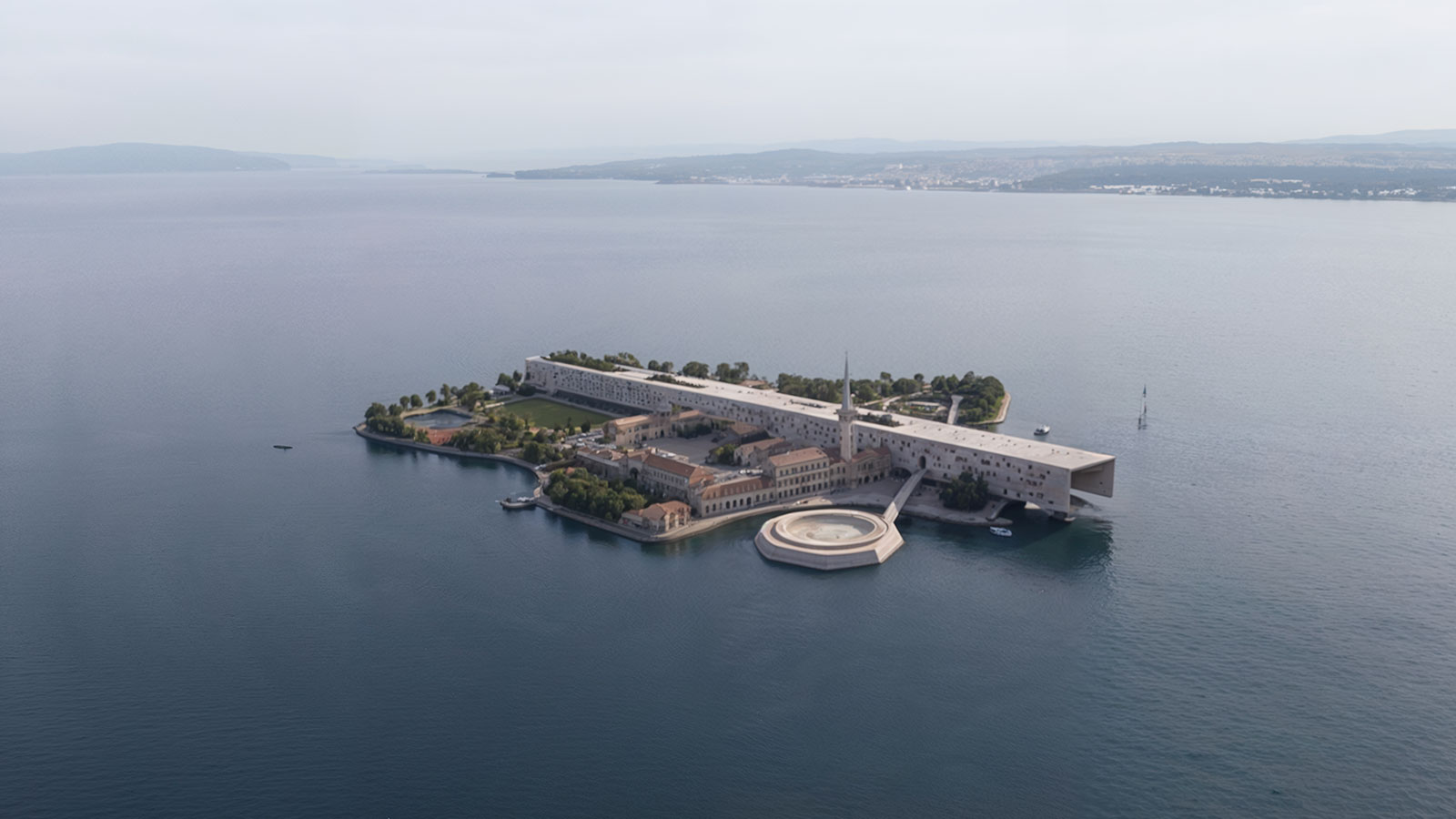
The proposal understands Poveglia not as a natural island, but as an urban artifact in suspension.
Like Venice itself, it is a constructed landscape defined by fragments, edges, and relationships rather than objects. The existing buildings are not remnants to be preserved passively; they are permanent figures within a larger composition.
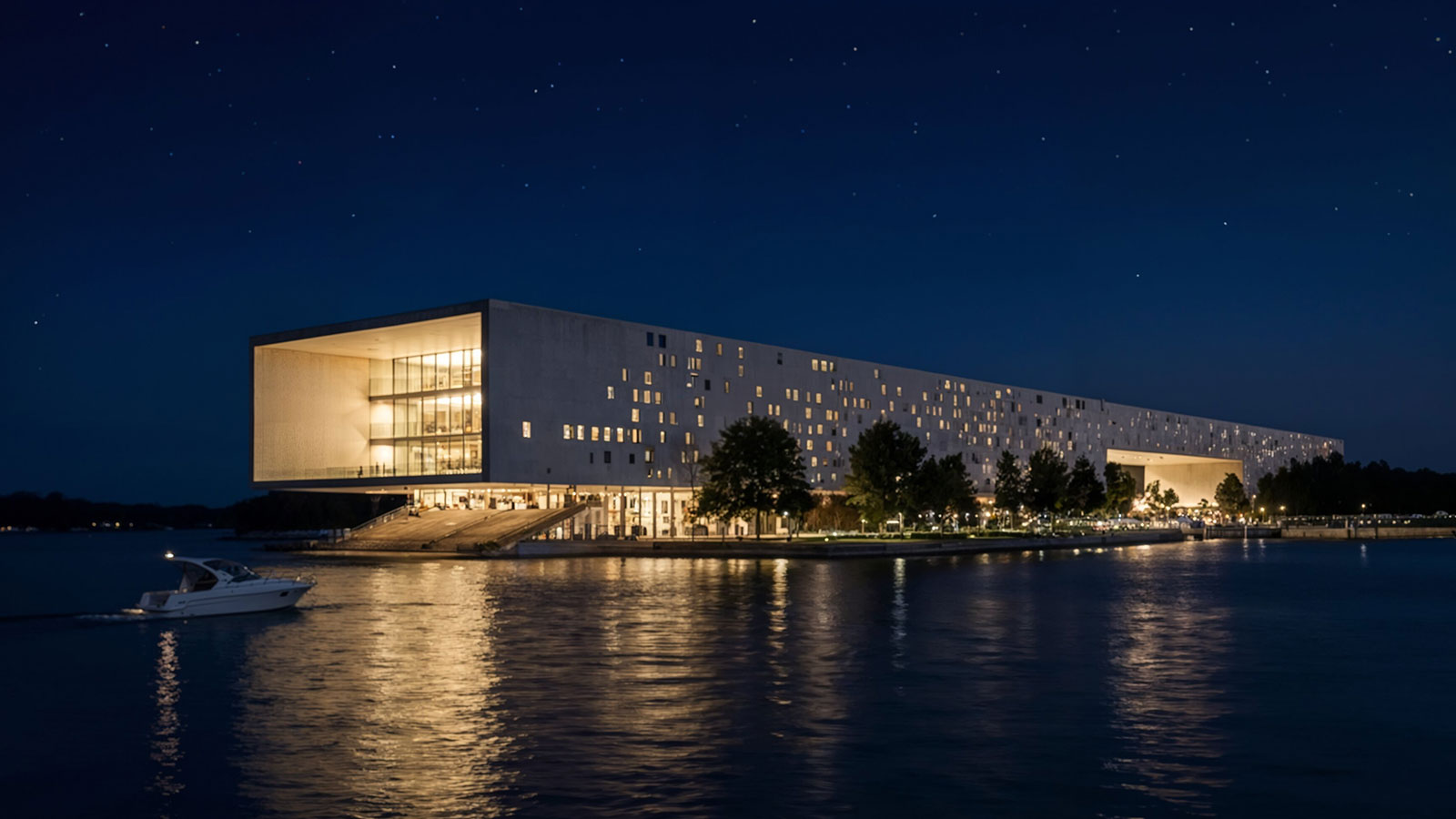
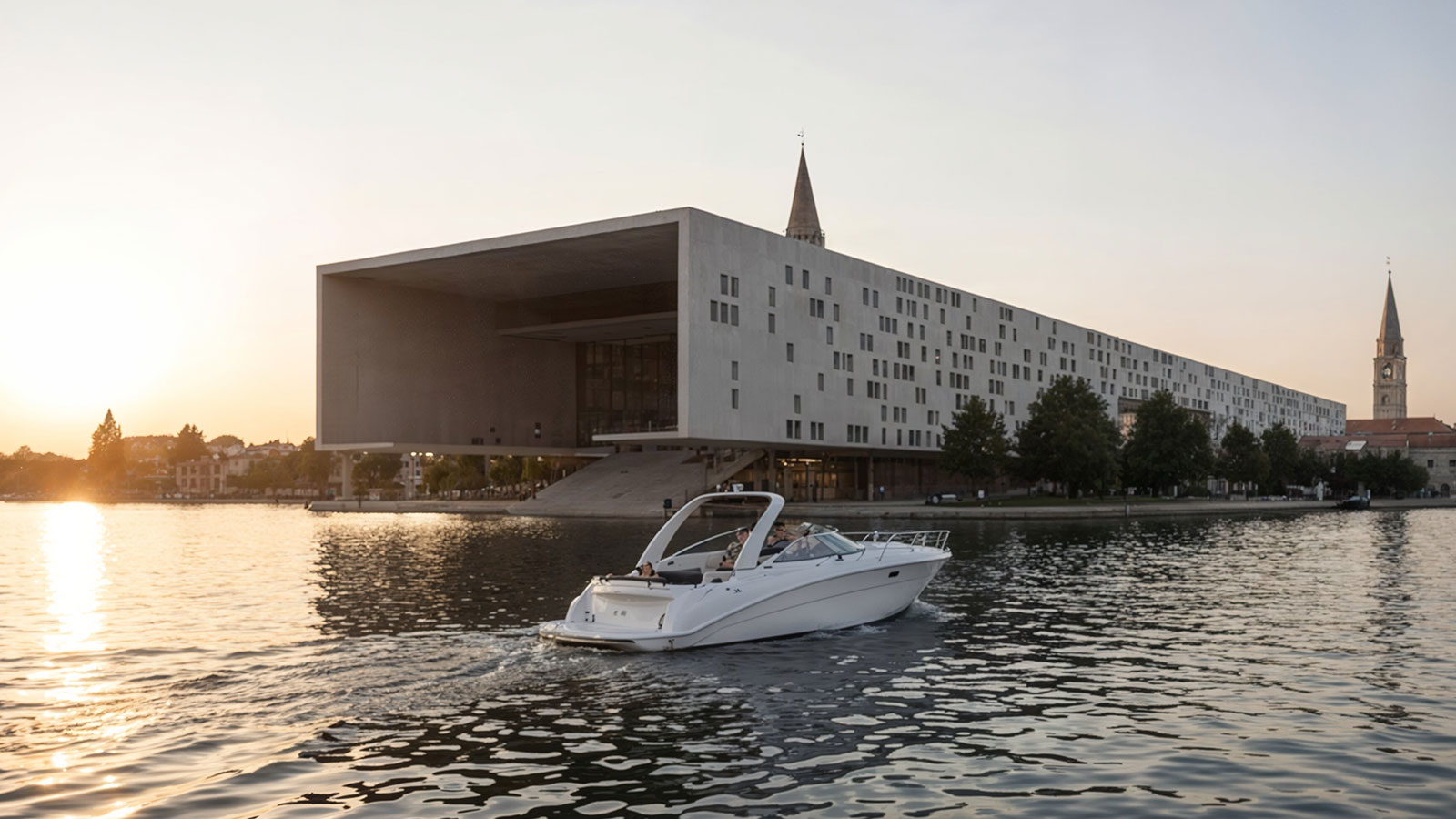
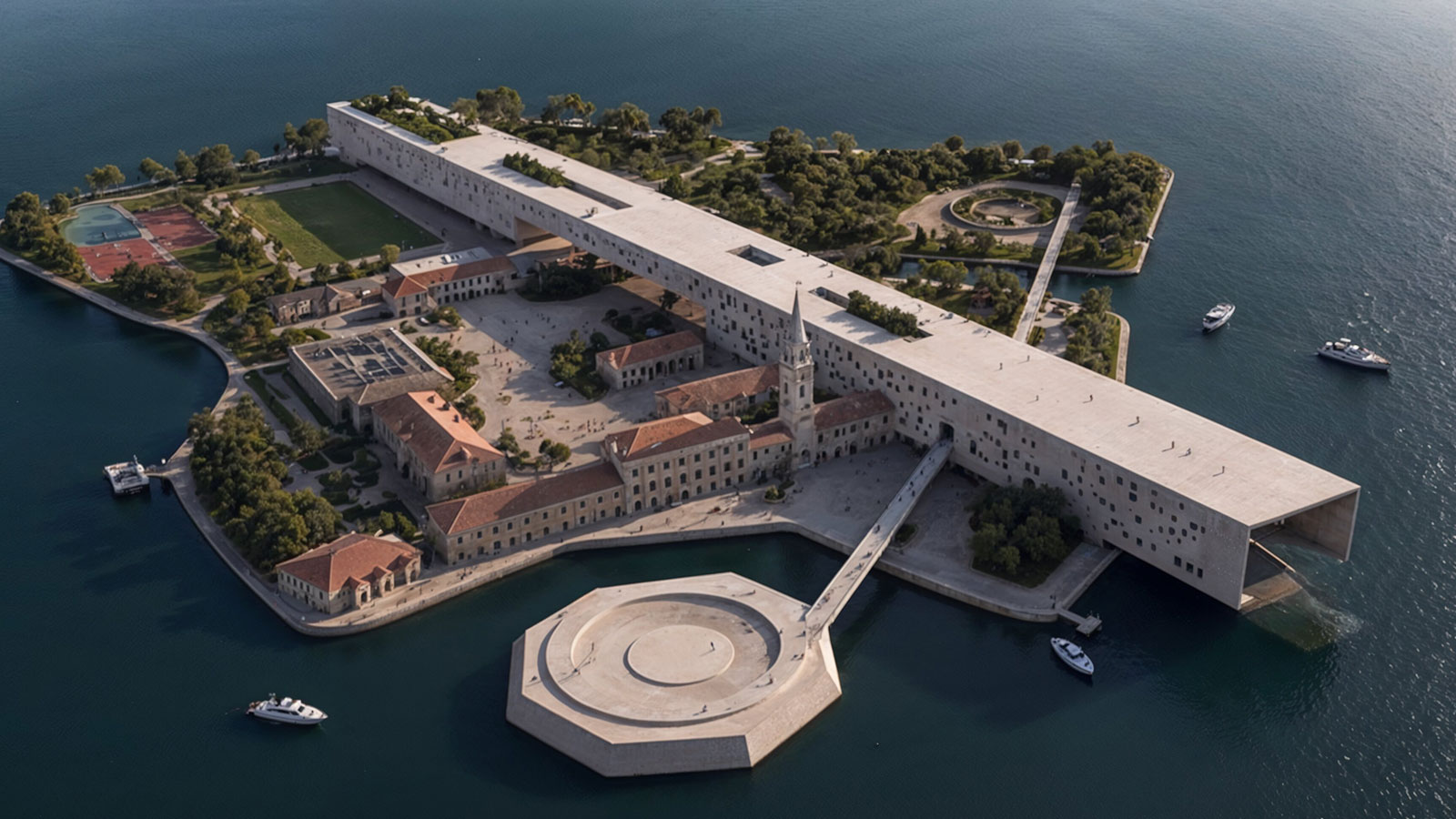
The project introduces a single, decisive architectural gesture:
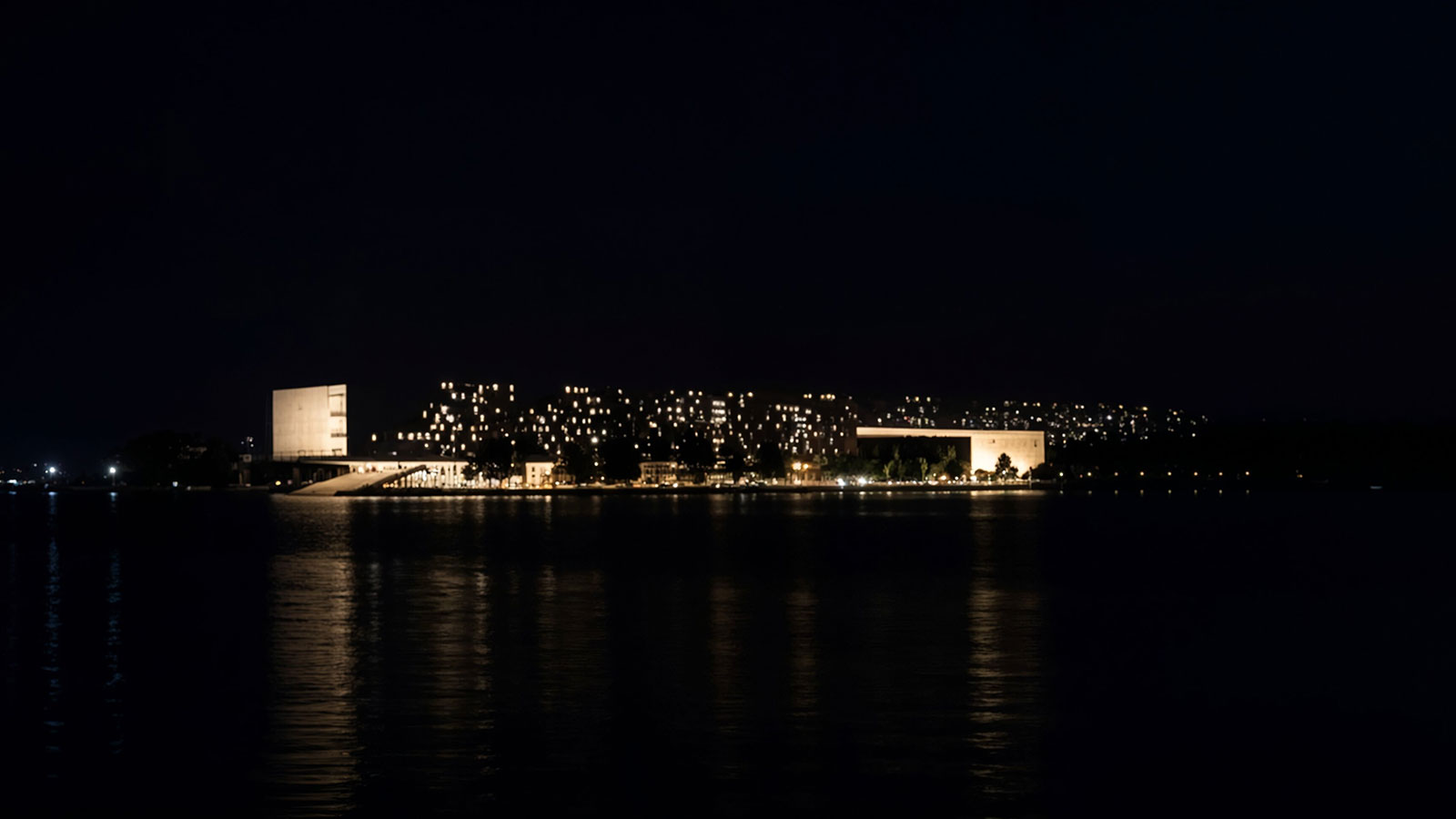
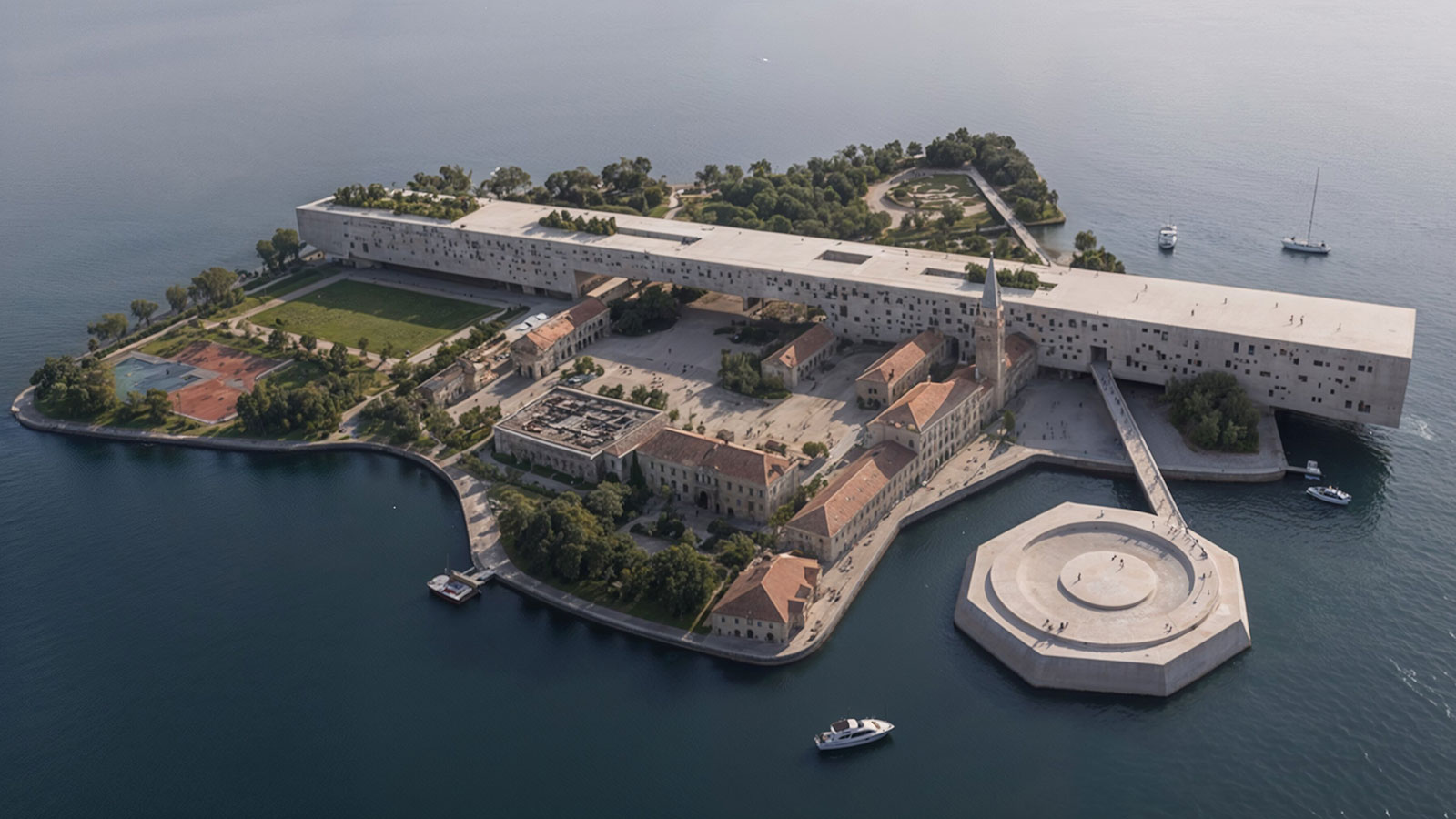
A linear structure that crosses the island without enclosing it.
This gesture is not an imposition. It is an act of measure.
It establishes order without canceling ambiguity.
It defines a system while leaving space for interpretation.
In this sense, the new architecture does not replace the island it clarifies it.
The Line as Structure
The line is the fundamental element of the project.
It is at once:
- a path
- a building
- an infrastructure
- a horizon
Stretching across the island, it organizes the program into a continuous sequence, transforming the campus into a linear city of knowledge.
But more importantly, the line creates relationships:
- between the two parts of the island
- between the built and the unbuilt
- between the past and the present
It does not seek centrality.
It produces continuity.
The Void as Public Space
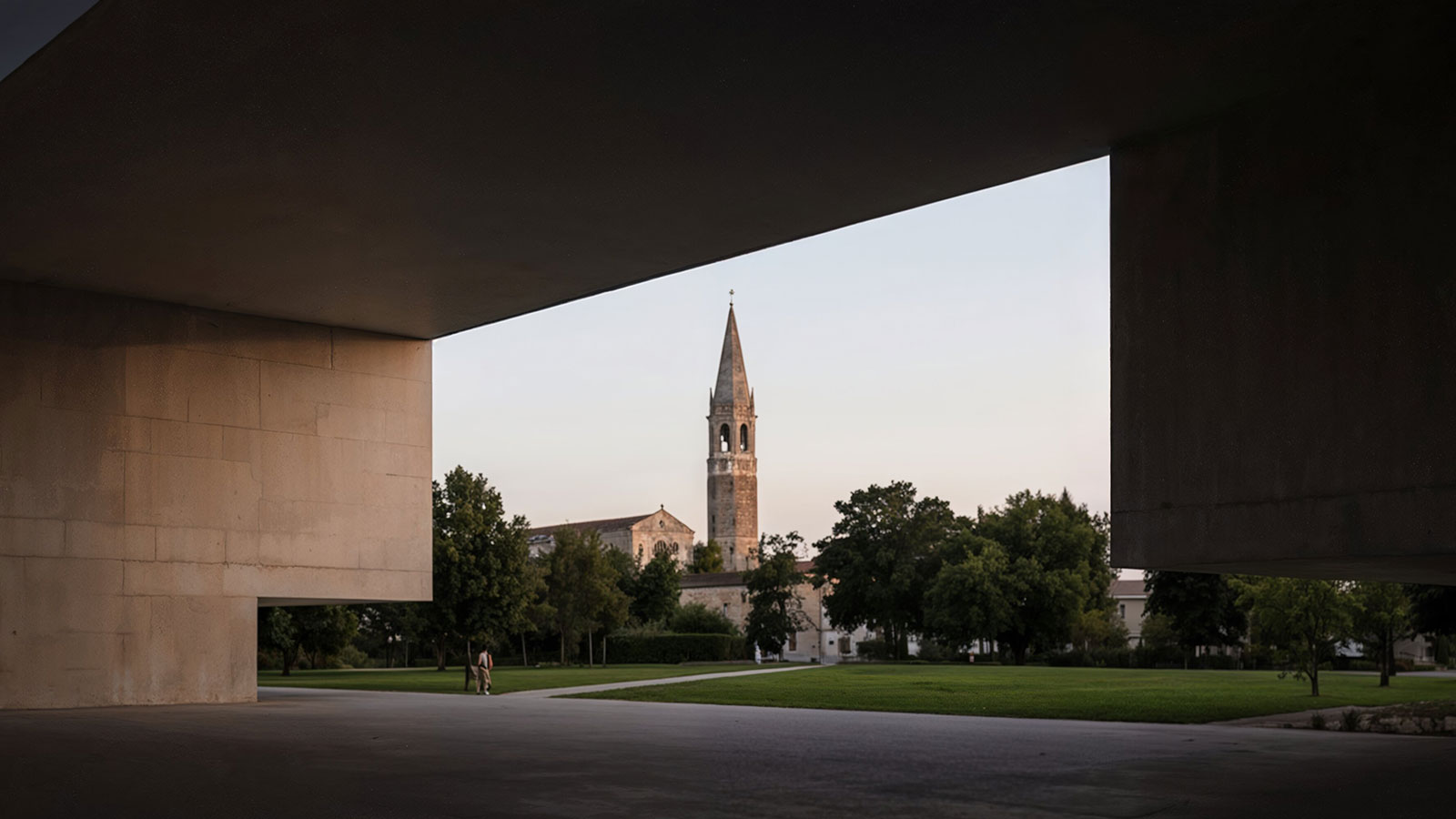
If the line defines the system, the void gives it meaning.
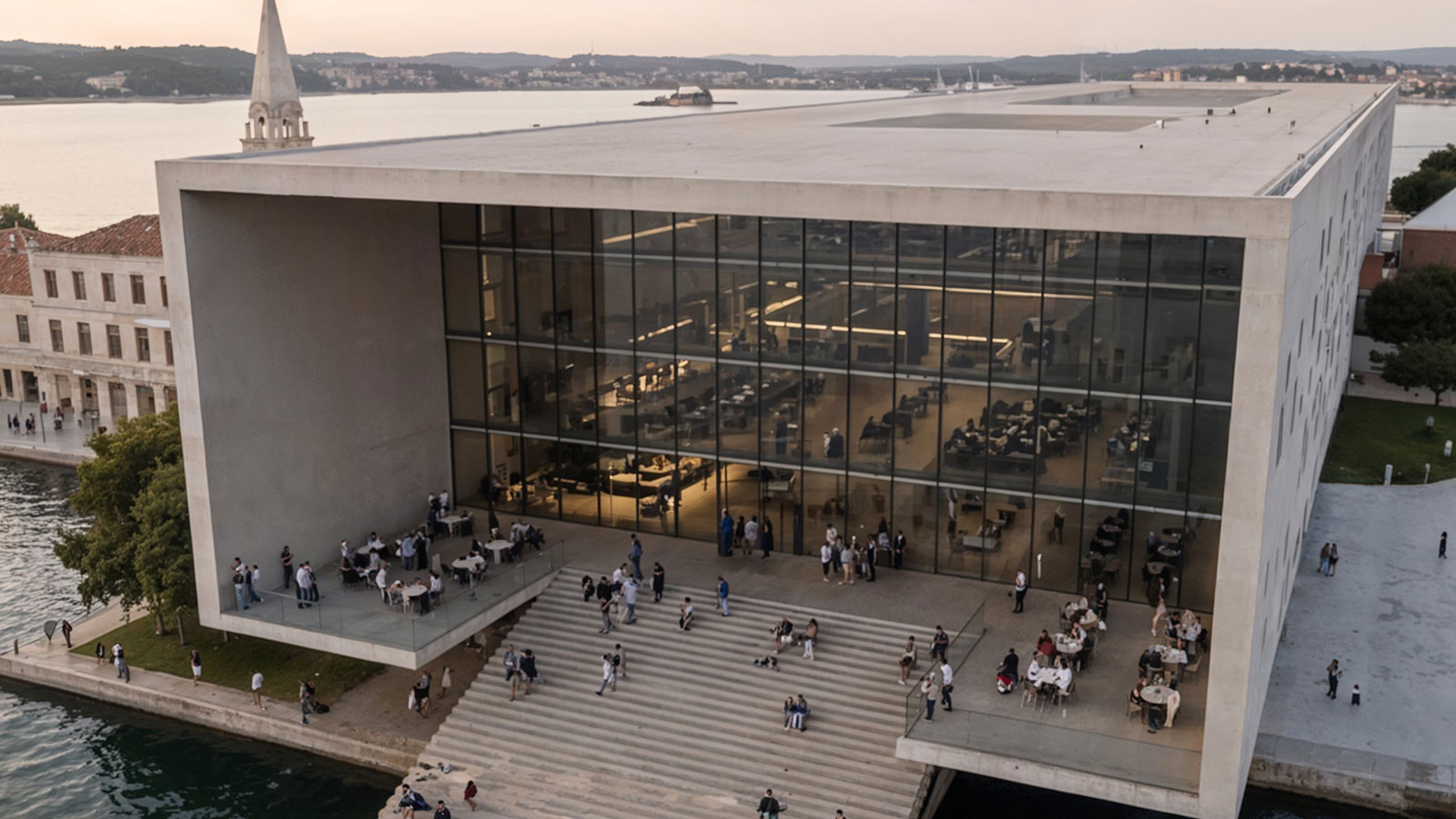
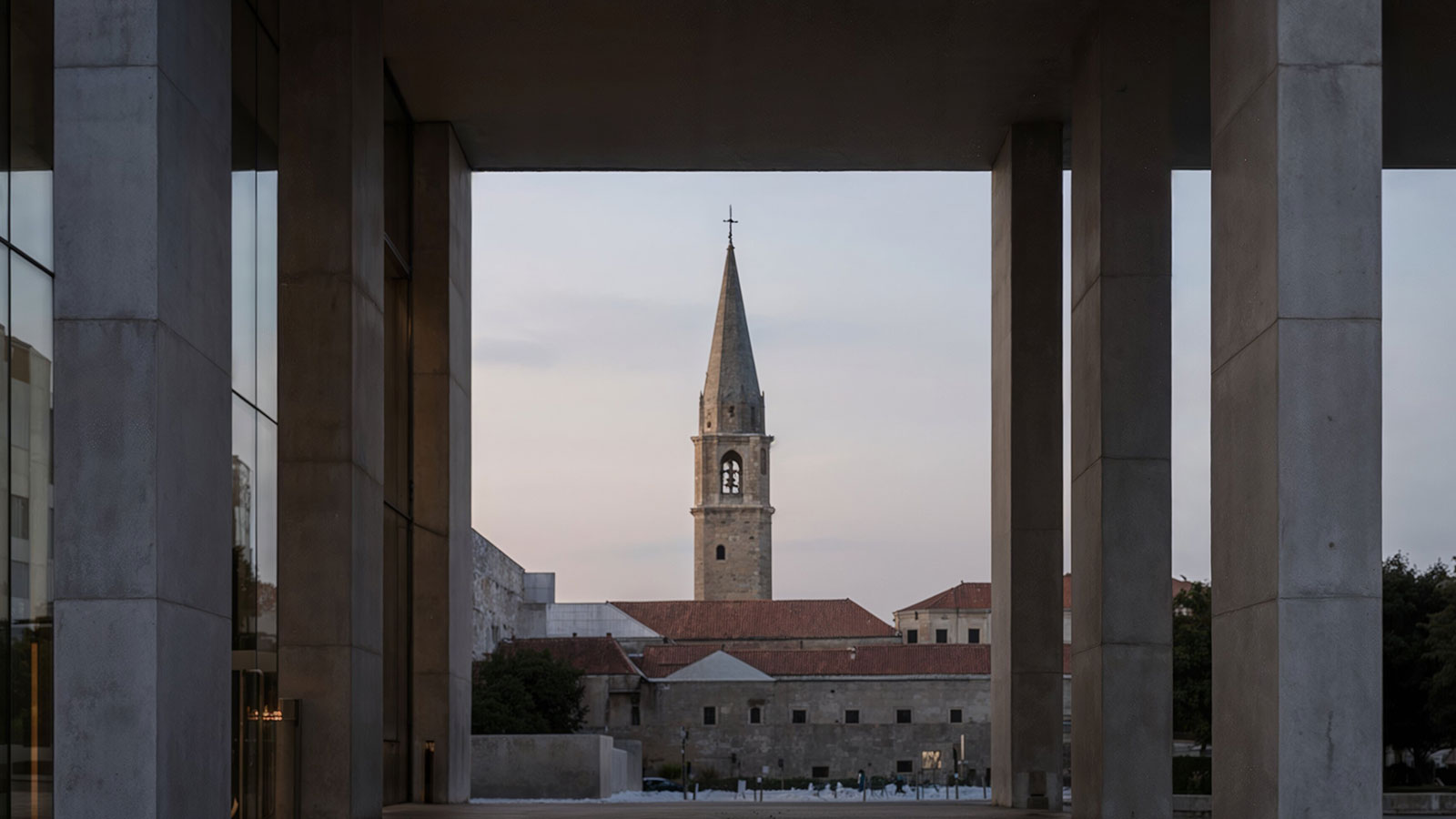
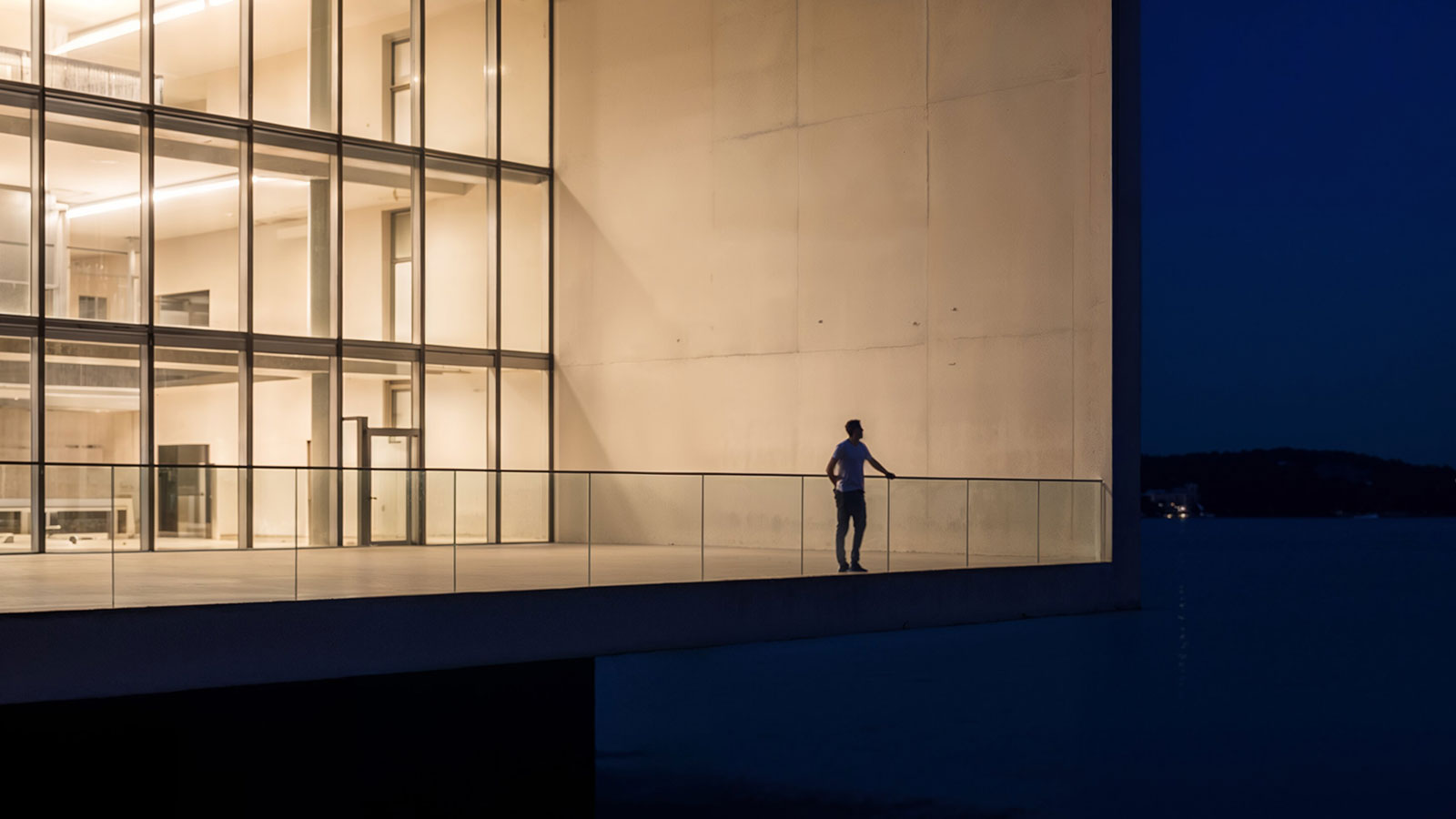
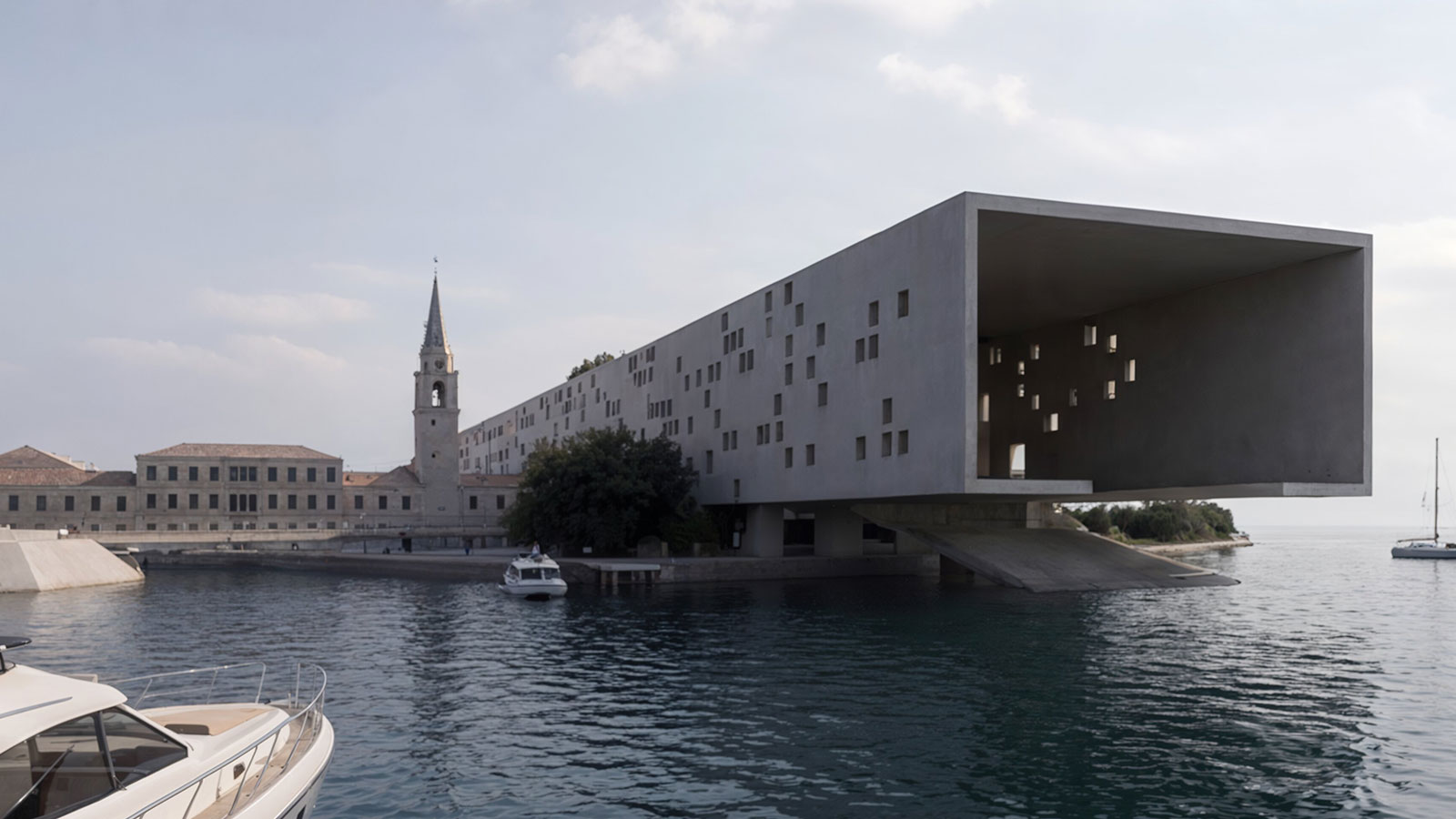
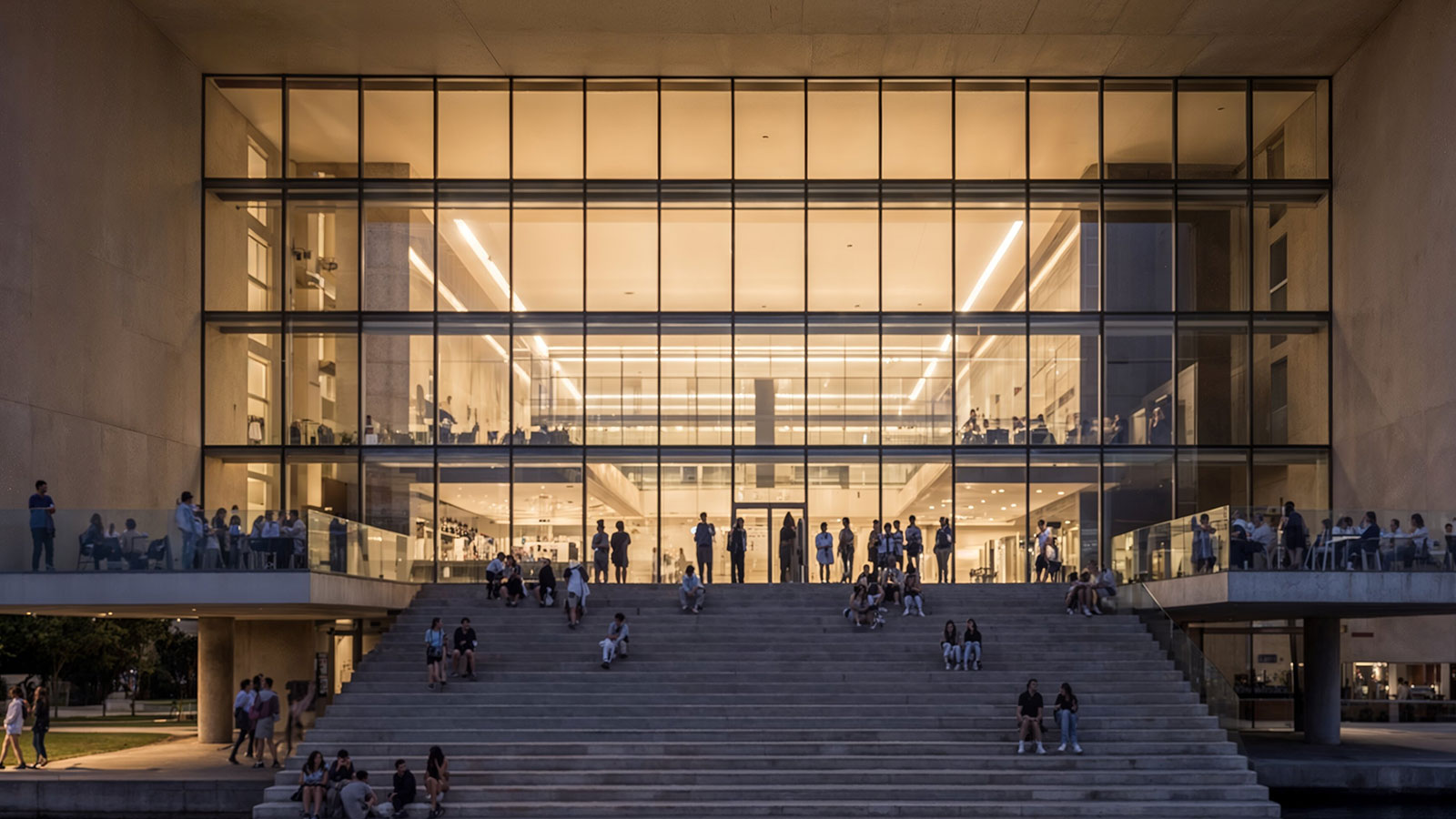
Beneath the suspended volume, a large shaded space emerges not as leftover space, but as a deliberate absence.
This void becomes the true civic center of the project:
- a place of gathering
- a place of pause
- a place where the scale of architecture meets the scale of the human body
Here, architecture withdraws in order to allow life to appear.
This is not emptiness.
It is measured silence.
The Stair and the Water
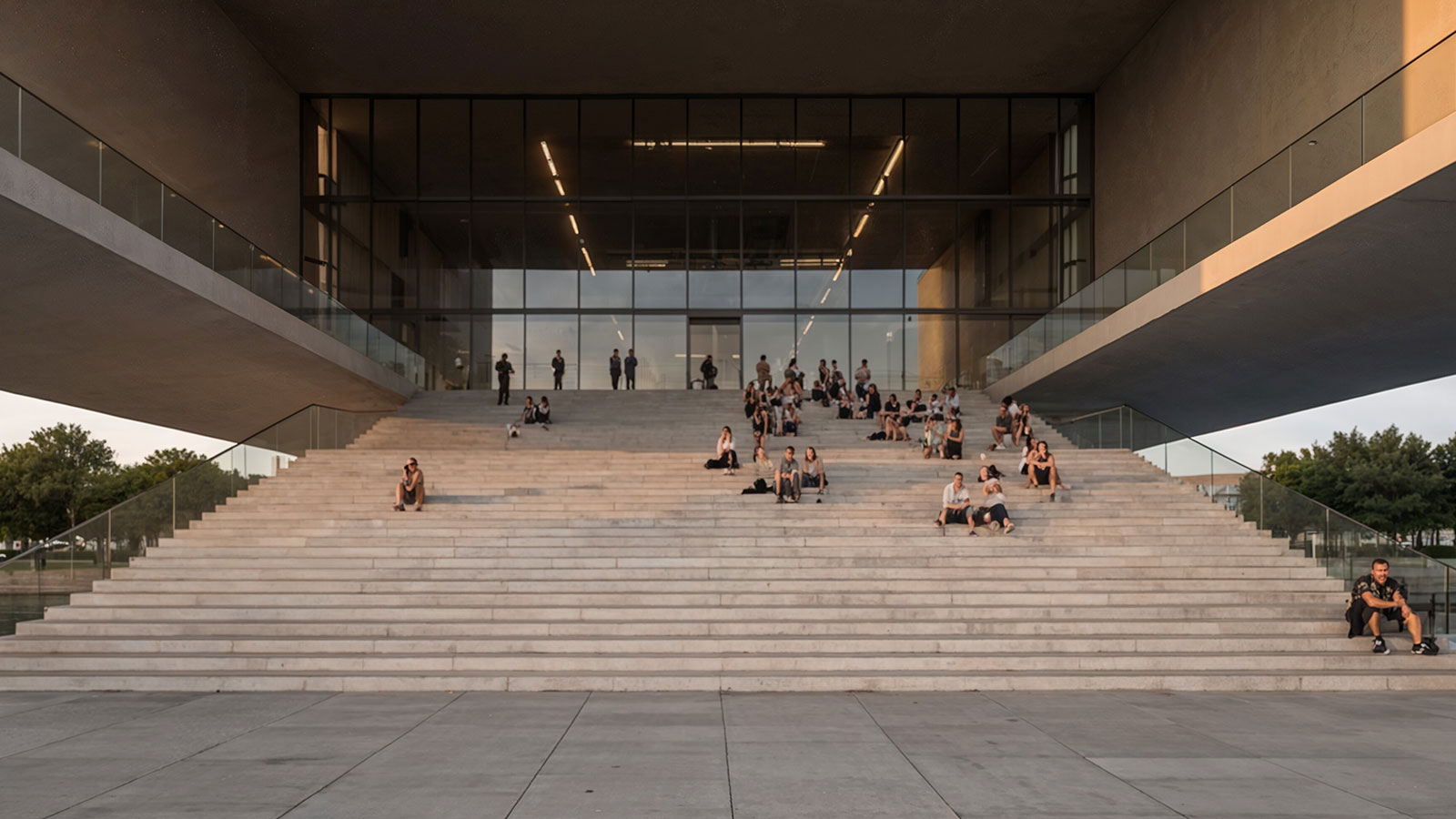
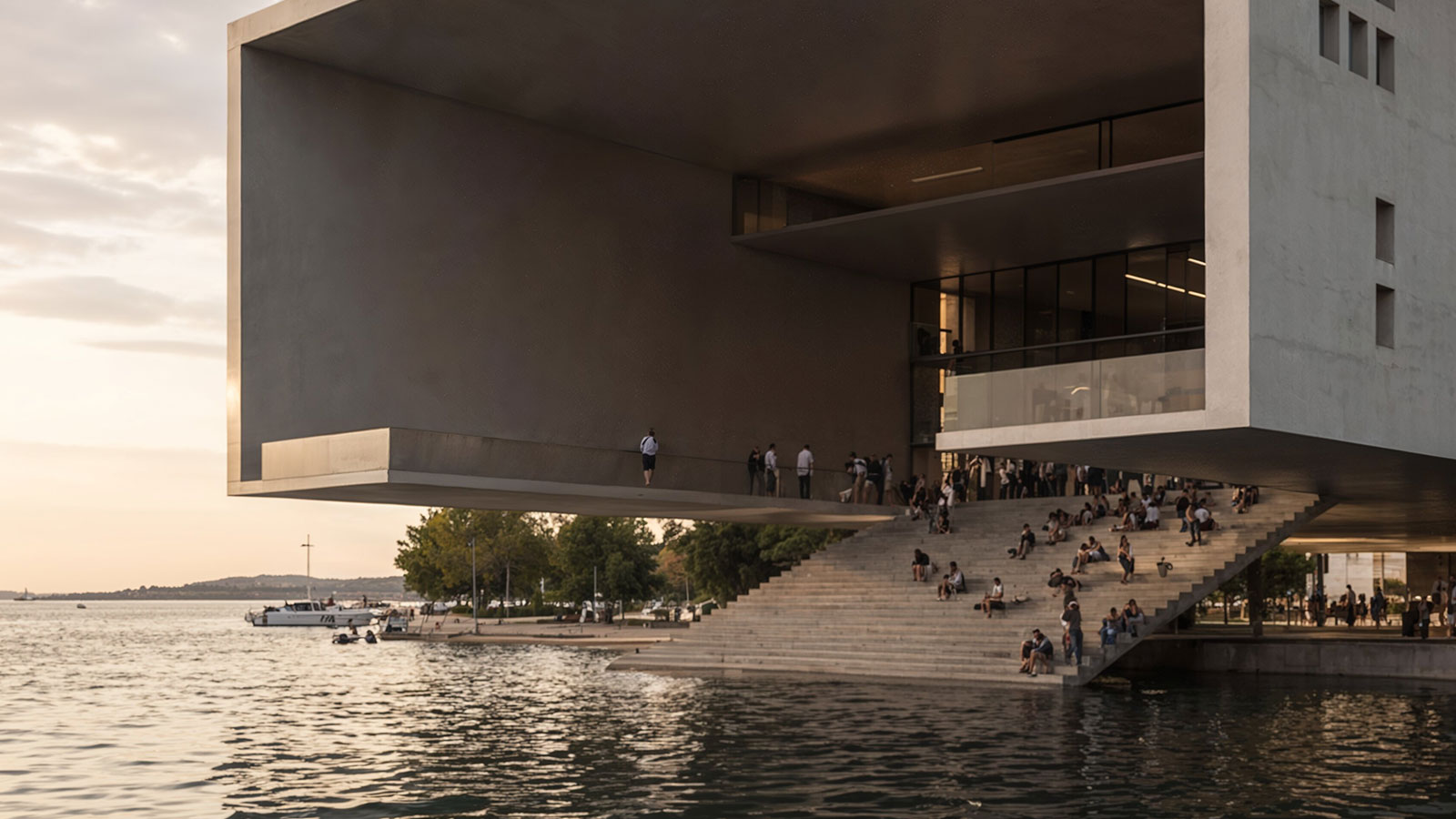
The stepped platform descending into the lagoon is perhaps the most direct gesture of the project.
It is not simply an access device.
It is a theatre of everyday life.
Facing the water, it transforms the edge of the island into:
- a place of encounter
- a place of observation
- a place of collective presence
In Venice, water has always been a surface of reflection both physical and symbolic.
The stair does not dominate this condition.
It amplifies it.

The Relationship with the Existing
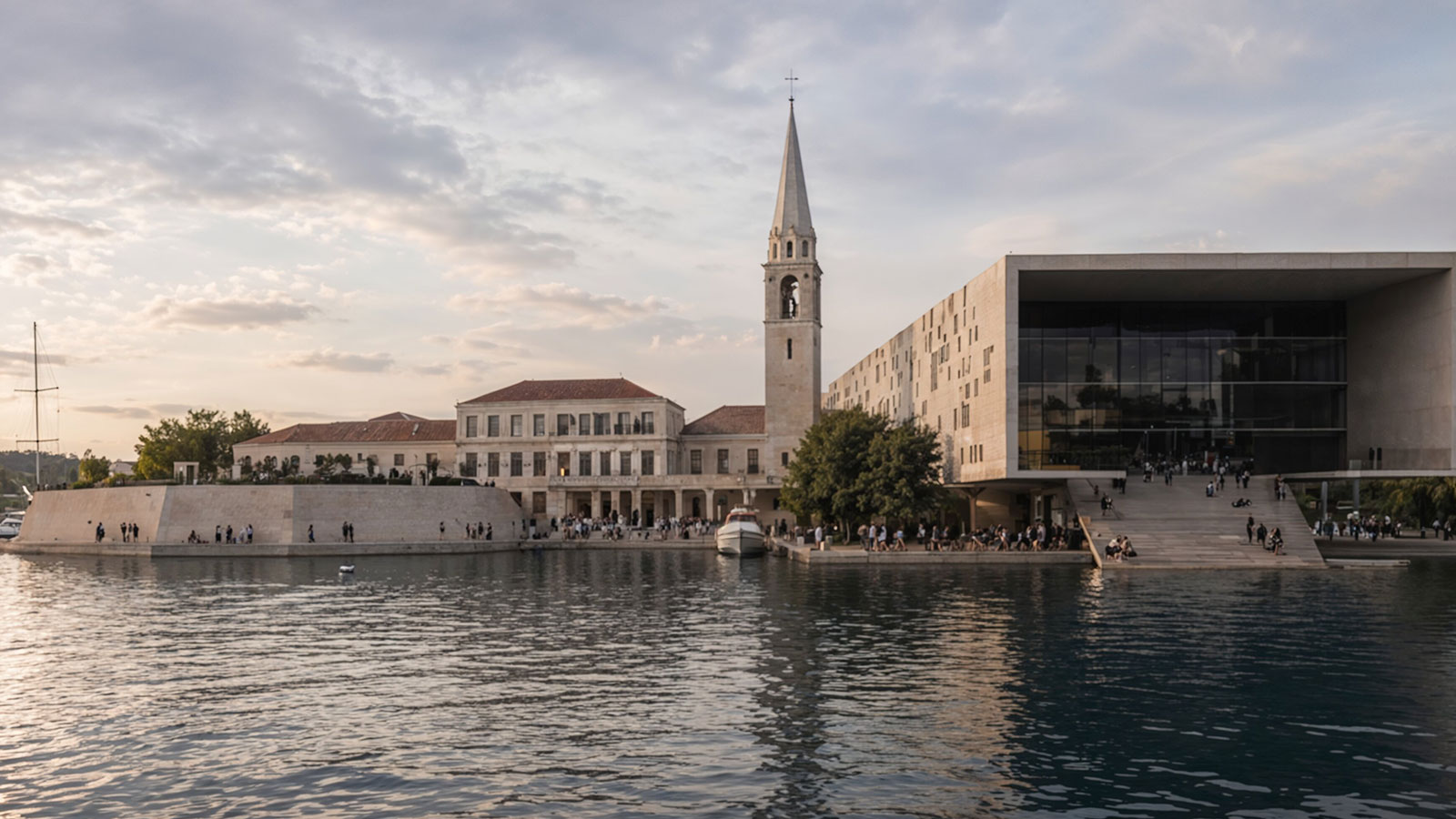
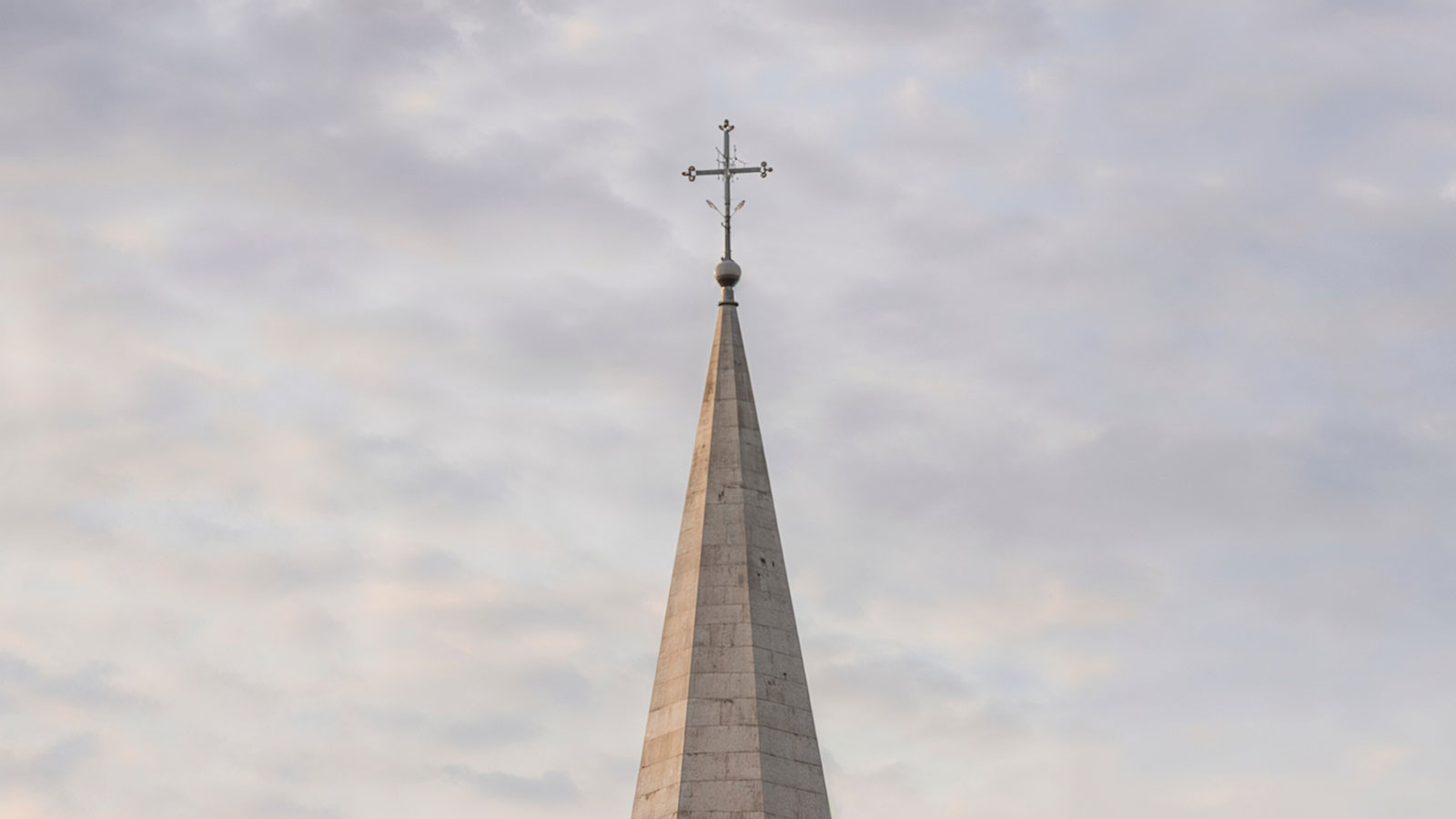
The historical buildings are not treated as objects of nostalgia, but as anchors of permanence.
Their role is not to be preserved as isolated monuments, but to remain active within the new system:
- as spaces of administration
- as cultural and social nodes
- as references that give orientation and meaning
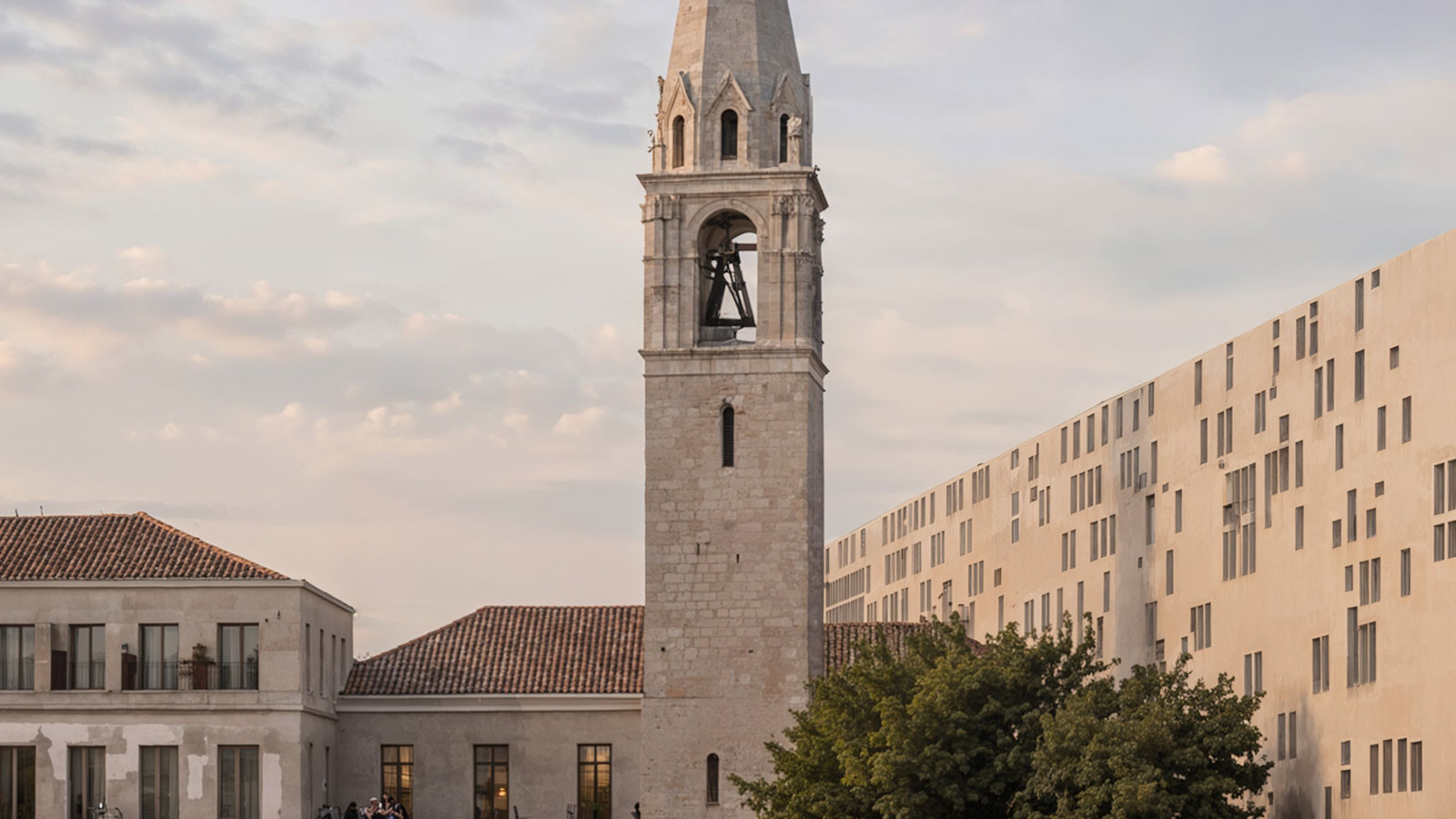
The new architecture does not imitate them.
It stands apart, allowing the difference between old and new to become legible.
This distance is essential.
Without it, there is no dialogue only confusion.
Light, Matter, and Abstraction
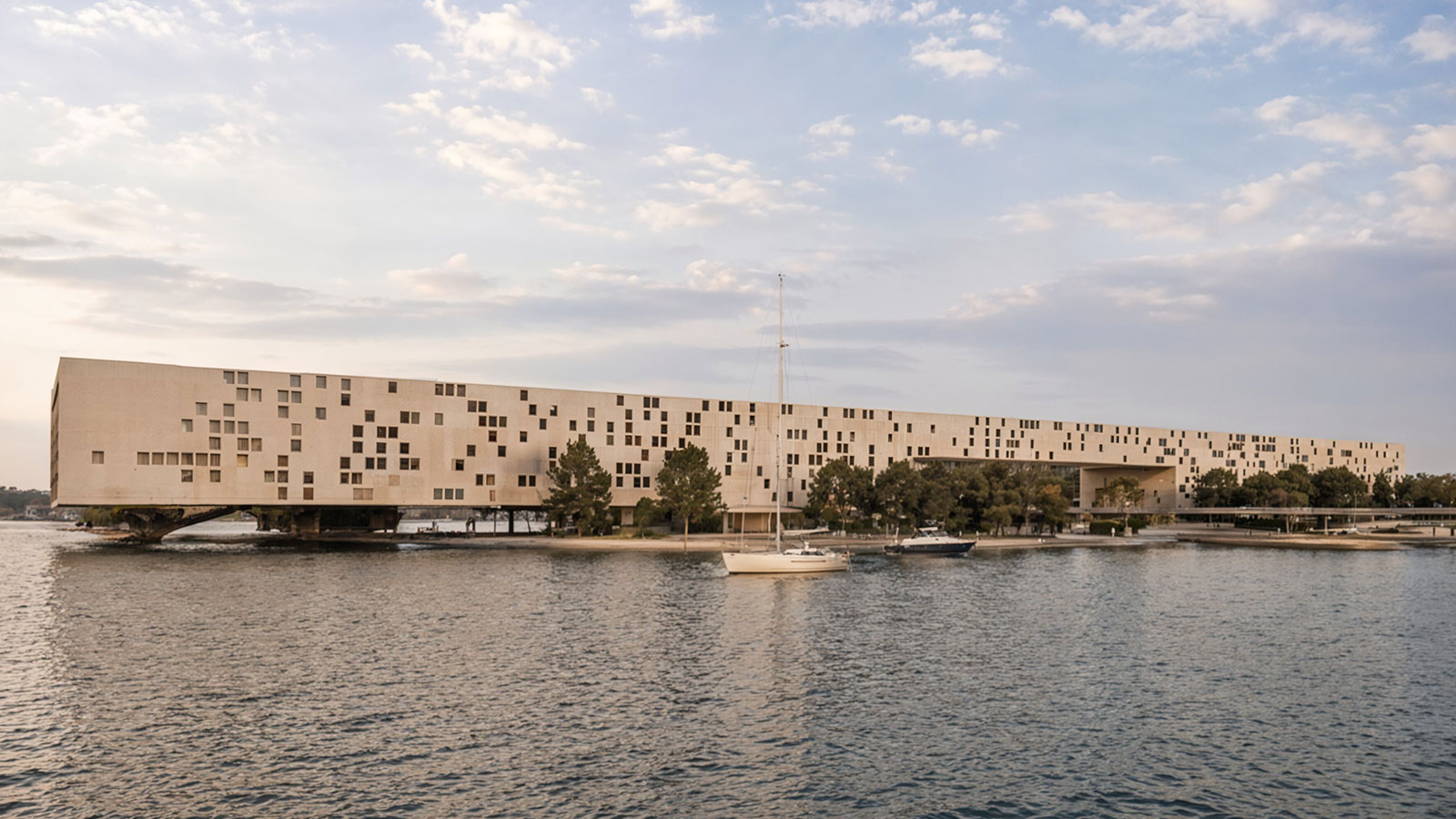
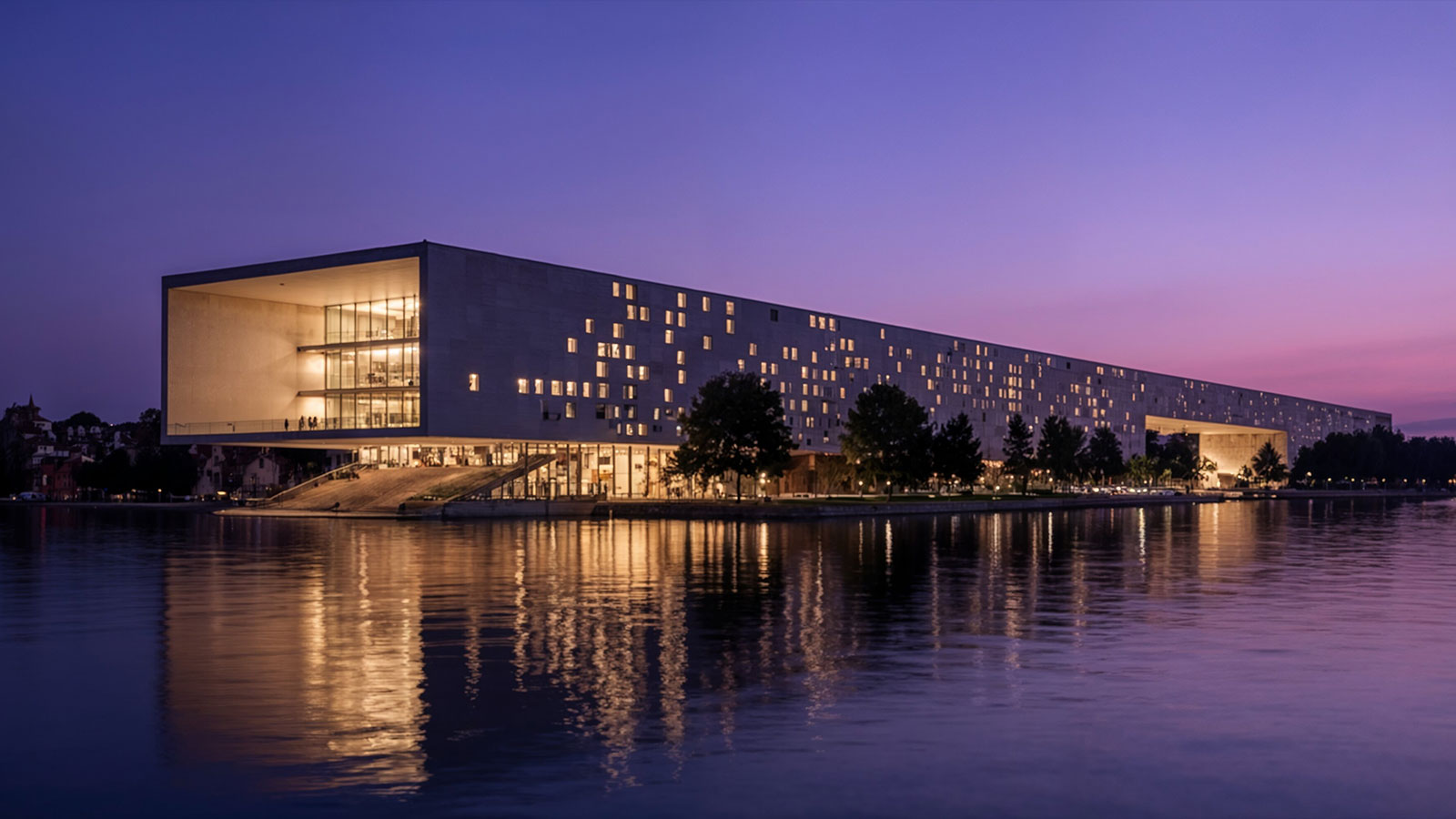
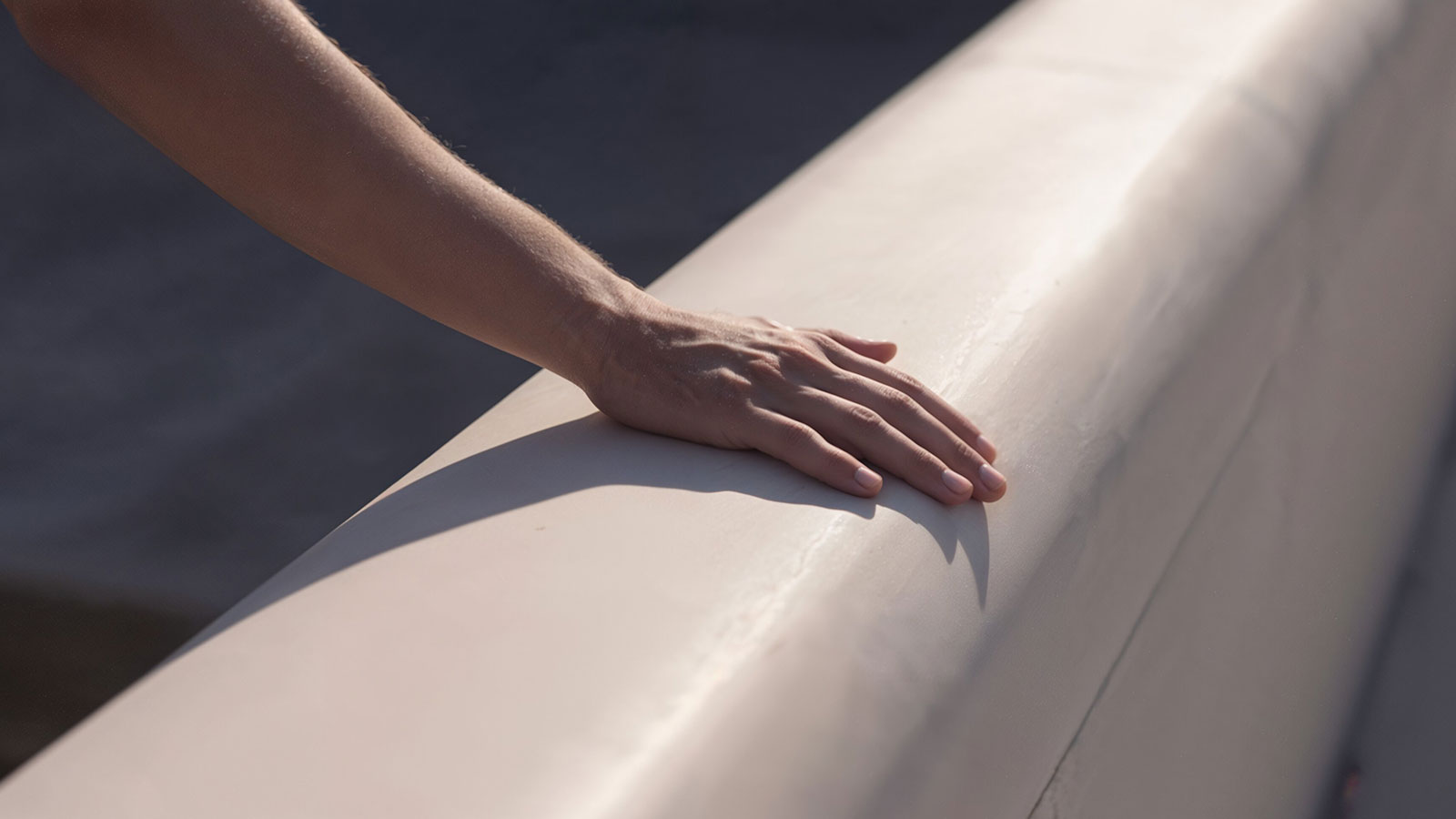
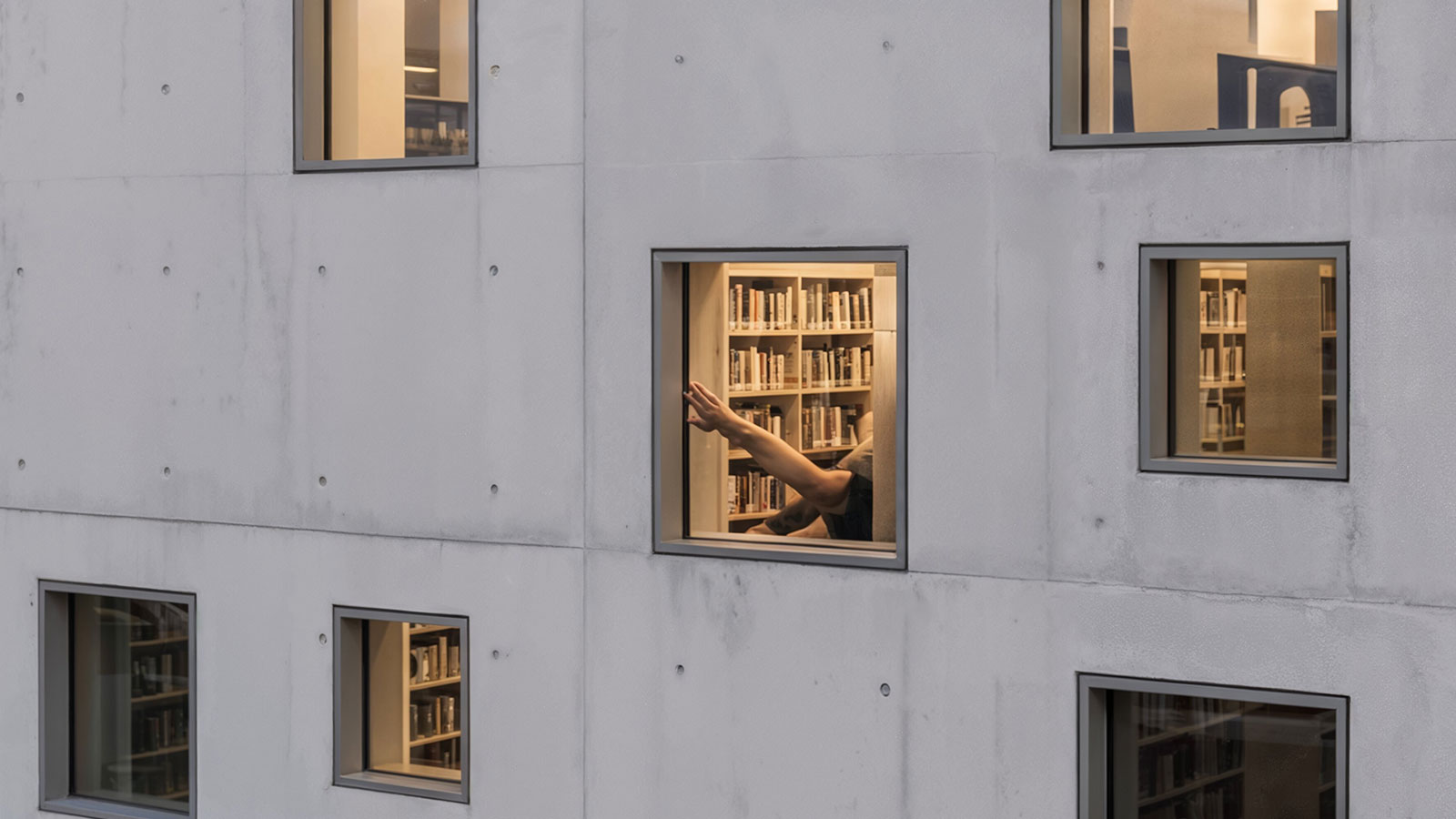
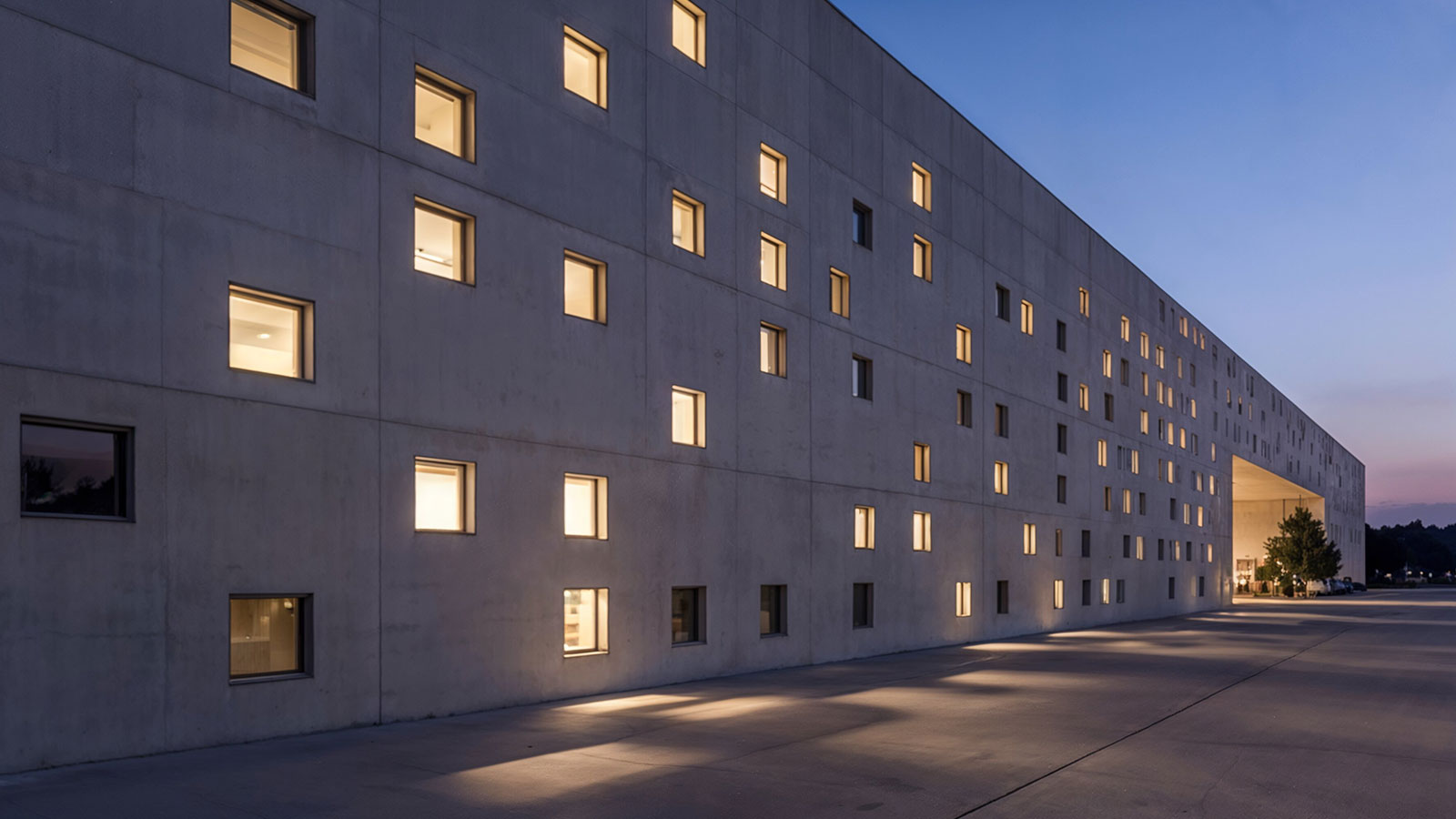
The new volume is conceived as a quiet, abstract body.
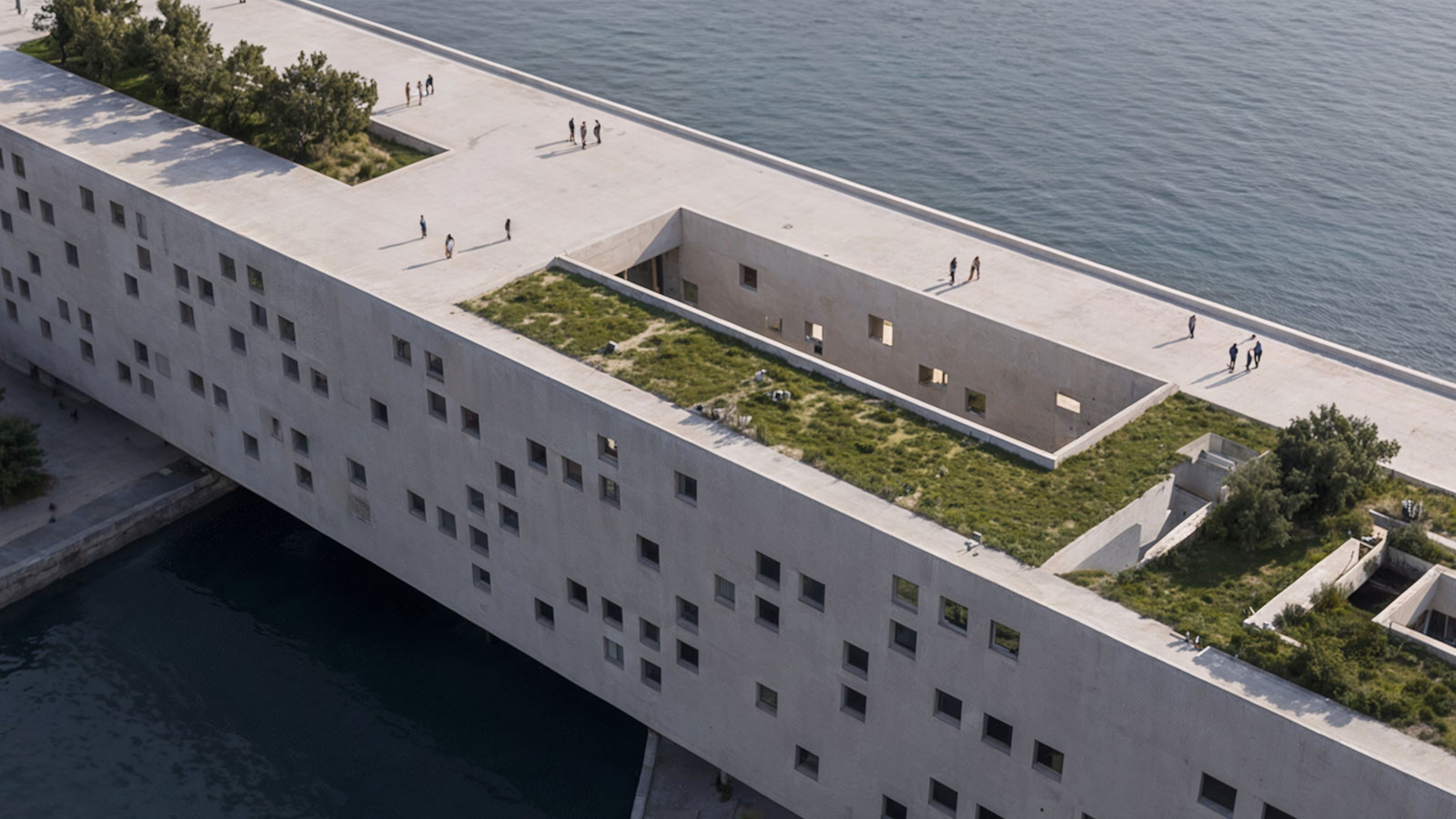
Its surface is defined by a controlled pattern of openings neither fully regular nor arbitrary. These apertures allow light to penetrate the interior, creating a diffuse and changing atmosphere.
During the day, the building appears as a solid mass, almost mute.
At night, it transforms into a luminous presence, revealing the life within.
This duality reflects the nature of the university itself:
- introspective and concentrated
- open and collective
The Campus as a Condition
The project avoids the traditional idea of the campus as a collection of buildings.
Instead, it proposes a condition:
a continuous field where learning, living, and social interaction coexist.
The program classrooms, housing, library, public spaces is not separated but integrated into a single spatial system.
This continuity allows the university to function not as an institution, but as an environment.
Conclusion
Poveglia does not need to be reinvented.
It needs to be understood.
The project is therefore not an act of transformation, but an act of recognition.
By introducing a clear structure—a line, a void, a relationship—the architecture allows the island to emerge once again as a place of meaning.
In this sense, the project is not about form.
It is about continuity.
Continuity between memory and use.
Between silence and activity.
Between the island as it was, and the island as it can become.