


- Location: Nouakchott - Mauritania
- Year: 2019
- Client: Assalamalekoum
- Designer: Muftah Design
- Site Area: 300 m2
- Built-up area: 240 m2
- Use: Culture and arts
- Phase: Design
- Role: Project Architect
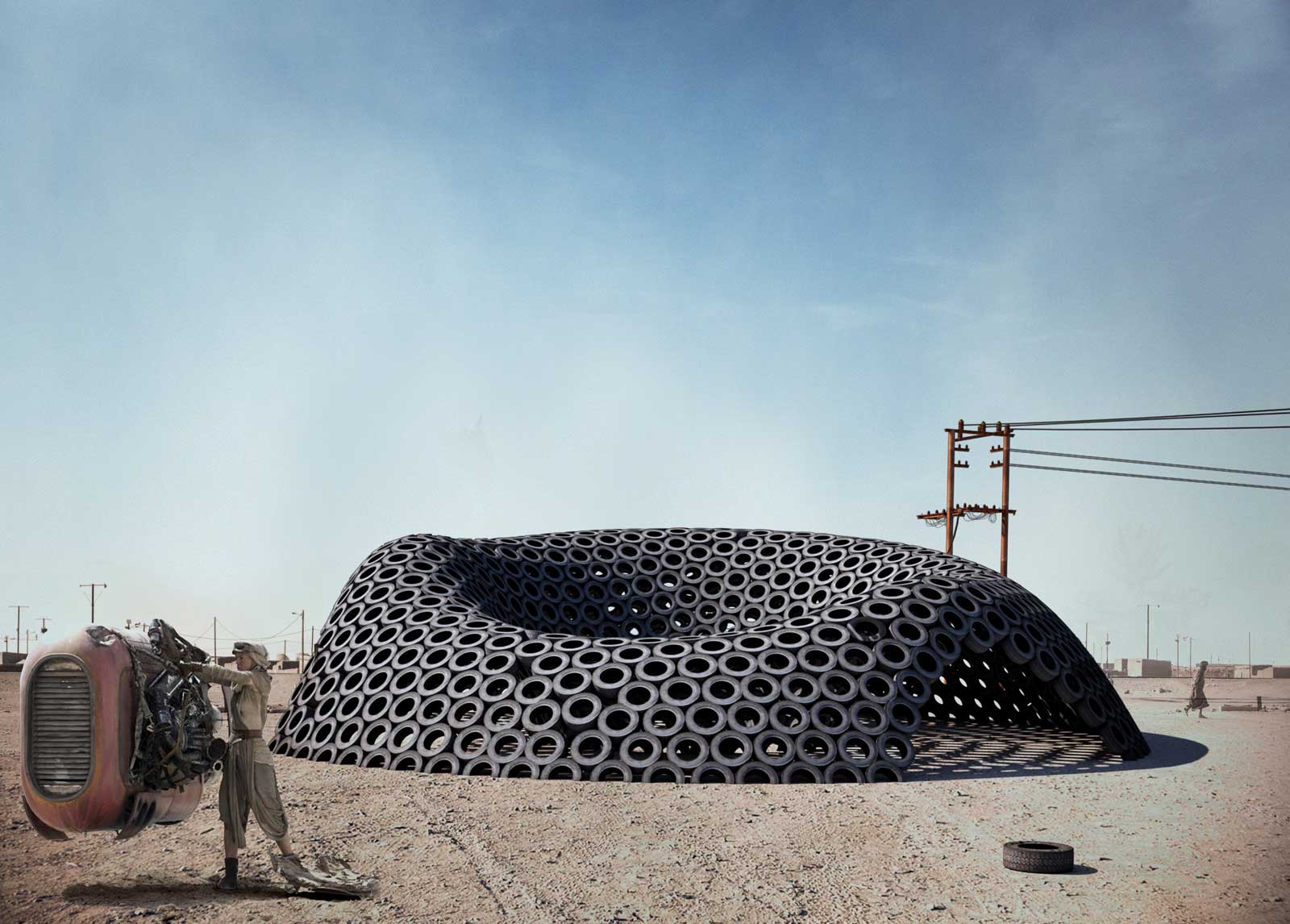
Tires and Wires
Introduction
The "Tires and Wires" project represents an innovative architectural intervention in the heart of Nouakchott, Mauritania. As a community-driven initiative, the project integrates recycled materials and participatory construction methods to create a multifunctional space that addresses cultural, educational, and environmental needs. The design showcases how sustainable architecture can foster social cohesion and inspire creative expression.
Context and Location
Nouakchott, the capital and largest city of Mauritania, is a hub of cultural and economic activity. With a history of rapid urbanization due to climate-induced migration, the city has faced challenges related to infrastructure and community spaces. Located in a densely populated area, the project site serves as a critical node for youth engagement and cultural expression, addressing the lack of accessible public venues in the city.
Architectural Concept
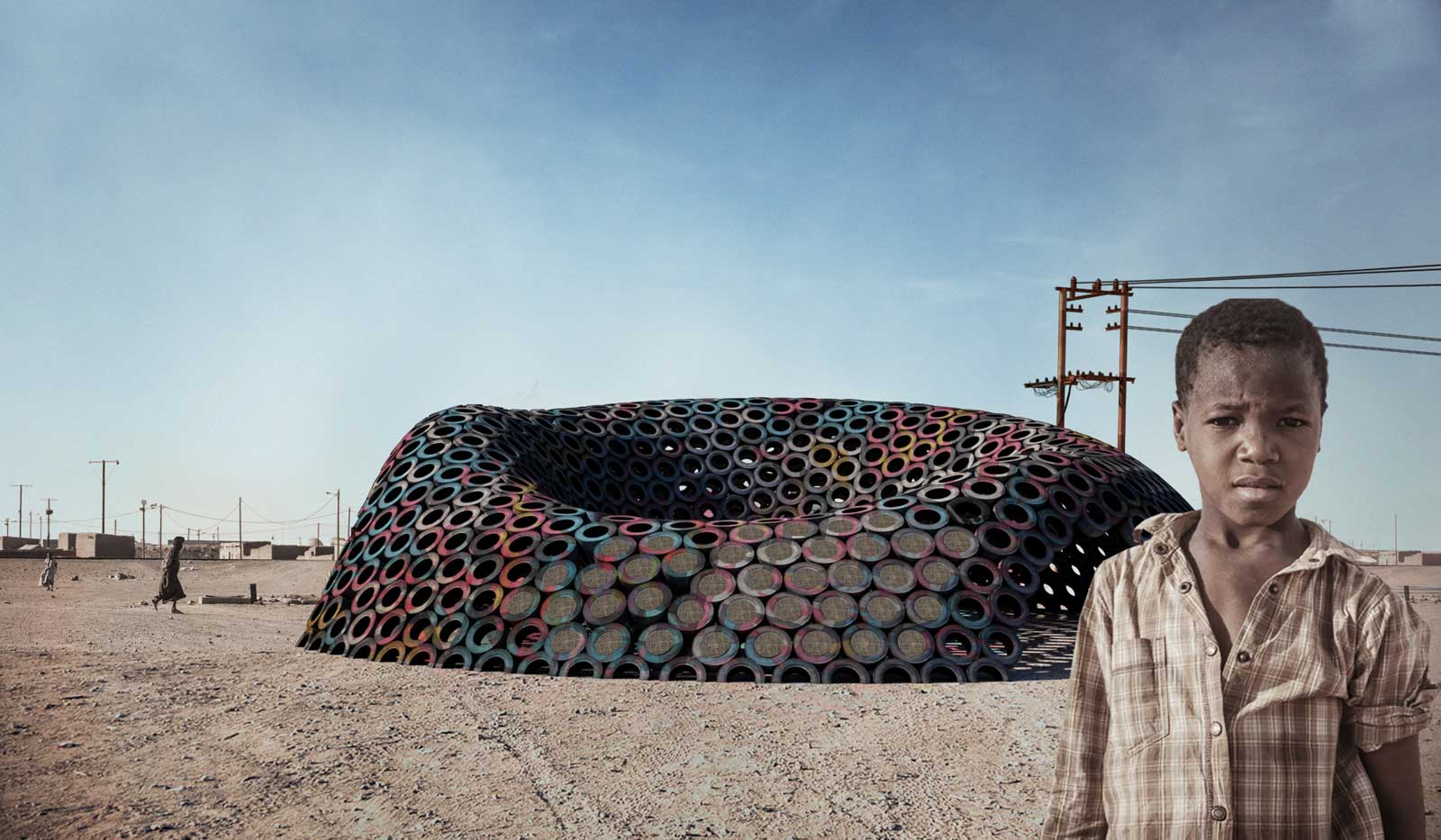
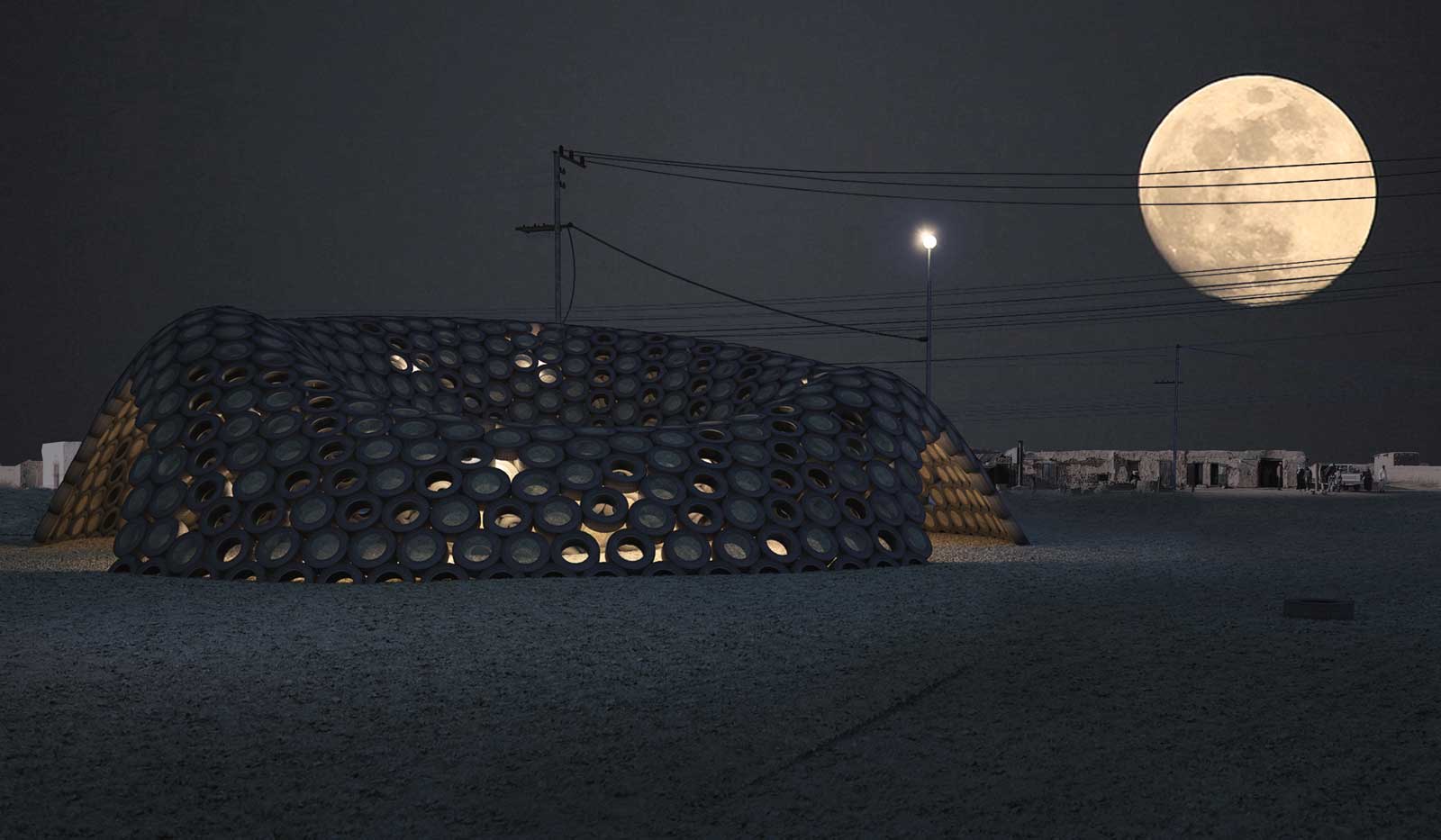
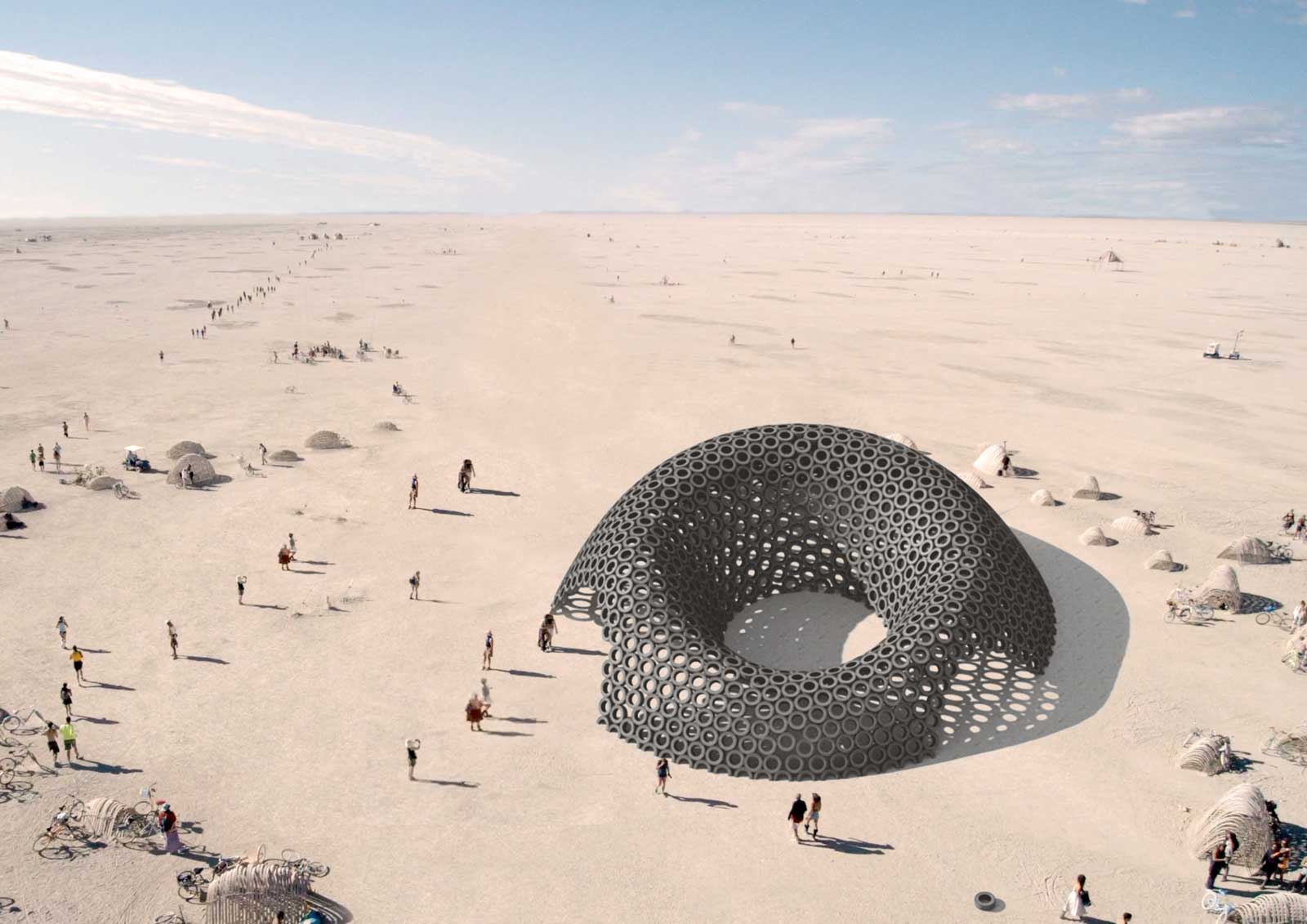
The design philosophy is rooted in simplicity, functionality, and sustainability. The project employs locally available and recycled materials, such as used tires and metal wires, creatively repurposed into architectural elements. The minimalist construction technique ensures accessibility for local artisans and community members to actively participate in the building process. The architecture balances aesthetics and utility, creating a structure that is visually compelling yet inherently practical.
Core Principles:
Sustainability: Utilizing recycled materials to minimize environmental impact.
Community Engagement: Involving local residents in the construction process to foster ownership and collaboration.
Adaptability: Designing flexible spaces that can accommodate diverse functions, from cultural events to educational workshops.
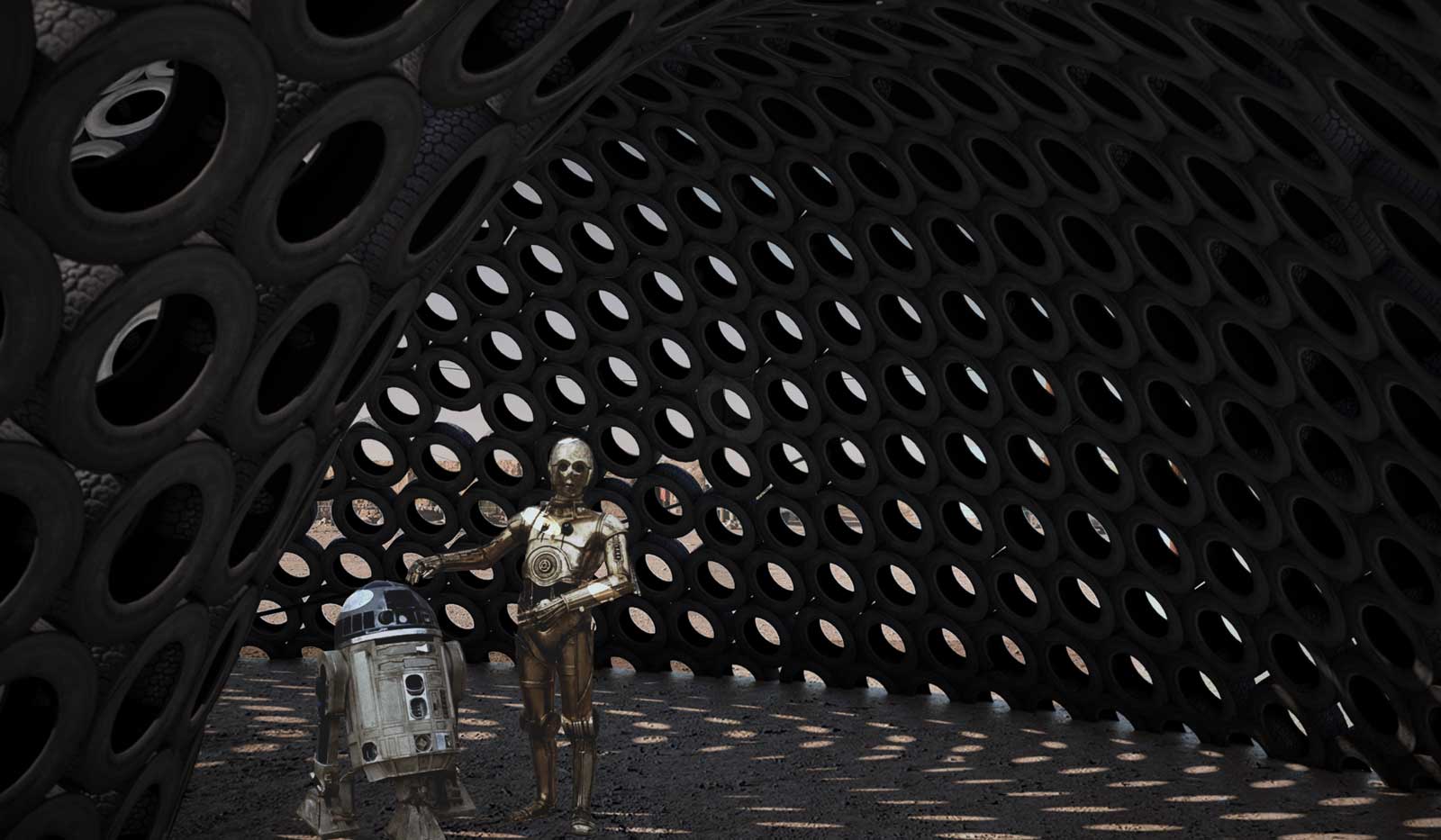
Climate Responsiveness: Integrating passive design strategies, such as shading and natural ventilation, to enhance user comfort.
Design Features
Spatial Program:
- Multipurpose Hall (175 m²): A central space for community gatherings, cultural performances, and workshops.
- Exhibition Gallery (65 m²): Dedicated to showcasing local art, photography, and cultural artifacts.
- Indoor Garden: A green, tranquil area promoting interaction and relaxation, enhancing the project's environmental credentials.
Material Palette:
The primary materials include:
- Tires: Used for foundational elements and decorative walls, symbolizing resilience and transformation.
- Metal Wires: Woven into tensile structures and shading devices.
- Natural Fibers: Incorporated into seating and partitions to add texture and warmth.
Construction Technique:
The structure is built using a modular steel frame, enabling ease of assembly. The process involves three main steps:
- Defining Axes: Marking the structural boundaries.
- Steel Frame Installation: Establishing the supportive skeleton of the building.
- Layer Integration: Weaving and attaching recycled materials to complete the design.
Environmental Considerations:
- Water Harvesting: Mesh and fiber systems collect rainwater, which is stored for garden irrigation.
- Shading Systems: Carefully oriented mesh panels provide optimal sun protection during peak hours (9:00 AM to 4:00 PM), reducing heat gain.
Visual Identity:
The project’s design is a blend of industrial aesthetics and community-oriented functionality. Public entrances are accentuated with symbolic patterns created from tire and wire elements, inviting and welcoming users.
Impact and Objectives
The project aims to address pressing social, cultural, and environmental challenges while fostering a sense of community. Key objectives include:
- Empowering Youth: Offering platforms for skill development, self-expression, and entrepreneurship through cultural and educational activities.
- Promoting Cultural Heritage: Encouraging the integration of traditional Mauritanian art and crafts into modern creative practices.
- Enhancing Sustainability Awareness: Demonstrating the value of upcycled materials in reducing environmental impact and encouraging resourcefulness.
Community Engagement
One of the project's defining aspects is its participatory design approach. Local residents and youth were actively involved in both the conceptual and construction phases. This collaboration not only built community pride but also ensured that the design meets the practical needs of its users.
Conclusion
The "Tires and Wires" project is more than an architectural achievement; it is a testament to the power of design as a tool for social transformation. By combining innovative reuse of materials, community involvement, and environmental consciousness, the project establishes a replicable model for sustainable development in urban contexts. It exemplifies how architecture can transcend functionality to become a catalyst for cultural enrichment and social empowerment.