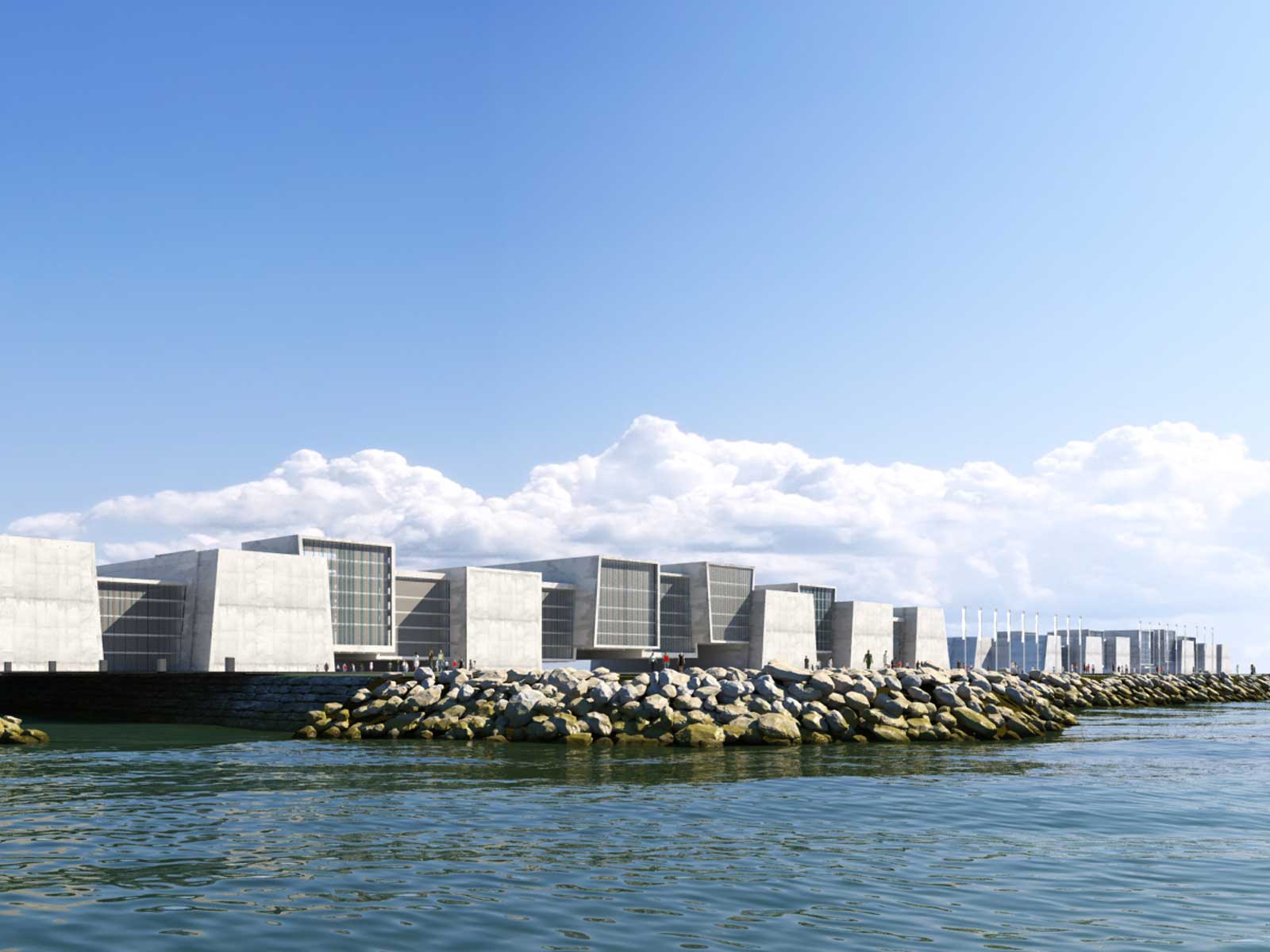



- Location: Tripoli – Libya
- Year: 2012
- Client: SSFI Social Security Fund Investments
- Designer: Muftah Abudajaja
- Site Area:140,000 m2
- Built-up area: 28,000 m2
- Use: Mixed-use
- Phase: Design
- Role: Project Architect
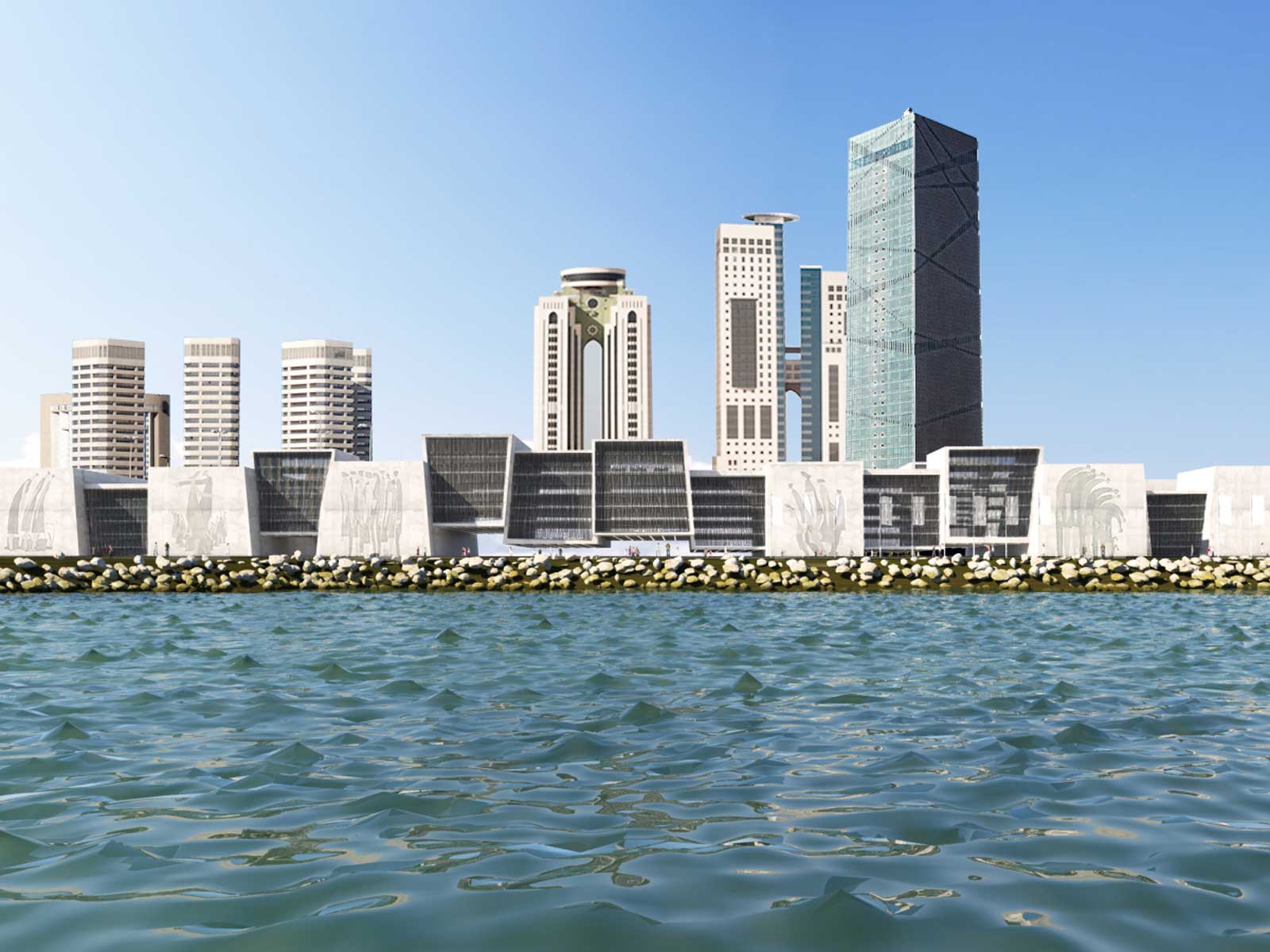
Tripoli Line Project Development: Revitalizing the Urban Core of Tripoli
Overview:
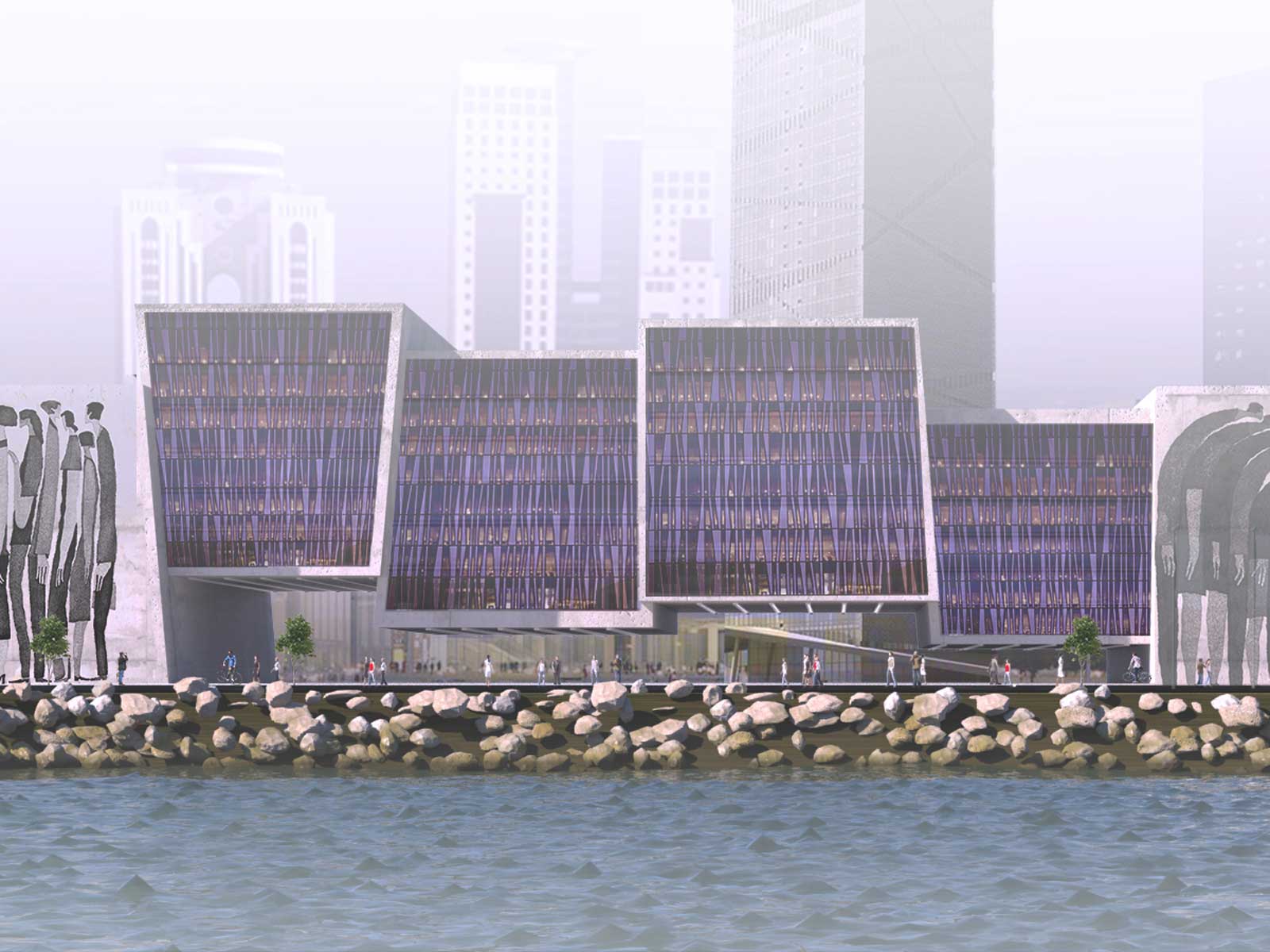
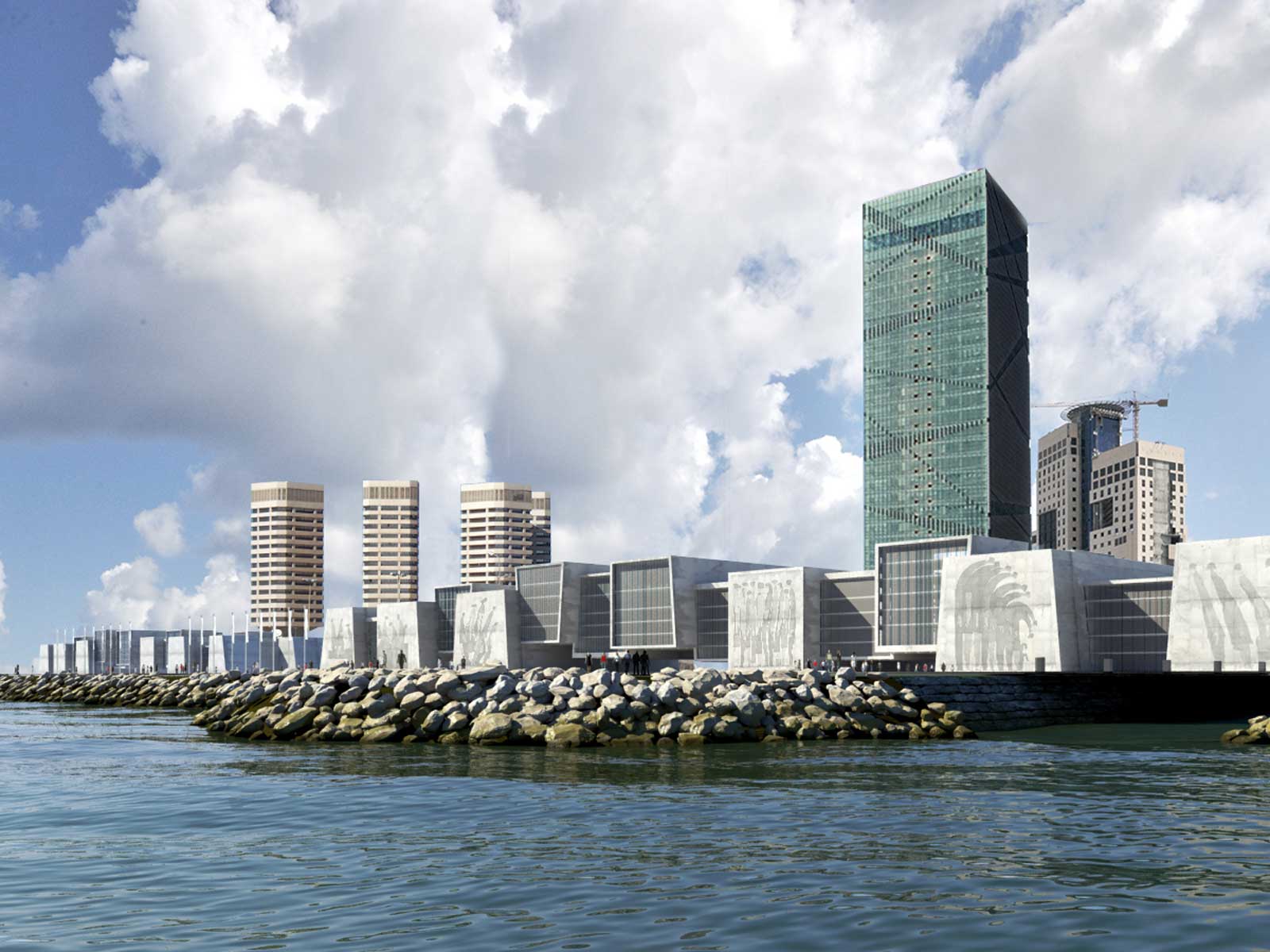
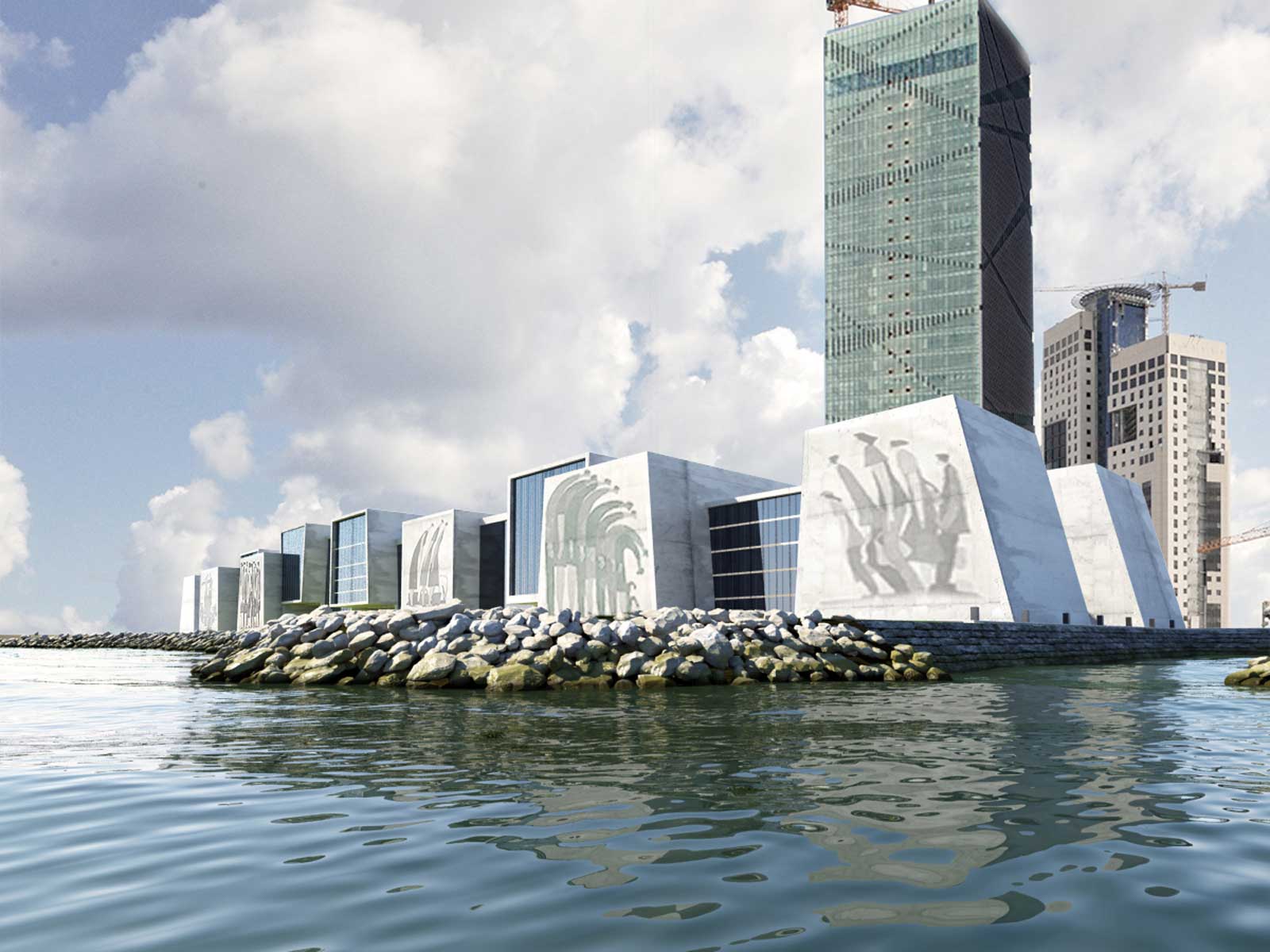
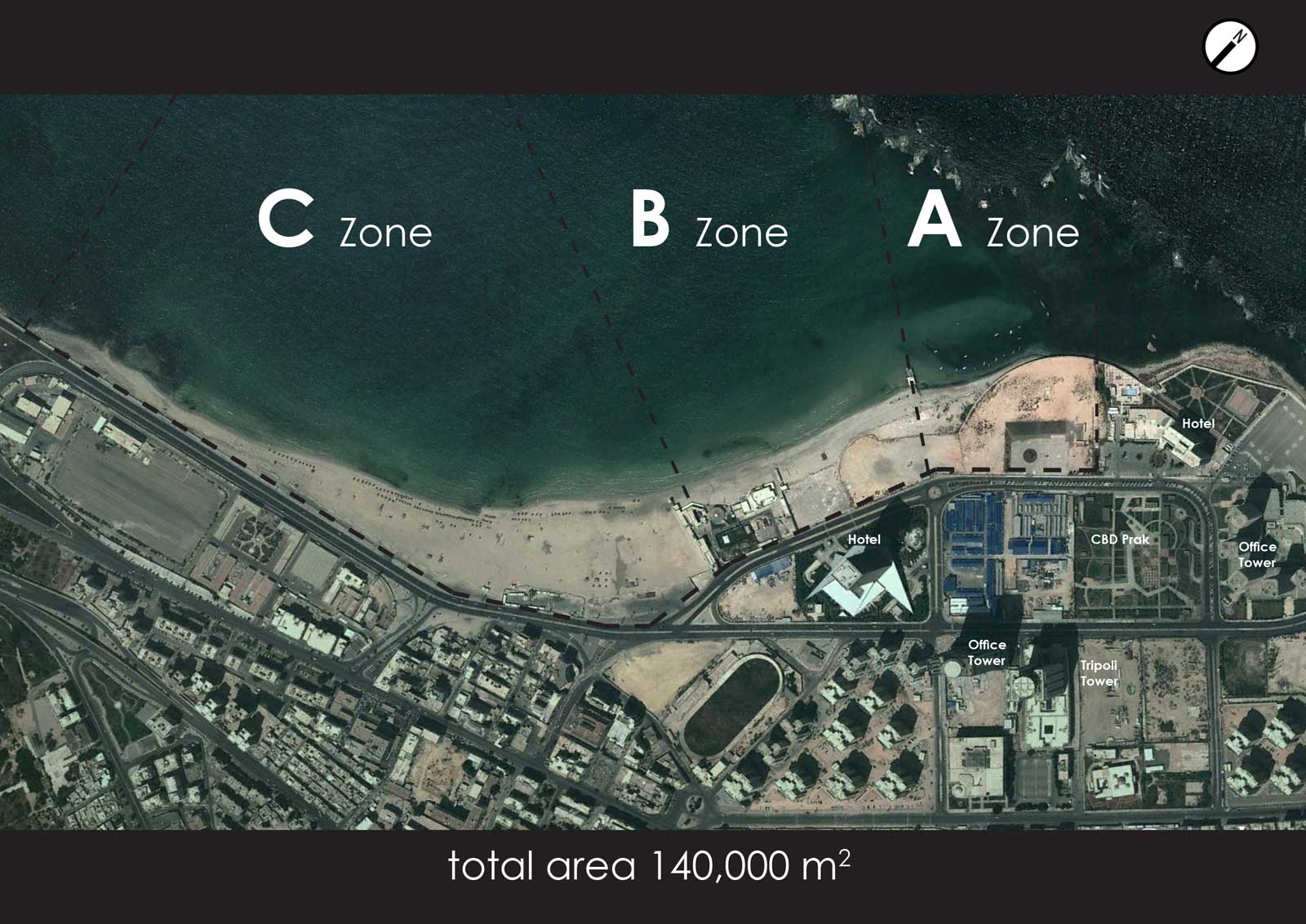
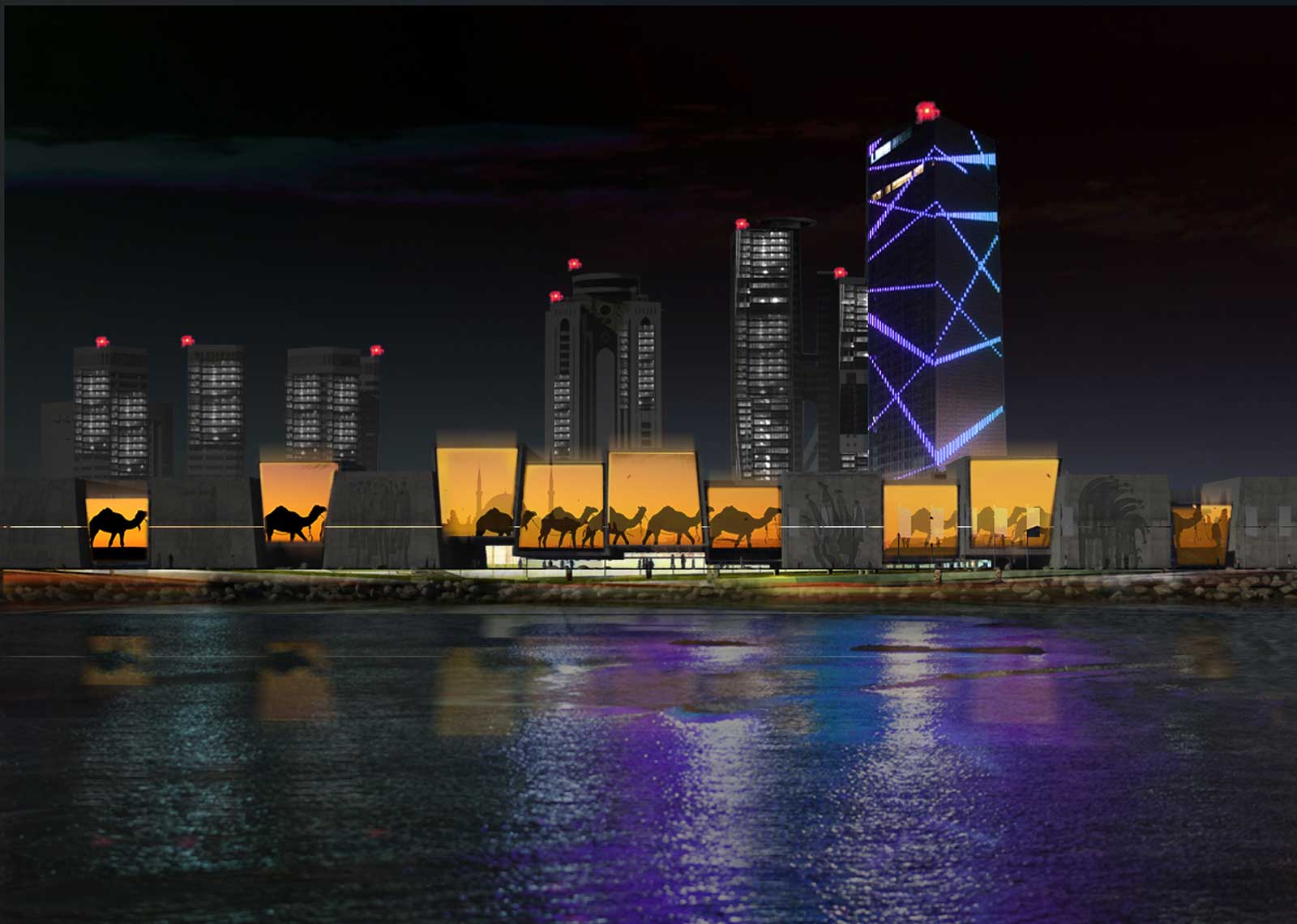
The Tripoli Line Project is an ambitious urban development initiative designed to transform the central coastline of Tripoli, Libya. Spanning an extensive area of 140,000 square meters, this project aims to rejuvenate the city's waterfront by integrating business, recreational, and cultural facilities. The development is strategically positioned on the northeastern coastline of Tripoli, making it the last available prime real estate in the city's central coastal area. This project seeks to enhance the city's cultural vibrancy, promote social interaction, and reconnect the urban core with the Mediterranean Sea.
Design Concept:
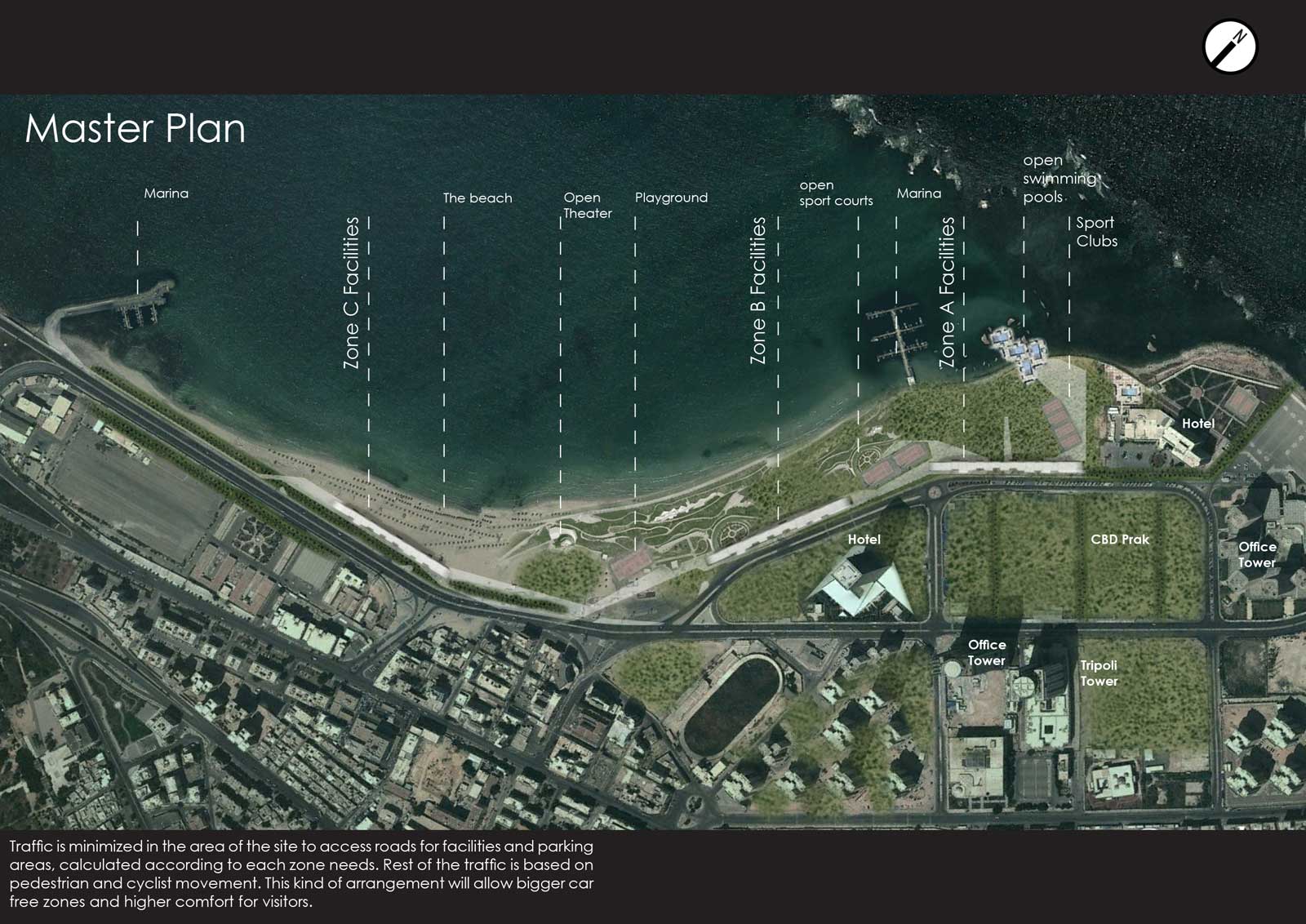
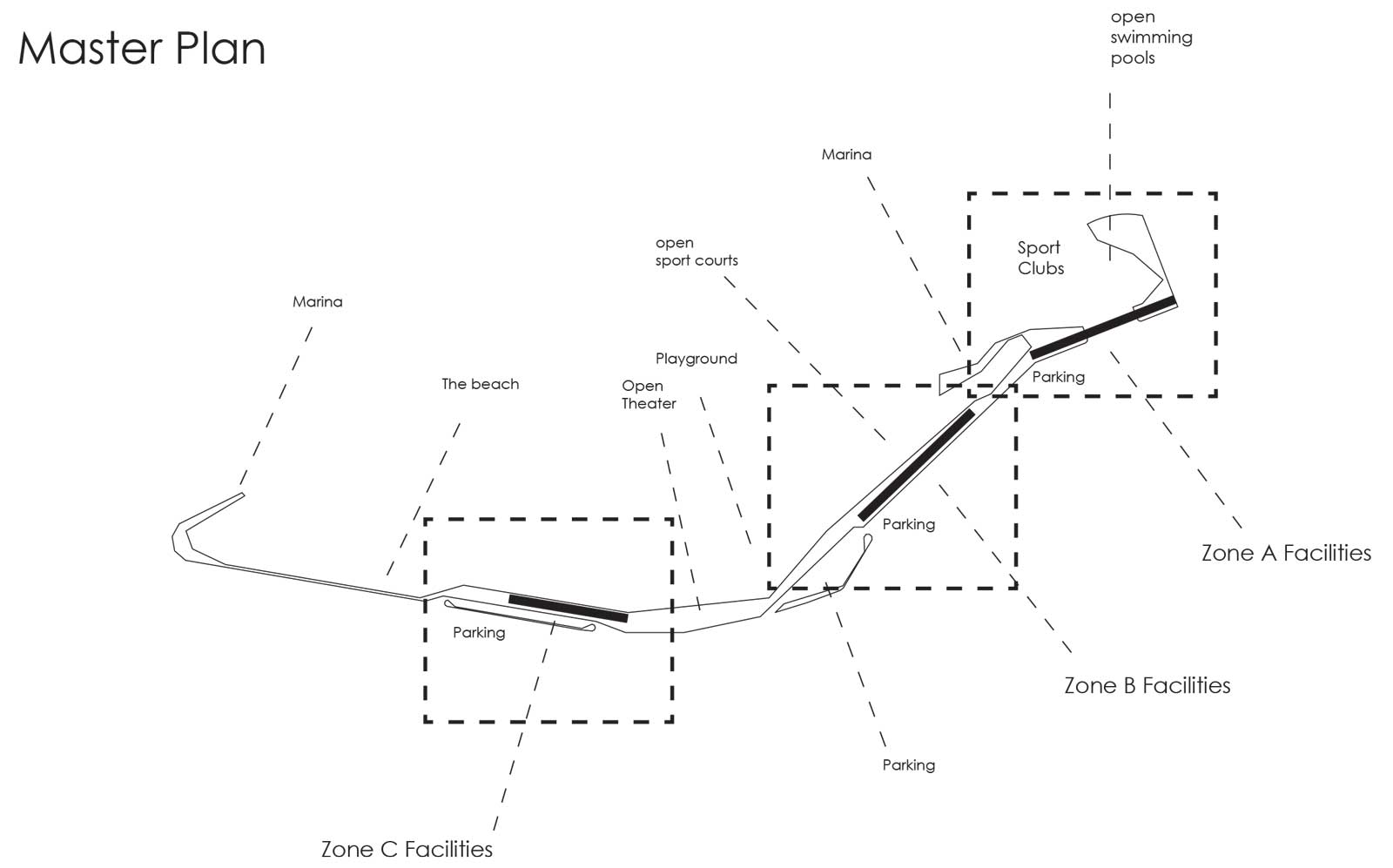
The architectural concept of the Tripoli Line Project is inspired by the historical fabric of Tripoli's old medina, envisioned as an extension of the ancient city wall. The project is conceived as a linear development that thickens towards the city center, with a layout that mirrors the existing urban grid while gradually opening up towards the sea. This approach creates a dynamic interaction between the dense urban environment and the open coastal landscape, providing a seamless transition from the bustling city to tranquil seaside spaces. The development is stratified into three distinct zones, each with its unique character and functions, ensuring a balanced blend of private, semi-public, and public spaces.
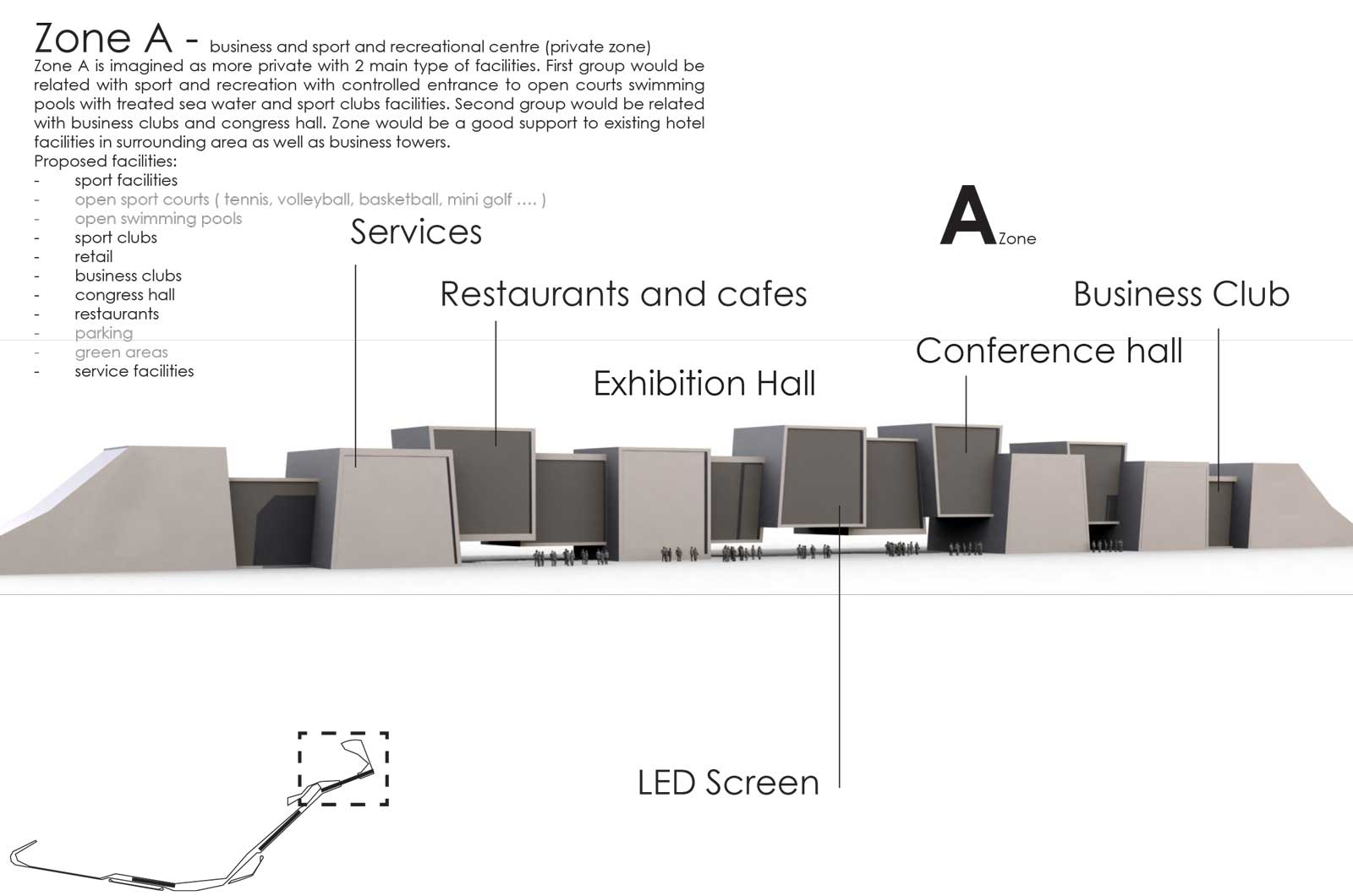
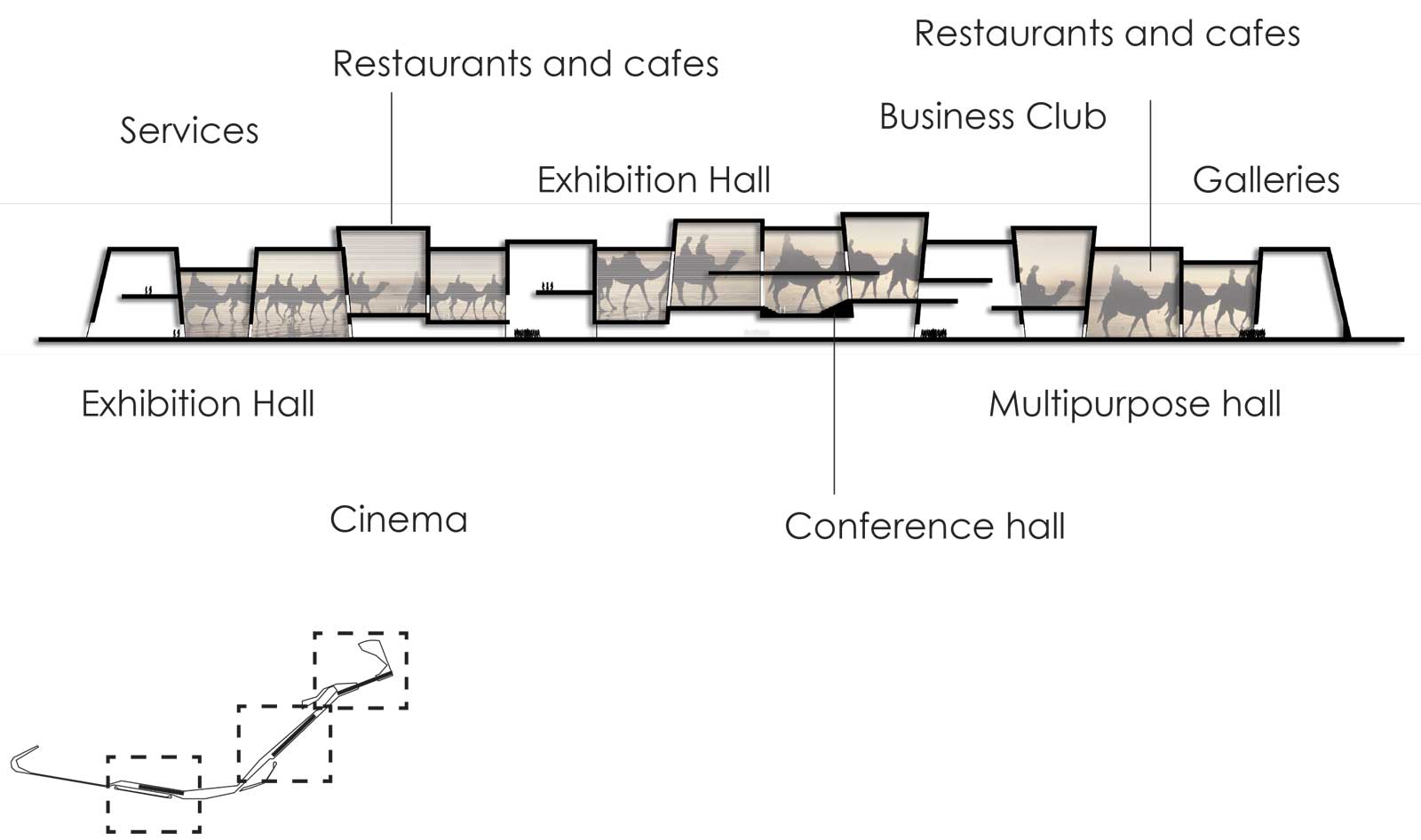
Zone A: Business and Sports Recreation Center
- Total Area: The largest of the three zones, Zone A is dedicated to private business and sports facilities, covering a significant portion of the site.
- Facilities:
- Sports and Recreation: Controlled access sports courts, open swimming pools with treated seawater, and sport club facilities.
- Business Clubs and Congress Hall: Supporting the surrounding hotel and business towers, providing spaces for conferences, meetings, and business events.
- Additional Amenities: Retail outlets, restaurants, green areas, and ample parking facilities.
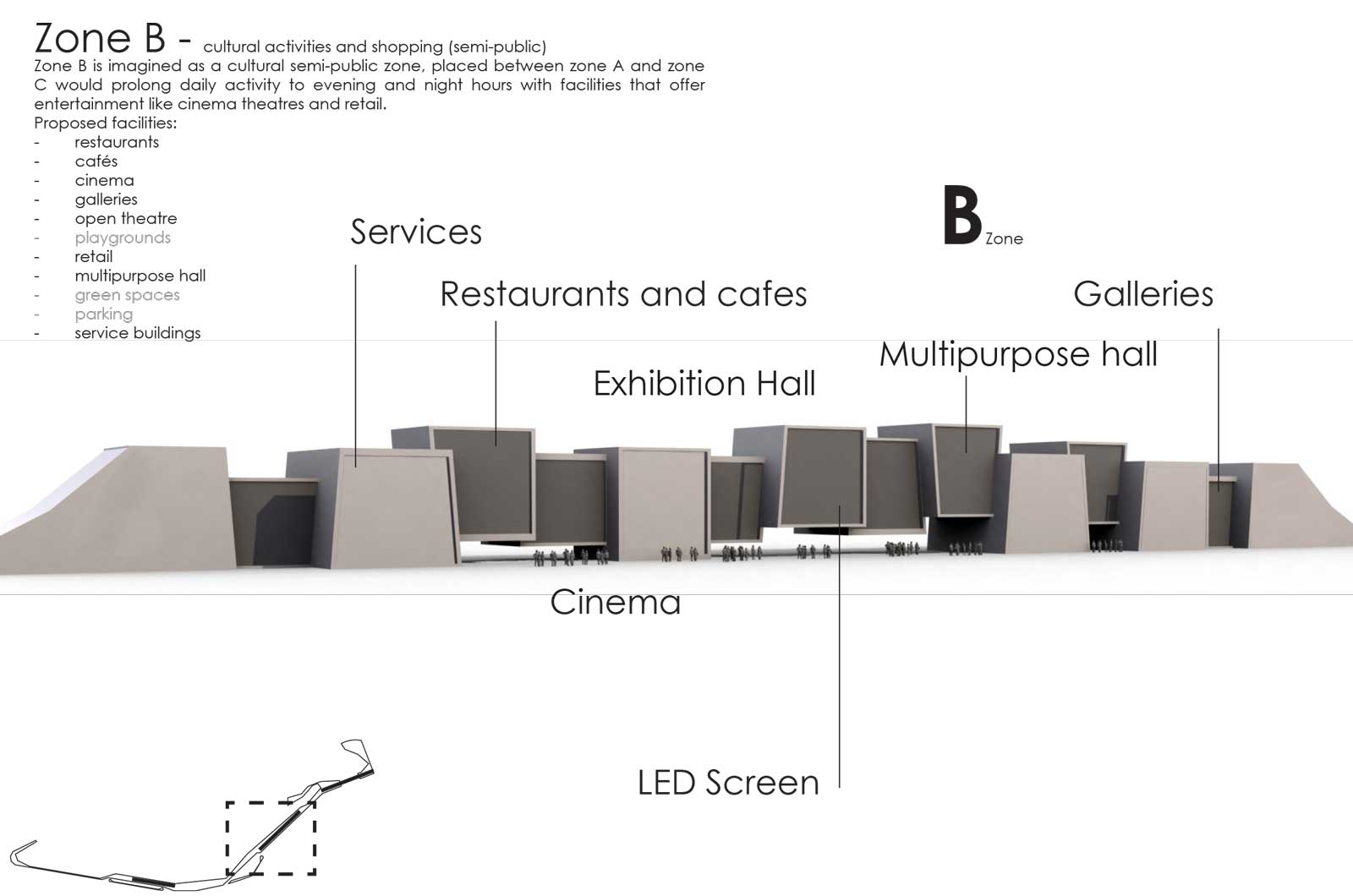
Zone B: Cultural and Shopping Hub
- Total Area: Serving as a cultural semi-public zone, Zone B acts as a bridge between the more private Zone A and the fully public Zone C.
- Facilities:
- Cultural Venues: Cinemas, galleries, an open theater, and a multipurpose hall designed to host a variety of events and exhibitions.
- Retail and Dining: A vibrant mix of retail spaces, restaurants, and cafes, catering to both daytime and evening visitors.
- Public Amenities: Playgrounds, green spaces, parking, and service buildings, creating a lively and accessible environment for all.
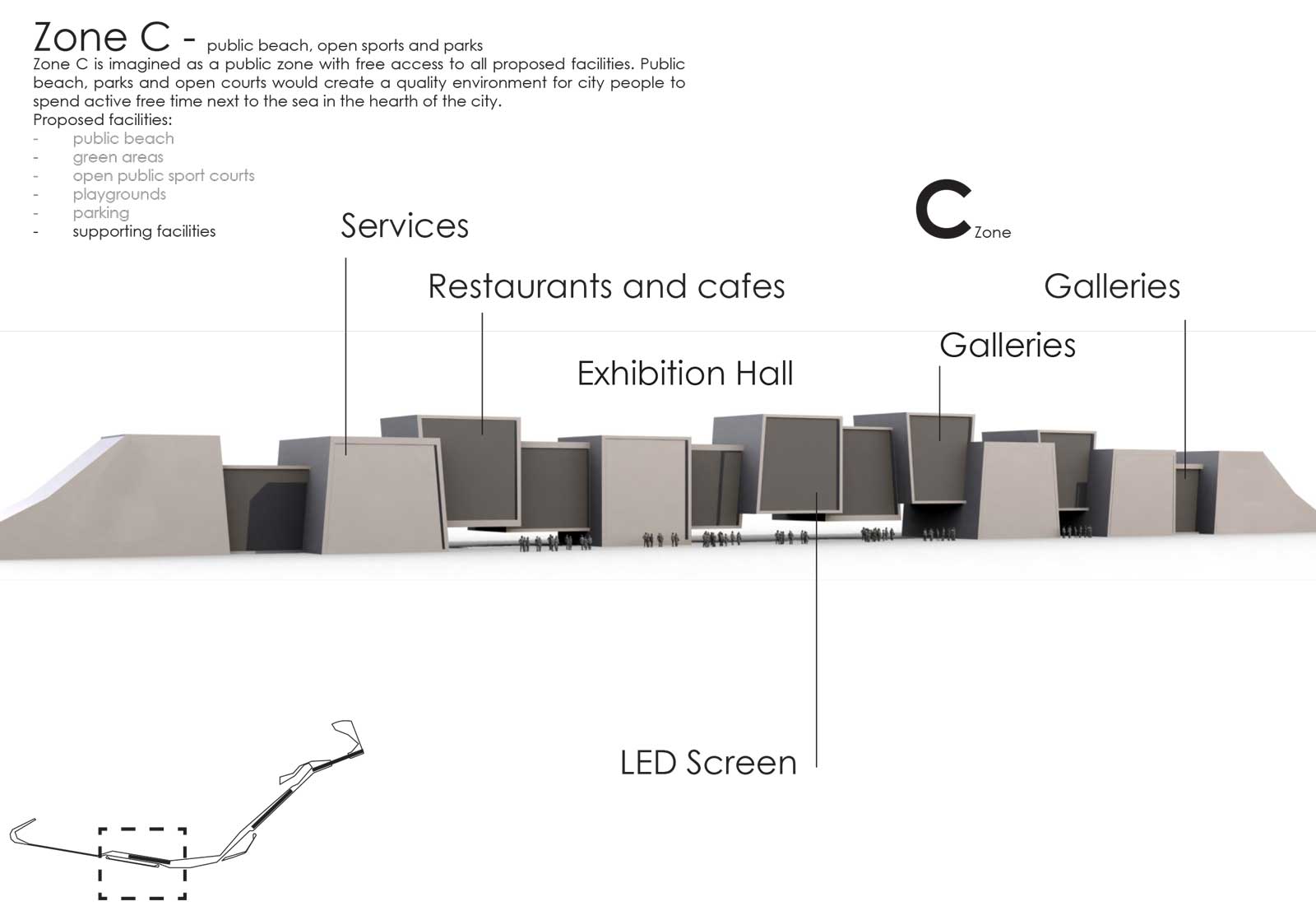
Zone C: Public Beach and Open Parks
- Total Area: Zone C is the most public-facing part of the development, offering free access to all its facilities.
- Facilities:
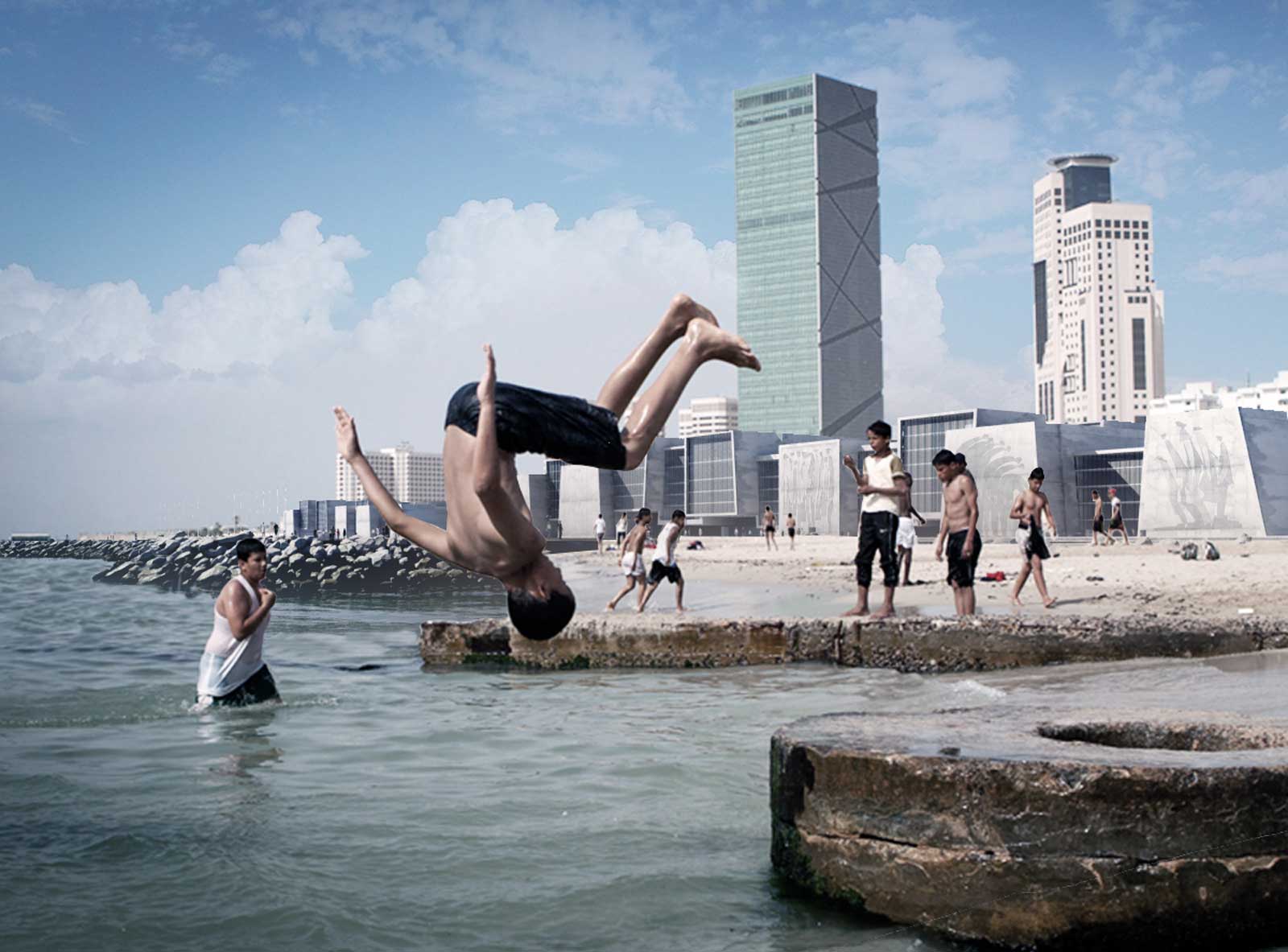
- Public Beach: A large, accessible beach area providing city residents with a place to relax and enjoy the Mediterranean.
- Parks and Open Spaces: Extensive green areas and open sports courts for activities such as tennis, volleyball, and basketball.
- Supporting Infrastructure: Parking areas, playgrounds, and other facilities designed to accommodate large numbers of visitors.
Social and Urban Impact:
The Tripoli Line Project is poised to play a critical role in revitalizing Tripoli's urban core by introducing a mix of uses that encourage both daytime and nighttime activities. By connecting the city center with the sea, the project enhances the pedestrian experience and promotes a healthier, more vibrant urban lifestyle. The inclusion of cultural and recreational facilities will not only serve the local population but also attract tourists and visitors, contributing to the economic growth of the region. The project's focus on integrating green spaces and reducing vehicular traffic aligns with sustainable urban development principles, making it a model for future developments in the city.
Conclusion:
The Tripoli Line Project Development is a visionary initiative that redefines the relationship between the city of Tripoli and its coastline. By blending historical references with contemporary design, the project creates a multifaceted urban environment that meets the needs of a diverse population. It represents a significant step forward in the ongoing efforts to modernize Tripoli while preserving its rich cultural heritage, ultimately contributing to the city's long-term vitality and sustainability.